Rangefinders for Vermont’s Green Mountain Ridge Shots
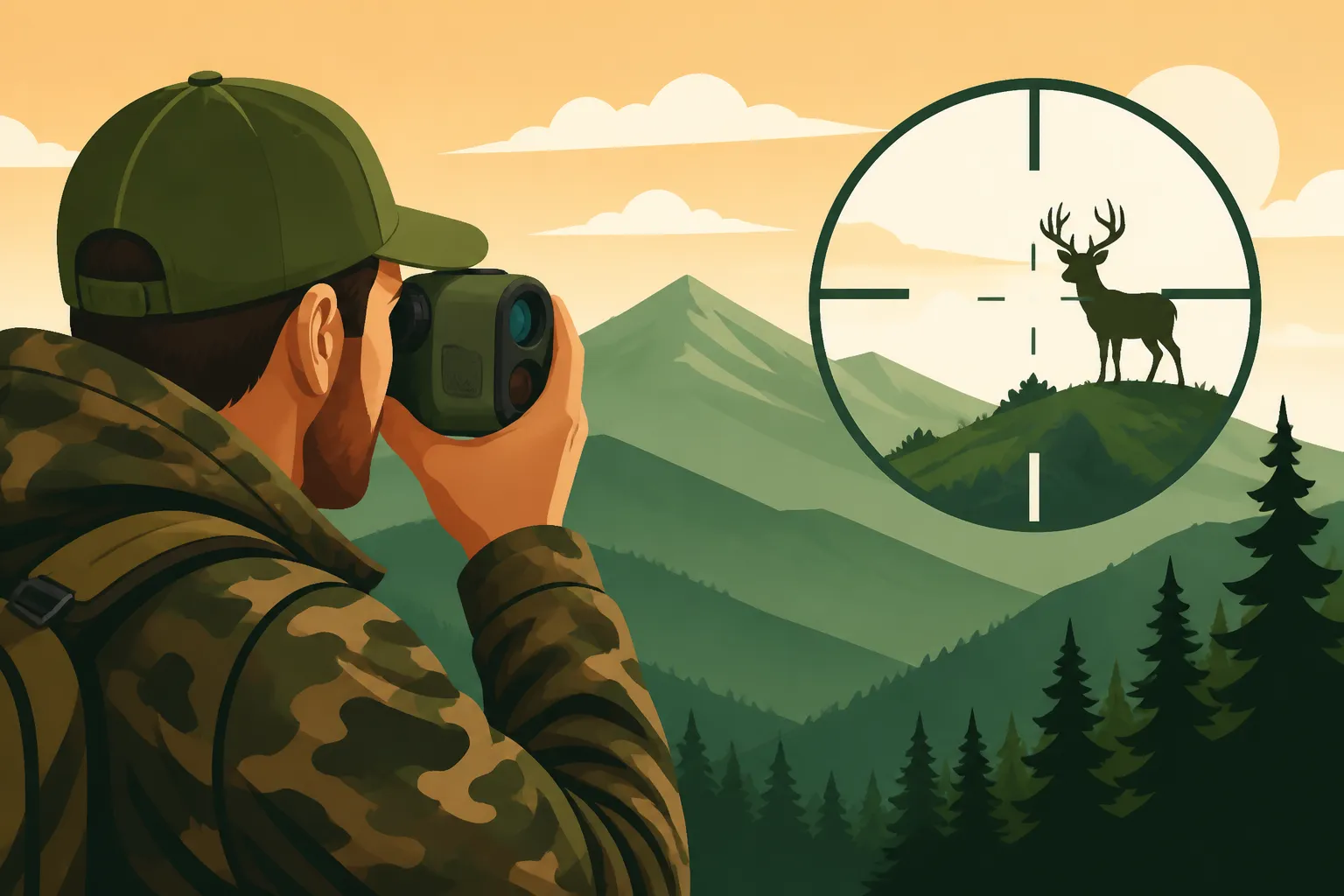
One of the biggest challenges we face as hunters in Vermont, especially when we venture into the Green Mountains, is accurately judging distance. Those steep ridges, deep ravines, and thick timber can play tricks on your eyes, making a shot that looks like 50 yards actually be 75, or a seemingly long 200-yard poke turn out to be a deceptive 150. Misjudging distance by even a small margin can mean the difference between a clean, ethical harvest and a heartbreaking miss or worse. This guide is all about equipping you with the knowledge to pick and use the right rangefinder, ensuring confidence and precision on every shot in Vermont's diverse and often challenging terrain.
Why Rangefinders Are Essential in Vermont's Green Mountains
Hunting in Vermont isn't like sitting over a flat bean field in the Midwest. Our landscape is carved by ancient glaciers, creating a wild tapestry of undulating hills, steep climbs, and dense forests that demand a different approach to shot preparation. A rangefinder isn't just a nice-to-have gadget here; it's a fundamental piece of gear.
The Deceptive Nature of Mountain Terrain
I've been fooled more times than I care to admit by how terrain can skew my perception of distance. When you're looking down into a valley or up at a buck silhouetted against a ridge, your brain often compensates for the angle, leading you to underestimate or overestimate the true horizontal distance. What appears to be a 100-yard shot could, with a significant uphill or downhill angle, actually be a "shoot-to" distance equivalent to 85 or 115 yards. This isn't just about bullet drop; it's about the path of the projectile relative to gravity. Without a rangefinder that accounts for these angles, you're essentially guessing, and guessing is never a good strategy when ethical hunting is on the line.
The varying density of cover adds another layer of complexity. A deer in an open hardwood stand might look closer than one partially obscured by softwoods or underbrush. The shadows, the light filtering through the canopy, and even the type of foliage can all contribute to an optical illusion. A laser rangefinder cuts through all that visual noise, giving you an objective, precise measurement that your eyes simply can't match.
Ethical Shot Placement and Confidence
Every hunter I know strives for a clean, ethical kill. That means putting the projectile exactly where it needs to go: in the vital zone. To do that consistently, you need to know the exact distance to your target. Without a rangefinder, you're relying on your internal estimation, which can be surprisingly inaccurate, especially when adrenaline is pumping or when hunting unfamiliar ground. Imagine you've been working a long ridge line, still-hunting through thick timber in the Green Mountain National Forest, and suddenly a buck steps out at what you estimate is 60 yards. Without confirming that with a rangefinder, you might hold for 50 or 70, potentially leading to a poor shot.
A rangefinder eliminates this uncertainty. It provides the hard data you need to make an informed decision on your holdover or windage, increasing your confidence exponentially. That confidence translates directly into a steadier aim and a better shot. It allows you to focus on your breathing, trigger control, and shot process, rather than second-guessing your yardage. This is especially true when you're targeting deer during Vermont's archery seasons, where distances are generally shorter but precision is paramount.
Adapting to Rapidly Changing Conditions
Vermont weather is notoriously fickle. One minute it's crisp and clear, the next a thick fog rolls in, or a sudden downpour starts. These conditions drastically reduce visibility and make judging distance even harder. Imagine waiting for a shot as the light fades during the Hunting the Rut in Early-to-Mid November, and a deer appears in patchy fog. Your rangefinder, especially one with good optics, can still give you a reading where your naked eye or traditional binoculars might fail to accurately gauge the distance.
Animals themselves can appear and disappear quickly in our rolling terrain. A deer might be feeding in a valley and suddenly bound up a hillside. A rangefinder with a fast acquisition time allows you to get a quick, accurate reading on an animal that's on the move or pausing briefly before disappearing into cover. You don't have time to fiddle with unreliable estimations when a fleeting opportunity presents itself.
Key Features to Look for in a Vermont Hunting Rangefinder
When you're outfitting yourself for Vermont hunting, particularly for our diverse landscapes from the Champlain Valley to the Northeast Kingdom, your rangefinder needs to be more than just a simple distance reader. It needs specific features to handle our unique challenges.
Angle Compensation Technology
This is, hands down, the most crucial feature for hunting in Vermont's Green Mountains. As we discussed, uphill and downhill shots are incredibly common here. Gravity affects a bullet's trajectory differently when shooting at an angle compared to a perfectly horizontal shot. If you're shooting steeply uphill or downhill, the effective "shoot-to" distance is actually less than the straight-line distance. A standard rangefinder will give you the line-of-sight distance, but an angle-compensating unit will calculate the equivalent horizontal distance, which is what your bullet's trajectory truly responds to.
For instance, if a buck is 200 yards away straight-line, but significantly downhill, your angle-compensating rangefinder might tell you the "shoot-to" distance is 185 yards. If you hold for 200, you'll shoot high. Conversely, an uphill shot might have a shorter "shoot-to" distance than line-of-sight, meaning you'd shoot low if you didn't compensate. Look for rangefinders that clearly state they have angle compensation, often labeled as "True Ballistic Range" (TBR), "Angle Range Compensation" (ARC), or similar. This technology is vital whether you're drawing a bow or squeezing a rifle trigger in our variable terrain.
Magnification and Objective Lens Size
While powerful magnification might seem appealing, it's not always the best choice for a dedicated rangefinder in Vermont. Too much magnification can make it harder to hold steady, especially when you're winded from climbing or shaking with adrenaline. For typical hunting distances in our woods and across smaller openings, a 6x or 8x magnification is often ideal. It provides enough zoom to pick out your target without being overly shaky or giving you too narrow a field of view. A good balance allows you to quickly locate your target, range it, and then shift to your primary optic for the shot.
The objective lens size (the front lens) influences how much light the rangefinder gathers. A larger objective lens generally means a brighter image, which can be a real advantage in the low light conditions common at dawn and dusk, or deep in our dense timber. However, a larger lens also means a bulkier, heavier unit. For a standalone rangefinder, a 20mm to 25mm objective lens is a good compromise between light gathering capability and compact size. If you're considering rangefinding binoculars, which combine the two, you'll naturally get larger objective lenses, offering superior low-light performance.
Ranging Speed and Target Acquisition
In a real hunting scenario, things can happen fast. A deer might step out of cover for only a few seconds, or it might be moving through an opening. You need a rangefinder that can lock onto a target quickly and provide a reading almost instantly. Slow rangefinders can cause you to miss a shot opportunity or force a rushed, less accurate shot. Look for models that boast fast processing speeds and quick display updates.
"Scan mode" is another excellent feature. This allows you to continuously press the range button and pan across an area, getting multiple readings as you move. This is incredibly useful for ranging several objects in quick succession, or for ranging a moving animal. If a deer is walking along a field edge, you can keep the rangefinder on it, getting real-time updates as its distance changes. This feature is particularly helpful when Hunting a Champlain Valley Dairy Farm Edge, where animals might move through large open spaces.
Understanding Different Rangefinder Technologies
The world of rangefinders has evolved significantly, offering various technologies to suit different hunting styles and budgets. Knowing the pros and cons of each will help you choose the best fit for your Vermont adventures.
Laser Rangefinders (The Standard)
The vast majority of modern hunting rangefinders use laser technology, and for good reason. They are generally compact, reliable, and offer excellent precision. How do they work? Simple: they emit a laser beam, which travels to your target and bounces back. The device then measures the time it takes for the laser to make this round trip, and, knowing the speed of light, it calculates the distance.
Benefits: Laser rangefinders are incredibly accurate, often down to a yard or even a half-yard at reasonable hunting distances. They are relatively affordable, with many excellent options available for different price points. They're also lightweight, making them easy to carry in a chest harness or pack when you're Climbing to a Green Mountains High-Elevation Bench. However, they do have some limitations. Heavy fog, rain, or snow can sometimes interfere with the laser beam, leading to inaccurate readings or no reading at all. While most quality units are designed to handle typical hunting conditions, extremely dense precipitation can be an issue. Also, ranging through thick brush can be tricky, as the laser might pick up the closer leaves or twigs instead of your intended target. Many units, however, have a "last target priority" mode which attempts to ignore foreground objects and range the furthest object in the laser path, which can be useful in our thick woods.
Rangefinding Binoculars (The Integrated Approach)
For those who prioritize efficiency and minimizing gear, rangefinding binoculars offer an appealing solution. These combine a high-quality pair of binoculars with a laser rangefinder built right in. Instead of carrying two separate optical devices – binoculars for glassing and a rangefinder for ranging – you have one integrated unit. This can be a game-changer for reducing bulk and increasing speed in the field.
Pros: The primary advantage is convenience. You can glass for game, spot an animal, and immediately range it without having to switch instruments. This can be crucial when time is of the essence, or when trying to acquire a quick read on an animal that might disappear into cover. Many rangefinding binoculars also feature superior optics compared to standalone rangefinders, offering better light transmission and image clarity, which is excellent for spotting deer in the dim light of dawn or dusk. Since binoculars typically have larger objective lenses, they perform exceptionally well in low-light conditions.
Cons: The main drawbacks are typically weight and cost. Rangefinding binoculars are almost always heavier and significantly more expensive than a standalone rangefinder. This added weight can be noticeable on long hikes in the backcountry, especially if you're already carrying a rifle or bow and a full pack. They also require a larger investment. However, if you spend a lot of time glassing and want the ultimate in streamlined functionality, they are a fantastic option.
GPS/Mapping Integration
Some advanced rangefinders go beyond just measuring distance, incorporating GPS capabilities and even integrating with mapping applications. While not strictly necessary for every hunter, these features can be incredibly useful for modern navigation and data logging in Vermont's vast public lands.
These rangefinders might allow you to mark your shooting position, the location of your target, or even the spot where you last saw blood, all with precise GPS coordinates. This information can then be synced with a smartphone app or a dedicated mapping platform like GoHunt. Imagine you range a buck at 180 yards in a dense patch of timber, mark its location with your rangefinder's GPS, and then use that precise data in your GoHunt app to plan your recovery route, even after dark. This integration helps you combine distance data with topographical maps, identifying natural funnels, bedding areas, and potential escape routes. It can be particularly valuable when hunting expansive areas like Green Mountain National Forest, where precise location tracking can prevent you from getting disoriented.
Another benefit of this integration is the ability to connect your rangefinder with a ballistic calculator in an app like GoHunt. Once you range a target, the distance is wirelessly sent to your phone, and the app instantly calculates your precise holdover or windage adjustment based on your specific rifle, ammunition, and environmental conditions. This eliminates manual data entry and reduces the chance of error, giving you an even faster, more accurate solution in the field.
Practical Tips for Using Your Rangefinder in Vermont
Having a great rangefinder is one thing, but knowing how to effectively use it in the field is another. Vermont's diverse terrain and hunting situations require a bit of practice and foresight.
Pre-Season Scouting and Ranging Key Landmarks
One of the best habits you can develop is using your rangefinder during your pre-season scouting trips. Whether you're hanging trail cameras, checking for sign, or simply exploring new ground, take the time to range various landmarks. Range that big pine tree across the clearing, the cluster of rocks on the next ridge, or that specific bend in a logging road. Make a mental note – or even jot it down – of these distances.
For example, when you're scouting a potential stand location overlooking a food plot or a beaver flowage, range several prominent features. "That downed log is 40 yards, the edge of the creek is 65, and the big oak on the far bank is 90." When a deer finally steps out during the season, you won't have to range it cold. You'll already have nearby reference points, which can help confirm your rangefinder's reading or give you a quick estimate if the deer isn't staying still long enough for a precise measurement. This proactive approach builds confidence and familiarity with your hunting area, which can be invaluable when the pressure is on. This is a critical step to take before Hanging a Stand on a Champlain Valley Field Edge or setting up near any natural funnel.
Field Practice and Muscle Memory
Just like with your rifle or bow, consistent practice with your rangefinder will make you faster and more proficient. Don't wait until opening day to pull it out of the box. Spend time ranging random objects in your backyard, in a local park, or even on your drive to work (from a safe, stationary position, of course!). Practice drawing it from your harness or pocket, bringing it to your eye, acquiring a target, and getting a reading quickly.
Work on steadying the unit. Many hunters find that bracing their elbows against their body, or even against a tree or knee, helps reduce shake and allows for a more accurate reading, especially at longer distances. Practice ranging small targets, like a specific branch or a fence post, rather than just a large building. This will hone your ability to pinpoint your intended target in dense cover. The goal is to build muscle memory so that when a deer suddenly appears, using your rangefinder feels like a natural, almost automatic action, rather than a fumbling struggle. You'll want to be quick and smooth when Hunting the Regular Archery Opener in October.
Battery Life and Weather Protection
There's nothing more frustrating than having your essential gear fail in the field. Always check your rangefinder's battery life before heading out, especially for multi-day hunts or in cold weather. Cold temperatures can significantly reduce battery performance, so it's a good idea to carry spare batteries, perhaps tucked into an inner pocket to keep them warm.
Vermont weather can throw anything at you, from driving rain to heavy snow. Ensure your rangefinder is rated as waterproof or at least water-resistant. While most modern units are, don't just assume. A sudden downpour can quickly ruin electronics. Keep it protected in a chest harness with a cover, or in a waterproof pocket when not in immediate use. Some hunters even keep it on a lanyard around their neck, tucked inside their jacket for quick access and weather protection. Taking these precautions will ensure your rangefinder is ready to perform when you need it most, regardless of what Mother Nature throws your way.
Combining Your Rangefinder with Ballistic Data
A rangefinder gives you the distance, but to truly put that information to good use, you need to understand how it integrates with your projectile's trajectory. This is where ballistic data comes into play, turning raw yardage into actionable aiming points.
Understanding Bullet Trajectory
Every bullet, once it leaves the barrel, immediately begins to fall due to gravity. This "bullet drop" is influenced by several factors: the bullet's weight, its velocity, its ballistic coefficient (how aerodynamically efficient it is), and environmental conditions like temperature, humidity, and altitude. When you sight in your rifle, you're usually zeroing it at a specific distance – say, 100 or 200 yards. At that range, your bullet will hit where you aim. But at any other distance, it will either be slightly high (within its maximum point-blank range) or, more commonly, low.
The farther the target, the more the bullet drops. For instance, a common deer hunting cartridge might drop 6-8 inches at 200 yards when zeroed at 100 yards. At 300 yards, that drop could easily be 18-24 inches or more. Knowing the exact range from your rangefinder allows you to then apply your ballistic knowledge. Without a precise range, trying to estimate bullet drop becomes a shot in the dark, leading to misses or, worse, unethical hits. This is why a good rangefinder is so vital for Rifles and Calibers for Vermont Big Game.
Using Ballistic Calculators and Apps
Modern technology has made managing ballistic data much easier than it used to be. Instead of complex drop charts taped to your stock, you can now use sophisticated ballistic calculators, often available as smartphone apps. Many rangefinders can even communicate wirelessly with these apps, streamlining the process even further.
Here's how it often works:
- Input Your Data: Before your hunt, you'd input your rifle's specifics (caliber, bullet weight, muzzle velocity, zero distance) into a ballistic app like those often integrated with hunting tools from GoHunt. You'd also account for typical Vermont environmental conditions for the season you're hunting.
- Range Your Target: In the field, you use your angle-compensating rangefinder to get the true "shoot-to" distance to your deer.
- Get Your Solution: If your rangefinder integrates with your ballistic app, that distance is automatically sent. The app then instantly calculates the precise holdover (how many inches or MOA/Mils you need to aim above the target) or the turret adjustment needed on your scope. Some advanced rangefinders even have these calculators built directly into them, displaying the aiming solution right in the viewfinder.
This combination is incredibly powerful, especially for longer shots or when hunting in varied terrain where angles and distances constantly change. It removes the guesswork and provides a precise, data-driven aiming solution, giving you the best chance for a clean harvest whether you're stalking in thick timber or sitting a field edge in late season. Using these tools effectively can greatly improve your success and confidence when pursuing White-Tailed Deer Across Vermont.
Rangefinder Feature Comparison for Vermont Hunters
To help you visualize the different options and features discussed, here's a table comparing common rangefinder types and their suitability for Vermont hunting scenarios.
| Feature / Type | Basic Laser Rangefinder | Angle-Compensating Laser Rangefinder | Rangefinding Binoculars | Integrated GPS/Ballistic Rangefinder |
|---|---|---|---|---|
| Angle Compensation | No | Yes | Yes | Yes |
| Magnification | 4x-6x | 6x-8x | 8x-12x | 6x-10x |
| Objective Lens | Small (18-22mm) | Medium (20-25mm) | Large (42-56mm) | Medium-Large (25-42mm) |
| Ranging Speed | Good | Very Good | Very Good | Excellent |
| Low-Light Performance | Fair | Good | Excellent | Good-Excellent |
| Cost | Low | Moderate | High | Very High |
| Weight/Bulk | Very Low | Low-Moderate | Moderate-High | Moderate |
| Vermont Suitability | Limited (flat ground only) | Excellent (Highly Recommended) | Excellent | Superior (if budget allows) |
| Best For | Backyard practice | Most Vermont hunting situations | Glassing/long-range | Precision hunting/remote areas |
As you can see, for the typical Vermont hunter who encounters varied terrain and wants ethical shot placement, an angle-compensating laser rangefinder is truly the sweet spot. If your budget and style allow, integrated options offer even more advantages.
Choosing the Right Rangefinder for Your Vermont Hunting Style
Ultimately, the "best" rangefinder is the one that fits your specific hunting style, the terrain you frequent, and your budget. For most hunters in Vermont, the core requirement is reliable, accurate angle compensation. If you're primarily a bowhunter, especially during Bowhunting Vermont's Expanded Archery Season or Hunting the Regular Archery Opener in October, where shots are generally closer but every yard matters, a compact, fast, angle-compensating unit is ideal. Bowhunters don't need huge magnification, but rapid target acquisition is key.
If you're a rifle hunter who might be taking longer shots in the more open areas of the Champlain Valley or across clear-cuts in the Northeast Kingdom, then higher quality optics and potentially an integrated ballistic solution become more valuable. You might be ranging animals at 250-300 yards or more, and every bit of clarity and precision helps. Consider how often you glass with binoculars. If you're constantly glassing open country, a pair of rangefinding binoculars can truly streamline your setup and reduce the amount of gear you're fumbling with.
No matter which unit you choose, invest in quality. A rangefinder is a tool that directly impacts your ability to make an ethical shot. Don't skimp on a critical piece of gear that brings confidence and precision to your hunts in Vermont's wild and beautiful landscapes. Get out there, practice, and enjoy the season!
Disclaimer
This article is for general informational purposes only and does not constitute professional advice. Laws, prices and regulations vary by location and change over time. Consult a qualified professional for guidance on your specific situation.