Best In-Line Muzzleloader for Vermont Hunters
For many Vermont hunters, navigating the myriad of hunting seasons, weapon restrictions, and diverse terrain can feel like solving a complex puzzle. You want to extend your time in the woods, especially when rifle season has come and gone, or you're eyeing those precious antlerless opportunities. This guide is all about helping you understand what makes an in-line muzzleloader a fantastic tool for Vermont hunting and how to choose the best one to meet our state's specific demands.
Why Muzzleloaders Are a Smart Choice for Vermont Hunters
Hunting in Vermont offers a rich tradition, but it also comes with specific rules and unique challenges. When you're looking to maximize your time afield, especially for deer, a muzzleloader isn't just an archaic alternative; it's a strategic advantage. It opens up exclusive seasons and provides a satisfying blend of traditional hunting with modern reliability, perfect for our Green Mountain state.
Extended Season Opportunities
One of the biggest draws to muzzleloader hunting in Vermont is the chance to hit the woods when many other hunters are packing up for the year. We have dedicated muzzleloader seasons that run both before and after the general rifle season, giving you invaluable extra time to pursue deer. Think about that quiet week in October, Vermont October Muzzleloader Antlerless Window, where you might be one of the few pursuing antlerless deer, focusing on herd management and filling the freezer. Or consider the late-season hunt, Hunting Into the December Muzzleloader Close, a stark contrast to the busy November rifle season. These aren't just bonus days; they are often prime opportunities, especially after the initial pressure of rifle season has dispersed deer and changed their patterns.
Imagine a crisp December morning, fresh snow on the ground, and you're out there with your muzzleloader. The woods are quieter, and deer are often focused on their late-season food sources, making them potentially more predictable. Having the option to hunt these specific windows means more chances to connect, and it extends your overall hunting experience significantly. It's a fantastic way to stretch your season and put more venison on the table.
Versatility in Vermont Terrain
Vermont's hunting landscape is incredibly diverse. From the dense, rolling hardwoods of the Green Mountains to the open agricultural fields of the Champlain Valley and the thick, swampy lowlands of the Northeast Kingdom, your gear needs to be versatile. An in-line muzzleloader, when chosen wisely, truly shines in these varied conditions. Unlike some traditional black powder arms, modern in-lines are designed for reliability in the damp, cold, and often unpredictable Vermont weather we all know so well. They’re built to be more accurate at longer ranges than their predecessors, a crucial factor whether you're taking a shot across a cut-over in the Green Mountain National Forest or targeting a buck along a field edge.
The improved accuracy and ballistic performance of modern in-lines mean you can ethically take deer at ranges that might have been questionable with older models. This versatility is vital when you consider the mix of thick cover and occasional longer sightlines you'll encounter here. Plus, the single-shot nature forces a thoughtful, deliberate approach to every shot, which many of us appreciate as it hones our hunting skills.
Key Features to Look for in a Vermont Muzzleloader
When you're sifting through the options for an in-line muzzleloader, it's easy to get overwhelmed by all the choices out there. But for Vermont hunters, there are a few key features that really stand out and should be at the top of your list. Our climate, our terrain, and our specific hunting seasons demand a certain level of performance and reliability. Don't just grab the first one you see; think about how these features will actually perform when you're deep in the woods on a cold, damp morning.
Weather Resistance and Reliability
Let's be real: Vermont weather doesn't always cooperate. You could start your morning with a clear, frosty sky and by noon be trudging through sleet or a damp, heavy snowfall. This makes weather resistance absolutely paramount for any firearm, but especially for a muzzleloader where moisture can compromise your powder charge or ignition. Look for stainless steel barrels and synthetic stocks. These materials are far more resistant to rust and warping than blued steel and traditional wood, ensuring your rifle performs consistently, season after season, regardless of how many rainy days you put it through.
Beyond the materials, consider the ignition system. Many modern in-lines use 209 shotgun primers, which are known for their reliability even in less-than-ideal conditions. Some designs also feature sealed breeches or quick-release breech plugs that help keep moisture out and make cleaning a breeze. A reliable ignition system means you can be confident that when you pull the trigger, your muzzleloader will fire, even if it's been exposed to a bit of drizzle or snow throughout your hunt. You don't want to spend precious hunting time worrying about a misfire due to a damp primer.
Accuracy and Range for Eastern Hunting
While we're not typically taking 400-yard shots across vast plains in Vermont, accurate shooting is still crucial. Our terrain often presents shots that might be shorter, but they can be through brushy corridors, across small clearings, or on steep angles. An effective muzzleloader needs to be consistently accurate out to 100-150 yards, which is a very reasonable expectation for modern in-line models. Look for a rifle with a quality barrel, as this is the heart of its accuracy. Many come with fluted barrels or advanced rifling that can improve performance.
When you're evaluating accuracy, also consider the twist rate of the barrel. Different twist rates are optimized for different projectile types, especially when you're using sabots. A faster twist rate might stabilize longer, heavier projectiles better, which can be advantageous for energy retention and accuracy. Many Vermont hunters swear by specific sabot and projectile combinations for their chosen muzzleloader. Resources like GoHunt can often provide valuable insights and user reviews on specific muzzleloader models and their real-world accuracy, helping you narrow down choices that perform well for others in similar conditions. Don't forget that a good set of optics, whether it's open sights or a mounted scope, is equally vital for maximizing your accuracy. Choosing a Scope Magnification for Timber Country could be a helpful read if you're planning on adding glass.
Portability and Handling
Hunting in the Green Mountains often involves a good bit of walking, climbing, and still-hunting through varied cover. A heavy, cumbersome rifle can quickly become a burden, especially if you're hiking into remote public land. Look for a muzzleloader that balances weight with stability. A lighter rifle, perhaps with a synthetic stock and a shorter barrel (24-26 inches is a good sweet spot), will be much more pleasant to carry up and down those Vermont hills.
The balance of the rifle is also important. A well-balanced muzzleloader will feel natural to shoulder and point, which is crucial for quick, instinctive shots when a deer suddenly steps into a shooting lane. Think about how the rifle feels in your hands, how easily it swings, and whether it's comfortable to carry for extended periods. If you plan to hunt from a treestand, Best Scope for a Treestand Setup, consider the overall length and how it will maneuver in tight spaces. Some models feature break-action designs that can be more compact for transport or easier to load in a blind.
Recommended Muzzleloader Types and Their Advantages
When it comes to modern muzzleloaders, the "in-line" design is king, and for good reason. They've revolutionized black powder hunting by offering significantly improved reliability, accuracy, and ease of use compared to their traditional counterparts. But even within the in-line category, there are distinctions, primarily revolving around how they open and function. Understanding these differences can help you pick the perfect companion for your Vermont hunting adventures.
Modern In-Line Designs
Modern in-line muzzleloaders are the go-to for most hunters today, especially here in Vermont. What makes them "in-line" is how the primer ignites the powder charge: it's directly in line with the bore, leading to a much more efficient and reliable ignition. This design virtually eliminates the hang-fires and misfires that were common with older side-lock or flintlock systems, which is a huge confidence booster when you're waiting for that perfect shot on a cold, damp morning.
These rifles typically use 209 shotgun primers, which are hot, consistent, and resistant to moisture. They offer a much cleaner burn and a more consistent shot-to-shot performance. The barrels are often rifled to handle modern sabots and projectiles, allowing for impressive accuracy out to 150 yards or more, making them effective tools for deer hunting. Their ease of cleaning, especially with quick-release breech plugs, also means less time scrubbing and more time preparing for your next hunt. The advancements in these designs have really blurred the line between a muzzleloader and a modern centerfire rifle in terms of performance and user-friendliness, while still giving you access to those coveted extended seasons.
Break-Action vs. Bolt-Action
Within the in-line muzzleloader world, you'll primarily find two action types: break-action and bolt-action. Both have their advantages, and the "best" one often comes down to personal preference and how you plan to use it.
Break-Action Muzzleloaders:
These are incredibly popular due to their simplicity and ease of use. Just like a single-shot shotgun, you "break open" the action to load a primer directly into the breech plug and then insert your projectile and powder from the muzzle.
-
Pros:
- Easy to Clean: The open breech allows for quick and thorough cleaning of the bore and breech area. Many come with quick-release breech plugs that can be removed by hand or with a simple tool.
- Compact: When broken open, they are shorter, which can be a plus for maneuvering in a treestand or tight cover.
- Simple Operation: Fewer moving parts generally mean less to go wrong and straightforward loading/unloading in the field.
- Ambidextrous: Most break-action models are equally comfortable for right or left-handed shooters.
-
Cons:
- Less Secure Primer: While modern designs are robust, some older or entry-level models might expose the primer slightly more to the elements when the action is closed, though this is less of an issue with current designs.
- Recoil Transfer: The hinge design can sometimes lead to a bit more perceived recoil compared to a solid bolt-action, though this is often negligible with proper shooting form.
Bolt-Action Muzzleloaders:
These operate much like a bolt-action centerfire rifle. You pull back a bolt to reveal the breech, insert your primer, and then close the bolt. The powder and projectile are still loaded from the muzzle.
-
Pros:
- Enhanced Weather Protection: The enclosed bolt provides excellent protection for the primer and breech, keeping moisture and debris out. This can be a significant advantage in heavy rain or snow.
- Stronger Action: A solid bolt-action design generally handles recoil very well and can feel very sturdy and "rifle-like" to shoot.
- Consistency: The tight lock-up of the bolt can contribute to consistent accuracy.
-
Cons:
- More Complex to Clean: While not difficult, cleaning the breech area can sometimes be a little more involved than with a break-action, requiring specific tools for the breech plug.
- Less Compact: The full bolt mechanism means the rifle remains at its full length during loading, which can be slightly less convenient in very tight spaces.
Many hunters in Vermont, especially those who prioritize absolute weather sealing and a familiar rifle feel, might lean towards a bolt-action in-line. Others, who value simplicity and field-stripping ease, often prefer the break-action. Both are highly capable for taking deer in Vermont.
Here's a quick comparison of key features:
| Feature | Break-Action In-Line | Bolt-Action In-Line |
|---|---|---|
| Primer Access | Direct open breech | Bolt slides back to expose breech |
| Weather Protection | Very good, though primer may be less recessed than bolt-action | Excellent, primer fully enclosed |
| Ease of Cleaning | Generally easier and more open | Good, but sometimes slightly more involved |
| Compactness (Loading) | More compact when action is open | Stays full length |
| Field Stripping | Often very simple | Typically simple |
| Recoil Management | Very good | Excellent |
| Reliability | High | High |
Calibers and Ammunition for Vermont's Deer
Choosing the right caliber and ammunition for your muzzleloader is just as important as selecting the rifle itself. For Vermont deer hunting, you need a setup that delivers ethical, clean kills, especially given the varied shot opportunities you might encounter. While there are a few options out there, two calibers tend to dominate the discussion, and understanding how projectiles and sabots factor in is key.
The .50 Caliber Standard
When you talk about muzzleloader hunting, especially for deer, the .50 caliber is often considered the standard, and for good reason. It offers a fantastic balance of power, trajectory, and bullet availability that makes it incredibly effective for whitetails. A well-placed .50 caliber projectile delivers ample energy for a quick, humane harvest, even on larger Vermont bucks.
The wider bore of the .50 cal means you're pushing a heavier, larger diameter projectile. This translates to good energy transfer and a substantial wound channel, increasing your chances of a quick recovery. Many hunters find the recoil manageable, especially with modern rifle designs that incorporate recoil pads and well-designed stocks. It's truly a versatile caliber that performs admirably whether you're taking a close-range shot in thick timber or a longer shot across an open field. For anyone starting out or looking for a dependable, all-around option for White-Tailed Deer Across Vermont, the .50 caliber is a solid, reliable choice that won't leave you wishing for more power.
Sabots and Projectiles for Accuracy
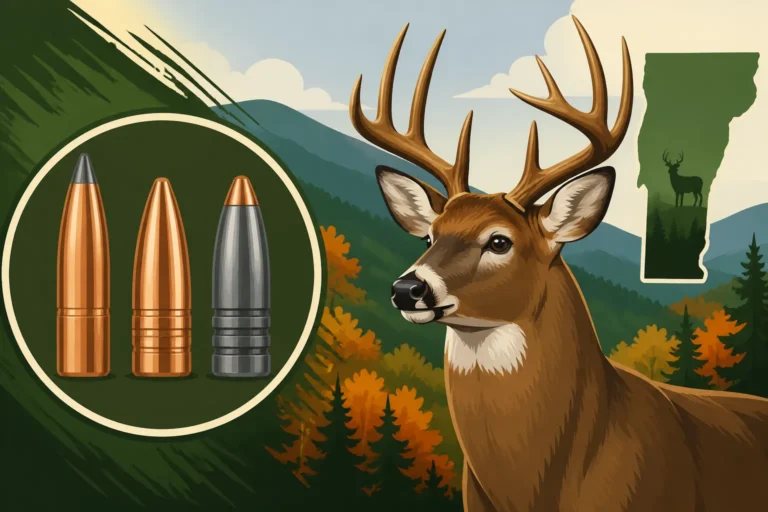
Once you've settled on a caliber, the next critical decision is your ammunition: specifically, the sabot and projectile combination. A sabot (pronounced "say-bow") is a plastic sleeve that allows a smaller-diameter bullet to be fired through a larger-diameter muzzleloader barrel. This is where modern muzzleloaders really shine, as using sabots allows for aerodynamic, jacketed bullets designed for rifles to be used, vastly improving accuracy and terminal performance compared to traditional round balls or conical bullets.
For Vermont deer, you'll typically find sabots paired with .45 caliber or .40 caliber bullets in a .50 caliber muzzleloader. The lighter bullet and plastic sabot create a gas seal, allowing the bullet to exit the barrel with greater velocity and spin, leading to better accuracy. The bullets themselves are often designed for controlled expansion, similar to what you'd find in a centerfire rifle cartridge, ensuring maximum energy transfer and tissue damage upon impact.
When selecting your sabots and projectiles, consider a few factors:
- Bullet Weight and Design: Heavier bullets (e.g., 250-300 grains) often perform well, retaining energy at longer ranges and penetrating deeply. Look for designs that emphasize controlled expansion, such as those with soft points or polymer tips, to create a broad wound channel without fragmenting excessively.
- Twist Rate Compatibility: Your muzzleloader's barrel twist rate will favor certain bullet lengths and weights. Experimentation is key to finding what shoots best out of your specific rifle. Don't be afraid to try different brands and bullet weights.
- Accuracy: Ultimately, the best sabot and projectile is the one that shoots most accurately out of your muzzleloader. Spend time at the range, trying different loads, and dial in your setup. Best Muzzleloader Scope for Timber Shots can certainly aid in this process. Many hunters keep detailed notes in a logbook or use digital scouting tools like GoHunt to track their load data and shot performance. Finding a combination that consistently groups tight ensures you'll make clean, ethical shots when it counts.
Remember, practice makes perfect. Firing a muzzleloader effectively requires understanding its unique loading process, recoil characteristics, and trajectory. Regular range time with your chosen ammunition will build confidence and ensure you're ready when a Vermont whitetail steps into your shooting lane.
Disclaimer
This article is for general informational purposes only and does not constitute professional advice. Laws, prices and regulations vary by location and change over time. Consult a qualified professional for guidance on your specific situation.