Recovering a Deer From a Steep Ravine
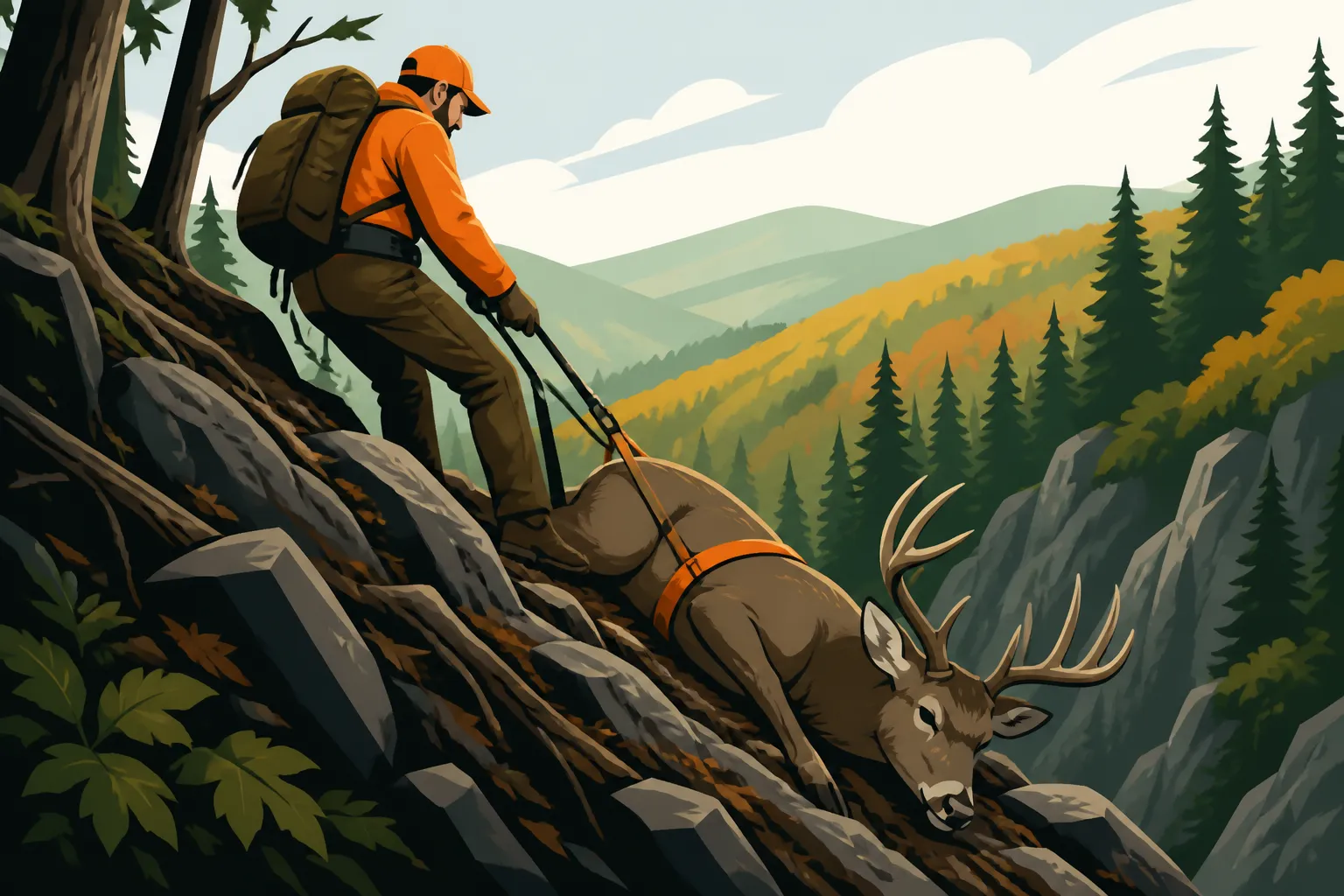
There's a unique kind of dread that washes over a hunter when a well-placed shot sends a magnificent Vermont whitetail tumbling down an unforgiving slope, disappearing into the depths of a steep ravine. The initial adrenaline of the harvest quickly gives way to a knot in your stomach as you realize the real work is about to begin. Recovering a deer from such a challenging spot isn't just about strength; it's about strategy, safety, and having the right tools. This guide will walk you through the careful steps needed to safely and successfully retrieve your deer from even the most treacherous Green Mountain ravines.
The Heart-Stopping Moment: Initial Assessment and Safety First
The sound of a deer crashing through underbrush, then silence, often followed by the sickening thud of it hitting the bottom of a steep incline, is enough to make any hunter's heart sink. It's a bittersweet moment, combining the triumph of a successful hunt with the immediate, overwhelming challenge of recovery. Before you even think about scrambling down that slope, take a deep breath. Rushing into a dangerous situation can turn a recovery effort into a rescue mission for yourself. Vermont's terrain can be incredibly deceptive, and what looks like a manageable drop from above can quickly become a perilous descent.
When the Shot Rings True, and the Deer Takes a Dive
You've made a good shot, perhaps on a majestic buck you've been chasing all season. You heard the distinct thwack or thump, and the deer bolted, only to vanish over an unseen edge. Your mind races: Is it dead? How far did it fall? Is it even recoverable? This is where the initial scouting you did before the season really pays off. If you've spent time Scouting Vermont Public Land Before Season, you might have a mental map of the terrain, including those sudden drops or drainages. Even with careful planning, deer have a knack for finding the path of most resistance post-shot. The sight of your prize lying motionless, perhaps wedged against a rock or at the bottom of a creek bed, is a relief, but also a stark reminder of the hard work ahead. Don't let excitement override caution.
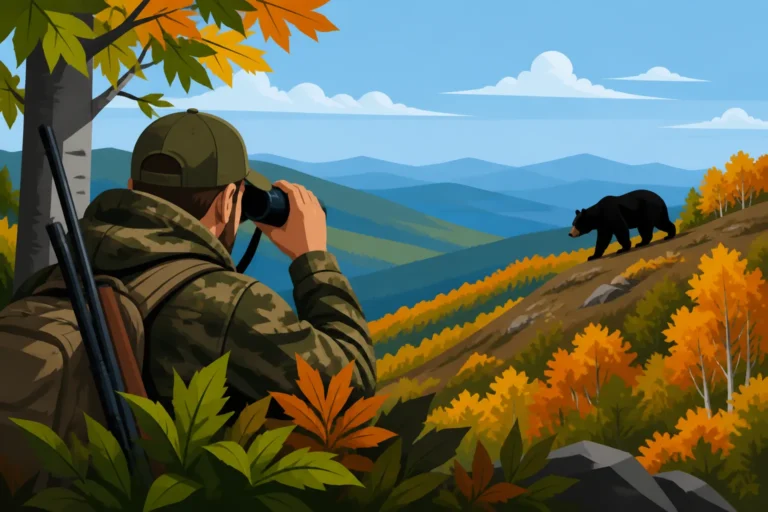
Often, these ravines are formed by small streams or seasonal run-off, carving deep, narrow gullies into the landscape. The sides can be loose with shale, covered in slippery fallen leaves, or worse, coated in a thin layer of ice if you're hunting late in the season. The immediate concern isn't just getting to the deer, but getting back out with it. The frustration of seeing your hard-earned deer in an unreachable spot is palpable, but remember, panic is your enemy. Take a moment, pull out your binoculars, and glass the situation. Get a clear picture of the deer's exact location, the type of terrain it's in, and any potential obstacles or safer paths down.
Prioritizing Your Personal Safety in Treacherous Terrain
No deer, no matter how big or how long you've pursued it, is worth risking your life. This isn't just a hunting adage; it's a critical rule for navigating Vermont's often unforgiving landscape. Before you take a single step towards the edge, conduct a thorough safety assessment. Look for stable anchor points like large trees or solid rock outcrops that could be used for ropes. Examine the ground immediately around the ravine for loose soil, rotten logs, or crumbling edges that could give way under your weight.
Think about the conditions. Is the ground wet from recent rain or melting snow? Are there icy patches hidden under leaf litter? Moss-covered rocks and muddy banks can be incredibly slick. Always assume the worst and prepare for it. If you're hunting alone, this assessment becomes even more critical, as there's no one to help if you get into trouble. If you're fortunate enough to have a hunting partner, discuss the best approach together. One person can remain at the top, acting as a spotter and ready to offer assistance or call for help. Having a fully stocked Best First Aid Kit for a Remote Hunt is not just good practice, it's essential when venturing into challenging terrain. Ensure your phone is charged, and consider carrying a satellite communication device, especially if you're deep in areas like the Green Mountain National Forest's Two Districts where cell service can be spotty at best.
| Safety Checkpoint | Considerations | Action Plan |
|---|---|---|
| Slope Stability | Are the banks loose soil, shale, or solid rock? Are there signs of recent rockfall or erosion? | Test small sections with a foot or stick. Avoid areas with obvious instability. Look for established game trails or less steep approaches. |
| Surface Conditions | Is it wet, icy, covered in slippery leaves, or deep mud? | Wear appropriate footwear with excellent traction. Use trekking poles for stability. Move slowly and deliberately. |
| Obstacles & Hazards | Are there fallen trees, thick brush, hidden stumps, or swift water at the bottom? | Identify potential trip hazards. Note any water crossings or areas where the deer might be partially submerged. |
| Weather & Light | Is it getting dark? Is precipitation expected? How cold is it? | Prioritize recovery during daylight. If dark, ensure sufficient lighting. Dress in layers to manage temperature fluctuations. If weather deteriorates, consider retreating and returning the next day if legal and safe. |
| Communication & Assistance | Do you have cell service? Do you have a hunting partner or can you contact someone? | Inform someone of your location and intentions. Carry a fully charged phone and/or satellite messenger. Don't hesitate to call for help if needed. |
Gearing Up: Essential Tools for a Mountainous Recovery
Once you've assessed the situation and determined it's safe to proceed, the next step is gathering the right tools. Attempting a ravine recovery with inadequate gear is like trying to Hunting a Ridge Above a Northeast Kingdom Bog in flip-flops – it's a recipe for disaster. This isn't your typical flat-ground drag; it requires specialized equipment and a methodical approach. Thinking ahead about what you might need, even carrying some of it in your pack, can make all the difference.
Illuminating the Darkness and Navigating the Unknown
One of the biggest challenges in a ravine recovery, especially if time is passing, is diminishing daylight. The depths of a ravine can become dark much faster than the surrounding landscape. A reliable light source is absolutely non-negotiable. Forget that tiny keychain light; you need powerful illumination. A good quality Best Headlamp for a Pre-Dawn Ridge Climb is invaluable, freeing your hands for climbing and carrying gear. Consider also bringing a secondary light source, like a powerful lantern or another headlamp, as backups. Having two light sources allows you to work more efficiently and provides redundancy in case one fails.
Beyond light, accurate navigation is critical. You need to know exactly where you are, where the deer is, and the safest route to get back out. GPS devices, whether standalone units or mapping apps on your phone, are essential. Many hunters swear by apps like GoHunt, which allow you to download maps for offline use, crucial in Vermont's remote areas where cell service is often nonexistent. Before heading out, always download topographic maps of your hunting area onto your device. This allows you to visualize the terrain, identify contour lines indicating steepness, and pick out potential ingress and egress points, a skill you might have honed when Reading Aerial Photos for Green Mountain Deer. Knowing the precise coordinates of your deer will make it easier to communicate its location if you need to call for assistance or guide a partner to the spot. Remember that the battery life of your phone can be significantly reduced in cold weather, so carrying a portable power bank is a smart move.
The Right Kit for Lifting and Hauling
This is where the physical demands of ravine recovery really come into play. Dragging a whole deer straight up a steep, slippery incline is often impossible, even for multiple people. You need tools that provide mechanical advantage.
- Ropes: At least 50-100 feet of durable, static climbing rope or strong utility rope. Dynamic climbing rope stretches too much, making it less efficient for hauling. Inspect ropes for fraying or damage before use.
- Pulleys: Simple pulley systems can multiply your pulling power. A basic Z-drag setup using two or three pulleys and a couple of carabiners can turn a seemingly impossible task into a manageable one.
- Carabiners and Slings: These are vital for setting up anchor points, attaching ropes to the deer, and creating self-tending systems. Ensure they are load-rated for rescue or climbing.
- Game Bags: While not directly for hauling, game bags are crucial if you decide to quarter the deer to lighten the load. This is often the most practical solution for a steep ravine, allowing you to carry the meat out in pieces. These can then be packed into a sturdy frame pack, similar to what you might use for a Best Pack for a Northeast Kingdom Moose Hunt.
- Game Sled/Deer Cart: A traditional deer cart might not be feasible for very steep, broken terrain, but a flexible game sled made of durable plastic can be excellent for sliding a deer (or its quarters) over snow or even mud, especially once you reach a more gradual slope or an open logging road.
- Knives and Bone Saw: Essential for field dressing and, if necessary, quartering the animal. A sharp knife is critical for a clean job and safety.
Don't overlook the importance of having a robust and capable Best Pack for a Northeast Kingdom Moose Hunt, even if you're not moose hunting. These packs are designed for heavy loads and often feature external frames that can handle the awkward bulk of deer quarters, which might be your only option for getting the animal out of the ravine.
Personal Protection and Communication
Beyond lighting and hauling gear, your personal protective equipment is paramount.
- Gloves: Heavy-duty work gloves protect your hands from rope burn, sharp rocks, thorns, and cold.
- Footwear: Sturdy, waterproof hiking boots with excellent ankle support and aggressive tread are a must. Think about traction in mud, snow, and on slippery rock.
- Reflective Gear/Blaze Orange: If you're working in low light or with a partner, or if other hunters might still be in the area, wear your Blaze Orange Requirements to remain visible.
- Whistle: A simple whistle can be a lifesaver for communicating with a partner over distances or in dense cover, especially if voices are muffled by terrain or wind.
- Satellite Communicator: If you're truly in the remote backcountry, a device like a Garmin inReach or Zoleo can send texts and SOS signals even when there's no cell service. This is a vital piece of gear for anyone hunting challenging Vermont terrain.
The Descent and Ascent: Strategies for Extraction
The actual process of getting into the ravine, securing the deer, and extracting it is the culmination of your preparation. This phase demands patience, careful coordination, and a clear understanding of your physical limitations and the capabilities of your equipment. It's a series of small, calculated steps, not one heroic leap.
Securing Your Position and the Deer
Before you even touch the deer, ensure your own position is stable. Use trekking poles for balance, and if the slope is truly treacherous, consider using a safety line anchored to a strong tree at the top, even if it's just a length of rope to hold onto as you descend. As you approach the deer, do so cautiously. Even a deceased animal can roll or shift, especially if it's precariously balanced. Once you reach it, assess its condition and position. If it's tangled in brush or against an unstable log, work to free it carefully.
At this point, you'll need to decide whether to field dress the deer in the ravine or try to haul it out whole. For truly steep and difficult terrain, field dressing is almost always the better option, significantly reducing the weight. If you opt to gut it, try to orient the deer on as stable a patch of ground as possible. This can be awkward and messy on a slope, but it's far easier than trying to haul out an extra 30-50 pounds of entrails. Make sure you have a sharp knife and plenty of disposable gloves for this task. Once field dressed, secure the deer. If you're using ropes, tie them securely around the antlers or neck and then around the hindquarters. If quartering, place the meat into game bags immediately to protect it from dirt and insects.
Leveraging Physics: Mechanical Advantage Techniques
Dragging a whole deer straight up a ravine is often impossible. This is where mechanical advantage systems, like a pulley setup, become your best friend. A common and effective system is the "Z-drag."
- Anchor Point: Secure a rope to a sturdy tree or rock at the top of the ravine, directly above or slightly to the side of the deer.
- Deer Connection: Attach the other end of the rope to the deer, usually with a sling around the antlers or neck.
- Pulley 1 (at the deer): Attach a pulley to the rope near the deer, but not directly to it. The main hauling rope will pass through this pulley.
- Pulley 2 (at the anchor): Attach a second pulley (or just run the rope directly, though a pulley is more efficient) at the anchor point. This is where you'll be pulling.
- Prusik/Mechanical Grab: Attach a prusik knot or a mechanical rope grab (like an ascender or a Gibbs ascender) to the main hauling rope, between the deer and the first pulley. This will allow you to pull a section of rope, and when you let go, the prusik holds the tension, preventing the deer from sliding back down.
With a Z-drag, every foot of rope you pull might only move the deer 4-6 inches, but it effectively multiplies your pulling power by three times or more, depending on the number of pulleys and how the system is configured. It's slow and methodical, but it works. This is especially useful if you're trying to Finding Ground Others Walk Past that no one else has accessed due to its difficulty. Remember to move slowly, keeping an eye on the rope, the anchor points, and the deer's movement. Clear any brush or small obstacles from the deer's path as it ascends.
The Team Effort: When to Call for Backup
While some hunters pride themselves on self-sufficiency, there's no shame in admitting when a task is too big for one person, or even two. Ravine recoveries are often one of those times. If, after your initial assessment, you realize the task is beyond your safe capabilities, don't be a hero. Call for help. This could mean calling a hunting buddy, a family member, or even a local game warden for advice. Game wardens are primarily law enforcement, but they are often knowledgeable about local terrain and can offer guidance or safety considerations. They usually won't perform the extraction for you, but they can ensure you're approaching it safely and legally.
When you call for backup, be prepared to give precise location information. This is where your GPS device or mapping app like GoHunt becomes invaluable. Provide exact coordinates and a clear description of the terrain. "It's near the big rock by the creek" won't cut it. "It's at N 44.XXX, W 72.YYY, approximately 100 yards south of the main logging road, in a 40-foot deep ravine with a 60-degree slope" is much more helpful. The more detail you can provide, the faster and safer your backup can reach you. Remember, a successful hunt isn't just about making the shot; it's about making a responsible and safe recovery.
Beyond the Ravine: Post-Recovery Care and Ethical Considerations
You've done it. You've heaved, pulled, and strategized, and your deer is finally out of the ravine, back on relatively level ground. The relief is immense, but the job isn't quite over. Now, you need to ensure the meat is properly cared for and that you uphold your ethical responsibilities as a hunter. The journey from the ravine to the dinner plate still has a few crucial steps.
Field Dressing in the Field vs. Hauling Whole
As discussed earlier, the decision to field dress at the site of the kill or haul the entire animal out is critical in a ravine scenario. For a steep ravine, gutting the deer on site is almost always the practical choice. It significantly reduces the weight you need to haul, often by 25-30%. This can be the difference between a successful recovery and an impossible one.
Field dressing on uneven, slippery ground can be tricky. Try to position the deer on its back if possible, using rocks or logs to prop it up. Be mindful of gravity and blood flow, and carry plenty of paper towels or wipes. If you're fortunate enough to retrieve the deer in cold weather, this can aid in the initial cooling process. For deeper insights into this, especially in challenging temperatures, you might find more information in guides like Field Dressing a Deer in Cold Weather. Once field dressed, if you plan to quarter the deer for pack-out, do it now. Separating the animal into manageable portions like the hindquarters, front shoulders, backstraps, and tenderloins makes carrying it out much easier, especially if you're using a frame pack.
Preserving the Meat and Respecting the Harvest
With the deer out of the ravine, the focus shifts to preserving the meat. The primary goal is to cool the carcass as quickly as possible. If the weather is warm, this is even more critical. Getting the deer out of the sun and into shade is the first step. If quartered, spread the meat out on game bags to allow air circulation. These specialized bags protect the meat from flies and dirt while letting it breathe. Never use plastic bags, as they trap heat and moisture, which can quickly spoil the meat.
Once cooled, transport the deer back to your vehicle or camp. This might involve Dragging a Deer Out of a Steep Ravine on a game sled, carrying quarters in your pack, or even employing a robust game cart if the terrain allows. The ethical obligation to retrieve your animal goes hand-in-hand with ensuring the meat is fit for consumption. Once at camp, you can proceed with the final processing, whether that's skinning, butchering, or preparing it for a taxidermist. For detailed steps on processing your harvest, a guide like Butchering a Deer at Camp can be incredibly helpful. Remember to tag your deer immediately upon recovery and report your harvest according to Vermont Fish and Wildlife Department regulations. A successful ravine recovery is not just about getting the deer out, but doing so safely and ensuring that the valuable meat is handled with the respect it deserves, reflecting the culmination of your challenging, yet rewarding, Vermont hunting experience.
Disclaimer
Please note: Hunting involves inherent risks. Always prioritize safety, understand local regulations, and be prepared for challenging conditions. This guide provides general information and should not replace professional safety training or expert advice.