Hunting the Fall Shotgun-Legal WMUs
If you've ever felt the sting of disappointment when the statewide archery turkey season closes, or if you’ve simply been overwhelmed trying to decipher Vermont's nuanced regulations for fall turkey hunting, you're not alone. It can feel like navigating a maze, especially when you're keen to keep pursuing those wily birds with a shotgun. This guide is here to unravel the complexities of Vermont's fall shotgun-legal Wildlife Management Units (WMUs), helping you understand where and how you can extend your season and find success.
Understanding Vermont's Fall Turkey Seasons
Vermont's approach to fall turkey hunting is a bit of a patchwork, designed to balance hunting opportunities with regional turkey populations. It's not a one-size-fits-all state, and knowing the differences between the seasons and legal methods is crucial for any hunter. The good news is, for those who prefer the definitive punch of a shotgun, there are still ample opportunities.
The Statewide Archery Window
Before we dive into the shotgun side of things, it’s worth noting that Vermont offers a generous statewide archery season for turkeys in the fall. This season typically runs for several weeks, often overlapping with the earlier stages of deer archery. It's a fantastic opportunity for bowhunters to get out there, hone their skills, and enjoy the crisp autumn air. However, once that archery window closes, shotgun hunters might feel left out, particularly if they haven't been paying close attention to which WMUs remain open for scatterguns. For more details on this season, check out our guide on Fall Turkey Hunting Vermont's Statewide Archery Window.
The Specifics of Shotgun-Legal WMUs
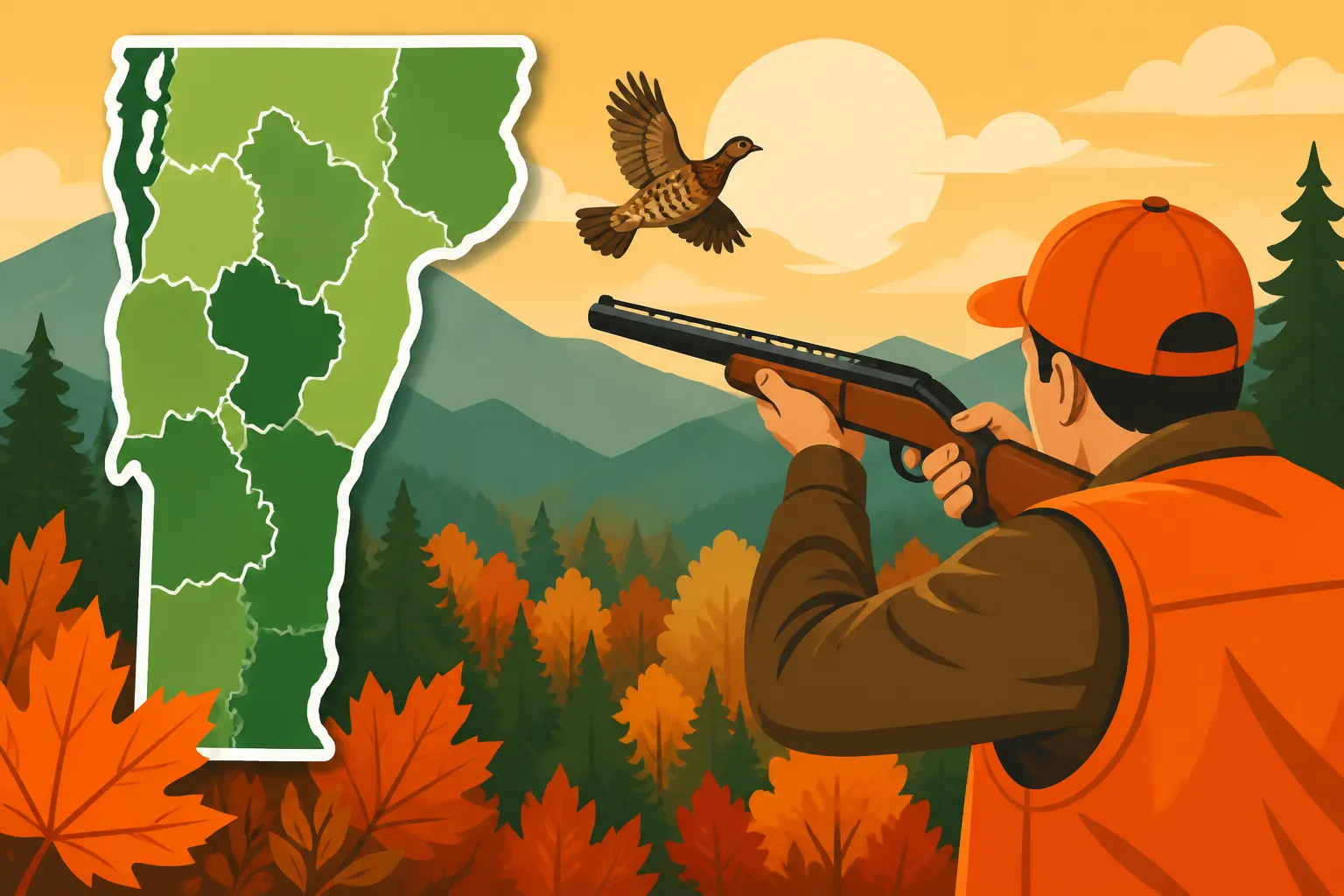
This is where things get a bit more localized. Unlike the broader archery season, the use of shotguns for fall turkeys in Vermont is restricted to specific Wildlife Management Units (WMUs). These are areas designated by the Vermont Fish & Wildlife Department, often based on turkey population densities, habitat, and other ecological factors. The primary reason for these specific designations is to manage localized turkey populations effectively. In WMUs where turkey numbers are robust, a shotgun season allows for a more efficient harvest, helping to maintain healthy population levels.
It’s not just about population, though; habitat also plays a huge role. Some WMUs, particularly in the Champlain Valley and parts of Southern Vermont, boast extensive agricultural lands and mature hardwoods, providing ideal habitat and consistent food sources that support larger turkey numbers. These are often the WMUs that see an extended or designated shotgun season. The key takeaway here is that you absolutely cannot assume a WMU is open to shotgun hunting just because it's fall. You must verify the regulations for your specific hunting area each year. Our article on Vermont Fall Turkey WMU Rules provides a deeper dive into these regulations.
Why Shotguns for Fall Turkeys?
For many hunters, the shotgun is the quintessential turkey hunting tool, even in the fall. There's a confidence that comes with its effective range and pattern density, especially when a flock of birds is scattered and you're trying to call them back. Shotguns offer a wider margin for error compared to archery, which can be particularly appealing when dealing with fast-moving, wary fall birds.
However, it's not without its challenges. The effective range of a turkey shotgun is still relatively limited, typically out to 40-50 yards, depending on your choke and ammunition. This means you still need to be an adept caller and stealthy hunter to get birds into range. Furthermore, carrying a shotgun through dense Vermont timber can be a bit more cumbersome than a bow, and you need to be acutely aware of your surroundings, especially if other seasons, like deer rifle, are open concurrently. Despite these considerations, the satisfaction of calling in a fall flock and making a clean, ethical shot with a scattergun is an experience many Vermont hunters cherish.
Identifying and Accessing Shotgun-Legal WMUs
Finding where you can legally hunt fall turkeys with a shotgun is the first, and arguably most important, step. This requires a bit of homework, but the resources are readily available to ensure you stay within the bounds of the law.
Navigating the Vermont Fish & Wildlife Regulations
The Vermont Fish & Wildlife Department's website is your go-to source for the most accurate and up-to-date hunting regulations. Each year, they publish a detailed digest that outlines season dates, bag limits, and, crucially for fall turkeys, the specific WMUs that are open to shotgun hunting. You'll typically find a map and a list, making it straightforward to identify the legal areas. Don't rely on information from previous years or hearsay; regulations can and do change. Take the time to download the current year's hunting guide and familiarize yourself with the nuances of Vermont's Statewide Versus Limited Fall Turkey WMUs.
To make it even easier, here's a general example of what you might find for WMU classifications for fall turkey hunting (always double-check the current year's official regulations):
| WMU Type | Legal Method (Fall Turkey) | Typical Season Length | Notes |
|---|---|---|---|
| Statewide Archery | Archery only | ~6 weeks | All WMUs during the specified dates |
| Shotgun-Legal WMUs | Shotgun, Archery | ~2 weeks | Specific WMUs with robust populations, check annual regulations |
| Archery-Only WMUs (Fall) | Archery only | ~6 weeks | Other WMUs not designated for shotgun |
| Youth & Novice Weekend | Shotgun, Archery | 1 weekend | Statewide, for mentored youth/novice hunters |
This table is for illustrative purposes only. Always consult the official Vermont Fish & Wildlife Department regulations for current dates and legal WMUs.
Key Regions and Public Access
Once you've identified the shotgun-legal WMUs, the next challenge is finding actual hunting ground. Vermont boasts a respectable amount of public land, including Wildlife Management Areas (WMAs) and State Forests, many of which fall within these designated WMUs. Regions like the Champlain Valley, with its mix of agriculture and timber, often have WMUs with good turkey populations. Areas in the southern and central parts of the state with extensive hardwood forests can also be prime.
When you're looking for public land access, a mapping tool like GoHunt can be incredibly valuable. It allows you to overlay public and private land boundaries, topography, and even aerial imagery, helping you pinpoint potential hotspots and understand access points. I can't tell you how many times I've used GoHunt to scout a new WMA, looking for old logging roads, clearings, or mast-producing ridges that turkeys are sure to frequent. This kind of advanced scouting is key for Scouting Vermont Public Land Before Season. Remember that even on public land, certain rules might apply regarding vehicle access or camping, so always check the specific regulations for that particular parcel.
Gaining Private Land Permission
While public lands offer great opportunities, some of the best fall turkey hunting, especially with a shotgun, can be found on private property. Farmers, in particular, often appreciate hunters helping to manage turkey populations, which can sometimes impact crops. Getting permission requires a polite approach, a willingness to respect their property, and often, offering to share some of the harvest. I've found that knocking on doors a few weeks before the season, dressed respectfully and clearly stating your intentions, often yields positive results.
Be prepared to explain why you're asking to hunt turkeys and reassure them of your safe hunting practices. Always ask for written permission if possible, or at the very least, ensure you have a clear understanding of the boundaries and any specific rules they might have. Building a good relationship with a landowner can open up incredible hunting opportunities for years to come. For more comprehensive advice, our guide on Getting Private Land Permission in Vermont offers excellent tips.
Strategies for Fall Shotgun Turkey Hunting
Fall turkey hunting is a completely different ballgame than spring gobbler pursuits. The birds are in larger family groups, often less vocal, and their motivations have shifted from breeding to feeding. Adapting your tactics is essential for success.
Locating Fall Flocks
In the fall, turkeys are largely driven by food. They’ll be where the groceries are. This means focusing your scouting efforts on areas rich in mast crops—acorns, beech nuts, and even wild apples. Areas with standing corn or recently harvested fields can also be magnets for flocks. During your scouting, pay attention to tracks, droppings, dusting bowls, and especially, flock vocalizations. Hens and poults are much more prone to yelping, clucking, and kee-keeing amongst themselves than big, silent spring gobblers.
Using tools like GoHunt can help you identify these food-rich areas on a map, looking for timber stands with oak or beech trees, or agricultural fields. I like to drive rural roads in early fall, listening for birds and stopping to glass fields at dawn and dusk. Once you locate a flock's general whereabouts, you can then focus on observing their patterns: where they roost, where they feed, and their travel corridors between these areas. Often, these travel routes will include natural funnels between two woodlots or along creek bottoms, which can be excellent ambush points.
Breaking Up a Flock and Calling Them Back
The most classic and effective fall turkey hunting strategy, especially with a shotgun, is to "break up" a flock and then call the scattered birds back together. This works because turkeys are highly social animals and instinctively want to regroup once dispersed.
Here's how it generally works: Once you've located a flock, often by hearing their general chatter or seeing them in an open area, you'll need to aggressively move in and flush them. This can feel counterintuitive to stealthy hunting, but the goal is to scatter them in every direction, ideally with a lot of noise and commotion. Once they've flown or run off, give it about 15-30 minutes for them to settle down and for the woods to quiet. Then, choose a good setup spot, preferably with your back against a wide tree for concealment and a clear view, and start making soft "assembly" calls – lost hen yelps, clucks, and especially the plaintive "kee-kee" run of a lost poult.
Often, the first birds to respond will be the younger birds, desperate to find their family. Be patient, continue calling softly, and be ready. If you hear multiple birds coming, resist the urge to call too aggressively, as this can spook them. Let their natural desire to regroup do most of the work. This strategy is so effective that we have a whole article dedicated to Working a Fall Flock Apart Statewide With a Bow, and many of those principles apply equally well to shotgun hunting.
Setting Up for a Shotgun Shot
Your setup is paramount when turkey hunting with a shotgun. Since your effective range is limited, you need to get birds in close. Concealment is key. A ground blind, especially one brushed in with natural vegetation, can be incredibly effective, allowing you to move and adjust without spooking wary birds. If you're not using a blind, ensure you're sitting with a good, wide tree trunk at your back to break up your silhouette and protect you from any unseen approaching birds.
Clear out any shooting lanes in front of you before the birds arrive. You want a clean, unobstructed shot at a bird that's ideally within 30-40 yards. Use reference points, like a distant rock or a specific bush, to gauge yardage. Remember, a turkey's head and neck are the target, not the body, so practice your swing and aim before the season. Having good concealment, understanding your shotgun's pattern, and anticipating where a bird might appear are all critical for success.
Essential Gear and Safety Considerations
Having the right equipment and prioritizing safety are non-negotiable for a successful and ethical hunt.
Shotguns and Ammunition
For fall turkeys, a 12-gauge shotgun is the most popular choice, offering a wide range of ammunition options and plenty of knockdown power. Many hunters prefer a 20-gauge for its lighter weight, and it's perfectly capable with modern turkey loads. A full or extra-full choke is generally recommended to keep your pattern tight, ensuring maximum pellet density on the turkey's head and neck.
When it comes to ammunition, look for specialized turkey loads. Brands like Federal, Winchester, and Remington offer loads specifically designed for turkeys, featuring heavier shot sizes (like 4, 5, or even 6) and denser patterns at longer ranges. Practice with your chosen load and choke combination before the season to understand its effective range and pattern. You don't want any surprises when a big tom or a plump hen steps out.
Decoys and Calls for Fall Turkeys
While aggressive gobbler decoys are typical for spring, fall decoys are a bit different. A single hen decoy, or even a few jake and hen decoys, can work well, mimicking a regrouping flock. Sometimes, no decoy at all is the best approach, especially if birds are wary. The goal is often just to get them to approach your calling, rather than providing a visual target from afar.
As for calls, mouth calls (diaphragm calls) are incredibly versatile, allowing for hands-free calling. Pot calls and box calls are also excellent for producing realistic yelps, clucks, and purrs. The key fall call is often the "kee-kee run" – a series of high-pitched whistles followed by yelps – which imitates a lost poult. This sound can be irresistible to scattered flock members. Learning to produce soft, realistic assembly calls will significantly increase your odds. For specific recommendations, our guide on Calls for Vermont Turkeys can offer more insight.
Blaze Orange and General Safety
Even though fall turkey season generally falls outside the peak deer rifle season, there can be overlaps with other hunting opportunities, or you might be in a WMU that allows both. It is absolutely critical to check the specific blaze orange requirements for the dates and WMUs you plan to hunt. Vermont has clear regulations on how much blaze orange or pink must be visible. Even if it's not legally required for your specific hunt, wearing blaze orange while walking to and from your stand, especially on public land, is always a wise safety precaution. This is covered in more detail in our article on Blaze Orange Requirements.
Beyond blaze orange, general hunting safety cannot be overstated. Always identify your target positively before shooting, be aware of what's beyond your target, and treat every firearm as if it were loaded. When breaking up a flock, be cautious not to run directly into another hunter. Communicate with your hunting partners, especially if you're attempting a drive or a flock break.
Beyond the Shot: Processing and Reporting
The hunt doesn't end when the bird hits the ground. Proper field care and adhering to reporting requirements are the final, crucial steps.
Field Dressing and Transport
Once you've made a successful shot, the first thing to do is ensure the bird is expired. Then, it’s time for field dressing. Many hunters prefer to simply remove the entrails in the field, making the bird lighter to carry out and helping it cool faster. If you plan to taxidermy the bird, be careful not to damage the fan or wings. In cooler weather, you have a bit more time, but in warmer early fall days, getting the bird cooled down quickly is important for meat quality.
Transporting your bird out of the woods should be done respectfully and safely. If you're walking through populated areas or near roads, cover the bird to avoid alarming non-hunters. Always have your license and tag readily available for inspection.
Reporting Your Harvest
Vermont, like many states, requires hunters to report their turkey harvest. This data is vital for the Vermont Fish & Wildlife Department to monitor turkey populations, assess harvest rates, and make informed management decisions for future seasons. The most convenient way to report your harvest is often through the department's online reporting system or their mobile app. You'll need specific information from your license and the bird itself, such as the WMU where it was harvested, the date, and its sex. There’s usually a specific deadline for reporting, so don't delay! While reporting deer, as covered in Reporting a Deer Through Vermont's App, is a bit different, the principle of timely and accurate reporting is the same. It's a fundamental responsibility of every ethical hunter.
Disclaimer
This guide is intended for informational purposes only and does not supersede official Vermont Fish & Wildlife Department regulations. All hunters are responsible for knowing and adhering to current hunting laws, season dates, bag limits, and licensing requirements. Always consult the most recent Vermont Hunting and Trapping Guide and any applicable addendums before heading afield.