Packing for a Northeast Kingdom Moose Hunt
Embarking on a moose hunt in Vermont's remote Northeast Kingdom is an experience unlike any other, but the sheer scale of the animal and the rugged, unforgiving terrain can quickly overwhelm an unprepared hunter. Many dream of drawing that coveted tag, but few truly grasp the logistical challenges of packing everything needed for success and, crucially, for getting a massive animal out. This comprehensive guide will meticulously break down the essential gear, clothing, and supplies you'll need to meticulously plan and execute a successful and safe moose hunt in this wild corner of Vermont, ensuring you're ready for anything Mother Nature or a big bull throws your way.
Understanding the Northeast Kingdom Challenge
Hunting moose in the Northeast Kingdom isn't like chasing whitetails in the Champlain Valley. It's a vast, wild landscape of thick softwoods, sprawling bogs, steep ridges, and often unpredictable weather. The sheer remoteness and the massive size of your potential quarry demand a level of preparedness that goes far beyond a typical deer hunt.
The Remoteness Factor and Its Implications
The Northeast Kingdom lives up to its name, feeling distinct and often isolated from the rest of Vermont. Cell service is spotty at best, and in many areas, completely nonexistent. This means your communication and navigation plans need to be bombproof. You can't rely on calling for help if something goes wrong, nor can you easily look up a map on your phone. Hunters often find themselves miles from the nearest paved road, sometimes even further from a main logging track. This isolation dictates a self-reliance mindset where every item in your pack serves a critical purpose.
Furthermore, the distance from civilization impacts everything from sourcing supplies to getting your game to a processor. You need to pack enough food, water, and fuel for your entire trip, including potential delays due to weather or a lengthy pack-out. Thinking about how you’ll get a several-hundred-pound animal from the middle of nowhere to your truck, and then to a check station, is just as important as the gear you use to harvest it. This is where planning your extraction strategy, potentially with a good game cart or even a pack frame, becomes paramount.
Weather Variability and Terrain Demands
Vermont weather, particularly in the fall, is notoriously fickle, and the Northeast Kingdom amplifies this unpredictability. A crisp, sunny morning can quickly give way to a driving rain or even an early snowfall. Temperatures can swing wildly from comfortable daytime highs to freezing nights, sometimes all in the same 24-hour period. This variability demands a meticulous layering system that allows you to adapt to changing conditions without adding excessive bulk. For more on handling these conditions, consider learning about Layering for a Wet Green Mountain Day.
The terrain itself is a beast. Expect to navigate thick, brushy clear-cuts, slog through swampy bogs, and climb steep, rocky ridges. These environments punish gear, from boots to outerwear. Your footwear needs to be waterproof, durable, and offer excellent ankle support for stability over uneven ground. You’ll be carrying heavy loads, especially if you're lucky enough to tag a bull, so your pack needs to distribute weight efficiently and comfortably. The unique demands of the bogs, for example, might even make you consider specialized footwear beyond just heavy-duty hiking boots, or at least quality gaiters to keep mud and water out.
Essential Gear Categories for Success
When preparing for a Northeast Kingdom moose hunt, it's helpful to break your gear down into several crucial categories. This ensures nothing critical is overlooked and helps manage the overall weight and bulk. From your personal comfort to the actual tools of the hunt, every item needs careful consideration.
Personal Comfort and Survival Gear
Staying warm, dry, and fed is fundamental to a successful and enjoyable hunt. Your clothing system should be built around layers, starting with moisture-wicking base layers, insulating mid-layers, and a waterproof, windproof outer shell. Given the remote nature of the hunt, packing an extra set of dry clothes, especially socks, is a non-negotiable. A reliable headlamp with extra batteries is crucial for early morning hikes and late evening processing. Don't forget a compact, well-stocked first-aid kit; even a minor cut or blister can become a major problem miles from help. For truly remote hunts, a personal locator beacon (PLB) or satellite communicator is a wise investment, allowing you to send emergency signals or check in with loved ones, especially in areas with no cell service. Many hunters rely on devices like the Garmin inReach Mini for reliable communication where phones simply won't work. For more on general backcountry preparedness, you might find valuable information in Best First Aid Kit for a Remote Hunt and Best Satellite Communicator for Northeast Kingdom Land.
Food and water are another critical aspect. High-calorie, non-perishable snacks and meals are essential. Think dehydrated meals, energy bars, and nuts that provide sustained energy. Carrying a reliable water filter or purification tablets, along with a sturdy water bottle or hydration bladder, is vital. You can never carry enough water for an extended period, so having the ability to replenish from streams and springs is a must. A small, lightweight camp stove and fuel can make a huge difference for hot meals and drinks, especially during cold, damp weather. A multi-tool, fire starter, and navigation tools (GPS, compass, and physical maps – don't rely solely on electronics) round out your core survival kit.
Hunting Specific Equipment
Of course, you need the right tools to harvest your moose. This includes your rifle or bow, appropriate ammunition or arrows, and optics. For rifles, a powerful caliber capable of taking down a large animal cleanly and ethically is paramount, such as a .30-06, .300 Win Mag, or .338 Win Mag. Ensure you have practiced extensively with your chosen setup. Optics are equally important; a good quality rangefinder and binoculars are essential for judging distance and assessing animals in dense cover. A spotting scope might be overkill unless you plan on extensive glassing across large clear-cuts, a strategy that can be effective for Glassing a Clear-Cut for a Bull Moose.
Beyond the firearm itself, don't overlook crucial accessories like a solid sling, a spare magazine, and a cleaning kit. For archery hunters, a reliable bow, plenty of broadhead-tipped arrows, and a sturdy quiver are key. Consider the heavy brush of the NEK when choosing broadheads – fixed blade designs often hold up better to impacts than some mechanicals. A good quality hunting backpack capable of carrying your gear for an entire day, and potentially more, is crucial. Look for packs with comfortable hip belts and shoulder straps, and enough capacity for layers, food, and emergency supplies. When considering a pack, think about options mentioned in resources like Best Pack for a Northeast Kingdom Moose Hunt.
Field Processing and Extraction Kit
This is where moose hunting truly diverges from other big game hunts. A moose is an enormous animal, often weighing upwards of 800-1000 pounds. You simply cannot drag it out whole, and you'll need specialized gear to break it down and transport it. This process is physically demanding and time-consuming, and being properly equipped makes all the difference.
Tools for Breaking Down a Moose
The moment you harvest a moose, the real work begins. You'll need an array of sharp, durable knives designed for butchering large game. A quality fixed-blade knife for initial skinning and quartering, a smaller knife for more precise work, and a sturdy bone saw are absolutely essential. Don't forget a knife sharpener to maintain keen edges throughout the process – a dull knife is a dangerous knife. Heavy-duty game bags are critical for keeping meat clean and protected from insects and debris while you transport it. These bags should be breathable to allow the meat to cool. Carrying a lightweight tarp or ground cloth can also be invaluable for keeping meat off the forest floor as you work.
Many hunters also bring a good set of disposable gloves to maintain hygiene during processing. A headlamp (with spare batteries) is critical if you're working into the evening, which is highly probable given the time it takes to break down such a large animal. Having a basic meat processing kit as suggested in articles like Best Meat Processing Kit for Camp will ensure you have everything from boning knives to sharpening steels, and even paracord to hang quarters if needed.
Logistics of Transporting Massive Quarters
Once the moose is broken down, the challenge shifts to getting the meat out of the woods. This is often the most physically grueling part of the entire hunt. A high-quality external frame backpack is almost a necessity for packing out heavy quarters over rugged terrain. These packs are designed to distribute weight efficiently and can handle extreme loads. Even with a good pack, this is often a multi-person job, so planning with your hunting partners is key. For more on what to look for in a frame pack, check out Best Backpack Frame for a Quartered Moose.
For areas with more accessible logging roads or flatter ground, a robust game cart can be an absolute lifesaver. However, the Northeast Kingdom’s dense woods and steep grades often render carts useless. Consider bringing bright flagging tape to mark your route from the kill site back to a navigable trail or road; it’s easy to get disoriented when making multiple trips, especially if working after dark. When you're dealing with the size of a moose, every small efficiency you can gain in the field adds up to a huge difference in the overall effort required. Remember, getting your animal out cleanly and legally is the final, crucial step of the hunt, and good gear makes it possible.
Preparedness Beyond the Basic Kit
A successful moose hunt in the Northeast Kingdom isn't just about the gear you bring, but the planning and foresight you apply to every potential scenario. This means thinking about communication, navigation, and understanding the specific local conditions, especially when venturing into such remote and wild landscapes. Tools like mapping applications and comprehensive scouting become just as vital as your rifle or broadheads.
Navigation and Communication Strategies
Given the notorious lack of cell service in much of the Northeast Kingdom, relying on your phone alone for navigation is a recipe for disaster. A dedicated GPS unit loaded with detailed topo maps is a smart investment. Better yet, pair it with physical paper maps and a compass – and know how to use them. The digital mapping platform GoHunt offers excellent layering options for land ownership, topo maps, and satellite imagery, which can be pre-downloaded for offline use. This allows you to meticulously scout potential areas like a specific "moosey" clear-cut or a remote beaver flowage from the comfort of your home, and then carry that information with you digitally. Even with the best digital tools, always carry a backup.
Beyond navigation, a reliable means of communication is paramount. As mentioned before, a satellite messenger device like a Garmin inReach or a Zoleo is essential for emergency contact and for letting loved ones know you’re safe, even if it's just a simple "I'm okay" message. These devices can literally be lifesavers if you or a hunting partner suffer an injury or become disoriented. Planning your entire trip, including access points and potential extraction routes, with these remote communication limitations in mind will significantly reduce your risk and anxiety in the field. Remember, when you're Hunting the Northeast Kingdom, you're often truly off-grid.
Understanding Moose Behavior and Habitat
While not strictly "packing gear," understanding moose behavior and their preferred habitats is a crucial part of your preparation. This knowledge informs where you'll focus your efforts and, consequently, what specific gear might be most useful. Moose favor dense conifer swamps, beaver flowages, and recently cut areas where browse is abundant. They often utilize thick cover for bedding and thermal regulation, especially during colder weather. Knowledge of their movement patterns and preferred food sources will guide your scouting and hunting strategy. For instance, knowing that they might be more active in a specific type of habitat, or understanding the impact of environmental factors like recent timber cuts, allows you to pack the right calling implements or set up your blind in a strategic location.
Taking the time to research Moose Hunting Vermont's Northeast Kingdom and specific details like How Many Moose Live in Vermont will give you a better grasp of population dynamics and where to focus your efforts. Understanding the current status of the herd, which is influenced by factors like winter tick prevalence, can also help manage expectations. While the number of Vermont's Eighty-Five 2026 Moose Permits is limited, each drawn hunter has the responsibility to be as prepared as possible. Scouting well in advance, whether digitally with tools like GoHunt or on the ground, will drastically increase your chances of success and ensure that your meticulously packed gear is used effectively in the right place.
Essential Moose Hunt Packing List
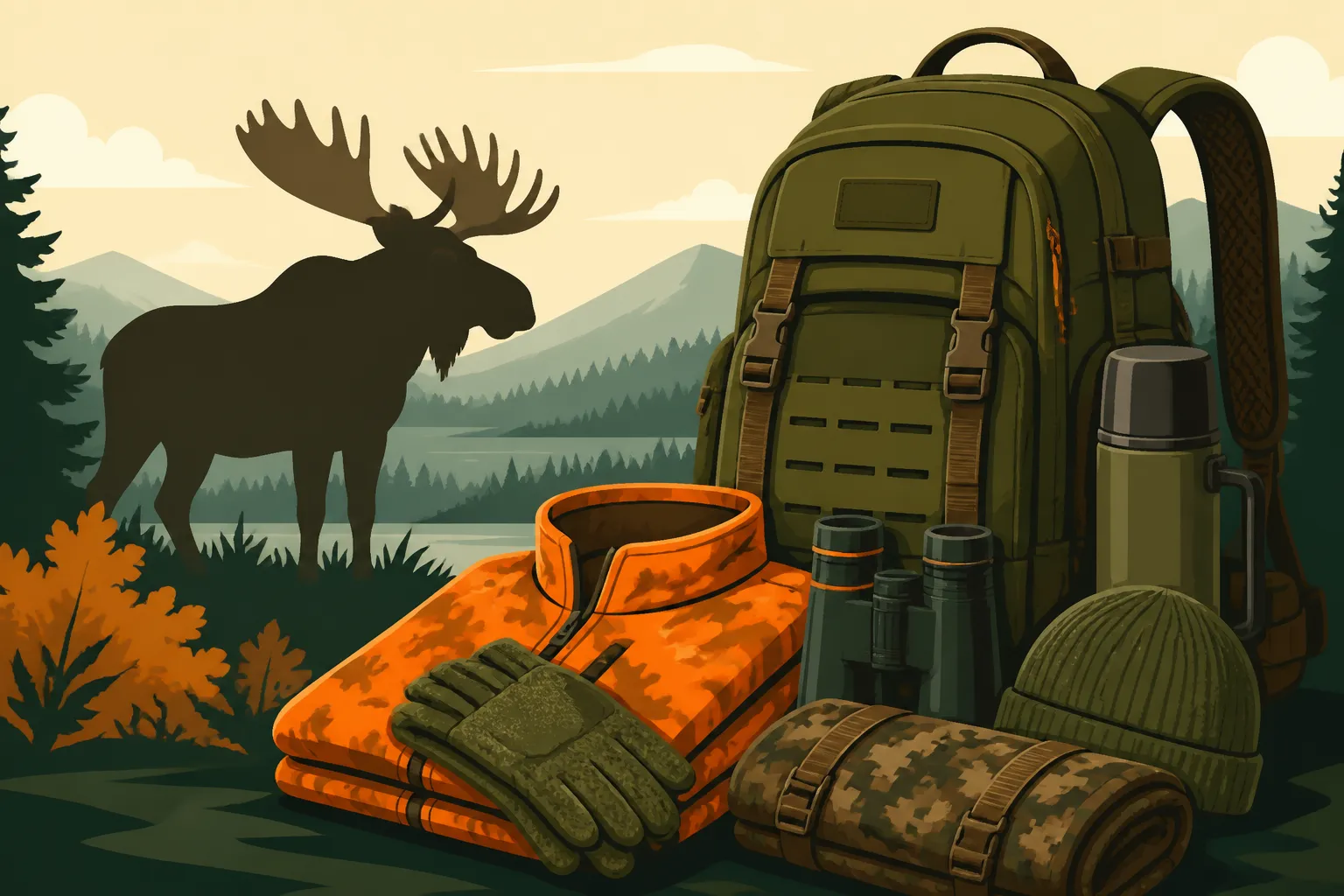
Here’s a simplified table summarizing the essential gear categories to consider for your Northeast Kingdom moose hunt. This is a starting point, and you should always tailor your list to your specific trip duration, hunting style, and personal needs.
| Category | Essential Items | Notes |
|---|---|---|
| Personal & Camp | Layered clothing (base, mid, outer shell), extra socks, waterproof boots, headlamp/extra batteries, first-aid kit, sleeping bag, tent/shelter, camp stove & fuel, water filter/purification tablets, high-calorie food, fire starter, multi-tool | Prioritize warmth, dryness, and emergency preparedness. Consider a portable shelter for longer hunts. |
| Hunting Specific | Rifle/Bow, ammunition/arrows, binoculars, rangefinder, GPS unit, paper maps, compass, hunting license & permits, blaze orange gear, hunting pack, calls/decoys | Ensure all firearms are sighted in and bows are tuned. Double-check all legal requirements. |
| Field Processing | Fixed-blade knives, bone saw, knife sharpener, heavy-duty game bags, paracord, tarp/ground cloth, disposable gloves | Critical for breaking down and protecting meat. Essential for Field Dressing a Moose in the Northeast Kingdom. |
| Extraction & Safety | External frame pack, game cart (optional, terrain dependent), flagging tape, satellite communicator/PLB, whistle, bear spray (optional, but wise), extra water/snacks | Getting the meat out is the hardest part. Prioritize communication for remote areas. |
Disclaimer
The information provided in this guide is for general informational purposes only and does not constitute professional advice. Hunting regulations, gear recommendations, and safety protocols can change. Always consult the Vermont Fish & Wildlife Department for the most current regulations and obtain proper licenses and permits before hunting. Your safety is your responsibility.