Layout Blind Hunting a Champlain Valley Cornfield
If you've ever stood on the edge of a vast Vermont cornfield, watching ducks or geese funnel in at first light, you know the frustration of having nowhere to hide. These intelligent birds quickly pick out anything that looks out of place, making traditional blinds impractical in such open terrain. That's where the magic of layout blind hunting in a Champlain Valley cornfield truly shines, offering an unparalleled advantage for waterfowl hunters seeking to get closer to the action and fill their strap. This guide will walk you through everything you need to know to transform those challenging field hunts into successful, memorable experiences.
The Undeniable Appeal of Champlain Valley Cornfields for Waterfowl
The Champlain Valley, with its expansive agricultural lands, presents an irresistible draw for migrating and resident waterfowl. These fields, particularly those planted with corn, become crucial feeding grounds, especially as seasons progress and natural food sources diminish. Understanding this natural magnet is the first step to a successful layout blind hunt.
Why Cornfields are a Waterfowl Magnet
Imagine a hungry flock of Canada geese or a bustling group of mallards after a long migratory flight or a cold night. Their immediate instinct is to find a high-energy food source, and nothing quite fits the bill like a standing or recently cut cornfield. These fields offer a rich bounty of waste grain, providing the carbohydrates and fats these birds need to sustain themselves through the arduous fall and winter months. The Champlain Valley, stretching from the northern reaches of Lake Champlain down towards Addison County and beyond, is dotted with these agricultural havens. Farmers rotate crops, harvest at different times, and leave varying amounts of waste grain, creating a dynamic smorgasbord that waterfowl are acutely aware of.
Beyond just the food, cornfields offer essential cover. While a standing cornfield provides excellent concealment from aerial predators, even cut fields offer pockets of stubble and stalks that birds feel secure in. This sense of security, combined with readily available sustenance, establishes these agricultural tracts as prime waterfowl real estate. When you’re planning your hunt, pay attention to the harvest schedules of local farms. Fields that have been recently chopped for silage or picked for grain are often the most attractive, creating a buffet line for hungry birds. Mallards, in particular, are notorious for hitting these fields, especially during colder snaps when their metabolic needs are higher. Geese, of course, are almost synonymous with cornfield feeding.
The Strategic Advantage of Layout Blinds
Hunting in wide-open agricultural fields presents a unique set of challenges. Waterfowl, particularly geese and ducks that have been pressured, possess incredible eyesight and an uncanny ability to spot anything that doesn't belong. A traditional pop-up blind or even a carefully constructed natural blind often creates a silhouette that birds can pick out from hundreds of yards away, causing them to flare just outside of shooting range. This is where layout blinds become an absolute game-changer.
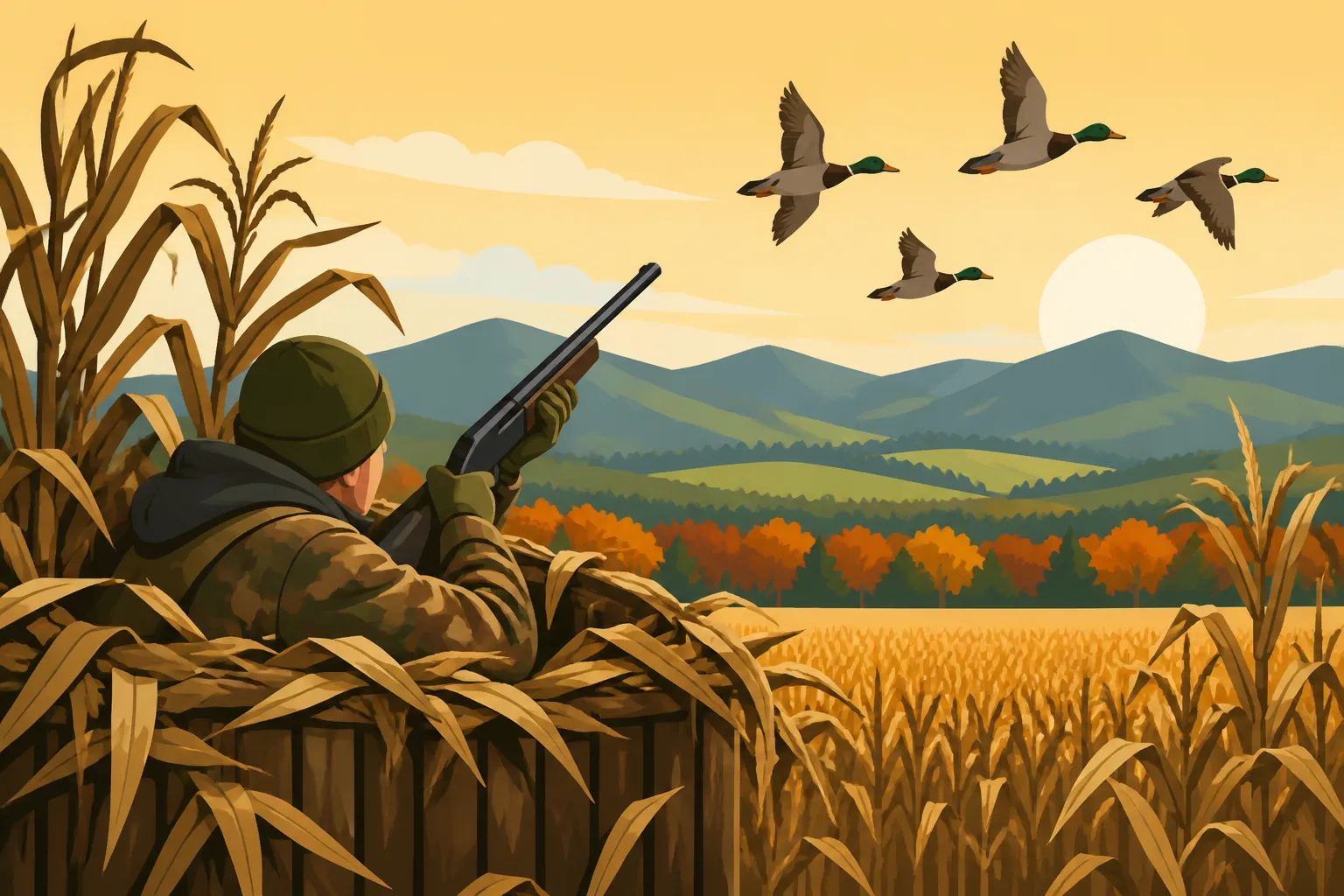
Layout blinds are designed to make you disappear. Their low-profile, coffin-like structure allows you to lie down almost entirely flat, blending seamlessly with the contours of the field. When properly brushed in, a layout blind becomes practically invisible from above, mimicking a small rise or a pile of debris rather than a human hunter. This low silhouette is critical in the flat, open expanses of the Champlain Valley. It allows you to position yourself directly in the heart of where the birds want to be – often right in the "X" of their preferred feeding zone – without raising suspicion. The versatility of these blinds also means you can set up quickly, adapt to changing wind conditions, and remain comfortable while staying completely concealed, which is a massive advantage when those wary geese are circling at a high altitude, scrutinizing every detail below. A proper setup with a well-camouflaged layout blind turns the tables, allowing you to intercept birds that would otherwise be unapproachable.
Scouting Success: Locating the X in Champlain Valley Corn
Successful layout blind hunting is not just about having the right gear; it’s fundamentally about knowing where to set up. Waterfowl hunting, especially for pressured birds in open fields, is 90% scouting and 10% shooting. Without understanding bird patterns, you’re essentially just guessing, and educated guesses are what fill limits.
Reading the Land and the Birds
The key to consistently finding birds in Champlain Valley cornfields is meticulous pre-season and in-season scouting. You need to identify where the birds are actively feeding, not just where they might feed. This involves countless hours of driving back roads, glassing fields with good binoculars or a spotting scope, and observing flight patterns from a distance. Look for freshly harvested fields, or those with standing corn that shows signs of recent activity – trampled stalks, droppings, and feathers are dead giveaways. The "X" is the precise spot where birds are actively landing and feeding. It can shift daily based on weather, pressure, and food availability, so recent intel is crucial.
Start your scouting efforts well before the season opens. Identify fields that hold corn, note the surrounding landscape, and understand the general flight corridors birds use. As the season progresses, and especially during the critical fall migration, dedicate mornings and evenings to observing specific fields. Pay attention to how the birds approach, where they land, and how they exit. Are they coming from Lake Champlain? Are they following a creek bed or a ridge line? Tools like modern mapping applications can be incredibly helpful here. While perhaps more associated with big game hunting, resources like GoHunt offer detailed satellite imagery and property line information that can be invaluable for understanding terrain and access, even for waterfowl. Observing how birds react to pressure in different fields will tell you a lot about their wariness and what you need to do to get them to commit.
Permission and Respecting Private Property
A significant portion of the prime cornfield hunting opportunities in the Champlain Valley lies on private land. Gaining permission from landowners is not just a courtesy; it's a legal requirement and an absolute necessity for ethical hunting. Vermont has clear rules regarding posted land and trespass, and approaching landowners with respect and genuine interest in helping them manage game can open many doors. Don't just show up on opening morning; build relationships during the off-season.
When you approach a landowner, be polite, well-groomed, and offer to help them out. Many farmers are dealing with crop depredation from geese and might be open to hunters who can help mitigate the problem. Offer to share some of your harvest, assist with small tasks around the farm, or simply promise to be respectful of their property and livestock. Always carry a written permission slip with you, even if the landowner says it's not strictly necessary. This not only protects you but also demonstrates your professionalism. Remember, leaving no trace is paramount. Pick up all your shell casings, leave gates as you found them (open or closed), and never drive through fields without explicit permission, especially when they are wet. Maintaining a good relationship with one landowner can lead to opportunities with others, as word travels fast in rural communities. For more on navigating landowner relations, see our guide on Knocking on Doors in Champlain Valley Farm Country.
Setting the Stage: Decoy Spreads and Blind Placement
Once you've scouted your spot and secured permission, the real artistry of layout blind hunting begins: setting up your decoy spread and concealing your blinds. This is where you transform a barren field into an irresistible landing strip for unsuspecting waterfowl.
Crafting the Perfect Decoy Spread for Cornfields
The decoy spread is your primary tool for attracting birds. In cornfields, you'll typically be targeting Canada geese, mallards, and often black ducks. Your spread needs to look natural and inviting, mimicking a flock of birds comfortably feeding and resting. For geese, a combination of full-body decoys, shells, and even silhouettes can be effective. Full-bodies offer realism and dimension, while shells are easier to transport and deploy in larger numbers. Silhouettes can create the illusion of even more birds when viewed from a distance.
The general rule is: the more decoys, the better, especially for geese. Aim for a spread that creates a visible "hole" or "landing zone" where you want the birds to commit. A classic spread is the "U" or "J" shape, with the open end facing into the prevailing wind (as birds typically land into the wind) and your blinds positioned at the base of the "U" or at the bend of the "J," slightly downwind of the landing zone. This places the incoming birds directly over your blinds as they commit. For ducks, a smaller cluster of mallard and black duck decoys within or just outside the goose spread can be highly effective. Don't forget motion decoys like spinning-wing ducks or flappers; these can add crucial realism and attract attention from passing birds, especially on calm days. For a deeper dive into specific setups, check out Best Goose Decoy Spread for a Champlain Valley Field or even apply principles from Decoying Mallards on Lake Champlain to your field setup.
| Decoy Type | Pros | Cons | Best Use in Cornfield |
|---|---|---|---|
| Full-Body | Most realistic, excellent visibility | Bulky, expensive, heavy to transport | Small, realistic spreads; visible focal points |
| Shells | Lighter, stackable, more affordable | Less realistic from certain angles | Creating numbers, filling out spreads |
| Silhouettes | Very lightweight, compact, inexpensive | Flat, only visible from specific angles | Adding numbers to large spreads, distant birds |
| Motion | Adds realism, attracts attention | Batteries can die, less durable | Enhancing realism, attracting wary birds |
Camouflage and Concealment: Becoming Part of the Field
Your layout blind is only as good as its concealment. Merely lying in a blind in the middle of a cut cornfield will still make you stick out like a sore thumb to sharp-eyed waterfowl. The goal is to make your blind disappear completely, becoming an indistinguishable part of the field itself. This is often called "brushing in" your blind.
Before you even get into the field, ensure your blind's outer fabric matches the general color tone of the fields you're hunting. Most layout blinds come in various stubble or corn patterns that work well. Once on site, gather natural vegetation from the immediate area. This means corn stalks, dry grass, and stubble from the very field you’re hunting. Tuck these materials into the stubble straps and pockets on your blind. Overdo it rather than underdo it – you can always remove some. Break up the straight lines of the blind's frame with irregular clumps of vegetation. Pay particular attention to the edges and corners, as these are often the most difficult to blend. If the ground is uneven, use the natural depressions or slight rises to your advantage, nestling the blind into them. You want your blinds to look like naturally occurring clumps of debris or slight variations in the field, not rigid boxes. When done correctly, even when a flock of geese is directly overhead, they won't pick you out, allowing them to commit confidently to your spread. This meticulous attention to blending is crucial for success, especially when using a Best Layout Blind for a Champlain Valley Field that might otherwise stand out.
Execution: Calling, Shot Placement, and Retrieval
With your spread set and your blinds blended, it’s time for the moment of truth. Effective calling, ethical shot placement, and diligent retrieval are the final pieces of the puzzle that ensure a successful and responsible hunt.
The Art of the Call in the Cornfield
Calling waterfowl is an art form, especially for wary cornfield birds. Your calls need to sound natural, confident, and inviting, convincing birds that your spread is a safe and desirable place to land. For geese, a mix of deep honks, clucks, and moans can mimic a contented feeding flock. When birds are distant, use loud greeting calls to get their attention. As they turn and approach, tone down your calling, switching to softer clucks and murmurs to suggest contentment. Don't overcall; let the decoys do most of the work when birds are locked on and coming in. When they're circling, you might use a pleading hail call to try and pull them closer.
For ducks, particularly mallards, a series of short, sharp "come-back" calls can grab attention, followed by a contented "feeding chuckle" when they're working the spread. A common mistake is to call too loudly when birds are close. Remember, the goal is to reassure, not to alarm. Learning to read the birds' reactions to your calls is paramount. If they shy away, ease up on the call. If they respond positively, keep doing what you're doing. There are many fantastic instructional videos and calls available. Practicing before the season, perhaps with resources from a site like GoHunt, can dramatically improve your success rate. This dynamic interplay between calling and reading bird behavior is what separates a good waterfowl hunter from a great one.
Ethical Shots and Efficient Retrieval
When birds commit and drop into your landing zone, the moment can be exhilarating. However, maintaining composure for an ethical shot is crucial. The cardinal rule of waterfowl hunting is to never shoot at birds outside of effective range. For most shotgunners, this means a maximum of 40-50 yards, depending on your choke, shot size, and skill. Shooting beyond this range leads to crippled birds that often fly off to die elsewhere, which is both unethical and wasteful. Wait until you can clearly identify the species and ensure they are within your effective killing range.
When it's time to shoot, sit up smoothly and focus on the lead bird or a specific bird within the flock. Pick one bird, aim, and execute your shot. Avoid "flocking" as this often results in missed shots or injured birds. After the shot, be vigilant. Mark where the bird falls, or where it last flew if it's crippled. Having a well-trained retriever dog is an invaluable asset in a cornfield, as birds can easily disappear into dense stubble or nearby ditch lines. If you don't have a dog, carefully mark the spot and walk directly to it. Even if you think it's a clean kill, scan the area for signs of life. Retrieval needs to be swift and thorough to prevent unnecessary suffering and ensure you recover every bird. Always be aware of the daily Vermont Duck and Goose Bag Limits for your specific waterfowl zone. This careful attention to ethical hunting practices not only honors the game but also upholds the integrity of the hunting tradition. It's important to know your Vermont Waterfowl Zone Boundaries to ensure you're hunting within the correct regulations.
Gear Essentials for Cornfield Layout Blind Hunting
Beyond the blinds and decoys, having the right supporting gear can make or break your cornfield hunting experience. From clothing to accessories, thoughtful preparation ensures comfort, safety, and success.
Layering for Vermont's Variable Weather
Vermont's fall and winter weather in the Champlain Valley can be notoriously unpredictable. A morning might start with a crisp frost, transition to a warm, sunny midday, and end with a biting wind or even snow. Lying motionless in a layout blind for hours demands a strategic approach to layering your clothing. Start with a good moisture-wicking base layer to manage sweat, even if it's cold. Follow with insulating mid-layers like fleece or down that can be easily added or removed. Finally, a waterproof and windproof outer shell is absolutely critical to protect against rain, snow, and those piercing field winds.
Remember, you'll be exerting yourself carrying decoys and blinds, so you want to avoid overheating on the walk-in, but then stay warm once you're prone in the blind. Pay special attention to your extremities: insulated, waterproof boots are non-negotiable, as cornfields can be damp and muddy, and cold feet will quickly ruin a hunt. Good gloves or mittens that allow for dexterity when shooting, and a warm hat, are also essential. For more detailed advice on dressing for the conditions, look at our general guide on Layering for Vermont's Long Hunting Season.
Footwear, Calls, and Accessories
When it comes to footwear, specialized hunting boots designed for cold, wet conditions are paramount. Look for insulated, waterproof boots with good ankle support. Even if the field looks dry, standing cornstalks can hold moisture, and low-lying areas or drainage ditches can be surprisingly wet. Brands like Muck Boot, Lacrosse, or even sturdy hiking boots from Darn Tough (a Vermont-based company!) can be excellent choices. You might also consider hip waders or chest waders if you anticipate crossing deeper water or retrieving birds from an adjacent marsh or stream. While the focus is on cornfields, the principles for dealing with water from Best Waders for Lake Champlain Duck Hunting still apply.
Beyond clothing and footwear, a few key accessories will enhance your cornfield hunt:
- Calls: A good goose call and a duck call (or two of each) are essential. Practice before the season to ensure you sound convincing.
- Ammunition: Bring enough steel shot shells (lead is prohibited for waterfowl) in appropriate sizes (e.g., BB or 2 for geese, 2 or 3 for ducks).
- Decoy Bag: A large, durable bag for transporting decoys is a must.
- Blind Bag: A smaller bag to keep your calls, ammo, snacks, water, and other essentials organized and easily accessible in your layout blind.
- Headlamp: Crucial for walking in and out in the dark, especially when navigating uneven terrain with gear.
- Thermos: A hot cup of coffee or soup can be a game-changer on a cold morning.
- First-Aid Kit: Always a good idea to have one, especially in remote areas.
- GPS/Mapping App: To mark your location, find property lines, and navigate in low light. Modern apps are invaluable.
Navigating Regulations and Ethical Considerations
Hunting waterfowl in Vermont requires adherence to specific state and federal regulations, and responsible hunters always prioritize ethical conduct. Understanding these rules is not just about avoiding fines; it's about preserving the resource and the privilege of hunting for future generations.
Understanding Vermont's Waterfowl Zones and Seasons
Vermont is divided into specific waterfowl hunting zones, each with its own season dates and bag limits. The Champlain Valley falls primarily within the Lake Champlain Zone, which often has different opening and closing dates and potentially split seasons compared to the Interior Zone or the Connecticut River Zone. It is absolutely critical to consult the most current Vermont Fish & Wildlife hunting guide each year to confirm season dates, shooting hours, and daily bag limits for ducks and geese. These regulations can change annually based on population surveys and management goals.
Additionally, remember that federal regulations also apply to migratory birds. This means you need a Vermont hunting license, a Vermont migratory bird license, and a Federal Duck Stamp. For residents, this also means knowing the rules around Vermont's Resident-Only Two-Bird Turkey Limit, though that's a different species, it highlights the state's specific regulations. Be aware of legal shooting hours, which typically run from one-half hour before sunrise until sunset. Using a reliable app that automatically adjusts for sunrise/sunset based on your location is a fantastic way to ensure compliance. Knowing your zone, like outlined in Vermont Waterfowl Zones and Seasons, is crucial.
Responsible Hunting and Conservation
Beyond the written laws, ethical hunting is about making responsible choices in the field. This includes ensuring clean kills, diligent retrieval of all downed birds, and refraining from sky-busting or taking shots beyond your effective range. It also means showing respect for the land and landowners. Pick up all your spent shell casings, dispose of any trash properly, and leave the field cleaner than you found it.
Participating in waterfowl hunting is also an act of conservation. The funds generated from hunting licenses, permits, and especially the Federal Duck Stamp directly support wetland conservation and habitat restoration efforts across the country. By purchasing these, you're contributing to the very habitats that support the birds you pursue. Remember that the future of hunting depends on a positive public image, and every hunter is an ambassador. By practicing responsible and ethical hunting, we ensure that the tradition of layout blind hunting for waterfowl in the beautiful Champlain Valley continues for years to come.
Conclusion
Hunting the cornfields of the Champlain Valley from a layout blind offers some of the most exciting and challenging waterfowl action Vermont has to offer. It demands diligent scouting, meticulous setup, and skilled execution, but the rewards are truly unforgettable. By understanding the birds, respecting the land, and employing the right techniques, you can transform those seemingly impossible open-field hunts into consistent successes. So, bundle up, brush in your blind, and get ready to experience the thrill of having greenheads and honkers dropping right into your decoys.
Disclaimer
Please remember that hunting regulations and conditions can change. Always consult the most current Vermont Fish and Wildlife Department regulations before planning any hunting trip. This guide is for informational purposes only and does not supersede official regulations.