Night Hunting Rules for Vermont Coyotes
The allure of a Vermont night, quiet and crisp, can be incredibly tempting for a hunter looking to pursue coyotes. However, stepping out after dark to hunt in the Green Mountain State comes with its own unique set of regulations and considerations that, if misunderstood, can turn an exciting endeavor into a frustrating, or even illegal, situation. This guide aims to demystify Vermont's specific night hunting rules for coyotes, helping you navigate the legal landscape so you can confidently and responsibly hit the woods under the stars.
Understanding Vermont's Legal Framework for Night Hunting
Vermont has a well-defined set of hunting regulations, and when it comes to night hunting, these rules become even more specific. Many hunters, especially those new to predator hunting or accustomed to day-only seasons for deer and bear, often find themselves scratching their heads, wondering what's truly allowed once the sun dips below the horizon. It's not just about what you can do, but also how you can do it, and the specifics vary greatly depending on the species.
General Night Hunting Prohibitions and Exceptions
For most game animals in Vermont, hunting is strictly a daylight activity. This means pursuing species like deer, bear, and even most small game from half an hour after sunset to half an hour before sunrise is completely off-limits. This blanket prohibition is in place for a multitude of reasons, primarily safety, fair chase, and to help manage populations effectively. Trying to identify a legal buck or a sow without cubs in the dark is incredibly difficult and poses significant risks. This general rule sometimes leads hunters to believe all night hunting is forbidden, which simply isn't the case for certain predators.
However, coyotes stand out as a notable exception to this rule. The Vermont Fish & Wildlife Department recognizes the role coyotes play in the ecosystem, and also the challenges they can pose to livestock and local deer populations, leading to more flexible hunting opportunities. This exception acknowledges the difficulty of targeting these elusive canids during daylight hours, especially as they often become more active at night. It's a key distinction that opens up a whole new world of hunting strategies for those willing to embrace the nocturnal challenge. Remember, while night hunting for coyotes is allowed, it doesn't mean a free-for-all; stringent rules still apply to ensure safety and ethical hunting practices.
Specific Rules for Coyotes
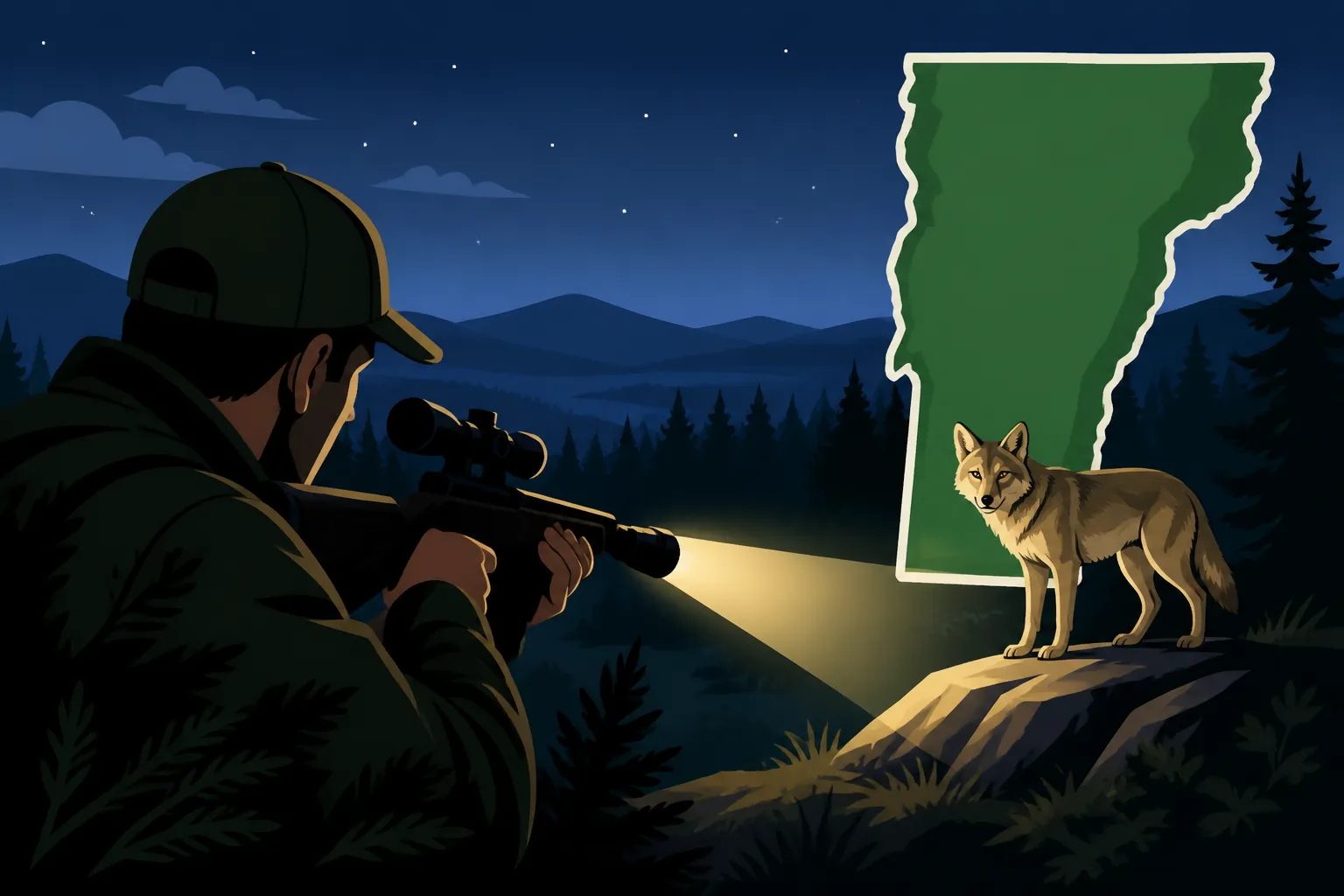
When it comes to coyotes, the rules pivot considerably. You are permitted to hunt coyotes at night in Vermont, but this comes with very precise stipulations, primarily revolving around the use of artificial lights. Many states have outright bans on any artificial light source for hunting, but Vermont offers a path for coyote hunters. Specifically, artificial lights may be used to take coyotes (and foxes, if you're interested in broadening your predator pursuits) during the designated night hours. This is a game-changer for night hunting, as it allows for positive identification and accurate shot placement, which are paramount safety concerns in the dark.
One of the most critical aspects of this rule, and one that often trips up even seasoned hunters, is the requirement for blaze orange. If you're hunting coyotes at night during any period when big game seasons (like the popular Vermont's November Rifle Season or Muzzleloader Deer Hunting in Vermont) are open, you are required to wear blaze orange. This isn't just a suggestion; it's a legal mandate to ensure maximum visibility to other hunters who might also be in the woods. Your artificial light may help you see, but blaze orange helps others see you. The light itself must be handheld or attached to your head or shoulder – no vehicle-mounted spotlights for hunting from a road, which is a common misconception and a serious violation. Always confirm the exact dates of overlapping big game seasons, as this blaze orange requirement shifts throughout the year.
Required Licenses and Permits
Before you even think about stepping foot into the Vermont woods after dark, you need to ensure you have all your ducks—or rather, your coyotes—in a row regarding licensing. Just like any other hunting activity in the state, pursuing coyotes requires a valid hunting license. For residents, this typically means a Resident Hunting License, while non-residents will need to secure a Non-Resident Hunting License. If you're a long-term visitor or a new resident, it's worth exploring the different options like Vermont Resident License Options or Vermont Nonresident License Options to find what best fits your situation.
Beyond the general hunting license, there aren't typically additional permits specifically for coyote hunting at night, unlike some other predator management programs or specific limited-entry hunts for other species. However, it's always prudent to check the current Vermont Fish & Wildlife regulations each year, as rules can occasionally be updated. The key is that your standard hunting license covers you for coyote hunting, day or night. Don't forget, if you're a bowhunter considering Bowhunting During Vermont's Rifle Season, even when targeting coyotes, your archery license must be valid, and you'll still be subject to the blaze orange requirements if a rifle season is active. Always carry physical or digital proof of your license while in the field, as wardens can and do check.
Permitted Methods and Equipment for Night Coyote Hunting
Hunting coyotes at night demands a specialized approach and specific gear. The success of a night hunt often hinges on your ability to see, call, and remain concealed, all while adhering strictly to Vermont's equipment regulations. It's not just about having the right tools, but knowing how to legally and effectively use them in the dark.
Approved Light Sources
As mentioned, artificial lights are permitted for night coyote hunting in Vermont, which is a huge advantage. However, the type and manner of using these lights are crucial. The law typically specifies that the light must be carried by hand or attached to the hunter's head or shoulder. This means you can't mount a powerful spotlight to your truck or ATV and cruise logging roads looking for eyeshine; that's considered jacklighting and is highly illegal. The intent behind this regulation is to keep hunting fair chase and prevent indiscriminate shooting.
The best lights for night coyote hunting are often headlamps or powerful handheld spotlights with red or green filtered lenses. Many experienced hunters prefer red or green light because it's less likely to spook wary coyotes, whose eyes react differently to these wavelengths compared to white light. These colored filters also help preserve your natural night vision. When using a light, scan slowly and methodically, looking for the tell-tale eyeshine of a coyote. A quality light, like those from Fenix or Streamlight, can make all the difference, providing the clarity and reach you need without excessive weight. Think about battery life too; a long night in the cold Green Mountains can quickly drain inferior batteries.
Legal Firearms and Ammunition
Just like during the day, your choice of firearm for night coyote hunting in Vermont needs to be legal and appropriate for the species. Generally, any legal firearm for small game or predator hunting can be used. This usually includes centerfire rifles, rimfire rifles, shotguns, and even archery equipment. While a .22LR might be fine for close-range shots on smaller coyotes, many hunters prefer something with a bit more punch and range, like a .223 Remington, .204 Ruger, or .243 Winchester, especially when a coyote might hang up at a distance. If you're using a shotgun, buckshot or heavy loads of tungsten-alloy shot are often preferred for their knockdown power at closer ranges.
Ammunition choice is also critical for ethical and effective harvesting. Hollow point or soft point bullets designed for rapid expansion are generally recommended to ensure a clean kill and minimize the risk of richochet. When selecting your rifle, consider how it handles in low light. A rifle equipped with a good quality scope that performs well in dimly lit conditions can be a significant advantage. Remember that Vermont also has rules regarding magazine capacity during hunting, so always verify you are compliant. For broader context on choices for larger game, you might want to review Rifles and Calibers for Vermont Big Game, though coyote-specific considerations are slightly different.
| Equipment Type | Legal for Night Coyote Hunting in Vermont? | Specific Regulations/Notes |
|---|---|---|
| Artificial Lights | Yes | Must be handheld, or head/shoulder mounted. No vehicle-mounted. Blaze orange required if big game season is open. |
| Centerfire Rifles | Yes | Any legal caliber for predators. Verify magazine capacity rules. |
| Rimfire Rifles | Yes | Legal for predators. |
| Shotguns | Yes | Legal for predators. |
| Archery Equipment | Yes | Legal for predators. Broadheads must be hunting-legal. |
| Electronic Calls | Yes | Permitted for coyotes (and foxes). |
| Decoys (Visual) | Yes | Permitted for coyotes. |
| Thermal Imaging | No (Generally) | Vermont regulations typically restrict devices that enhance natural vision for hunting, check current law. |
| Night Vision | No (Generally) | Vermont regulations typically restrict devices that enhance natural vision for hunting, check current law. |
| Suppressors | Yes | Legal for hunting in Vermont since 2015. |
Electronic Calls and Decoys
Electronic calls are incredibly effective tools for night coyote hunting and are legal to use in Vermont for coyotes and foxes. These devices can replicate a vast array of sounds, from distress calls of rabbits, fawns, or birds, to the howls and barks of other coyotes. Mastering their use is a key part of successful predator calling. Brands like Foxpro and ICOtec are popular among predator hunters for their versatility and sound quality. When setting up your call, consider placing it away from your position, perhaps 50-100 yards downwind, to draw the coyote's attention away from you. This can prevent a wary coyote from pinpointing your location if it approaches cautiously.
Visual decoys, such as a rabbit or bird decoy, can also be used in conjunction with electronic calls. A small, fluttering decoy can provide that extra visual stimulus to convince a hesitant coyote to commit, especially if it can't quite pinpoint the sound. Movement is often key here, so a decoy with a subtle, erratic motion can be highly effective. Remember, coyotes have incredible eyesight, even in low light, so ensure your decoy setup is realistic and your concealment is top-notch. Utilizing mapping software like a GoHunt app can help you plan your setup, identify potential approach corridors, and pinpoint areas with good visibility for both your call and decoy placement. When learning the ropes of calling, you might find tips in resources like Coyote Calling Vermont Farm Country or Predator Calling Green Mountain Backcountry to be extremely helpful.
Safety Considerations and Ethical Practices
Night hunting introduces additional layers of responsibility. The reduced visibility means that every decision, from target identification to shot placement, carries increased weight. Ethical hunting is always paramount, but never more so than when operating under the cloak of darkness.
Identifying Your Target and Backstop
This is arguably the most critical safety rule for night hunting: be absolutely, 100% certain of your target and what lies beyond it. In daylight, this can be challenging enough, but at night, with only an artificial light source, it requires extreme discipline. A coyote's eyeshine can look similar to other animals or even reflective objects. Always take the time to positively identify the animal through your scope or binoculars before putting your finger on the trigger. Ensure you see the full body of the coyote and not just a pair of glowing eyes.
Furthermore, always know your backstop. What's behind that coyote? Is it a hillside, a thick patch of woods, or open farmland with a road or house beyond? Bullets can travel much farther than you might think, even after passing through an animal. In the dark, it's incredibly easy to lose track of your surroundings. Before you even set up for a night hunt, scout the area in daylight, identifying safe shooting lanes and potential hazards. Use your GoHunt app or other mapping tools to understand the topography and locate any nearby structures or roads. This diligent preparation is vital to prevent accidents and ensure responsible hunting.
Communication with Landowners and Neighbors
If you're hunting on private land, securing explicit permission is not just a courtesy; it's a legal requirement in Vermont. Do You Need Written Permission in Vermont? The lack of daylight visibility magnifies the importance of clear communication with the landowner and anyone living nearby. Inform them of your intentions, your general location, and the hours you plan to be hunting. This prevents alarm from gunshots or spotlights in the dark and fosters a good relationship. It can be incredibly jarring for a homeowner to see lights and hear shots on or near their property in the middle of the night without prior warning.
Even when hunting public land, if you are near private property boundaries, a quick conversation with adjacent landowners can go a long way. Let them know you'll be out, what you're hunting, and when. This transparency builds trust within the community and helps maintain a positive image of hunters. Respect for private property extends beyond just permission; it includes being mindful of noise, leaving no trace, and being a good neighbor.
Respecting Wildlife and Public Perception
While coyotes are often considered nuisance animals by some, they are still a part of Vermont's diverse wildlife, and ethical treatment is crucial. This means striving for clean, quick kills and recovering every animal you shoot. Wounding an animal and losing it in the dark is not only unethical but also a disservice to the resource. Your equipment choices, like appropriate calibers and effective light sources, all contribute to this goal.
Public perception of hunting, especially night hunting, can be sensitive. Hunters have a responsibility to act as ambassadors for their sport. This means strictly adhering to all regulations, being safe, and always putting ethics first. An irresponsible act by one hunter can cast a shadow over the entire hunting community. By being diligent, respectful, and safe, you contribute to a positive perception of hunting in Vermont, ensuring these opportunities continue for future generations.
Practical Tips for Successful Night Hunts
Beyond the rules, there's an art and science to successfully calling in and harvesting coyotes under the moon. A well-planned and executed night hunt can be an incredibly rewarding experience.
Scouting and Setup Strategies
Successful night hunting starts long before you even load your rifle. Thorough daylight scouting is absolutely essential. Look for signs of coyote activity: tracks, scat, denning areas, and kill sites. Focus on areas that offer good visibility and natural funnels where coyotes might travel. Creek bottoms, logging roads, power line cuts, and field edges are all potential hotspots. Use a detailed mapping app, like GoHunt, to identify contours, cover, and potential wind corridors. This tool can also help you mark optimal setup locations and plan your entry and exit routes without disturbing the area. Remember, coyotes are incredibly smart and wary, so minimizing your footprint is key.
When you choose your setup location, think about wind direction. Coyotes have an incredible sense of smell, so always try to set up downwind of where you expect them to approach. Also, consider your shooting lanes. Clear any brush or obstacles that might interfere with a shot or block your light beam. A small, portable ground blind or natural cover can help break up your silhouette against the night sky. For more daytime scouting tips, you might find Scouting Vermont Public Land Before Season useful, adapting those principles for coyote-specific sign.
Weather and Wind Considerations
Weather plays an enormous role in coyote behavior and hunting success. Cold, clear nights with minimal wind are often ideal. Coyotes tend to be more active when the weather is stable, and the lack of wind allows your calls to carry further and more clearly. Conversely, strong winds can make it very difficult to hear approaching coyotes and can also swirl your scent, giving away your position. Heavy rain or snow can dampen sounds and make coyotes less likely to move, but a light snowfall can sometimes make tracking easier.
Always check the forecast meticulously before heading out. Understand how wind and thermals work, especially in Vermont's varied terrain. In hilly or mountainous areas, air tends to flow downhill as it cools after sunset, reversing direction again as the sun rises. This means your scent might be carried downhill, potentially alerting coyotes approaching from below. Adjust your setup to account for these shifts in air current.
Field Dressing and Reporting
Once you've successfully harvested a coyote, the process isn't over. Field dressing a coyote, especially in the dark, requires good light and careful attention. Many hunters choose to skin coyotes for their fur, in which case a clean field dress is vital to preserve the hide quality. Be prepared with sharp knives, game bags if you plan to save meat (though coyote meat isn't typically consumed), and a strong headlamp.
In Vermont, there isn't a mandatory reporting requirement for coyotes as there is for deer or bear. You don't need to tag them or report them to the Vermont Fish & Wildlife Department. However, it's still a good practice to handle the carcass respectfully. If you're not planning to keep the fur, consider burying the carcass or taking it to an appropriate disposal site, especially if you're on private land or near public access points. This demonstrates respect for the land and for non-hunting public, ensuring that your night hunting activities are viewed in a positive light.
Disclaimer
Please be aware that hunting regulations can change. While this guide is based on the most current information available, it is always your responsibility as a hunter to consult the official Vermont Fish & Wildlife Department regulations booklet or website before engaging in any hunting activity. These resources provide the definitive legal framework and any updates that may have occurred since the publication of this article. Stay safe, be ethical, and enjoy your time in Vermont's wild places.