Calling Coyotes Over a Winter Feed Site
The crisp Vermont air of winter can be a beautiful thing, but for many landowners and hunters, it also signals a renewed challenge: coyotes. These intelligent predators often key in on concentrated food sources during the lean months, whether that's a deer wintering yard, a dairy farm's silage pile, or even a backyard bird feeder. The frustration of seeing a healthy deer herd dwindle or livestock become vulnerable can be immense. This guide is here to tackle that head-on, offering a detailed approach to successfully calling coyotes over winter feed sites in Vermont, providing practical strategies and insights to boost your chances.
Understanding Coyote Behavior Around Winter Feed Sites
Successfully calling coyotes isn't just about blowing on a call; it's about understanding why they are where they are and what they're doing. In winter, every animal's existence revolves around calories, and coyotes are masters of efficiency. Their movements and hunting patterns become highly predictable around reliable food sources.
Why Coyotes Target Winter Feed Sites
Winter in Vermont is a harsh mistress, and survival for coyotes often hinges on exploiting any available food source. While they are incredibly adaptable predators, capable of taking down deer, especially weakened or injured ones, they are also highly opportunistic scavengers. This is precisely why winter feed sites become magnets. Deer wintering yards, for example, concentrate deer in specific areas, making them more vulnerable. An injured deer or one struggling in deep snow is an easy target. Beyond natural prey, agricultural operations often provide a smorgasbord. Fields of standing corn, harvested corn silage piles, or even hay bales can attract rodents and other small game, which in turn attract coyotes. Dairy farms, in particular, can offer afterbirth from calving, sick calves, or even discarded carcasses, all of which are high-calorie bonanzas.
These feed sites are essentially grocery stores for coyotes. They patrol the perimeters, often establishing distinct travel routes to and from these areas. They learn the schedules of farm operations, understanding when fresh feed might be put out or when livestock are most vulnerable. Recognizing these patterns and understanding the "why" behind their presence is the first critical step in developing an effective calling strategy. It’s not just about a sound; it’s about presenting a scenario that exploits their inherent survival instincts during a time of scarcity.
Reading the Landscape for Coyote Sign
Once you've identified a potential winter feed site, your next task is to become a detective and read the subtle clues coyotes leave behind. Fresh snow is your best friend here, as it acts like a giant, pristine canvas revealing every movement. Look for tracks leading into and out of the feed site – distinct canine prints, often in a straight line, indicating a purposeful travel. Pay attention to their size and stride, which can give you a rough idea of the animal's size. Scat, or droppings, can also be a tell-tale sign, often containing hair, bone fragments, or bits of agricultural feed, confirming their diet.
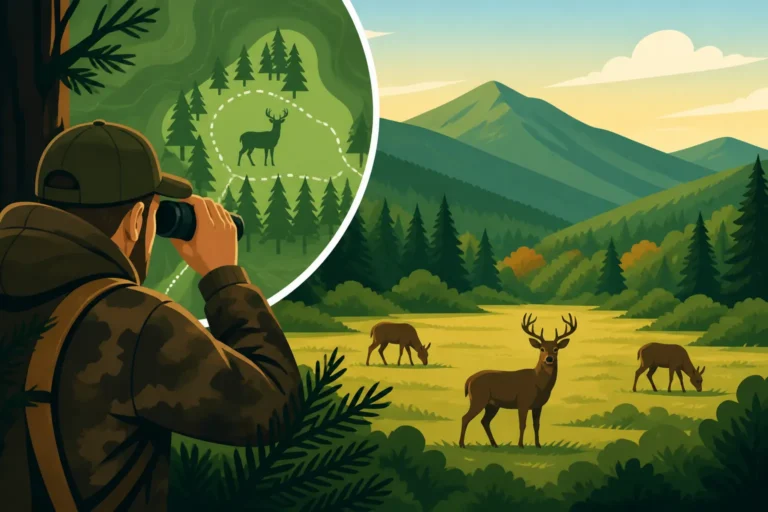
Beyond direct sign, observe the broader landscape. Are there specific trails worn into the snow leading from thick cover, like a cedar swamp or dense softwood stand, directly towards the feed source? These are prime travel corridors you can ambush. Look for pinch points – narrow strips of cover, fences, or changes in topography that naturally funnel coyote movement. Wind direction is paramount, as coyotes almost always approach a potential food source or distress call from downwind to use their superior sense of smell. Knowing this helps you predict their approach. Scouting tools, like the excellent mapping features found on a platform such as GoHunt, can be invaluable for identifying these pinch points, mapping out wind advantage, and marking where you've found fresh sign, all before you even step foot in the field. This diligent pre-hunt scouting, focused on understanding their movements, will drastically increase your odds of success once you start calling. For more on general scouting, check out how to use Scouting With the Vermont Fish and Wildlife App or Reading Aerial Photos for Green Mountain Deer.
Essential Calling Strategies for Winter Feed Sites
Once you understand where coyotes are and why, it's time to focus on how to bring them into range. Winter calling presents unique challenges and opportunities that require a specific approach.
Choosing Your Calls and Sequences
When calling coyotes over a winter feed site, your call selection and the sequence you employ are absolutely critical. Coyotes are smart, and they've heard a lot of calls. During winter, they're often hungry and less wary of certain sounds. Distress calls are generally the bread and butter of coyote hunting, with rabbit distress (cottontail, jackrabbit) being perennial favorites. These sounds tap into a coyote's instinct for an easy meal – a struggling, vulnerable animal. Fawn distress calls can also be incredibly effective, especially if you're hunting near a known deer wintering yard, as they mimic a young deer in trouble. Even bird distress calls, like a woodpecker or crow, can pique their curiosity or signal a small, easy meal. The key is urgency and realism.
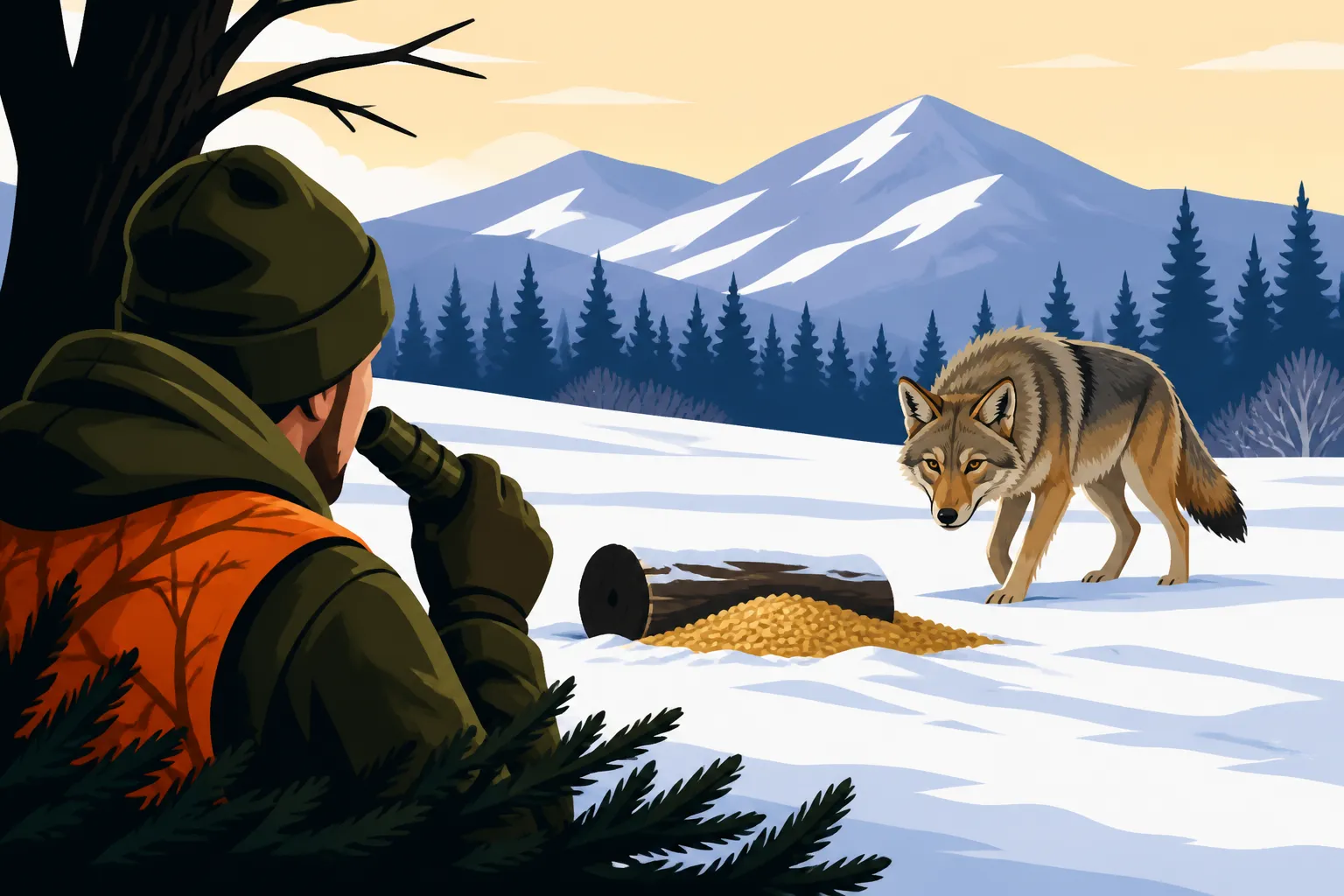
Beyond distress, howling can be a powerful tool, particularly in winter when coyotes are more territorial and often traveling in packs. A lonesome howl can draw a response, indicating a coyote seeking company. A challenge howl might bring in a dominant animal looking to defend its territory, or a pack investigating an intruder. Pup distress calls can also be used if you suspect a breeding pair or a family group. The real magic, however, lies in the sequence. Don't just blast one call. Start with a series of soft, inquisitive howls, then transition to a distress call after a few minutes of silence. Vary the volume, duration, and cadence of your calls to mimic a real situation. Remember, the goal is to paint a vivid picture in the coyote's mind – a struggle, an intruder, or a lonely call, all leading them closer to your position. For more on calling, you might find insight in Coyote Calling Vermont Farm Country or Predator Calling Green Mountain Backcountry.
Setting Up for the Shot
Your setup is just as important as your calling, especially in the wide-open spaces often found around winter feed sites. The single most crucial factor is the wind. Coyotes will almost always circle downwind of a call to scent check it before committing. This means you must set up with the wind in your face or as a crosswind, so your scent blows away from their expected approach. If you can't manage this, your hunt is likely doomed before it begins. Use scouting information to predict their likely travel corridors and set up accordingly.
Concealment is paramount. While full camouflage is essential, you also need to break up your silhouette. Use natural cover like brush piles, hedgerows, or the edge of a woodlot. If hunting open fields, a good ground blind can be invaluable, allowing you to move subtly and offering protection from the elements. Consider bringing along shooting sticks or a bipod to ensure a steady shot, as coyotes are rarely stationary for long. Establish clear shooting lanes, especially if you anticipate them coming from a particular direction. Having multiple shooters, if legal and safe, can be highly effective, with one person calling and the others covering different angles. Patience is a virtue in coyote calling; they might hang up at a distance, circle wide, or take their sweet time. Be ready to sit still, sometimes for 20-30 minutes after your last call, as a coyote might just be taking its final, cautious approach. If you're interested in alternative setups, consider Using a Ground Blind on Public Land.
Gear and Setup for Cold-Weather Coyote Hunting
Vermont winters demand specialized gear, not just for comfort, but for silent movement and effective execution. Skimping on your cold-weather setup can quickly lead to a miserable, and unsuccessful, hunt.
Crucial Cold-Weather Gear
When you're sitting still for extended periods in freezing temperatures, the right clothing isn't just a luxury – it's a necessity. Start with a robust layering system, crucial for adapting to fluctuating temperatures and activity levels. A good moisture-wicking base layer will pull sweat away from your skin, preventing chills. Follow this with insulating mid-layers, such as fleece or down, to trap body heat. Finally, an outer shell that is both windproof and water-resistant is essential to keep the elements at bay. Think about materials that are quiet, so you don't spook a wary coyote with a rustle. You can read more about this in Layering for Vermont's Long Hunting Season.
Beyond clothing, your extremities are often the first to get cold. Invest in high-quality insulated boots, rated for extreme cold, like those from brands such as Sorel or Muck Boots, to keep your feet warm and dry in snow. Pairing them with good wool socks is key. Hand warmers, either chemical packs or rechargeable versions, tucked into gloves or mittens, are a game-changer. A warm, insulated hat and a full face mask or balaclava will protect your face from biting winds, which are a constant in Vermont. Remember, any fidgeting or shivering due to cold will translate into movement that a sharp-eyed coyote will instantly pick up. Staying comfortable is directly linked to your ability to remain still and silent, a non-negotiable for coyote hunting.
Firearms and Optics for Coyote Calling
Choosing the right firearm and optics setup for coyote calling over a winter feed site is about precision and quick engagement. Coyotes are often taken at varying ranges, from close-up encounters in thick cover to long shots across open fields. For calibers, flat-shooting, high-velocity rounds are ideal. Popular choices include the .223 Remington, .204 Ruger, and .22-250 Remington. These calibers offer minimal bullet drop and excellent accuracy, which is crucial when targeting a relatively small animal that might be moving quickly. While Rifles and Calibers for Vermont Big Game provides a broader overview, these smaller, faster calibers are purpose-built for predators.
Your optic choice is equally important. A good quality scope with a variable magnification, typically from 3-9x or 4-12x, offers versatility for different ranges. Excellent light-gathering capabilities are a huge advantage, as prime coyote hunting times are often at dawn and dusk. Look for scopes with clear glass, a crisp reticle, and reliable turrets. For precise shot placement, especially at longer distances or in open country, a rangefinder is indispensable. Knowing the exact yardage to a coyote allows for accurate holdover or dial adjustments. Finally, a bipod or shooting sticks will provide a stable shooting platform, allowing you to settle in for a precise shot, particularly critical on those cold, long waits when holding steady freehand is difficult. A solid setup will give you the confidence to make the shot when the opportunity finally arises. Before heading out, make sure to check all local regulations, which can easily be found with tools like GoHunt.
Ethical Considerations and Safety
As with all hunting, pursuing coyotes comes with significant ethical and safety responsibilities. Maintaining a good reputation with landowners and ensuring the safety of yourself and others are paramount.
Respecting Landowners and Livestock
Hunting on private land in Vermont, especially around active farms or winter feed sites, always requires explicit permission. Never assume access, even if you’ve hunted nearby public land. A polite knock on the door, a clear explanation of your intentions (coyote control, not just sport hunting), and a willingness to adhere to any rules the landowner sets will go a long way. Many farmers welcome responsible coyote hunters who can help manage predator populations that threaten livestock or deer herds. When discussing your plans, be clear about your shot direction and backstops, ensuring no shots will be taken near barns, houses, or where livestock could be.
Building a good relationship with landowners is invaluable. Always leave gates as you found them, avoid damaging crops or fences, and offer to share any venison from deer you take, or even the coyote pelts if they have a use for them. Offering to help with chores or sharing a bit of your harvest can solidify that relationship for future hunting opportunities. Remember that hunting access is a privilege, not a right, and treating it with respect ensures opportunities for everyone down the line. To understand the specifics of gaining access, you can read Hunting a Champlain Valley Dairy Farm Edge.
Safe Hunting Practices
Safety is non-negotiable. When hunting coyotes, especially around areas where deer or livestock might be present, positive identification of your target before pulling the trigger is absolutely critical. In the low light of dawn or dusk, or when scanning through brush, ensure you have a clear, unobstructed view of the animal and that it is indeed a coyote. Never shoot at sound or movement alone. Always be aware of your surroundings, including what lies beyond your target. Ensure you have a safe backstop that will absorb your bullet, particularly in open fields where a round could travel a long distance.
Hunting with a partner can enhance safety, allowing for shared scanning of the area and clear communication. If hunting in an area where other hunters might be present (e.g., late-season deer hunters), consider wearing blaze orange, even though it's not always required for predator hunting. It makes you visible to other humans and most game animals, including coyotes, do not perceive the color spectrum in the same way we do, so it generally won't hinder your hunt. Always inform someone of your hunting location and expected return time, especially when venturing into remote areas. Basic first aid supplies, a knife, and a reliable flashlight should always be part of your pack. These diligent safety practices ensure that your pursuit of coyotes remains a responsible and enjoyable experience. For more on specific regulations, refer to Night Hunting Rules for Vermont Coyotes or Coyote Calling at First Light.
Disclaimer
Please note: The information provided in this guide is for informational purposes only. Hunting regulations and laws can change frequently. Always consult the latest Vermont Fish & Wildlife Department regulations before planning any hunting trip. Ensure you have all necessary licenses and permits and adhere to all safety guidelines.