Hunting a Clear-Cut Regrowth Edge
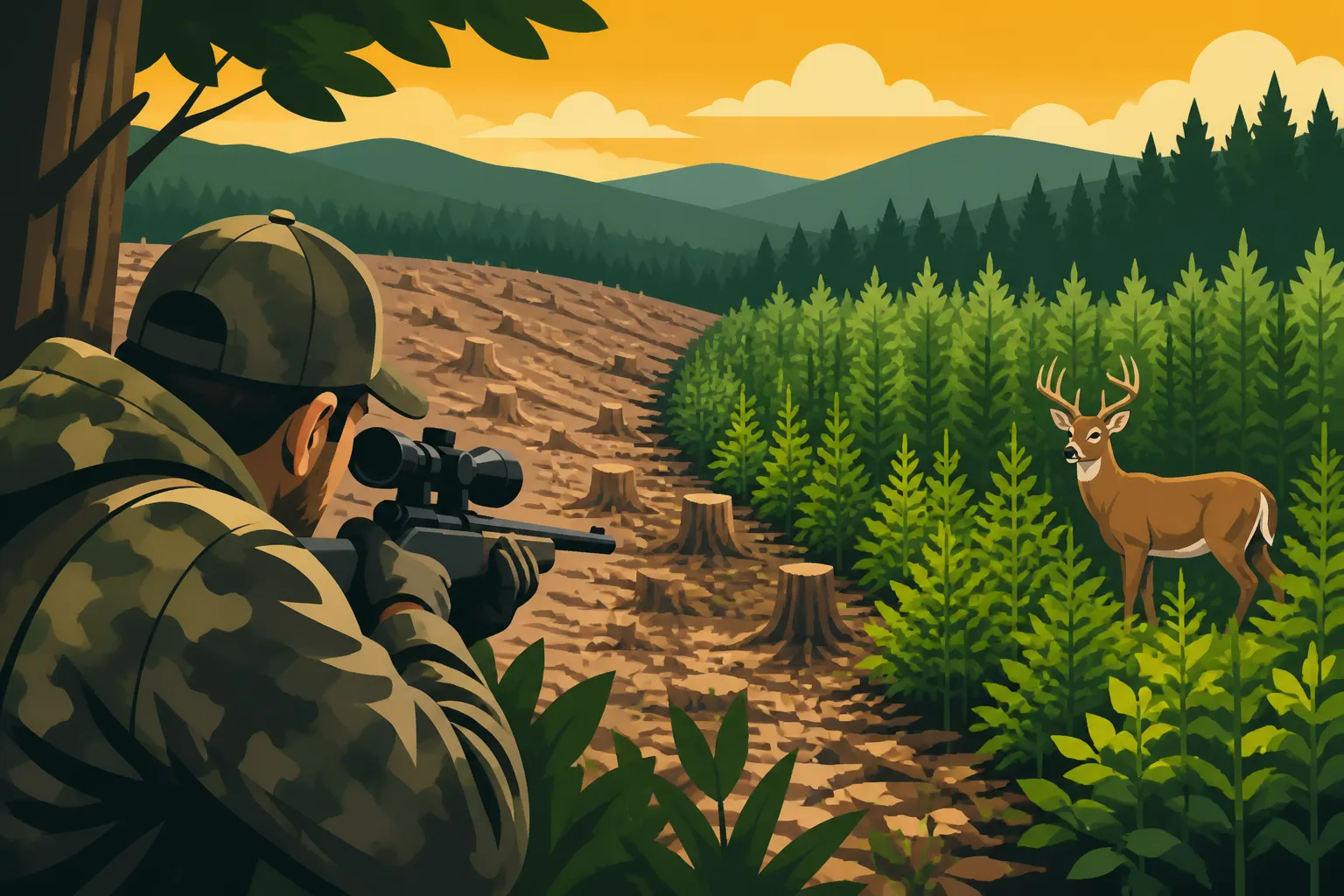
It’s a common frustration for many Vermont hunters: you’ve got your favorite hunting grounds dialed in, only to drive up one season and find a significant portion of it completely transformed by a timber harvest. Suddenly, the mature woods you knew are a maze of stumps and slash, and you’re left scratching your head, wondering where the deer have gone. But here’s a secret: those clear-cuts, with their dense regrowth edges, can be absolute magnets for whitetails, offering unparalleled opportunities if you know how to read them and hunt them effectively. This guide will walk you through understanding deer behavior in these dynamic environments, how to scout them, and the most effective hunting strategies to turn those seemingly ruined spots into your new honey holes.
Understanding Deer Behavior in Clear-Cut Regrowth
Timber harvesting, while initially disruptive, eventually transforms the forest into incredibly valuable deer habitat. A clear-cut isn't just a barren wasteland; it's a dynamic ecosystem constantly changing, and deer adapt to each stage of its regrowth. Understanding these stages and how deer use them is the first step to successful hunting.
Why Clear-Cuts Attract Deer
Clear-cuts are often deer magnets for a combination of reasons that directly address their survival needs: food, cover, and security. When mature timber is removed, sunlight floods the forest floor, stimulating a burst of new plant growth. This includes a smorgasbord of palatable forbs, grasses, and woody browse species like maple, cherry, and oak saplings, all within reach of a browsing deer. This high-quality, easily accessible forage is a primary draw, especially after a poor acorn year when natural mast crops are scarce. Deer will move into these areas specifically to take advantage of this bounty, often traveling significant distances from less productive mature timber.
Beyond food, the dense young growth that quickly springs up in a clear-cut provides excellent thermal and escape cover. Within a few years, a clear-cut can become an impenetrable thicket of saplings, briars, and low-lying vegetation. This thick cover offers deer a sense of security from predators and hunters, as visibility is severely limited, making it difficult for anything to approach undetected. It also provides crucial thermal regulation, sheltering deer from harsh winds and heavy snow in winter, and offering cool shade in the heat of early archery season. This combination of food and sanctuary means that clear-cuts often serve as prime bedding areas, particularly during daylight hours when deer seek refuge. The transition line, or edge, where this dense regrowth meets mature timber, is especially appealing as it offers both dense cover and easy access to other food sources or travel corridors.
Reading Different Stages of Regrowth
Not all clear-cuts are created equal, and deer usage changes dramatically depending on the age and density of the regrowth. You need to be able to "read" these stages to predict where deer might be holding or moving.
Early Stage (1-5 years post-harvest): In the first few years after a clear-cut, the ground is often dominated by herbaceous plants, annual weeds, and small stump sprouts. This stage is primarily a feeding area. The abundant sunlight promotes rapid growth of tender, digestible plants rich in nutrients. Deer will spend a lot of time browsing here, especially in the mornings and evenings. You'll find sign like fresh droppings, heavily browsed shoots, and perhaps some light trails. This is a great time to hunt the edges of these areas, particularly where they meet more established timber, as deer move in and out to feed.
Mid-Stage (5-15 years post-harvest): This is often the sweet spot for deer habitat. The clear-cut has now transformed into a dense, almost impenetrable thicket of young trees, shrubs, and briars, commonly referred to as sapling or brushy stage. Visibility inside is minimal, offering incredible security cover. Deer will bed down deep within these areas, often only moving short distances to feed. Travel lanes within this thicket can be very well-defined, resembling tunnels through the vegetation. The edge where this dense cover meets mature timber is still crucial, as deer use it as a staging area before entering more open woods or fields. You might find numerous rubs and scrapes along these edges, indicating buck activity. This dense cover also acts as a natural funnel, channeling deer movement along its perimeter, making it an ideal place to set up a stand or conduct a careful still-hunt. Learning to decipher these thickets is key to understanding Where Vermont Bucks Bed in Thick Cover.
Late Stage (15-25+ years post-harvest): As the trees continue to grow, the canopy begins to close, reducing the amount of sunlight hitting the forest floor. This suppresses much of the understory growth that initially attracted deer. The clear-cut becomes less appealing as a primary food source or dense bedding cover. Deer will still use these areas for travel, especially if they form a funnel between two more desirable habitats, but they won't hold in them as consistently. At this point, the hunting strategy shifts from targeting bedding or heavy browsing to focusing on travel corridors and transition zones where deer might still pass through. These older clear-cuts might still provide some thermal cover, but their food value is significantly diminished.
Scouting and Locating Key Areas in Regrowth
Effective scouting is paramount when hunting clear-cuts. These areas are vast and often difficult to navigate, making it essential to do your homework before the season begins.
Utilizing Aerial Imagery and Topo Maps
Before you ever set foot in a clear-cut, the best place to start your scouting is from the comfort of your home, using modern mapping tools. Platforms like GoHunt are invaluable for identifying these areas and understanding their layout. Start by looking for distinct blocks of lighter green or brownish areas on satellite imagery, often with sharp, straight edges indicating past logging activity. Pay attention to the age of the clear-cut – newer cuts will show more barren ground, while older ones will appear as a uniform mass of young, dense trees. You can mark potential stand locations and travel corridors right on your GoHunt map, noting where the regrowth abuts standing timber, a water source, or a field.
Topographical maps, often integrated into these same mapping applications, will help you identify elevation changes, drainages, and subtle benches within or around the clear-cut. Deer, being creatures of efficiency, will often use the path of least resistance. Look for saddles, ridge lines, and natural funnels that might channel deer movement, especially where the clear-cut creates a natural barrier. Understanding Reading Aerial Photos for Green Mountain Deer can give you a significant advantage in identifying these promising locations. Moreover, these maps can reveal access points and potential routes for Scouting Vermont Public Land Before Season that might be less obvious on the ground, helping you plan your entry and exit strategies to minimize disturbance. Remember, the less impact you have during scouting, the better your chances during the hunt.
Ground Scouting for Sign and Travel Routes
Once you've identified promising clear-cuts from your maps, it's time to hit the ground. Be prepared for tough walking, as these areas are notorious for tangled brush and uneven terrain. The goal is to confirm what your maps suggested and to find fresh sign that indicates current deer activity. Look for well-worn trails leading into and out of the dense regrowth, often along the edges where it meets mature timber. These are excellent indicators of common travel routes. Pay close attention to fresh tracks, which will tell you not only that deer are present but also their direction of travel and approximate size.
As you move slowly and deliberately through the clear-cut edges, keep your eyes peeled for other critical deer sign. Look for fresh droppings, which are a strong indicator of recent feeding and bedding activity. Heavily browsed saplings or shrubs, with jagged edges left by deer teeth, confirm that they are actively feeding in the area. In the fall, especially during the pre-rut and rut, look for rubs and scrapes. Bucks will often work rub lines along the clear-cut edge, marking their territory and leaving scent for does. Finding a string of fresh rubs, particularly on young saplings within the regrowth, can pinpoint a buck's core area. These signs, especially along the transition where cover meets a potential food source, are crucial for Finding Sign in Green Mountain Timber and understanding where deer are concentrated. Don't be afraid to penetrate a little way into the denser regrowth, just enough to confirm bedding areas without blowing deer out of the country.
Hunting Strategies for Clear-Cut Edges
Once you've done your scouting and have a good understanding of how deer are using a particular clear-cut, it's time to develop your hunting strategy. The thick cover and unique characteristics of these areas demand specific approaches.
Stand Placement for Different Winds and Approaches
Selecting the right stand location is critical, especially given the typically thick nature of clear-cut regrowth. The most effective spots are often along the edges where the dense regrowth meets more open timber, a field, or a natural travel corridor like a creek bottom or a subtle ridge. Deer will frequently use these edges as staging areas before entering open areas or as primary travel routes when moving between bedding and feeding. When Hanging a Stand on a Champlain Valley Field Edge, similar principles apply to a clear-cut edge. Position your stand to overlook these transition zones, focusing on pinch points where deer are funneled into a predictable path. A slight bend in the clear-cut's perimeter, a small point of timber jutting into the regrowth, or an old logging road that skirts the edge can all be excellent ambush sites.
Wind direction is paramount, perhaps even more so than in open woods because the thick cover can make human scent swirl unpredictably. Always approach your stand and set up with the wind in your favor, blowing your scent away from where you expect deer to approach. This might mean having multiple stand locations for different wind directions, or being willing to adjust your hunt plan on the fly. Consider Wind and Thermals in Steep Green Mountain Terrain when selecting your ambush points, as thermals can also play a significant role, especially in the mornings and evenings when they rise and fall. Ground blinds can also be incredibly effective in these environments, allowing you to quickly brush in and hide yourself right in the heart of the thick stuff, offering more flexibility if wind shifts or you need to be more mobile. Make sure to choose a spot that offers a clear shooting lane into the trails you've identified, even if it's just a narrow window in the brush.
Still-Hunting and Drives Through Regrowth
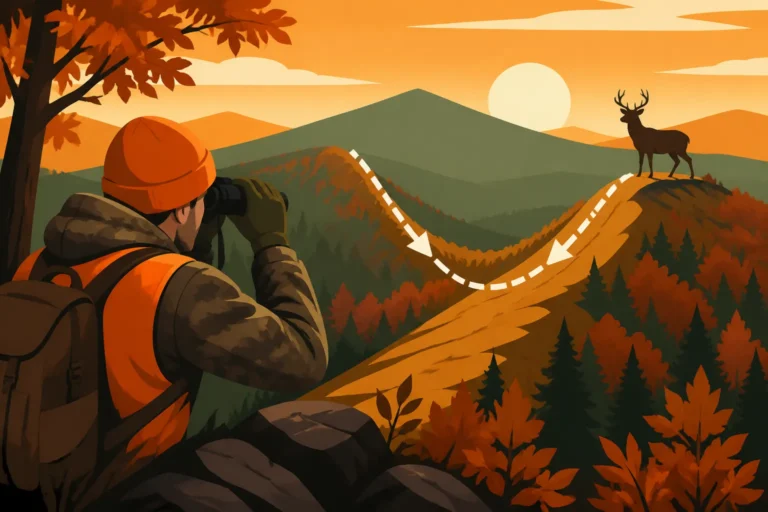
Still-hunting is a highly effective tactic in the dense cover of a clear-cut, particularly during midday when deer are often bedded down within the thicket. The key to successful still-hunting is patience and stealth. Move incredibly slowly, taking only a few steps at a time, then stopping for several minutes to glass and listen intently. The thick cover limits visibility for you, but it also limits visibility for the deer, meaning you might get closer to a bedded animal before it detects you. Focus on looking for horizontal lines (the back of a deer) in a vertical world, or subtle movements like an ear flick or a tail swish. This is a tactic often employed for Still-Hunting Green Mountain National Forest Timber, but adapted for the even denser undergrowth of a clear-cut. Pay attention to subtle changes in elevation or cover within the clear-cut, as deer will often bed on small humps or in slightly less dense pockets that offer a bit more visibility or thermal advantage.
Deer drives can also be extremely productive in clear-cuts, especially if you have a group of three or more hunters. The dense nature of the regrowth provides ideal cover for deer to hide, making it difficult to push them out of an area without strategic planning. Assign "blockers" or "posters" to cover known escape routes and funnels along the perimeter of the clear-cut, while "drivers" move slowly and deliberately through the thicket. Communication is key to ensure safety and coordinate the push. Drivers should move through the densest parts, making enough noise to get deer moving but not so much that they spook and run wildly. The objective isn't to blast deer as they break cover, but to gently push them towards the waiting standers, who have clear shooting lanes at the edges. This method can be especially effective during the late season when deer are seeking Late-Season Food Sources for Vermont Whitetails and dense cover to escape the cold. Remember to always prioritize safety, know where every hunter is, and only take ethical shots.
Navigating Challenges and Maximizing Success
Hunting clear-cuts comes with its own set of unique challenges. The dense vegetation and often unpredictable nature of logging operations require adaptability and a willingness to overcome obstacles.
Dealing with Thick Cover and Limited Visibility
The biggest challenge in hunting clear-cuts is undoubtedly the thick, tangled vegetation and the resulting limited visibility. This makes it hard to spot deer, track them, and even move silently. To combat this, slow down, way down. When still-hunting, take one step, then pause for a full minute, scanning every shadow and opening. Use your binoculars constantly, even at close range, to pick apart the cover. You're not looking for a whole deer, but rather a horizontal line, an antler tip, an ear, or a patch of hide. Consider a quality pair of binoculars with excellent low-light performance, as deer often move in the dim light of dawn and dusk, or on cloudy days when visibility is already reduced.
For stand hunting, creating clear shooting lanes is crucial. When setting up a treestand, spend extra time trimming branches and brush to open up windows to the trails you expect deer to use. Do this well in advance of the season so human scent dissipates. If Using a Ground Blind on Public Land, choose a location where the natural vegetation already provides some openings, and then enhance it by carefully weaving in local brush without creating an obvious "hole" in the cover. Remember, deer are accustomed to thick cover, and a perfectly manicured shooting lane might make them wary. Embrace the challenge by using it to your advantage: the same thick cover that hides the deer can hide you, allowing for closer encounters if you're patient and stealthy.
Timing Your Hunts to Deer Movement
Deer movement in and around clear-cuts is heavily influenced by time of day, weather, and the hunting pressure they experience. To maximize your success, you need to time your hunts strategically.
Early Morning and Late Evening: These are typically the prime times to catch deer moving in and out of the clear-cut, transitioning between bedding areas deep within the thicket and feeding areas on its edges or in adjacent open timber and fields. Set up your stand an hour before first light and stay until well after sunrise, and likewise for the evening hunt. These transition periods are when deer feel most secure moving.
Midday: Don't dismiss midday hunts in clear-cuts. As deer bed down during the middle of the day, especially if pressured, they often seek the densest parts of the regrowth for security. This is an ideal time for a slow, methodical still-hunt through the interior of the clear-cut, where you might bump a bedded deer or catch one moving between small pockets of cover. In cold weather, they might move more to find thermal comfort.
Weather Conditions: Overcast days, light rain, or periods following a cold front can often trigger increased deer movement in clear-cuts. Deer feel more secure moving under the cover of clouds or light precipitation, and a sudden drop in temperature might prompt them to feed more aggressively. High winds, while challenging for hunters, can sometimes make deer feel more secure moving during the day, as the noise helps mask their movements. Conversely, bright, sunny, calm days often mean deer will be bedded tight in the thickest cover, making still-hunting difficult.
Hunting Pressure: Clear-cuts, particularly those on public land or areas that see a lot of hunters, can experience significant pressure. Deer quickly learn to avoid open areas and seek refuge in the dense regrowth. This makes clear-cuts excellent sanctuaries, especially during periods like Vermont's November Rifle Season. If you're hunting an area with high pressure, focus your efforts on hunting deep within the clear-cut, far from roads and easily accessible trails. Deer will often retreat to the deepest, nastiest parts of the regrowth when they feel pressured, and these become your best opportunities. You'll often find that Hunting Pressure on Vermont Public Land can drive deer into unexpected places, and a clear-cut is often one of them.
| Regrowth Stage (Years Post-Harvest) | Primary Deer Activity | Ideal Hunting Strategy | Best Time to Hunt |
|---|---|---|---|
| Early Stage (1-5) | Heavy Browsing | Edge Stands, Still-Hunting | Morning/Evening |
| Mid-Stage (5-15) | Bedding, Browsing, Staging | Interior Still-Hunting, Edge Stands | All Day (especially midday for still-hunting) |
| Late Stage (15-25+) | Travel, Security Cover | Funnel/Corridor Stands, Drives | Transition Times |
Disclaimer
Hunting is an inherently dangerous activity. Always prioritize safety, follow all Vermont Fish & Wildlife Department regulations, and obtain appropriate licenses and permits. Be aware of your surroundings, know your target and what is beyond it, and hunt responsibly. The information provided here is for educational purposes only and should not replace professional guidance or personal judgment.