Vermont Waterfowl Zones and Seasons
If you've ever felt overwhelmed trying to decipher Vermont's waterfowl hunting regulations, you're certainly not alone. Between understanding specific zone boundaries, varying season dates, and the myriad of permits and stamps required, it can feel like you need a law degree just to figure out where and when you can legally chase ducks and geese. This guide aims to cut through that confusion, offering a clear, comprehensive breakdown of Vermont's waterfowl zones and seasons so you can spend less time scratching your head and more time in the blind.
Understanding Vermont's Waterfowl Landscape
Vermont, despite its landlocked reputation to some, actually boasts incredible waterfowl hunting opportunities, largely thanks to its strategic position along the Atlantic Flyway. However, navigating these opportunities means understanding how the state's wildlife managers segment hunting pressure and bird populations. It's not a one-size-fits-all approach, and for good reason—the bird activity and habitat vary wildly from the broad expanse of Lake Champlain to the quiet bends of the Connecticut River.
Why Vermont Has Different Waterfowl Zones
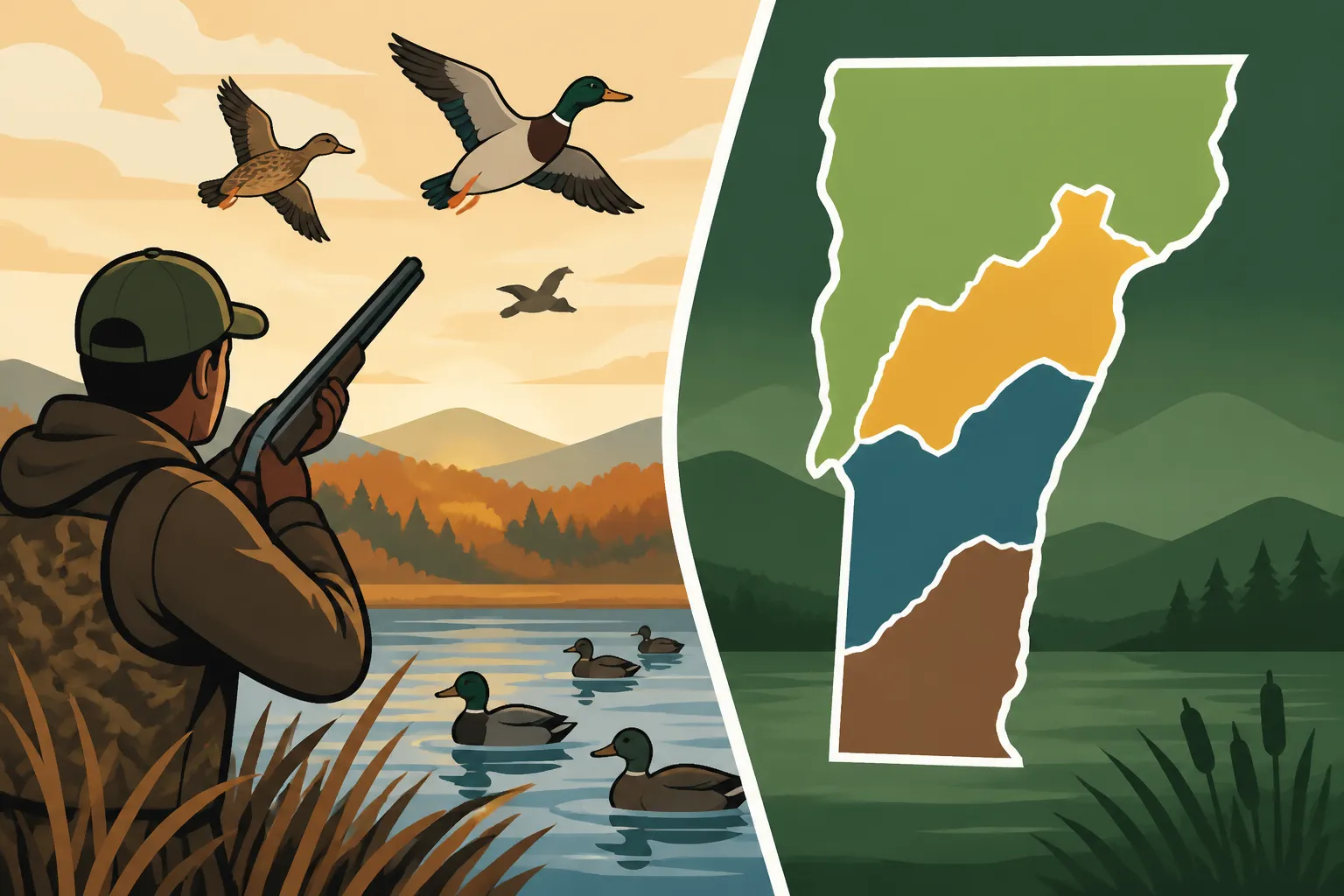
The existence of multiple waterfowl zones in Vermont isn't just about making things complicated; it's a carefully considered management strategy. The Vermont Fish & Wildlife Department (VFWD) and the U.S. Fish & Wildlife Service collaborate to set these zones based on distinct geographical features, migratory bird patterns, and habitat types. For instance, the vast open waters and agricultural lands surrounding Lake Champlain attract and hold different species, and at different times, than the smaller rivers and marshes found deeper inland. Trying to apply a single season framework to these diverse environments would either over-harvest birds in one area or underutilize opportunities in another.
Consider the challenge: a cold snap in northern Vermont might push birds out of smaller, shallower wetlands, but Lake Champlain, with its sheer size, often remains open much longer, providing crucial late-season habitat. Conversely, early migrating teal might only stop for a short period in interior marshes before continuing south. These zones allow managers to tailor opening and closing dates, as well as bag limits, to best match the actual timing of migration and bird presence in those specific areas. It helps distribute hunting pressure more evenly and ensures sustainable harvest levels, which is something we all want for the future of our sport.
This zonal system also acknowledges the different hunting traditions and access points across the state. Hunters along the Connecticut River, for example, often focus on pass-shooting geese or jump-shooting ducks in smaller oxbows, which is a different dynamic than the extensive decoy spreads often used on Lake Champlain. By recognizing these regional differences, the VFWD can create regulations that are more effective and better serve both the birds and the hunters. It's a pragmatic approach to a complex ecological puzzle, even if it adds a few extra layers for us to understand.
The Influence of the Atlantic Flyway
Vermont sits squarely in the middle of the Atlantic Flyway, one of North America's four major migratory bird routes. This isn't just a fancy designation; it's the reason we have ducks and geese in the first place! Millions of birds use this corridor each fall and spring, traveling from their northern breeding grounds in Canada and the Arctic to wintering areas further south, often as far as the Caribbean or South America. Vermont's lakes, rivers, and wetlands provide critical stopover points for feeding, resting, and staging before they continue their journey.
This flyway connection means our waterfowl hunting opportunities are intrinsically linked to what's happening hundreds or even thousands of miles away. A drought in Canadian breeding grounds, for instance, can significantly impact the number of ducks that fly south through Vermont. Similarly, an early freeze-up to our north can push a huge influx of birds into the state all at once, creating fantastic hunting conditions, while a mild fall might mean birds linger further north, leading to slower hunting here. Understanding this broader migratory context helps us appreciate the dynamic nature of waterfowl hunting and why every season can feel a little different.
The VFWD, along with federal agencies, monitors these migratory patterns closely, using data from banding programs, aerial surveys, and hunter harvest reports to inform their season recommendations. This continuous flow of information is vital for setting appropriate season lengths and bag limits each year. When you're out there, shivering in a layout blind during a late-season snow flurry, remember you're witnessing an ancient migration, and your hunting efforts are part of a much larger, continent-wide conservation strategy that depends on healthy flyways.
Key Waterfowl Species You'll Encounter
While Vermont might not be famous for the sheer diversity of species found in some southern states, we still get a fantastic array of waterfowl making their way through. Understanding which birds you're likely to see, and when, can significantly help your hunting strategy.
Mallards and wood ducks are often the bread and butter for many Vermont duck hunters, especially in the early season. Wood ducks, with their incredible iridescent plumage, are particularly prevalent in wooded swamps and small creeks, and their distinct squeal is a common sound in the September and October woods. Mallards, of course, are ubiquitous and can be found nearly everywhere, from large lakes to small farm ponds. As the season progresses and colder weather sets in, you'll start to see more dabbling ducks like green-winged teal, black ducks, and wigeon, especially in the interior and Connecticut River zones. Black ducks, being a bit more wary, offer a real challenge and a prized addition to the strap.
On the big water of Lake Champlain, ring-necked ducks, goldeneyes, and scaup become more common, particularly as shallow waters freeze up and divers move to deeper, open water. These birds behave differently than dabblers, often requiring different decoy spreads and hunting tactics. Geese are another major draw, with a healthy resident Canada goose population providing early-season opportunities before the main push of migratory birds arrives later in the fall. You might also encounter snow geese during peak migration, especially in agricultural fields in the Champlain Valley, though they can be incredibly challenging to decoy. Knowing what birds are likely to be present in your chosen zone and time of year will inform your decoy spreads, calling techniques, and overall approach to the hunt.
The Lake Champlain Zone: A Premier Destination
When most people think of Vermont waterfowl hunting, their minds often drift to the vast expanse of Lake Champlain. And for good reason – this monumental body of water offers some of the state's most diverse and productive waterfowl opportunities. It’s a truly unique hunting environment, presenting both incredible rewards and specific challenges that hunters must be prepared for.
Defining the Lake Champlain Zone Boundaries
The Lake Champlain Zone isn't just the lake itself; it encompasses a specific geographical area designed to reflect the lake's influence on bird migration and behavior. The boundary typically includes the waters of Lake Champlain, its immediate bays, and its major tributaries up to the first natural or man-made obstruction impassable to migratory waterfowl. This often means rivers like the Lamoille, Missisquoi, Winooski, and Otter Creek are part of this zone for a significant stretch upstream from the lake. It's crucial to consult the Vermont Fish & Wildlife Department's official regulations map each year, as slight adjustments can occur.
Beyond the water, the zone extends to include the low-lying agricultural lands and wetlands that fringe the lake, particularly in the Champlain Valley. These areas, rich with cornfields, hayfields, and small marshes, serve as critical feeding and loafing areas for ducks and geese throughout the season. Hunters in this zone often find themselves hunting over water one day and in a field the next, depending on bird movement and weather. This broad definition ensures that the regulations adequately cover the complex habitat mosaic that supports Lake Champlain's waterfowl populations, from open water diver hunting to field-edge mallard and goose opportunities.
Understanding these boundaries is paramount. You don't want to inadvertently find yourself hunting under "Interior Zone" regulations when you thought you were in the Lake Champlain Zone, which can have different opening and closing dates. Using a GPS with up-to-date public land maps, or an app like GoHunt which shows boundaries, can be incredibly helpful for confirming your location, especially in areas where tributaries form the boundary lines. This diligent approach will help prevent any unfortunate run-ins with game wardens and ensure a legal and enjoyable hunt.
Season Structure and Unique Opportunities
The Lake Champlain Zone often boasts the longest and most complex season structure in Vermont, frequently featuring a "split season." This means the season might open, close for a period, and then reopen later in the fall. The primary reason for this split is to account for the staggered arrival of different species and to provide opportunities during peak migration for both early-season dabblers and later-season divers and geese. For instance, the early part of the season might target wood ducks and early mallards, while the later segment is timed for the arrival of more significant numbers of divers and Canada geese. You can learn more about how this works by checking out Vermont's Split Lake Champlain Season Explained.
One of the unique opportunities here is the sheer variety of hunting styles available. You can spend a morning setting out a massive decoy spread for divers on the main lake, then transition to a secluded bay for dabblers in the afternoon. Field hunting for geese is also a significant draw, especially as birds feed up for their southward journey. Many hunters focus on the large resident Canada goose population early in the season, before the northern migrants push in. The ability to switch between these diverse scenarios requires adaptability and a well-rounded gear setup, from sturdy boats and deep-water decoys to layout blinds and field-specific calls.
The late season, when much of the state's smaller water has frozen, often sees Lake Champlain as a last bastion of open water. This can concentrate birds, offering incredible hunting, but it also comes with its own set of challenges—bitter cold, high winds, and rapidly changing ice conditions. Access to the lake often becomes limited to specific ramps and areas that remain ice-free. However, for the hardy waterfowler, these late-season hunts can be the most memorable, presenting opportunities to decoy substantial flights of mallards, black ducks, and various diver species that are often more tolerant of larger decoy spreads and calling efforts.
Tactics for Success on Lake Champlain
Hunting Lake Champlain effectively requires a blend of preparation, knowledge, and flexibility. Given its size, scouting is absolutely critical. Birds move constantly based on wind, weather, and food sources. Don't just show up on opening day hoping for the best; spend time observing flight patterns, identifying loafing areas, and finding out where birds are feeding. Look for areas with submerged aquatic vegetation for divers or flooded timber and cornfields for dabblers and geese. Utilizing tools like GoHunt's satellite imagery can help identify potential hotspots and plan your approach before you even step foot in the field.
Decoy placement and numbers are key here. For open-water diver hunting, large spreads of 50 or more decoys are common, often set in J-hooks or long lines to guide birds into a landing zone. Using specialized decoys for species like bluebills, redheads, or canvasbacks can also make a difference. For dabblers in smaller bays or marshes, a more conservative spread of a dozen mallards and a few black ducks might be all you need, often with a spinning wing decoy to add motion. When field hunting geese, realism is paramount. Big spreads of full-body or shell decoys, combined with flags and calls, are essential to draw in wary Canada geese. Check out tips for Decoying Ducks on Lake Champlain for more detailed strategies.
Wind and weather are your constant companions on Lake Champlain, and they dictate everything. A strong north wind can push birds off the main lake into sheltered bays, while a sudden squall can create dangerous conditions. Always prioritize safety, especially on large, open water. Having appropriate personal flotation devices, a reliable boat, and knowing your limits are non-negotiable. Being adaptable to changing conditions means having multiple spots scouted—perhaps a protected bay for windy days and an open-water spot for calm mornings. It also means being prepared for anything the weather throws at you, from pouring rain to freezing temperatures, by having the right layering system and waterproof gear.
The Interior Zone: Classic Vermont Marsh and River Hunting
While Lake Champlain gets a lot of the spotlight, Vermont's Interior Zone offers its own brand of waterfowling that's equally rewarding, often characterized by a more intimate experience on smaller waters. This is where you'll find those classic scenes of hunters tucked into cattails along a winding creek or waiting patiently over a hidden beaver pond. It's a different rhythm, but one that many Vermont hunters cherish.
Geographical Scope of the Interior Zone
The Interior Zone is essentially everything else that isn't the Lake Champlain Zone or the Connecticut River Zone. This vast area covers the central and western parts of Vermont, stretching from the Canadian border down to Massachusetts. It includes a huge diversity of habitats: countless small to medium-sized rivers like the Winooski, Lamoille, and White River; numerous beaver flowages and natural ponds; and a multitude of swamps, flooded timber, and agricultural ditches. This is the Vermont many imagine: rolling hills, dense forests, and hidden pockets of water.
What makes the Interior Zone so unique is this sheer variety of small waters. Unlike the expansive views of Lake Champlain, hunting here often involves more intimate setups. You might be jump-shooting a small creek one day and sitting in a ground blind tucked into reeds on a pond the next. Access can be a mix of public lands, like state forests and wildlife management areas, or private parcels where obtaining landowner permission is key. Utilizing tools like onX or GoHunt to scout potential public access points or identify land ownership for permission requests can be a game-changer in these often-rugged, fragmented landscapes.
Because of the scattered nature of these habitats, birds tend to be more dispersed and often more localized. You might find a small flock of mallards consistently using a particular beaver pond, or a group of wood ducks favoring a secluded stretch of creek. This requires more legwork in terms of scouting and often a willingness to explore, but the reward is often a less pressured hunt and a strong sense of connection to the landscape. The diverse geography also means that while early-season hunting for wood ducks and resident mallards can be fantastic, the later season is highly dependent on how long small waters remain unfrozen.
Season Dates and Species Focus
The season dates for the Interior Zone are generally more straightforward than Lake Champlain's, typically running as a continuous season or with a shorter, less pronounced split. The specific dates vary year-to-year based on federal guidelines and VFWD recommendations, so always double-check the current regulations. However, the general pattern is an opening in late September or early October, extending through much of November, sometimes with a brief closure and then reopening for a December segment. These timings are designed to coincide with the main migration of dabbling ducks and early-season geese passing through these inland areas.
The species focus in the Interior Zone leans heavily towards dabbling ducks. Wood ducks are kings in the early season, especially in the wooded swamps and beaver ponds that characterize much of this zone. Their vibrant plumage makes them a highly sought-after trophy. Mallards are, of course, ever-present, and black ducks become more common as the season progresses and colder weather drives them from northern climes. You'll also encounter green-winged teal, especially in September and early October, offering fast-paced shooting over small water. While geese are present, they are generally less concentrated than in the Champlain Valley, often found in smaller family groups or flocks in isolated farm fields or along larger rivers.
Diver ducks are much less common in the Interior Zone simply because their preferred deep-water habitats are rare. You might occasionally see a ring-necked duck on a larger pond or reservoir, but they are not the primary target here. The hunting experience is often defined by those moments of anticipation, waiting for a small flight of woodies to zip through the timber or a pair of mallards to cup their wings over a quiet backwater. This focus on dabblers also influences decoy spreads, calling techniques, and the overall pace of the hunt, emphasizing stealth and understanding local bird movements.
Hunting Small Waters and Backcountry Ponds
Hunting the small waters and backcountry ponds of the Interior Zone is a deeply rewarding experience that often feels more solitary and connected to nature. These spots are typically less pressured than larger, more accessible areas. Success here hinges on thorough scouting, stealth, and adapting to intimate settings. Start by identifying potential beaver flowages, old mill ponds, or oxbows along rivers using aerial maps. A quick paddle or hike in the off-season can reveal prime feeding areas, natural blinds, and potential access points. You might be surprised at what you find off the beaten path!
When hunting these smaller spots, less is often more. A small spread of six to twelve mallard and wood duck decoys, often paired with a spinning wing decoy for added attraction, can be incredibly effective. Focus on natural-looking setups that allow for easy concealment. Brush in a simple ground blind from local materials, or position yourself against a large tree or rock outcrop. Calling should be subtle and realistic; aggressive calling can often flare birds on these smaller, quieter waters. A few soft quacks or a feeding chuckle is often all it takes to convince a small flight to commit. For tips on Reading a Marsh for a Morning Flight, understanding the subtleties of how birds use these micro-habitats is crucial.
Jump-shooting is another highly effective tactic in the Interior Zone, especially on smaller rivers and creeks. This involves slowly walking or paddling stretches of water, surprising birds that are loafing or feeding. It requires a keen eye, quick reflexes, and a willingness to cover ground. Remember to always be aware of your surroundings, especially if hunting near private property, and respect all safety guidelines. This type of hunting can be incredibly exciting and offers a more active way to pursue birds when stationary spreads aren't producing. Don't forget to review Jump-Shooting a Vermont Creek for more detailed advice on this thrilling method. The beauty of the Interior Zone is in its quiet moments and the challenge of finding those hidden gems where ducks feel safe.
The Connecticut River Zone: Eastern Edge Opportunities
On Vermont's eastern flank, the Connecticut River forms a natural boundary with New Hampshire and creates its own distinct waterfowl hunting environment. This zone, while smaller than the Interior or Lake Champlain zones, offers unique opportunities, particularly for geese and various dabbling ducks that utilize the river and its adjacent floodplain habitats.
Tracing the Connecticut River Zone's Reach
The Connecticut River Zone is, as its name suggests, focused entirely on the Connecticut River itself and its immediate shoreline habitats that border Vermont. This includes the main stem of the river and typically extends to adjacent wetlands, oxbows, and small tributaries for a limited distance upstream from the river's main channel. It stretches from the Canadian border in the north, all the way down to Massachusetts in the south, forming a crucial migratory corridor. This long, narrow zone acts like a liquid highway for birds moving along the eastern edge of Vermont.
The character of the river changes dramatically along its length. In the far north, it can be narrower and more intimate, resembling some of the interior rivers. As it flows south, it widens significantly, forming broader floodplains, agricultural bottomlands, and larger oxbow lakes, particularly in areas like the Northeast Kingdom and southern Vermont. These varying stretches offer different hunting scenarios, from jump-shooting tight bends to setting up for pass-shooting geese over wide fields. Because the river itself is the border, it’s critical to understand that hunting regulations can differ on the New Hampshire side, so always ensure you are aware of which state's regulations apply to your location.
Access to the Connecticut River can vary. There are numerous public boat launches and access points along its length, maintained by both Vermont and New Hampshire. Additionally, many private landowners along the river are open to granting permission for responsible hunters, especially for goose hunting in cornfields. Similar to the other zones, leveraging mapping apps and doing thorough pre-season scouting is vital to identify both productive habitat and legal access points. The distinct linear nature of this zone means that birds often follow the river's course, making certain choke points or major feeding areas particularly productive during migration.
Season Dates and River-Specific Challenges
The season dates for the Connecticut River Zone are typically set to align with the arrival of migratory birds that favor this river corridor, often mirroring a similar timing to the Interior Zone. You can expect an opening in late September or early October, with the season extending through November, sometimes with a brief split before a late-season segment in December. These dates are generally structured to allow hunters to target early-season dabblers and resident geese, as well as the main push of migratory Canada geese and later-arriving ducks as the colder weather sets in. As always, consult the current year's VFWD regulations for precise dates.
Hunting the Connecticut River presents a unique set of challenges that are distinct from static ponds or large lakes. The most significant is the river's current. Decoy spreads need to be anchored much more securely, and hunters often use heavier weights or specialized rigging to prevent decoys from being swept downstream. Boat control is also paramount, especially if you're hunting from a boat blind or retrieving birds in a strong current. Safety on the river, particularly during colder months, cannot be overstated. Water temperatures can be dangerously low, and capsizing could lead to rapid hypothermia. Always wear a life jacket and be aware of changing river conditions.
Another challenge is distinguishing between resident and migratory birds, especially with Canada geese. The Connecticut River holds a healthy resident Canada goose population, but it also experiences significant pushes of migratory geese. This distinction, while sometimes difficult in the field, doesn't usually impact the legality of the hunt, but understanding movement patterns can inform your setup. Furthermore, the river's dynamic nature means that sandbars, islands, and prime feeding areas can change from year to year due to floods or erosion. What was a hotspot last season might be completely different this year, reinforcing the need for continuous scouting.
Strategies for River-Edge Hunting
Successful hunting along the Connecticut River often involves capitalizing on its linear nature and the habits of river-dwelling birds. For ducks, jump-shooting is highly effective, especially in smaller oxbows, backwaters, and stretches where the current slows. Stealth is key here – approach bends carefully, staying low and out of sight. You can find detailed strategies for this thrilling method in Jump-Shooting a Vermont Creek. Setting up small decoy spreads of mallards and black ducks in quiet coves or areas with slower current can also be very productive, especially if you identify a consistent flight path.
For geese, the Connecticut River is a major travel corridor, and field hunting in the adjacent agricultural bottomlands can be fantastic. Setting up large spreads of goose decoys in cornfields or other stubble fields where birds have been feeding is a common and effective tactic. Pass-shooting geese as they travel up and down the river, particularly at sunrise or sunset when they are flying between roosting and feeding areas, is another popular method. This often involves setting up in a well-camouflaged position along a known flight path, often on a point or island in the river, or on a strategic field edge. Learn more about effective methods in Pass-Shooting Geese on the Connecticut River.
Concealment is always crucial, but especially so along a river. Birds flying along a predictable path often have excellent vantage points. Utilize natural cover like tall grass, brush, or downed timber, or use well-brushed-in portable blinds. Keep movement to a minimum, especially when birds are approaching. Calling should be adjusted to the situation – loud, aggressive calling for distant geese, but softer, more subtle calls for ducks working into a tight river bend. Being aware of the sun's position and the wind direction is also vital; try to set up with the wind at your back or quartering, so birds finish into the wind, presenting easier shots, and avoid having the sun glare directly into your eyes.
Navigating Vermont's Waterfowl Regulations and Permits
Understanding the nuances of Vermont's waterfowl zones and seasons is only half the battle. To ensure a legal and responsible hunt, you must also be acutely aware of the various licenses, permits, and reporting requirements that are specific to migratory bird hunting. It can feel like a labyrinth of paperwork, but each component serves an important role in conservation and management.
Essential Licenses and Stamps Required
First and foremost, any hunter pursuing waterfowl in Vermont must possess a valid Vermont hunting license. This is your baseline requirement. Depending on your residency status, the cost will vary, but it's the gateway to all other permits. Beyond the basic hunting license, migratory bird hunters have several additional requirements, starting with the Vermont Migratory Bird Hunting License. This state-specific stamp helps fund Vermont's waterfowl management and conservation efforts directly within the state. You'll want to check out Vermont Migratory Bird Certification for detailed information on this.
Next, every waterfowl hunter 16 years of age or older must purchase a Federal Migratory Bird Hunting and Conservation Stamp, commonly known as a Federal Duck Stamp. This stamp is an absolute must-have; it's a small adhesive stamp that you sign across the face and carry with you. The vast majority of the funds generated from Federal Duck Stamp sales go directly to conserving wetlands and purchasing habitat for the National Wildlife Refuge System, benefiting countless species of migratory birds and other wildlife. It's truly one of the most successful conservation programs in history. You can find out more about this requirement at Vermont Federal Duck Stamp Requirement.
Finally, all migratory bird hunters, regardless of age, must register with the Harvest Information Program (HIP). This is not a physical stamp or permit but a registration process that collects information about the species you intend to hunt. This data helps the U.S. Fish & Wildlife Service estimate harvest numbers and manage populations. When you purchase your Vermont Migratory Bird License, you'll typically be prompted to complete your HIP registration. It's quick, but forgetting it can lead to hefty fines, so don't skip this critical step! Having all these documents correctly purchased and readily accessible while hunting is non-negotiable.
Understanding Bag Limits and Species Restrictions
Bag limits are crucial for sustainable waterfowl populations, and they vary significantly by species, gender (for some ducks), and sometimes even by zone or time within a season. You can't just shoot every duck that flies by; you need to be able to identify your target species in flight and understand the daily bag and possession limits. For example, mallards typically have a daily bag limit, but often with a restriction on the number of hens you can take. Wood ducks, black ducks, and teal also have their own specific limits. Geese usually have a separate, often more generous, bag limit that can also vary by species (e.g., Canada geese vs. snow geese). To get the most current information, refer to Vermont Duck and Goose Bag Limits directly from the VFWD.
It's not just about the numbers; it's also about identification. Misidentifying a protected species or exceeding a specific species limit is a common mistake that can land hunters in trouble. Take the time to study duck and goose identification guides, paying attention to wing patterns, flight characteristics, and calls. Spend time observing birds before the season opens. Knowing the difference between a goldeneye and a bufflehead, or a mallard hen and a black duck, is a fundamental skill for responsible waterfowl hunting.
Possession limits are also important. This is the maximum number of birds you can have in your possession, including those at your home, in your freezer, or in your vehicle, from previous hunting trips. It's usually two or three times the daily bag limit. If you hunt for several days and accumulate birds, you need to keep track to avoid exceeding this limit. Always transport your birds in a way that allows for easy identification of species and sex, with one fully feathered wing attached to each bird until it reaches your home or a processing facility. This helps game wardens verify your harvest.
Carcass Tagging and Reporting Requirements
While Vermont's deer and moose harvests require physical tagging and often in-person or online reporting, waterfowl have a slightly different system. Typically, migratory birds do not require individual physical tags affixed to them in the field like big game. However, specific rules apply to transporting birds. As mentioned, leaving one fully feathered wing attached to each bird until it's processed at your home or a commercial facility is a standard requirement. This allows for species identification if a game warden inspects your harvest.
The primary reporting for waterfowl comes through the Harvest Information Program (HIP) survey. After the season, a random sample of HIP-registered hunters will receive a voluntary survey from the U.S. Fish & Wildlife Service asking them to report their harvest numbers. This is where the data is collected that helps inform future season settings and population management. While voluntary, participating in these surveys is incredibly important for the future of waterfowl hunting.
It’s also critical to understand rules regarding baiting and electronic calls. Baiting for migratory birds is strictly prohibited, meaning you cannot hunt over areas where grain, salt, or other feed has been placed to attract birds. This includes hunting over fields where crops have been manipulated in an illegal way to create an attractant. Additionally, using electronic calls for migratory birds is generally illegal, with a few exceptions (like for snow geese in specific conservation order hunts, which Vermont does not typically have). Always check the latest regulations for these specific prohibitions, as violations carry significant penalties. These rules are in place to ensure fair chase and to prevent overharvesting.
Gear, Scouting, and Conservation for the Vermont Waterfowler
Being a successful waterfowl hunter in Vermont goes far beyond just knowing the zones and seasons. It involves having the right gear to endure the elements, putting in the critical pre-season scouting work, and always keeping conservation at the forefront of your actions. These elements combine to not only improve your success rate but also to ensure the longevity of our hunting heritage.
Selecting the Right Gear for Varied Terrain
Vermont's diverse waterfowl habitats, from the open expanses of Lake Champlain to the dense cover of interior marshes, demand a versatile approach to gear. Your choice of waders, for instance, is crucial. Chest waders are almost a necessity for most scenarios, allowing you to navigate deeper water, set decoys, and retrieve birds comfortably. Insulated waders are a must for late-season hunting when water temperatures can be dangerously cold. On the other hand, for jump-shooting smaller creeks, a good pair of waterproof boots might suffice, reducing bulk and increasing mobility. Take a look at Best Waders for Lake Champlain Duck Hunting for more in-depth advice on this critical piece of equipment.
Layering your clothing is paramount in Vermont, where temperatures can swing wildly even within a single day. Start with moisture-wicking base layers, add insulating mid-layers like fleece or down, and top it all off with a waterproof and windproof outer shell in a suitable camouflage pattern. Don't forget a warm hat and gloves, as heat loss from the head and extremities can quickly lead to discomfort. For colder, longer sits, consider heated vests or hand warmers. Your choice of shotgun is also important; a reliable, weather-resistant 12-gauge or 20-gauge, capable of handling steel shot, is standard. Ensure you have the appropriate chokes for various shooting scenarios, from tight patterns for geese to more open spreads for close-range ducks.
Decoys and calls should be tailored to your target species and hunting location. For Lake Champlain, a mix of mallard, diver, and goose decoys might be needed, sometimes in large numbers. For small interior ponds, a dozen mallards and wood ducks could be perfect. Don't underestimate the power of motion decoys, like spinning wing models or jerk cords, to add realism to your spread. Calling is an art that takes practice. Invest in a good duck call and a goose call, and spend time practicing various cadences and volumes. Learning to make soft greeting calls, feeding chuckles, and aggressive comeback calls will significantly increase your effectiveness.
Pre-Season Scouting and Mapping Tools
Scouting is, without a doubt, one of the most critical components of successful waterfowl hunting in Vermont. Birds are creatures of habit but also opportunistic, constantly adapting to changing food sources, water levels, and hunting pressure. You cannot rely on last year's hotspots; conditions change. Start your scouting long before the season opens, ideally in late summer or early fall. Look for preferred feeding areas (cornfields, acorns in flooded timber, aquatic vegetation), loafing spots (sheltered bends, open water areas), and flight corridors between them. Observe where birds are roosting and where they go to feed at first light.
Utilize modern mapping tools to your advantage. Apps like GoHunt, onX Hunt, or the Vermont Fish & Wildlife Department's online mapping resources are invaluable. They allow you to study satellite imagery, identify public land boundaries, mark potential access points, and pinpoint key habitat features like beaver ponds, marshes, and agricultural fields. You can plan your routes, identify potential blind locations, and even determine property ownership for asking permission on private land. This digital scouting can save you countless hours of walking and greatly increase your efficiency.
However, digital scouting should always be complemented by boots-on-the-ground reconnaissance. Hike or paddle into potential areas. Look for fresh sign like droppings, tracks, and disturbed vegetation. Talk to local farmers or landowners; they often have valuable insights into bird movements. Be aware of hunting pressure; if a spot looks too easy to access, it's likely to be heavily hunted. Sometimes, the best spots are a little further off the beaten path, requiring a longer walk or paddle, but offering a more exclusive and productive experience. Your scouting efforts are an investment that pays dividends when the season opens.
Practicing Ethical Hunting and Conservation
Waterfowl hunting, perhaps more than any other form of hunting, is deeply intertwined with conservation. The very ability to pursue ducks and geese relies on healthy wetland ecosystems and robust migratory populations, which are sustained through the efforts and funding of hunters. Practicing ethical hunting isn't just about following the law; it's about respecting the resource, the birds, and your fellow hunters.
This means ensuring clean kills by practicing your shooting regularly and understanding your effective range with steel shot. Avoid sky-busting or takingHail Mary shots at distant birds; only shoot at birds within your comfort zone to minimize crippling. It also means making every effort to retrieve downed birds, even if it requires a challenging retrieve. A crippled bird that is not recovered is a waste of the resource and diminishes the success of the hunt. Have a dog if possible, or be prepared to use your waders or a boat to get to a downed bird quickly.
Conservation extends to habitat stewardship as well. If you hunt on private land, offer to help the landowner with habitat improvements, like planting food plots or clearing brush. On public lands, leave no trace: pack out all your trash, including spent shell casings, and avoid damaging vegetation. Support conservation organizations like Ducks Unlimited or Delta Waterfowl, whose work directly benefits waterfowl populations and habitat. Participating in hunter surveys, like HIP, also contributes vital data for management decisions. By being a responsible and ethical hunter, you contribute directly to the future of waterfowl hunting for generations to come.
Planning Your Vermont Waterfowl Adventure
A successful Vermont waterfowl season isn't just about showing up on opening day; it's a culmination of strategic planning, adaptability, and community engagement. From maximizing opportunities across different zones to staying informed about ever-changing conditions, a thoughtful approach will significantly enhance your hunting experience.
Maximizing Your Opportunities Across Zones
One of the great advantages of Vermont's zonal system is the potential to extend your hunting season and diversify your experiences. Instead of limiting yourself to just one zone, consider obtaining the necessary licenses and stamps to hunt in multiple areas. For example, you might start your season targeting wood ducks and early mallards in the Interior Zone's small creeks and beaver ponds. As the season progresses and colder weather drives birds to larger water, you could then shift your focus to the Lake Champlain Zone, where the split season often provides late-season opportunities for divers and geese.
This multi-zone approach requires a bit more planning but can drastically increase your time in the field and your chances of success. It means having your gear ready for different scenarios—perhaps smaller, portable blinds for interior marshes and a robust boat setup for Lake Champlain. You might need to scout different types of habitat in separate regions. However, the reward is a broader understanding of Vermont's waterfowl dynamics and the ability to adapt to varying migration patterns and weather conditions. One year, the Interior Zone might be lights out; the next, Lake Champlain could be holding all the birds. By being flexible, you're not putting all your eggs in one basket.
Remember that Vermont's Three Waterfowl Zones Explained in detail often have different opening and closing dates, so carefully consult the annual regulations from the Vermont Fish & Wildlife Department. Planning your schedule to take advantage of these staggered openings or late-season segments will make the most of your waterfowl season. Don't be afraid to travel a bit within the state; a few extra miles can sometimes put you into completely different hunting conditions and bird concentrations.
Connecting with Local Resources and Communities
One of the best ways to enhance your waterfowl hunting in Vermont is to connect with local resources and the hunting community. The Vermont Fish & Wildlife Department is your primary source for official regulations, season dates, and public land information. Their website is often updated with current conditions and conservation news. Don't hesitate to call your local game warden or regional biologist with specific questions; they are there to help and are a wealth of knowledge.
Beyond official channels, engage with fellow hunters. Join local waterfowl hunting clubs, participate in online forums, or simply strike up conversations at boat launches or sporting goods stores. Local knowledge is invaluable, offering insights into bird movements, productive areas, and effective tactics that you might not find in a guide book. While nobody expects someone to reveal their secret honey hole, most hunters are willing to share general advice or discuss regional patterns. You can often learn about new techniques or gear through these interactions.
Consider getting involved in conservation efforts. Volunteer for wetland restoration projects, participate in local cleanups, or attend public meetings about waterfowl management. This not only deepens your understanding of the resource but also connects you with a network of passionate individuals who share your interests. Furthermore, local sporting goods stores, like those specializing in hunting gear such as Vermont Field Sports or even larger chains like Cabela's in Scarborough, Maine (a bit of a drive, but good resources), often have knowledgeable staff who can offer advice on local conditions, gear choices, and even point you towards areas with good public access. Remember that Hunting the Youth Waterfowl Weekend is also a fantastic opportunity to connect with new hunters and share knowledge.
Staying Flexible for Changing Conditions
Waterfowl hunting is, by its very nature, a dynamic pursuit dictated by forces largely beyond our control: weather, migration, and habitat availability. The most successful Vermont waterfowl hunters are those who are flexible and adaptable. A strong cold front can completely change bird patterns overnight, pushing new birds into the state while freezing up previously open water. A warm spell might cause birds to linger further north or disperse widely.
This means having backup plans and being willing to adjust your strategy. If your planned marsh is frozen solid, do you have a scouted alternative on a river or larger lake that might still be open? If the birds aren't working your traditional decoy spread, are you prepared to switch to jump-shooting or try a different call? Paying close attention to weather forecasts, not just for the day of your hunt but for several days prior and to our north, can give you a significant advantage. Tools like GoHunt can help you quickly identify alternative spots using their mapping features, helping you pivot your plans on the fly.
Being flexible also extends to your personal approach. Some days, the birds just aren't flying, or they're flying high and wary. Instead of getting frustrated, use those slow days to scout new areas, practice your calling, or simply enjoy the solitude of being outdoors. Waterfowl hunting is about the entire experience, not just the harvest. The ability to adapt to whatever Mother Nature throws at you, and to learn from every outing, will not only make you a more successful hunter but also a more resilient and appreciative one.
Disclaimer
Please note that hunting regulations, season dates, and zone boundaries are subject to change annually by the Vermont Fish & Wildlife Department and federal agencies. While this guide provides comprehensive information, it is your responsibility to consult the most current official Vermont Waterfowl Hunting Guide and regulations before heading into the field. This information is for educational purposes and should not be considered a substitute for official legal documents. Always prioritize safety, ethical hunting practices, and compliance with all applicable laws.