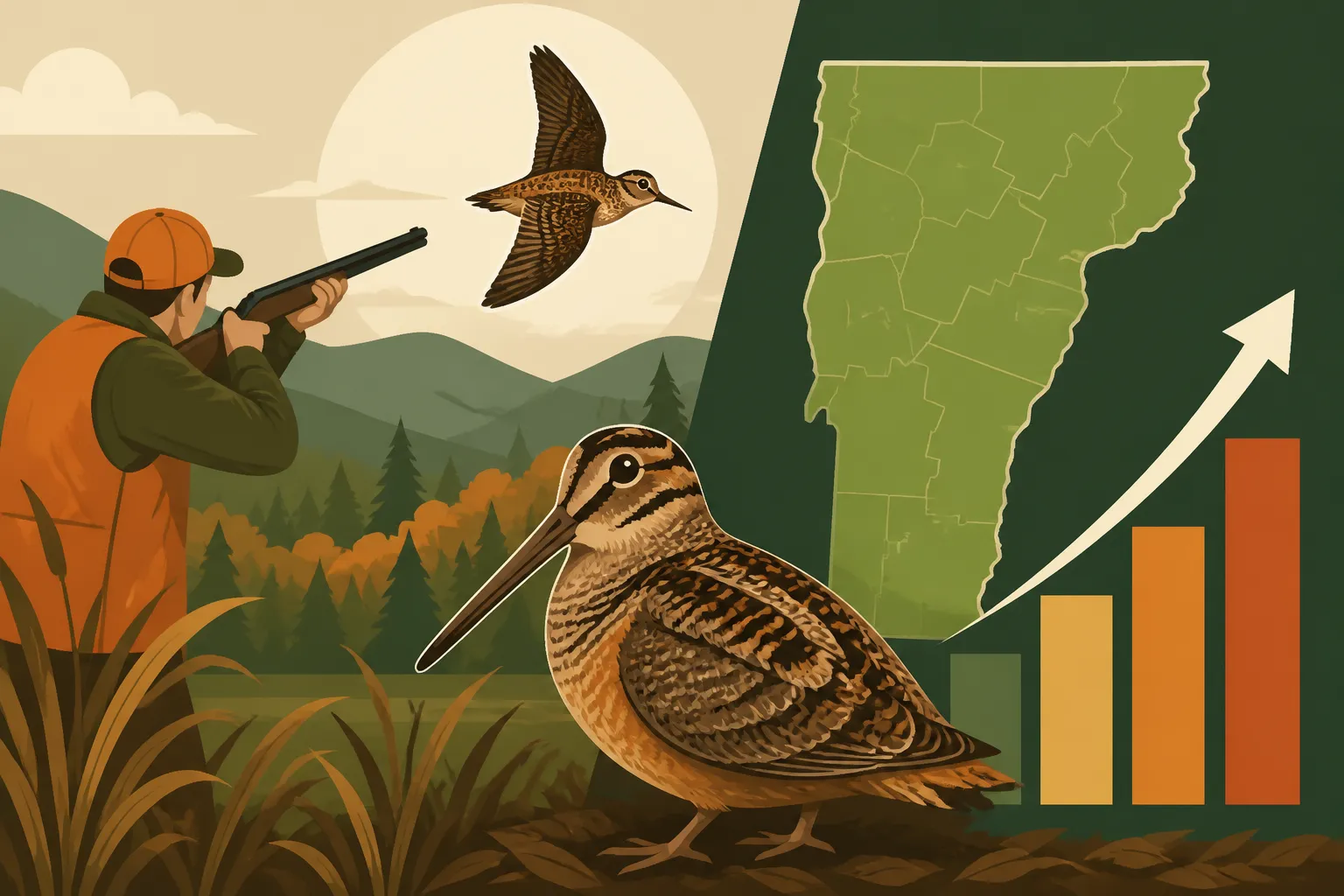
Vermont Woodcock Harvest Numbers
If you've ever found yourself trudging through the dense alders and damp coverts of a Vermont fall, hoping to flush one of those quirky, long-billed timberdoodles, you know the pure joy and sometimes utter bewilderment they bring. But beyond the thrill of the flush, many of us wonder how the woodcock population is actually doing here in the Green Mountain State. It can feel like a mystery, especially when one year you're finding birds everywhere and the next it's crickets. This guide is going to dig into Vermont's woodcock harvest numbers, shedding light on what these figures really mean for the bird, for habitat, and for us, the hunters who cherish them.
Understanding Vermont's Woodcock Population Dynamics
The American Woodcock, often affectionately called the timberdoodle, is truly one of a kind. These migratory shorebirds, despite their classification, prefer dense, young woodlands and damp, rich soil where they can probe for earthworms with their incredibly sensitive bills. Their cryptic plumage makes them masters of disguise, melting into the leaf litter and underbrush until they explode into a whirring flight, often startling the most seasoned bird hunter.
The Elusive Timberdoodle and Its Habitat Needs
Unlike deer or even turkeys, woodcock aren't exactly lining up for a census. Their secretive nature and reliance on specific, often transient, early successional habitats make tracking their numbers a unique challenge. They thrive in areas with a mosaic of young forests, brushy fields, and damp thickets, often found along stream corridors or in abandoned farmlands. These are habitats that are constantly changing due to natural succession or human activity like logging. If you're a hunter who uses tools like GoHunt to scout new areas, you're likely looking for these types of zones. A clear-cut that's five years old might be prime habitat, but in another five or ten, it could be too dense for them to probe for food or too open for cover. This constant flux means that woodcock populations, even within localized areas, can shift dramatically from year to year. It's not always about a statewide decline, but sometimes just a localized redistribution.
Migration Patterns and Their Impact on Local Numbers
One of the biggest factors influencing how many woodcock we see in Vermont, and thus how many are harvested, is their migratory nature. Vermont sits right along a significant migratory pathway for these birds as they move between their breeding grounds further north in Canada and their wintering grounds in the southeastern U.S. What we experience during our relatively short fall season is just a snapshot of a much larger continental movement.
The "fall flight," as it's often called, is heavily influenced by weather patterns. A sudden cold snap up north can push a wave of birds through Vermont in a matter of days. Conversely, a prolonged warm spell can delay their arrival or spread them out over a longer period. This means that harvest numbers in any given year might reflect more about the timing of the migration and local weather than the overall health of the breeding population. A low harvest year might simply mean the birds passed through quickly or arrived late, not necessarily that there are fewer birds in total. Understanding these dynamics is key to truly interpreting local harvest data, and resources such as When Woodcock Migrate Through Vermont can provide further context.
Decoding Vermont's Woodcock Harvest Data
So, how do biologists even begin to count these stealthy little birds, especially when they're here for such a fleeting part of the year? It's a combination of direct surveys, hunter reports, and banding efforts. While it's never a perfect science, these methods provide valuable insights into population trends and the overall health of the species.
How Harvest Numbers Are Collected and Reported
Vermont's Fish and Wildlife Department, like many state agencies, relies on a combination of mandatory and voluntary reporting systems. For small game like woodcock, hunters often report their harvest through annual surveys or, in some cases, via online platforms. While deer and turkey harvests are usually reported with strict deadlines and check stations, migratory bird data collection often involves more aggregated methods, partly due to the sheer volume and widespread nature of the hunting.
Biologists also conduct specific surveys, like the singing-ground survey in the spring, which helps estimate breeding populations. This data, combined with harvest reports from the fall, helps paint a more complete picture. The information gathered isn't just about how many birds were taken; it also considers hunter effort, success rates, and the distribution of the harvest across different regions of the state. This comprehensive approach allows the department to gauge the pressure on the resource and make informed management decisions. You can often find summarized data on state fish and wildlife websites, sometimes even integrated into mapping tools like those found on GoHunt, helping you visualize harvest distribution.
Interpreting Trends in Woodcock Harvest
Looking at raw harvest numbers year-to-year can be misleading without context. A single low year doesn't automatically signal a crisis, just as a high year doesn't mean woodcock are exploding everywhere. Instead, biologists focus on long-term trends. Are harvest numbers steadily declining over a decade? Are there significant fluctuations that correlate with specific events like widespread habitat loss or unusually severe winters?
It’s a bit like trying to read tea leaves, but with scientific rigor. For example, if breeding ground surveys show a consistent decline, and fall harvest numbers reflect that, it’s a strong indicator of a population issue. However, if breeding surveys are stable but harvest numbers are erratic, it might point more towards migratory timing, weather patterns, or shifts in hunter participation.
Here's a simplified look at how some harvest data might be presented, acknowledging that actual numbers fluctuate and are compiled by the Vermont Fish & Wildlife Department:
| Year (Hypothetical) | Estimated Harvest (Birds) | Hunter Participants (Approx.) | Birds Per Hunter (Average) | Key Factors Noted |
|---|---|---|---|---|
| Year 1 | 1,200 | 400 | 3.0 | Early cold front, good flight |
| Year 2 | 850 | 350 | 2.4 | Mild fall, delayed migration |
| Year 3 | 1,500 | 420 | 3.6 | Strong habitat regeneration |
| Year 4 | 900 | 380 | 2.4 | Heavy early season rains |
| Year 5 | 1,100 | 390 | 2.8 | Average conditions |
This table illustrates how variables like hunter numbers and external factors can influence the "birds per hunter" metric, which is often a more telling statistic than raw harvest numbers alone. Biologists cross-reference this with data from other states and regional flyway councils to get a continental perspective on species health, as woodcock are managed as a migratory bird at a federal level. For more information on how similar species are managed, check out Vermont Ruffed Grouse Population Cycles.
Factors Influencing Woodcock Harvest Success
Hunting woodcock isn't always about how many birds there are, but how accessible and concentrated they are during the season. Several environmental and human factors play a huge role in determining how successful hunters are, and thus, what those harvest numbers ultimately look like.
Habitat Changes and Their Effect on Hunter Opportunity
Woodcock are early successional habitat specialists. This means they need young, regenerating forests – think dense saplings, brushy edges, and damp ground that provides ample earthworms. In Vermont, much of our landscape is maturing into older forests. While beautiful, these older forests don't provide the ideal cover and feeding grounds for woodcock. Timber harvesting, especially clear-cutting followed by natural regeneration, creates these crucial habitats. However, logging practices vary, and the rate at which these specific habitats are created or lost directly impacts where woodcock will be found.
If you’re scouting areas, looking for recent logging activity from a few years back can be key. A patch that was cut five to fifteen years ago could be prime woodcock cover. Land managers, sometimes with the help of federal programs, specifically work to create these habitats on public lands like some Wildlife Management Areas (WMAs). Without ongoing habitat management, these areas mature and become less suitable, forcing the birds to move on. Using a mapping application on GoHunt that shows timber harvest data can give you a leg up in finding these productive areas.
Weather Conditions and the Fall Flight
As migratory birds, woodcock are incredibly sensitive to weather. The timing and intensity of the "fall flight" directly dictate how many birds are present in Vermont during hunting season. A mild autumn might mean birds linger longer in their northern breeding grounds or trickle through Vermont over an extended period. This can result in fewer concentrated flushes and, consequently, lower harvest numbers, even if the overall population is healthy.
Conversely, a sharp cold front, especially one with strong northerly winds, can push a significant wave of birds south, often concentrating them in favorable habitats as they stop to refuel. These are the days hunters dream of – when the coverts seem to be alive with timberdoodles. Heavy rains can also impact their feeding habits, driving earthworms deeper and making them harder to find, or conversely, making the ground softer and easier to probe. Pay close attention to weather forecasts, especially systems moving down from Canada, as these can be your best indicator for peak woodcock activity.
Hunter Effort and Access
Another less direct, but still important, factor in harvest numbers is simply hunter effort and access. Are fewer people hunting woodcock? Are they concentrating their efforts in specific areas? Unlike deer hunting, which has a very broad appeal, woodcock hunting tends to attract a more specialized group of bird hunters, often those who also pursue grouse. If fewer hunters are out, or if they're having trouble accessing prime habitat due to changing land ownership or posted private land, then harvest numbers will naturally be lower.
Access can be a real challenge in some parts of Vermont. While there's plenty of public land, finding the right kind of public land for woodcock can take some homework. Sometimes the best coverts are on private parcels, requiring careful negotiation for permission. Scouting tools and apps, including GoHunt, can help identify public land parcels and show property boundaries, which is invaluable for planning a hunt and knowing where to ask permission. Even the Vermont Public Land Hunting Hours can influence when and where hunters venture out.
What Harvest Numbers Tell Us About Conservation Efforts
Harvest numbers are more than just a tally; they're a pulse check on the health of the woodcock population and a guidepost for conservation efforts. Because woodcock are a federally managed migratory game bird, their conservation involves a collaborative effort across multiple states and federal agencies.
The Role of Singing Ground Surveys
Before the fall hunting season even begins, biologists are out in force during the spring, conducting what are known as singing ground surveys. This is a critical piece of the puzzle. Male woodcock perform elaborate courtship displays at dusk and dawn in open clearings, making distinctive peent calls and spiraling flights. Biologists drive specific routes, stopping at designated points to listen and count these "singing" males.
These surveys give wildlife managers an estimate of the breeding population. When these numbers are combined with data from other states and provinces, they provide a broad picture of the overall woodcock population trend across their range. If singing ground surveys show a decline, it’s a red flag, prompting further investigation and potentially leading to changes in bag limits or season lengths. This is a primary way that biologists measure the overall health of Vermont Ruffed Grouse and Woodcock populations.
Conservation Initiatives to Support Woodcock
When harvest numbers, especially combined with singing ground surveys, indicate a decline, it triggers a closer look at conservation strategies. A major focus for woodcock conservation is habitat management. Agencies work to create and maintain the early successional forests these birds need. This can involve:
- Timber Harvests: Strategically timed and designed logging operations to create young, dense growth.
- Controlled Burns: Though less common in Vermont for woodcock habitat than in other regions, burns can reset forest succession.
- Brush Hogging/Mowing: Maintaining existing clearings and edges to prevent them from maturing into unsuitable older forests.
Many of these efforts are coordinated through regional initiatives like the American Woodcock Society, which works with state agencies and private landowners to promote beneficial habitat practices. Understanding woodcock harvest numbers, therefore, is crucial for validating whether these habitat conservation efforts are actually making a difference on the ground. It's a continuous cycle of monitoring, managing, and adapting to ensure that future generations can still enjoy the thrill of a timberdoodle flush in Vermont's coverts. You can see similar conservation work for other species by exploring Vermont Small Game and Furbearers.
For hunters, being aware of these numbers and participating in surveys (if asked) helps contribute to the long-term health of this unique bird. Additionally, when you're Scouting Vermont Public Land Before Season, look for signs of habitat management that could benefit woodcock, like recently cut areas or brushy clearings. This proactive approach helps ensure good hunting opportunities and a healthy population for years to come, whether you're chasing them during Fall Turkey Hunting Vermont's Statewide Archery Window or specifically targeting timberdoodles.
Disclaimer
This article is for general informational purposes only and does not constitute professional advice. Laws, prices and regulations vary by location and change over time. Consult a qualified professional for guidance on your specific situation.