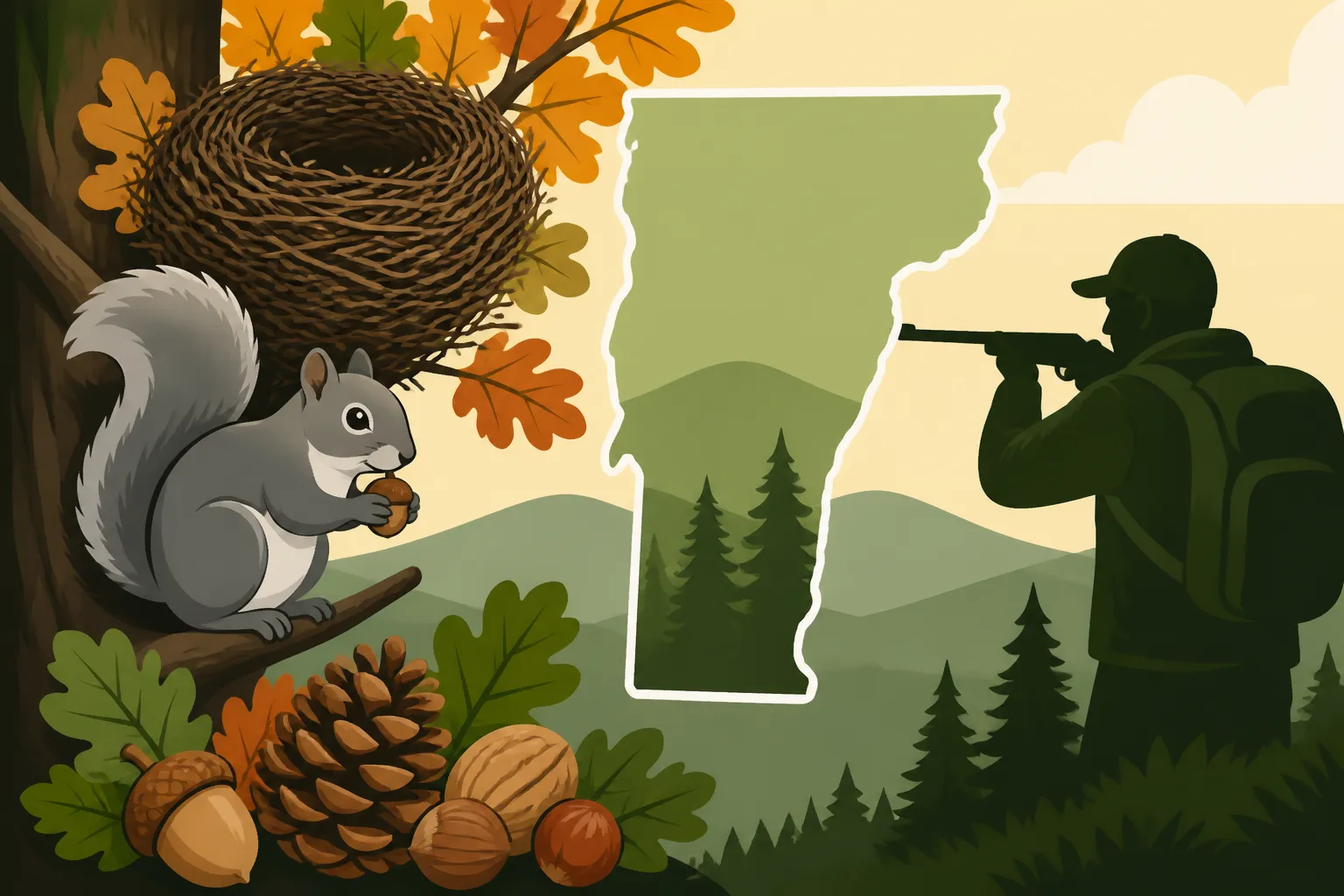
Vermont Squirrel Nest Counts and Mast Crops
It’s easy to think of squirrel hunting as just a casual pursuit, but for those of us who really love the crunch of leaves underfoot and the challenge of outsmarting a wary bushy-tail, there’s a deep connection between nature's pantry and a successful season. Here in Vermont, understanding the annual squirrel population, especially how it ties into what Mother Nature provides in terms of food, is absolutely key to knowing where and when to find these critters. This guide will walk you through how to read the landscape, focusing on squirrel nest counts and the all-important mast crops, to help you find more success in the Green Mountain woods.
The Annual Rhythm: Why Mast Crops Dictate Vermont Squirrel Hunting Success
When you think about hunting deer, you often think about food sources like acorns or beech nuts, right? Well, for squirrels, these "mast crops" are literally everything. Their entire year, from breeding success to winter survival, hinges on the abundance or scarcity of these natural provisions. A good mast year can mean an explosion in squirrel numbers, while a poor one can lead to a noticeable decline, making hunting tough. It's not just about finding squirrels; it's about understanding why they're where they are.
Understanding the Boom and Bust Cycles
Squirrel populations aren't static; they ebb and flow in direct response to the yearly mast crop. We call these "boom and bust" cycles. In a boom year, when oaks are dropping acorns like rain or beech trees are loaded with nuts, squirrels will feast. They'll reproduce more successfully, and a higher percentage of their young will survive into adulthood because food stress is minimal. You'll see squirrels everywhere, chattering in the treetops, burying caches for winter. These are the years a hunter dreams of, where the woods feel alive with activity.
Conversely, a bust year, perhaps after a late spring frost kills the blossoms on mast trees, means leaner times. Squirrels will struggle to find enough food. Competition will be fierce, and many younger squirrels, or even older, weaker individuals, might not make it through the harsh Vermont winter. Hunters who don't pay attention to these cycles often find themselves scratching their heads, wondering why their usual spots are so quiet. It’s not that the squirrels vanished; they simply never had the chance to thrive, or they moved to concentrated pockets where scarce food still exists. Knowing this helps you manage your expectations and adjust your strategy. You'll learn to look for those rare, isolated trees still producing, rather than hunting entire barren woodlots.
Key Mast Producers in the Green Mountains
Vermont's forests are a patchwork of different tree species, and not all mast is created equal in the eyes (or stomachs) of a squirrel. Understanding the primary mast producers is crucial for any hunter hoping to fill their game bag. We're primarily talking about "hard mast" here, which includes nuts and seeds, as opposed to "soft mast" like berries and fruits.
Our hardwood ridges are often dominated by various oak species, like red oak and white oak. White oak acorns are preferred by many critters because they're less bitter and have lower tannin content, but red oaks are often more reliable producers year after year. Beech trees, with their distinctive smooth grey bark, also produce highly sought-after nuts. These are often small, triangular, and packed with energy. Hickory nuts, from shagbark or pignut hickories, are another prime target for squirrels, offering a hard-shelled, energy-rich meal. Before I even set foot in the woods, I'm often pouring over aerial maps, sometimes even using features on platforms like Scouting Vermont Public Land Before Season or tools from GoHunt, to pinpoint areas that might hold good mast crops, especially those denser stands of oak or hickory that tend to be hotbeds of activity. Understanding the distribution of these trees across different elevations and soil types in Vermont is really a game-changer.
Decoding the Signs: Squirrel Nest Counts as a Population Indicator
Beyond the trees themselves, squirrels leave us other visual cues about their numbers and habits: their nests, or "dreys." These aren't just random piles of leaves; they're vital indicators of local squirrel density and historical activity. Learning to spot them and understand what they represent can give you a significant advantage in the woods.
Drey Hunting: What to Look For
When we talk about "drey hunting," we're not actually hunting the nests, but rather using them as a scouting tool. Squirrel dreys are typically large, bulky nests made of leaves, twigs, and bark, often tucked high in the crotches of trees or close to the main trunk. They can be tricky to spot at first, especially in a full canopy, but once you get your eye in, you'll start seeing them everywhere. They often look like a messy ball of debris, distinct from bird nests which are usually smaller and more intricate.
Active dreys might show fresh leaves, or you might even catch a glimpse of a squirrel slipping in or out. Over time, you'll learn to distinguish old, dilapidated dreys from newer, well-maintained ones. A concentration of multiple dreys in a single tree or a small stand of trees indicates a thriving local population. If you're walking through a woodlot and seeing a drey every few trees, that's a really good sign. However, if you're straining your neck and barely spotting any, it suggests lower squirrel numbers, potentially due to a poor mast year or other factors like heavy predation. This kind of observation is essential for determining where to focus your Squirrel Hunting Vermont Hardwoods efforts.
How Nest Density Reflects Winter Survival
The number of dreys you observe, particularly the well-maintained ones, can give you a pretty accurate proxy for the squirrel population's health and its ability to survive the previous winter. Think about it: in a year following a phenomenal mast crop, squirrels go into winter fat and healthy. They have ample energy reserves, and their reproductive success earlier in the year was high. When spring comes, more squirrels are alive, and they're ready to build new dreys or refurbish old ones for the next generation.
Conversely, a sparse drey count after a lean winter speaks volumes. It tells you that food was scarce, many squirrels succumbed to the cold or hunger, and the population suffered. The surviving squirrels might be spread out more thinly, making them harder to find. This insight is incredibly valuable for setting your expectations. If you're not seeing many nests, you know you're in for a tougher hunt and might need to adjust tactics, perhaps focusing on areas with less hunting pressure or specific, isolated food sources. Understanding How Deep Snow Affects Vermont Deer Survival can give you a sense of general winter harshness, which often correlates with small game survival too.
Here's a quick look at common mast trees and their characteristics relevant to squirrel hunting:
| Mast Tree Type | Preferred Mast | Production Cycle | Squirrel Preference | Habitat Notes |
|---|---|---|---|---|
| White Oak | Acorns | Annual, but variable | High (less bitter) | Upland hardwoods, well-drained soils |
| Red Oak | Acorns | Biennial (takes 2 yrs) | High | Upland hardwoods, various soils |
| American Beech | Beechnuts | Irregular (2-5 yr cycle) | Very High (high fat) | Rich, moist soils; often found on slopes/ridges |
| Shagbark Hickory | Hickory Nuts | Irregular | Very High (energy) | Rich soils, often in mixed hardwoods |
| Black Cherry | Cherries | Annual (soft mast) | Moderate (seasonal) | Widely distributed, old fields, forest edges |
| Sugar Maple | Samaras (seeds) | Annual | Low (emergency) | Dominant in northern hardwood forests |
Strategic Scouting: Connecting Mast, Nests, and Your Hunting Plan
Knowing about mast crops and nest counts is one thing, but actually translating that knowledge into a successful hunting strategy is where the rubber meets the road. It's about combining diligent pre-season work with smart in-season adjustments. You can't just walk into the woods blind and expect consistent success, especially when squirrel populations fluctuate.
Pre-Season Reconnaissance: Boots on the Ground and Eyes in the Trees
There's no substitute for getting out into the woods before the season even opens. This is your chance to really "read" the forest. Start by identifying potential mast trees in areas you plan to hunt. Are the oaks loaded with green acorns? Are the beech trees showing signs of a heavy nut crop? Pay attention to the ground under these trees. Are there cut nut husks, or small diggings where squirrels have been burying? This fresh sign is your first clue.
As you walk, actively look for dreys. Map out areas where you see concentrations of nests. These are your prime locations. I often carry a small notebook or use a mapping app to mark these areas. If a specific oak flat or beech ridge has multiple active dreys and a good mast crop, that’s where I’ll focus my early season efforts. This type of detailed Finding Sign in Green Mountain Timber work before the leaves fall is critical because once the canopy fills in, spotting dreys and evaluating tree health becomes much harder. It's also a great time to listen for squirrels, though their activity might be lower in summer, you can still catch them chattering or cutting nuts.
Leveraging Technology for Squirrel Scouting
While boots on the ground are irreplaceable, modern technology can give you a significant edge. Aerial maps, readily available through apps or services like GoHunt, allow you to identify large stands of hardwoods, potential mast-producing areas, and even distinct changes in timber type from the comfort of your home. You can often discern dark green patches of softwoods from the lighter greens of hardwoods, and sometimes even spot individual large mast trees.
Marking potential areas on your map digitally allows for easy navigation once you're in the field. When I'm planning my hunts, I often use these tools to identify ridges with high concentrations of oaks or areas along stream bottoms that might have a mix of beech and hickory. Then, when I get out there, I verify what the map suggests. This can cut down on wasted time walking through unproductive areas and help you pinpoint exactly where to spend your valuable hunting hours. You can even use satellite imagery to look for signs of previous timber cuts or disturbed areas that might affect food availability or squirrel movement, similar to how one might analyze Reading Aerial Photos for Green Mountain Deer.
Beyond Acorns: Other Food Sources and Habitat Considerations
While hard mast is king for squirrel populations, it's not the only thing they eat. A well-rounded understanding of their diet and habitat preferences can lead you to success even in a poor mast year or when hunting in less obvious locations. Squirrels are adaptable, and their diet shifts with the seasons and available resources.
Alternative Sustenance for Bushy-Tails
When acorns and beechnuts are scarce, squirrels won't just starve; they'll pivot to other food sources. "Soft mast" becomes much more important. This includes things like wild cherries, grapes, berries, and even apples from old abandoned orchards. If you find yourself in a year where the hard mast didn't pan out, shifting your focus to areas with these alternative foods can still yield good hunting. Hunting a Standing Apple Orchard might be your ticket to success, as squirrels will readily move into such areas to capitalize on the bounty.
Additionally, squirrels will also eat fungi, insects, bird eggs, and even tree buds, especially in the leanest times of late winter and early spring. While these aren't typically "hunt-over" food sources, understanding that squirrels are opportunists means you shouldn't entirely dismiss a woodlot just because the oaks are empty. They might be focused on an entirely different, less obvious food source. Looking for where they are cutting on various buds in the spring can give you insight into their movements and preferred trees for next fall.
The Impact of Timber Management on Squirrel Habitat
Timber management practices, like selective cutting or clear-cuts, can have a profound impact on squirrel populations and their distribution. A clear-cut, while initially devastating to mature mast trees, can eventually lead to dense young growth that provides excellent cover and a different array of food sources over time. Selective logging, if done thoughtfully, can thin out less desirable trees and promote the growth of mast-producing species.
Areas with a diversity of tree ages and species, particularly those with a good mix of mature oaks, beech, and hickory, will almost always support higher and more stable squirrel populations. Hunters should be on the lookout for these varied habitats. Checking in with local forest service offices or using mapping tools to identify recent logging activity can give you clues as to where squirrel habitats might be changing. A freshly logged area might not be great this year, but five years down the road, it could be a squirrel paradise. Always consider how these changes in Green Mountain National Forest's Two Districts might shift the game. Ultimately, success in the Vermont squirrel woods comes down to persistent scouting, a keen eye for nature's clues, and a deep understanding of the connection between the animals and their food.
Disclaimer
This article is for general informational purposes only and does not constitute professional advice. Laws, prices and regulations vary by location and change over time. Consult a qualified professional for guidance on your specific situation.