Hunting a Dam Spillway for Ducks
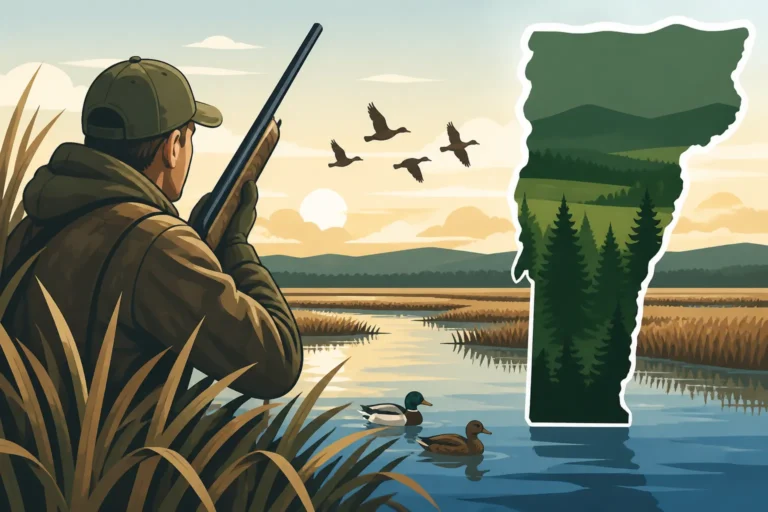
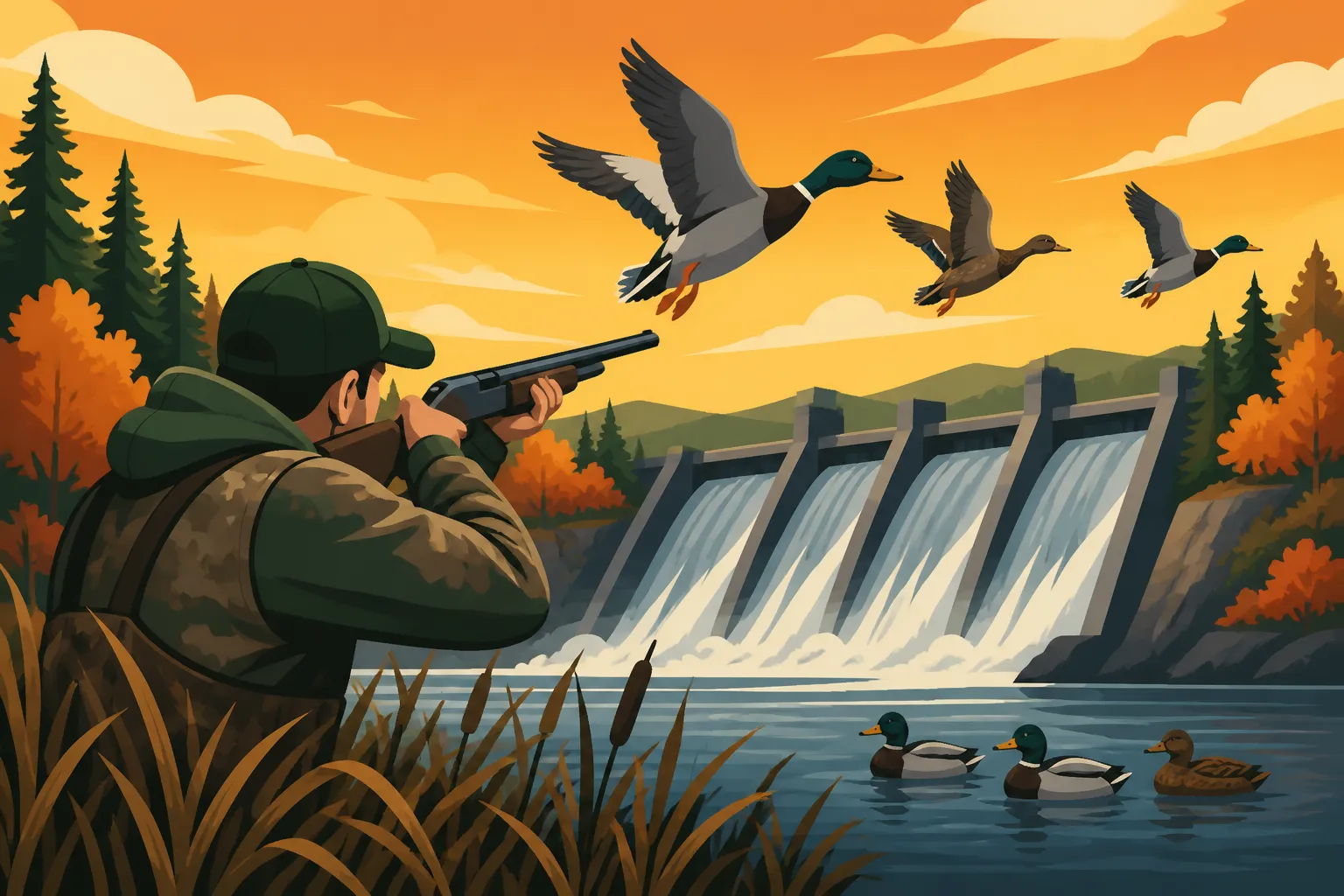
Finding consistent duck hunting opportunities in Vermont can often feel like chasing ghosts. One day, the birds are piled up in a certain marsh, the next they've vanished. Public access can be pressured, and private land is tough to come by. But there's a unique and often overlooked spot that can consistently hold ducks, especially when other water freezes up: the dam spillway. This guide will walk you through why these locations are duck magnets and how to successfully hunt them.
Understanding Why Dam Spillways Attract Ducks
Dam spillways, the overflow structures designed to release controlled amounts of water from a dam, create a microcosm of unique conditions that ducks absolutely adore. They're often overlooked by hunters who focus on larger bodies of water or traditional marshes, but their consistent features make them incredibly reliable.
Constant Water Flow and Open Water Access
One of the biggest draws of a dam spillway, particularly in late fall and early winter, is the constant flow of water. While shallow marshes and smaller ponds might skim over with ice as temperatures drop, the moving water at a spillway often remains open. This provides ducks with crucial access to water for feeding, drinking, and resting when other options are frozen solid. Think about those crisp November mornings when the edges of Lake Champlain are just starting to lock up, but you see steam rising from a small spillway downstream from a reservoir. That steam isn't just a sign of cold air meeting warmer water; it's a beacon for migrating waterfowl, telling them there's still open water available. This constant flow also helps to concentrate food sources, which we'll get into next. It's an oasis in an otherwise frozen landscape, and ducks, being opportunistic, are quick to capitalize.
Forage and Food Sources
The persistent current flowing through a spillway acts like a natural conveyor belt, continually stirring up and delivering food directly to the ducks. This isn't just about surface food; the turbulent water dislodges aquatic insects, larvae, small crustaceans, and even tiny fish or minnows from the substrate. Dabbling ducks, like mallards and black ducks, can easily tip up and grab these morsels, while divers might find a banquet of snails and mussels exposed by the flow. Imagine a small section of river where the current sweeps away leaves and silt, revealing a smorgasbord of invertebrates. That’s essentially what a spillway does, but on a consistent basis. Ducks don't have to work hard to find a meal here; the current does much of the work for them. This makes spillways prime feeding grounds, especially after a cold snap that reduces food availability elsewhere.
Shelter and Resting Areas
Beyond food and open water, dam spillways often offer excellent shelter. The very structure of a dam – concrete walls, rocky riprap, or adjacent wooded banks – can provide a significant windbreak, offering ducks a calmer place to rest and preen. You'll often find birds congregating in the eddies and slack water created by the structures, just out of the main current's strongest pull. These calmer pockets are not only easier to hold still in but also offer a measure of protection from the elements and often from predators like eagles or coyotes who might patrol more open areas. A high bank or a thicket of brush might offer a perfect sunning spot, allowing ducks to conserve energy. When you're out Hunting the Rut in Early-to-Mid November, you notice how deer seek out thick cover; ducks do the same, looking for spots where they can feel secure and minimize energy expenditure, especially during migration or harsh weather.
Scouting a Vermont Dam Spillway for Duck Hunting Potential
Effective scouting is paramount for success at a dam spillway. Unlike wide-open marshes, these spots are often linear and require a different approach to locate and understand the birds' patterns.
Identifying Public Access and Safety Considerations
Before you even think about setting foot near a dam spillway, you absolutely must know if you're on public or private land. Many dams are privately owned, or the land immediately surrounding them is private, even if the upstream reservoir is public. Trespassing is a quick way to lose your hunting privileges and alienate landowners, which none of us want to do. Tools like onX Hunt are invaluable here, allowing you to instantly check property lines and landowner information on your phone before you leave the house. This app can literally save your hunt by preventing an accidental trespass.
Beyond property lines, safety is paramount. Moving water, especially near a dam spillway, can be incredibly dangerous. Strong currents, submerged obstacles, slippery rocks, and sudden changes in water levels are all real hazards. Always scout during daylight, never alone, and wear appropriate safety gear if you need to be near the water. Look for safe entry and exit points, and consider if you'd be able to safely retrieve a downed bird without putting yourself at risk. Never take chances with swift water; a duck isn't worth a life. Remember, knowing where you can legally and safely hunt is the first step, whether you're Hunting Public Hunting Land in Vermont or a small private parcel.
Reading Water Levels and Flow Rates
Ducks are incredibly sensitive to water levels and flow rates. A spillway that's gushing after heavy rains might be too turbulent for them to rest or feed comfortably. Conversely, a trickle during a dry spell might not offer enough open water or stir up enough food. The sweet spot is usually a moderate, consistent flow. When you're scouting, pay attention to the water levels over several days or even weeks. Has there been recent rain? Has the dam operator released more water?
You'll often find that ducks prefer the edges of the main current, in those calmer eddies or backwash areas that form just downstream of obstacles or concrete structures. These spots offer a break from the strongest flow while still providing access to food delivered by the current. If you see birds actively feeding or loafing in a particular section during scouting, that's your honey hole. Use visual cues like floating debris or leaves to gauge the speed and direction of the current. A moderate flow usually means optimal conditions for ducks to feed and rest without expending too much energy.
Locating Key Features and Duck Sign
When scouting a spillway, you're not just looking for water; you're looking for micro-habitats within that water. Identify any structure that breaks the current, such as large rocks, downed trees, concrete abutments, or slight bends in the flow. These are prime areas where ducks will hold. Look for any emergent vegetation along the banks or in slower sections, as this offers additional cover and potential food.
And, of course, look for duck sign! Droppings on rocks or banks, scattered feathers, and muddy edges where birds have been feeding are all dead giveaways. If you see ducks themselves, observe their behavior. Are they feeding actively? Are they loafing and resting? Are they using a particular flight path to enter or exit the area? Observing these patterns during scouting will inform your setup on hunting day. Pay attention to how they use current breaks, small pockets of still water, or even shadows cast by structures. A good hunter is a good detective, and these subtle clues will tell you exactly where the birds want to be. Just as you might look for Scrape Lines Along a Logging Road for deer, you're looking for "duck sign" that indicates regular activity.
Effective Hunting Strategies for Dam Spillways
Hunting dam spillways requires a blend of traditional waterfowl tactics adapted for the unique environment of moving water and often exposed terrain. It's not like setting up in a vast marsh; it's more about precision.
Decoy Spreads and Placement in Current
Setting up decoys in moving water is a bit different than in still water. The current will do some of the work for you, but it also presents challenges. You want your decoys to look natural, actively feeding and resting, not battling the current or bunching up unnaturally.
For dabbling ducks like mallards and black ducks, a spread that simulates feeding birds is often best. Use a jerk string or a spinner decoy in a calmer eddy to create realistic motion. Place most of your decoys in the slower water, facing upstream into the current, as real ducks would. Leave an open landing zone directly in front of your blind, slightly upstream of your main spread. This gives incoming birds a clear, inviting place to commit.
For diver ducks, if they're using the spillway, a more compact raft of decoys in a slightly deeper, faster section can work. Again, they should be facing into the current. Remember to anchor your decoys securely; strong currents can easily drag them downstream. Often, a combination of weights or even attaching them to a heavier line running across a current break can prevent them from drifting away. Think about the principles of Decoying Ducks on Lake Champlain – motion and realistic positioning are key, but the current adds another dimension to consider.
Concealment and Approach
Dam spillways are often in more open areas, sometimes with concrete structures or riprap, making natural concealment tricky. This means you have to be extra vigilant about hiding.
Use the available cover: Look for any natural depressions, large boulders, thick brush, or even the shadows cast by the dam structure itself. If you're on a bank overlooking the spillway, create a simple blind using local vegetation, or bring a portable ground blind that blends in. You can also utilize the very structure of the dam, if safe and legal, to break up your outline. Remember that ducks have incredible eyesight, especially when approaching from above.
Master your approach: Your approach to the spillway needs to be stealthy and well-planned. Ducks will often approach from upstream or downstream, circling before committing. If they see you, it's game over. Use topographical features to stay out of sight until you're in your blind. Approach well before first light, under the cover of darkness, and avoid silhouetting yourself on a ridge or against the sky. A careful, quiet entry is half the battle. Just like when you're Still-Hunting Green Mountain National Forest Timber, every step matters.
Call Selection and Technique
The constant rush of water at a dam spillway creates a noisy environment. This means your calling strategy needs to be adapted. Subtle quacks and feed calls that work wonders in a quiet marsh might be completely lost here.
You'll often need to call louder and more aggressively to get the attention of ducks over the sound of the flowing water. A sharp, piercing hail call to get their attention is often a good start. Once they turn, you can switch to more reassuring greeting calls and eventually feed chuckles if they're working towards your spread.
Listen to the cadence of the water; try to time your calls during lulls in the loudest rushes if possible. And don't overcall. If birds are locked up and coming in, put the call down and get ready. The goal is to sound natural and inviting, not like a frantic concert. Having a good quality call that can cut through the noise is crucial. For specific local advice, check out Calling a May Gobbler Off the Roost for principles of calling in noisy environments, even if it's a different species.
Essential Gear and Safety for Spillway Hunting
Hunting dam spillways demands specific gear and an unwavering commitment to safety, given the unique challenges of moving water and potentially exposed conditions.
Waders, Flotation, and Cold Weather Gear
Hunting around moving water, especially in Vermont's chilly hunting seasons, means good waders aren't just a convenience; they're a necessity. Choose stout, insulated chest waders that can withstand snags and keep you warm. Neoprene or breathable waders with good layering underneath are essential.
More importantly, consider flotation. Moving water can be deceptive and dangerous. A personal flotation device (PFD) or even an inflatable life vest is a smart, often overlooked, piece of safety gear. Falling into swift, cold water can quickly lead to hypothermia and disorientation, even for strong swimmers. Don't take chances.
Layering is critical for warmth. The air around moving water can feel colder due to evaporation and wind. Start with a moisture-wicking base layer, add insulating layers like fleece or down, and top it off with a waterproof, windproof outer shell. Bring extra gloves, a warm hat, and hand warmers. You can read more about effective layering in Layering for Vermont's Long Hunting Season. You'd be surprised how quickly the cold can penetrate, even on what seems like a mild day.
Retrieval Tools and Emergency Preparedness
Retrieving a downed duck from a dam spillway can be challenging. The current can quickly carry birds downstream. A well-trained retrieving dog is ideal, but if you don't have one, other tools are essential. A long retrieval pole with a hook or net can be invaluable. If the water is calm and safe enough, a small, stable kayak or canoe might be an option, but only if you are experienced and the conditions are absolutely safe, with proper flotation and a partner. Never try to swim after a bird in moving water.
Beyond bird retrieval, think about broader emergency preparedness. Carry a fully charged cell phone (though service can be spotty in some Vermont areas, so don't rely solely on it). Pack a basic first-aid kit, a whistle, and a bright, waterproof flashlight or headlamp. Let someone know where you are hunting and when you expect to return. In a remote spillway, you might be a long way from help, so being self-sufficient is key. While GoHunt is primarily focused on Western big game, the principle of thorough preparation and safety planning it advocates is universal and absolutely applies here.
Shot Selection and Ammunition Considerations
When hunting waterfowl, non-toxic shot is legally required across all of Vermont. This means steel, bismuth, or tungsten-alloy shot. For spillway hunting, where shots can be at varying ranges and often on fast-moving birds, selecting the right shot size and load is important.
Generally, 2-shot or 4-shot steel for larger ducks like mallards and black ducks, or 6-shot for smaller teal or wood ducks, works well. Consider a heavy, high-velocity load to ensure clean kills. Because dam spillways often involve shooting over water or concrete, be mindful of ricochets. Always identify a safe backdrop before taking a shot, and be acutely aware of your surroundings, especially if there are homes, roads, or other infrastructure nearby. Safe shooting lanes are paramount in these often more confined hunting environments. Understanding Vermont Duck and Goose Bag Limits and staying compliant with all regulations, including shot type, is always crucial.
Table: Key Differences: Spillway vs. Marsh Duck Hunting
Here's a quick rundown of how hunting a dam spillway often differs from a more traditional marsh hunt:
| Feature | Dam Spillway Hunting | Marsh/Pond Hunting |
|---|---|---|
| Water Condition | Constant, often swift current; open water year-round | Still or slow-moving; prone to freezing |
| Primary Draw | Open water access, concentrated food, thermal breaks | Abundant natural food (plants, seeds), diverse cover |
| Concealment | Often challenging; reliance on structures, ground blinds | Easier with cattails, reeds, natural vegetation |
| Decoy Setup | Securely anchored, positioned in currents, focus on motion | Flexible spreads, often in open water with landing zones |
| Calling | Louder, more aggressive calls to cut through water noise | More subtle, varied calls depending on situation |
| Safety Concerns | Swift water, hypothermia, submerged obstacles, ricochets | Soft mud, hidden stumps, open water exposure |
| Retrieval | Challenging due to current; retrieval poles/dogs essential | Easier in calmer water; dogs or wading |
| Gear Focus | Heavy waders, PFD, durable decoys, sturdy anchors | Lighter waders, boat for setup, varied decoys |
Considerations Beyond the Hunt
Successfully hunting a dam spillway involves more than just setting decoys and calling. It’s about being a responsible, ethical hunter and understanding the broader context of Vermont’s waterfowl resources.
Respecting the Environment and Infrastructure
Dam spillways are often man-made structures with specific functions. They are not simply natural hunting grounds. Always be aware of your impact on the environment. Pack out absolutely everything you pack in, and perhaps even pick up some litter you find. Avoid damaging any part of the dam's infrastructure or surrounding property. This not only keeps the area pristine but also helps ensure continued access for future hunters. Leaving no trace is a fundamental principle of ethical hunting. Just as you consider your impact when Hunting a Green Field Planted for Deer, you should consider the unique environment of a spillway.
Furthermore, recognize that these areas may have other users – anglers, hikers, or simply people enjoying the scenery. Be courteous and represent the hunting community in a positive light. A friendly wave or a polite conversation can go a long way in fostering good relationships between different outdoor enthusiasts.
Understanding Waterfowl Seasons and Regulations
Vermont has specific waterfowl zones and seasons that dictate when and where you can hunt ducks. Always, always check the current regulations before heading out. The state is divided into different zones – Lake Champlain, Interior, and Connecticut River – each with its own specific opening and closing dates and bag limits. A dam spillway might fall into any one of these zones, so be certain of your location. You need a base hunting license, a Vermont migratory bird license, and a Federal Duck Stamp. Don't forget your Vermont Migratory Bird Certification and your Vermont Federal Duck Stamp Requirement! These are non-negotiable.
Bag limits and species-specific regulations are also crucial. You might see a variety of ducks using a spillway, but not all are legal to harvest, or they might have different daily limits. Being able to identify ducks in flight and on the water is a critical skill for any waterfowl hunter. This knowledge ensures you stay within the law and contribute to responsible wildlife management, preserving our hunting heritage for years to come. For specific dates and rules, refer to Vermont Waterfowl Zones and Seasons.
Post-Harvest Care and Reporting
Once you've harvested a duck, proper post-harvest care is essential to ensure high-quality table fare. Field dress your birds quickly to cool them down, especially if the weather isn't freezing. Carry game bags to keep them clean and protected during transport. Knowing how to properly pluck and prepare your ducks will ensure that none of that delicious wild game goes to waste.
Vermont also has specific reporting requirements for some game, though typically not individual ducks. However, participation in voluntary harvest surveys, if offered, helps wildlife biologists monitor populations and make informed management decisions. Every piece of data contributes to our understanding of the resource, which ultimately benefits us as hunters. Even though it's a different animal, the principles of Butchering a Deer at Camp can translate to efficient field care for ducks.
Disclaimer
This article is for general informational purposes only and does not constitute professional advice. Laws, prices and regulations vary by location and change over time. Consult a qualified professional for guidance on your specific situation.