Staying Safe Bowhunting Alongside Rifle Hunters
The vibrant foliage of Vermont's autumn is truly a sight to behold, and for many bowhunters, it represents the heart of the season. But then November rolls around, and suddenly, the woods that once felt like your private domain are buzzing with a different energy: rifle season. For archers who choose to stay in the field during this overlap, a crucial question arises: how do you keep yourself safe when the rules of engagement, and the primary weapon of choice, change so dramatically? This guide is all about navigating that unique challenge, ensuring you can still pursue your passion with confidence and, most importantly, safely.
Understanding the Overlap and Its Implications
The introduction of the archery-during-rifle overlap was a big change for many of us, creating new opportunities but also new considerations. It’s no longer just about blending in with the forest; it’s about making sure you’re unmistakably human to every other hunter out there.
The Reality of Shared Woods
Vermont's decision to allow bowhunting during portions of the rifle season fundamentally shifts the dynamic of our deer woods. Historically, these seasons were more distinct, creating clear periods where you knew what kind of hunter you'd encounter. Now, especially during Vermont's New Archery-During-Rifle Overlap Rule, you have a mix. You've got folks sitting in treestands with compound bows, and then just a ridge over, you might have a group of rifle hunters pushing a woodlot.
This creates a scenario where two very different hunting styles, with different priorities and fields of view, are sharing the same space. A rifle hunter might be covering a large field or a long clear-cut, looking for fast-moving deer. A bowhunter, on the other hand, is often still-hunting through thick cover, moving glacially slow, or sitting absolutely motionless in a treestand, focused on a small shooting lane. That quiet stillness, so critical for bowhunting success, can ironically make you less noticeable to someone scanning the woods for movement from a distance. We're all out there for the same thing – to enjoy the hunt and maybe fill the freezer – but the methods dictate our awareness levels in different ways. It’s no longer enough to just know where the deer are; you also need to be acutely aware of where other hunters might be, and how they perceive the landscape.
Why Visibility Becomes Paramount
If there’s one non-negotiable shift in mindset when bowhunting during rifle season, it's that visibility for you becomes absolutely paramount. In early archery season, our primary concern is breaking up our silhouette, using natural camouflage patterns to melt into the background. We spend countless hours choosing the right camo, looking at fabric textures and patterns that mimic bark or leaves. But when rifle season opens, that traditional camo, while still effective at hiding you from deer, can actually become a liability when it comes to being seen by other hunters.
The game changes from pure concealment to being unequivocally identified as human. Imagine a scenario: a rifle hunter spots a flash of movement through thick timber. If you're wearing head-to-toe traditional camo, that movement might be interpreted as a deer, or worse, a bear. If you're wearing blaze orange, that same movement is immediately and undeniably identified as a fellow hunter. This isn't just about legal compliance; it's about making sure no one ever has to make a split-second, mistaken judgment call. The slight edge you might gain in concealment from a deer by taking off your orange is simply not worth the risk of being mistaken for game by another human hunter. It's a psychological hurdle for some, I know, to trade that stealth for safety, but it's a trade every responsible hunter makes.
Essential Gear for Enhanced Visibility
When you're sharing the woods with rifle hunters, your gear choices shift from merely functional to safety-critical. It's not just about what helps you hunt, but what helps you be seen.
The Blaze Orange Mandate and Beyond
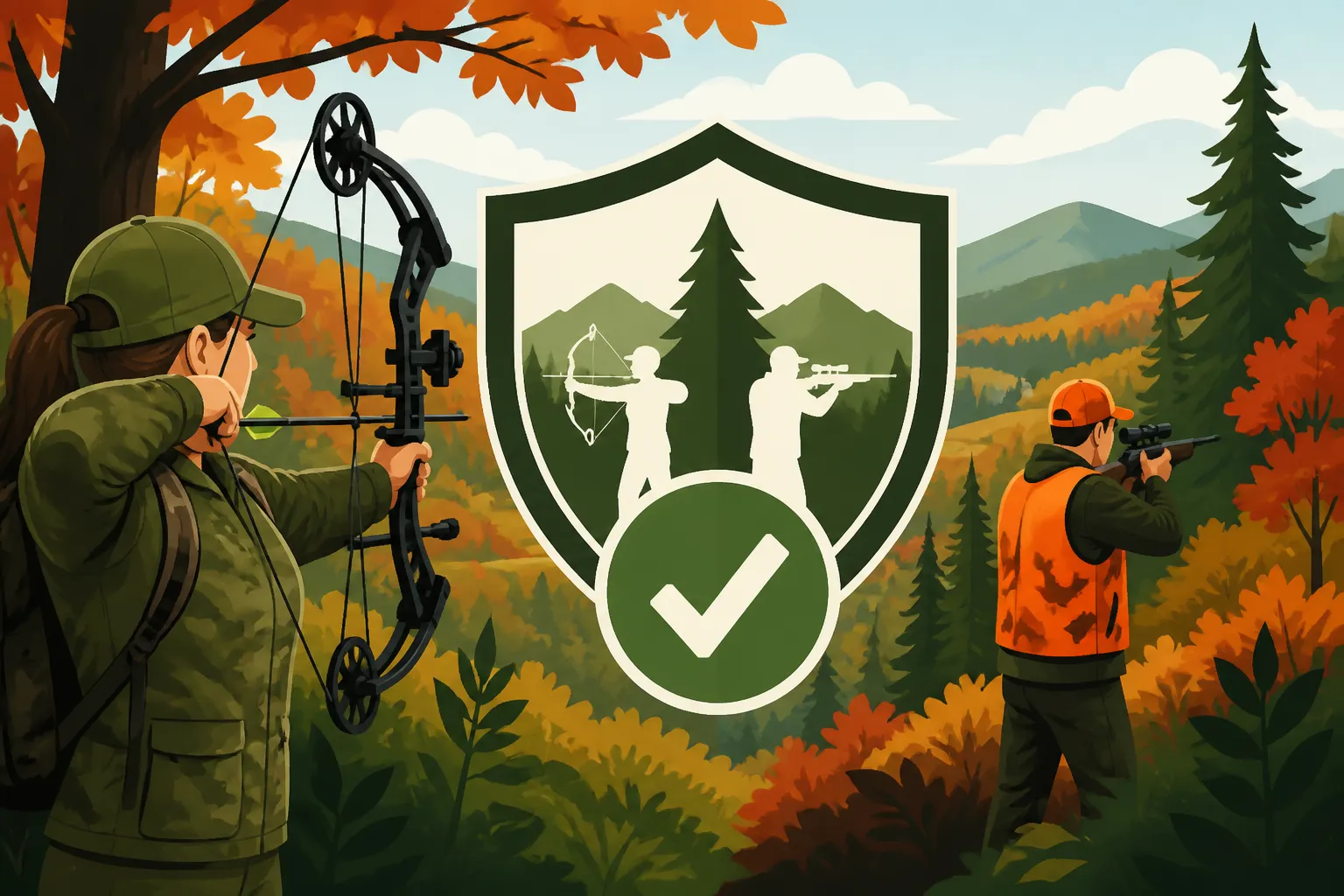
Let's be crystal clear: blaze orange is not optional when you're in the woods during rifle season, even if you're carrying a bow. Vermont law is specific on Blaze Orange Requirements for Bowhunting the Overlap. We're required to wear a certain amount, typically a minimum of 500 square inches above the waist, visible from all angles. This means a vest and a hat, at the very least. But as someone who's spent many hours in those November woods, I'll tell you this: don't just meet the minimum. Go beyond it.
Think about layering. A simple vest over your jacket is a start, but what about your pack? Many companies offer blaze orange pack covers that can be quickly deployed. Some packs even have integrated blaze orange panels. A blaze orange beanie or baseball cap is standard, but consider a full blaze orange jacket if your budget allows. The more orange you have, the better. When you're walking in or out in the low light of dawn or dusk, or moving through thick evergreens, every bit of added visibility counts. It’s not about spooking deer; it’s about signaling your presence unmistakably to anyone else who might be in the vicinity. After all, a deer might see your orange, but it's not going to shoot at you. Another hunter might not see your camo, and that's the risk we're trying to eliminate.
Strategic Use of Reflective Materials and Lights
While blaze orange is for daytime visibility, what about those critical low-light hours or navigating in the dark? This is where reflective materials and good lighting become your best friends. Reflective tape might not be legally mandated, but strategically placed strips on your treestand, the straps of your backpack, or even on your boot heels can make a huge difference if you're walking out after dark and another hunter is coming in. It catches light from headlamps, making you pop out of the darkness.
Speaking of headlamps, invest in a good one. A bright, reliable headlamp is essential for safe navigation through the woods before first light and after last light. Many modern headlamps also feature a red light option. This is a game-changer because red light preserves your natural night vision, making it easier for your eyes to adjust to the darkness around you, and it's generally less alarming to wildlife. If you hear someone approaching, a quick flash of your headlamp can alert them to your presence without startling them. Always make sure your headlamp has fresh batteries, or carry spares, because being stuck in the dark miles from your vehicle is a situation no hunter wants to experience. Especially when you're relying on that light to be seen.
Tactical Approaches to Minimize Risk
Beyond your gear, how you approach your hunt and move through the woods fundamentally impacts your safety when sharing space with rifle hunters. It's about being smart and proactive.
Communicating Your Presence
This is often the hardest part for us bowhunters. We train ourselves to be absolutely silent, to move like a ghost, to blend in so perfectly that even a squirrel doesn't notice us. But during rifle season, that silence can be a dangerous thing. If you hear movement nearby and suspect it's another hunter, a subtle vocalization can be a lifesaver. Instead of trying to mimic a deer grunt, which could invite a shot, a simple, clear, "Hunter here!" or even a polite cough or rustle of leaves can alert them to your presence without creating undue alarm.
If you're in a treestand and see someone approaching your position, don't wait until they're right underneath you. A quiet but firm "Morning, hunter!" or "Just letting you know I'm up here!" can prevent a dangerous situation. It's awkward, yes, but far better than the alternative. I also always carry a small whistle in my pack. It's for emergencies, of course, but a distinct blast can also serve as an undeniable signal of human presence if you find yourself in a situation where you need to be heard over distance or background noise. The key is to communicate clearly and calmly.
Choosing Your Stand Location Wisely
Your choice of stand location takes on added significance during the rifle season overlap. While you might typically seek out the thickest, nastiest cover for bowhunting, those areas can become high-risk when rifle hunters are in the vicinity. Visibility isn't just for others to see you; it's also for you to see others.
Consider positioning your stand with not only clear shooting lanes for deer but also clear lines of sight to common approach routes, trails, or property boundaries. Avoid setting up directly on top of a well-used game trail if it's the most obvious path for other hunters too, especially if it leads into dense cover. Instead, choose a spot slightly off to the side, perhaps on a ridge overlooking a funnel, where you have a better overview. It's also smart to set up with a natural backstop behind you – a large tree, a rise in the terrain, or a rock face – to absorb any stray projectiles, although the golden rule is always know what's beyond your target. Hunting a Funnel Between Two Woodlots can be effective for deer, but ensure your setup there still provides good visibility to your surroundings.
If you're using a ground blind, ensure it’s clearly marked with blaze orange. Using a Ground Blind on Public Land means you're almost completely obscured, making that orange even more vital. Also, consider the terrain. High-elevation benches or clearings can offer better visibility than deep, dark ravines.
Movement and Awareness on the Ground
If you're not in a stand, but rather still-hunting or stalking, your movements must be even more deliberate and cautious. Assume every rustle and snap of a twig is another hunter, not just a deer. Move slowly, taking one step at a time, pausing to scan your surroundings constantly. This isn't just for spotting deer; it's for spotting other hunters before they spot you, or before you inadvertently spook their deer.
I strongly advise against wearing headphones, or at least against using noise-canceling ones, during rifle season. You need to be able to hear distant rifle shots, voices, or the distinct crunch of another person's footsteps. Sound is a critical component of situational awareness. Regularly sweep your eyes, looking for flashes of blaze orange, the glint of a scope, or the outline of a person. Use an app like GoHunt or your preferred mapping software, like the one used for Best GPS App for Vermont Public Land, not just to track deer sign, but to be aware of property lines and potential access points for other hunters. Being aware of Hunting Pressure on Vermont Public Land can also inform your movement strategy, perhaps encouraging you to move slower in high-pressure areas.
Planning and Preparation for a Safe Hunt
Safety in the woods isn't just about what you do in the moment; it's built on solid preparation long before you step foot out the door.
Sharing Your Hunt Plan
This is a fundamental safety rule for any hunt, but it's amplified when you're bowhunting during rifle season. Before you head out, always tell a trusted friend or family member exactly where you're going to be hunting, your planned route, and when you expect to return. Give them a detailed description, perhaps even a marked map. If you're using a mapping app, consider sharing your location with them, if the app allows.
Think about it: if something goes wrong, whether it's an accident, a fall, or a misunderstanding with another hunter, having someone know your whereabouts is crucial for search and rescue efforts. It sounds basic, but in the excitement of hunting, it’s easy to overlook. A simple text message with your drop-pin location and "I'll be out by dark" could be a lifesaver. This kind of preparation gives you, and your loved ones, peace of mind, knowing that if you don't check in, someone knows where to start looking. Knowing Scouting Vermont Public Land Before Season to define your hunt plan carefully helps with this.
Understanding Hunter Behavior and Local Pressure
Vermont's hunting culture is diverse, and understanding how different groups operate can give you an edge in safety. Rifle hunters, especially during the peak of the season, might be engaged in deer drives, moving in a line through a woodlot to push deer towards standers. If you're still-hunting solo with a bow, you absolutely need to be aware of this possibility. Listen for distant shouts, dog barks (if permitted in that area for specific game), or multiple rifle shots in succession, which might indicate a drive in progress.
It’s also wise to research the typical hunting pressure for the areas you plan to visit. Some WMUs or popular public land tracts might be swarming with hunters on opening day, while others see less traffic. Using resources like the Vermont Fish & Wildlife Department’s harvest reports or even local forums can give you a feel for areas that tend to be hotspots. If an area is known for heavy pressure, you might choose to hunt it differently – perhaps sticking to less accessible spots, or opting for a different day altogether. Always check the regulations for your specific WMU; Vermont's Statewide Versus Limited Fall Turkey WMUs is a good example of how rules can vary by location. Knowing your chosen territory inside and out, from game movement to common hunter access points, is part of being a truly prepared hunter.
Post-Shot Protocol and Game Recovery
The moment of truth – you've made a good shot with your bow, and now it's time to recover your deer. This phase of the hunt requires particular care when rifle hunters are also in the woods. First and foremost, if you took off your blaze orange while on stand, put it back on immediately before you leave your stand to track. Every second you spend tracking without your orange on is a risk you shouldn't take.
When you begin tracking, especially if it's into thick cover or across varied terrain, move slowly and deliberately. If you have a partner, ensure both of you are wearing blaze orange and are communicating constantly. Don't rush into heavy brush without first assessing the area for other hunters. If you come across another hunter, announce your presence clearly and explain what you're doing. It’s always best to be overly cautious than to have a dangerous encounter. If you need to follow a blood trail that leads onto private land, make sure you understand Retrieving Game From Private Land in Vermont and have explicit permission before crossing any boundary. When it comes to Tracking a Deer in Fresh Green Mountain Snow or even just tracking a well-hit deer in leaf litter, the process demands intense focus – but never let that focus overshadow your awareness of other human presence.
| Feature | Archery-Only Season (Early Fall) | Bowhunting During Rifle Season (Late Fall/Early Winter) |
|---|---|---|
| Primary Focus | Blending in, pure concealment from deer | Being seen by humans, while still hunting effectively |
| Gear Emphasis | Camouflage, quiet movement | Blaze orange, reflective materials, visible pack covers |
| Movement Style | Stealthy, slow stalk | Extremely deliberate, frequent scanning, vocalization |
| Awareness Goal | Locating deer, wind, scent | Locating deer and other hunters, sounds of shots/voices |
| Stand Location | Often deep cover, dense edges | More open areas, clear lines of sight, natural backstops |
| Communication | Minimal, to avoid alarming game | Proactive verbal alerts to other hunters |
| Post-Shot | Focus on blood trail | Donning blaze orange immediately, slow & cautious tracking |
Disclaimer
This article is for general informational purposes only and does not constitute professional advice. Laws, prices and regulations vary by location and change over time. Consult a qualified professional for guidance on your specific situation.