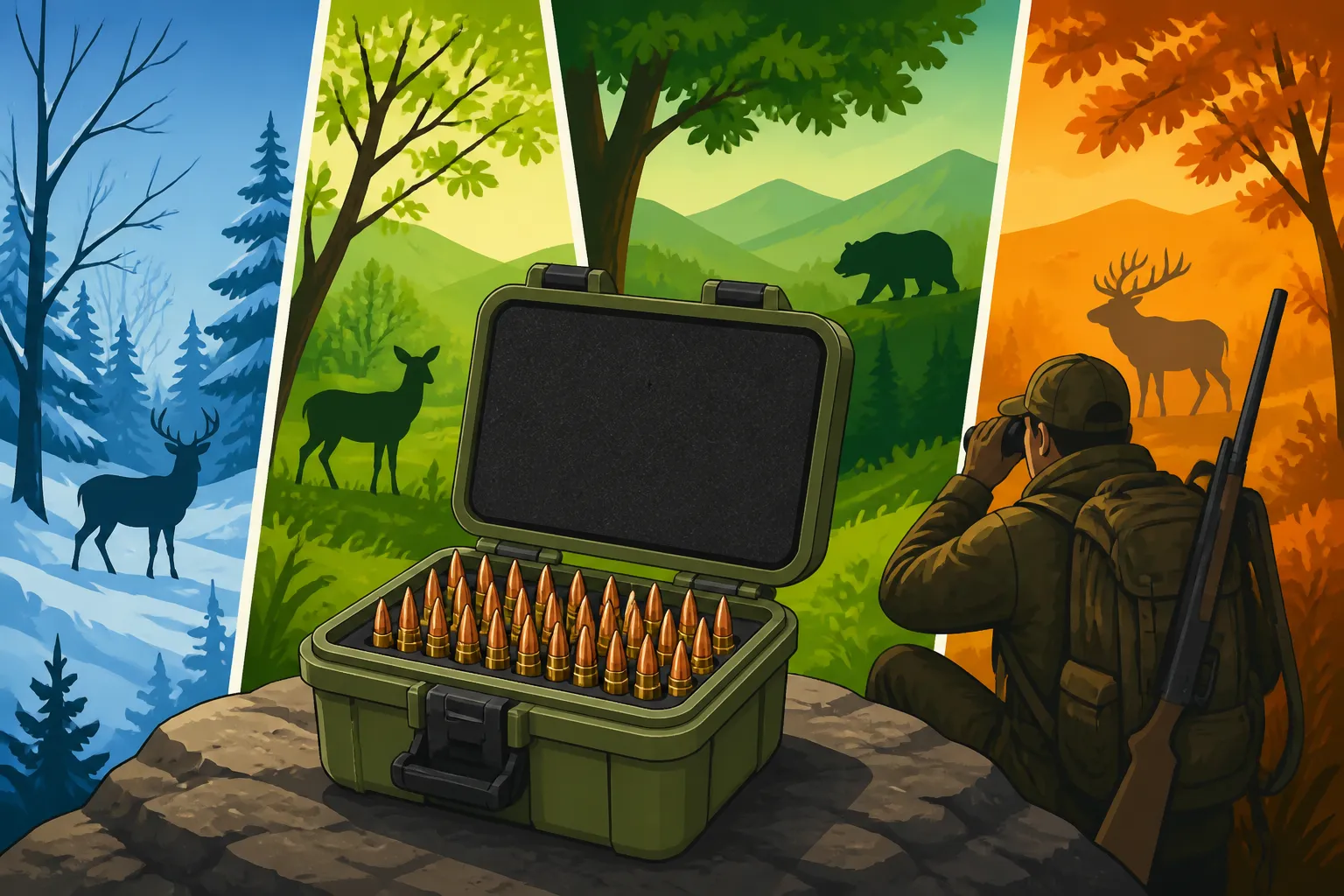
Best Ammo Case for a Multi-Season Hunt
There's nothing quite like the diverse hunting opportunities we have here in Vermont, but let's be honest, that diversity comes with its own set of logistical challenges. One minute you're chasing early season archers in crisp September, the next you're bundled up for a frigid December muzzleloader hunt, and somewhere in between, there's rifle season, bear season, and turkey season, each demanding different calibers and loads. Juggling all that ammunition, keeping it safe, dry, and organized, can be a real headache. This guide is all about helping you find the best ammo case for your multi-season hunting adventures in Vermont, ensuring your cartridges are always ready when you are.
The Unique Challenges of Multi-Season Hunting in Vermont for Ammunition Storage
Vermont hunters know better than anyone that our seasons throw everything at you. From the early archery days to the late muzzleloader closes, the environmental conditions and the types of game pursued mean your ammunition storage needs to be as adaptable as you are. It's not just about tossing a few boxes into a backpack; it's about protecting your investment and ensuring reliability when it counts.
Weather Extremes and Their Impact on Ammo
Our Vermont weather is famously unpredictable. A beautiful, crisp fall morning can quickly turn into a driving rainstorm, or even an unexpected snowfall, especially when you're out deep in the woods. Ammunition is sensitive to moisture. Even a little bit of humidity can begin to degrade powder, compromise primers, or corrode brass, leading to misfires or inconsistent performance. Imagine finally getting that big buck in your crosshairs during Hunting the Rut in Early-to-Mid November only for a wet round to fail. It's a hunter's worst nightmare.
Temperature swings are another factor. Extreme cold, common during the Muzzleloader Deer Hunting in Vermont season, can affect powder burn rates, subtly changing your point of impact. While modern ammunition is incredibly robust, protecting it from these rapid environmental shifts, especially condensation when moving from a warm vehicle to frigid air, is crucial. Your ammo case needs to be a fortress against the elements, capable of sealing out dampness and protecting against sudden temperature changes that can wreak havoc on your carefully chosen loads.
Diverse Calibers and Loads for Different Game
One of the great joys of hunting in Vermont is the sheer variety of game available, but this also means a varied arsenal. You might be carrying a .30-06 for deer, a .22 for squirrels, and a scattergun for spring turkeys, perhaps even a dedicated heavy hitter for black bear. Each of these requires a distinct type and caliber of ammunition. Mixing them up is not just inconvenient; it can be dangerous. Accidentally grabbing a .270 round for your .30-06 in the dim light of pre-dawn can lead to a jammed action or worse.
Your multi-season ammo case isn't just a container; it's an organizational system. It needs to accommodate these different calibers and loads, keeping them neatly segregated and clearly identifiable. This is especially true if you hunt multiple species within a short timeframe, or if you're like many Vermont hunters who might carry both a rifle and a bow during the Hunting a Bow During the Rifle Season Overlap, requiring different types of projectiles for each method. The goal is to spend less time rummaging and more time focused on the hunt.
Transport and Public Land Considerations
Getting to your favorite hunting spot in Vermont often involves navigating rough logging roads, bumping along dirt tracks, or even a hike deep into the backcountry of the Green Mountain National Forest. Your ammo case needs to withstand this abuse. It will be tossed in truck beds, strapped to ATVs, or carried in backpacks. A flimsy case that cracks or pops open during transport can scatter your precious ammunition, leaving you scrambling or, even worse, without the rounds you need.
Beyond durability, there are practical considerations. If you're utilizing public lands, say deep in one of the Green Mountain National Forest's Two Districts, you need a case that secures your ammunition safely, preventing unauthorized access. This not only speaks to general safety but also to legal compliance, as many states have specific regulations regarding the transport of firearms and ammunition. A robust, lockable case offers peace of mind whether your gear is in the truck or at base camp.
Essential Features of a Multi-Season Ammo Case
When you're outfitting yourself for the diverse hunting opportunities Vermont offers, your ammo case isn't just an afterthought; it's a critical piece of gear. Think about what it really needs to do: protect your ammunition from the elements, keep it organized, and make transport seamless.
Durability and Weather Protection
This is paramount for any gear heading into the Vermont woods. Your multi-season ammo case needs to be built tough. Look for heavy-duty polymer construction, not flimsy plastic. These materials are designed to withstand drops, impacts, and the general rough and tumble of hunting season. Imagine your case taking a tumble off the tailgate onto a rocky logging road—you want your ammo inside to be completely unharmed.
Beyond impact resistance, serious weather protection is a must. An O-ring seal around the lid is non-negotiable. This creates a watertight barrier, keeping out rain, snow, and even dust. You want latches that are robust and secure, not just a simple snap closure. Many quality cases feature multiple, heavy-duty latches that compress the O-ring, ensuring a tight seal. This kind of protection is vital when you're facing a surprise shower or even persistent dampness that can creep into less-protected containers. Some cases are even designed to float if accidentally dropped in water, an extra layer of peace of mind if you're hunting near a beaver flowage or crossing a creek.
Organization and Capacity
A multi-season hunter carries a variety of ammunition. A good ammo case will help you keep it all sorted. Look for cases that offer internal trays, dividers, or even modular systems that allow you to customize compartments. This way, your .30-06 deer rounds can be kept separate from your .223 coyote loads, and your turkey slugs from your buckshot. Clear labeling is also crucial – you can use simple labels or even color-coded markers on your cases or trays.
Capacity is another key factor. Are you looking to store a bulk supply of various calibers at your hunting camp, or do you need a more portable case to carry a day's worth of ammo for a specific hunt? Some cases are designed for high-capacity bulk storage, holding hundreds of rounds, while others are more compact, ideal for carrying a specific quantity. Think about how much ammo you typically bring for a multi-day trip versus a short morning hunt. Many hunters find it beneficial to have a larger storage case for the truck or camp, and then smaller, specialized pouches or boxes that they load up for each specific outing. A good system, perhaps researched on a platform like GoHunt, will help you avoid mixing up your loads when you're half-awake and heading out before dawn.
Security and Ease of Transport
Safety is always first, and securely storing your ammunition is a big part of that. Many quality ammo cases feature padlock tabs, allowing you to lock your case for peace of mind and to comply with any transport regulations. This is especially important if you're leaving your gear in a vehicle at a trailhead or in a tent at a remote camp. It protects against theft and prevents accidental access by anyone, especially children.
Ease of transport refers to how comfortably and safely you can move your loaded case. Ergonomic, heavy-duty handles that won't dig into your hand are important, especially when the case is loaded with dense ammunition. For heavier, bulkier cases, features like integrated wheels can be a lifesaver, allowing you to pull it rather than carry it, especially useful if you're moving a large quantity from your vehicle to a semi-permanent blind or camp site. Consider how you'll be getting your gear to your hunting spot—will it be a short walk, a long hike, or mostly vehicle transport? The weight and design of the case should align with your primary mode of movement.
Choosing the Right Ammo Case Type for Your Vermont Hunt
Navigating the various types of ammo cases can feel overwhelming, but understanding the pros and cons of each will help you make an informed decision tailored to your specific Vermont hunting style. It's not a one-size-fits-all world when it comes to keeping your precious rounds safe and organized.
Hard Cases for Long-Term Storage and Transport
When maximum protection and secure storage are your top priorities, a robust hard case is your best friend. These cases are typically made from thick, durable polymers that are virtually crushproof, offering superior impact resistance. They usually feature O-ring seals, making them watertight and dustproof—a critical feature for battling Vermont's unpredictable weather. You can drop them, stack them, and even submerge them (within reason), and your ammunition will likely emerge unscathed.
Hard cases are excellent for bulk storage at home, in your vehicle during transit to a distant hunt camp, or even at a temporary base camp out in the Northeast Kingdom. They're ideal for holding larger quantities of various calibers, keeping them neatly segregated in trays or dividers. If you're heading out for Vermont's November Rifle Season or Hunting Vermont's Regular Archery Season Into December and need a reliable way to get all your ammo to your hunting destination, a hard case provides unmatched peace of mind. The downside? They can be bulky and heavy, especially when fully loaded. This makes them less ideal for carrying deep into the backcountry on foot, but perfect for ensuring your main supply is secure and protected.
Soft Cases and Pouches for Field Use
For those moments when you need to carry a limited number of rounds discreetly and quietly into the field, soft cases and pouches shine. These are typically made from durable fabrics like Cordura or heavy-duty nylon, often with internal elastic loops or sleeves to hold individual cartridges securely. Their lightweight and flexible nature makes them easy to slip into a backpack, a large coat pocket, or even attach to a belt. They don't make noise when jostled, which is a huge advantage when you're still-hunting through thick timber or trying to remain silent on a Spot-and-Stalk Bear Hunting a Beech Ridge.
While they offer less crush protection and generally aren't fully waterproof (though many are highly water-resistant), soft cases are perfect for a day's hunt. You can load just the right number of rounds for your rifle or shotgun, avoiding unnecessary weight. They're excellent for carrying a backup supply or for specialized hunts where only a few shots are anticipated, like a careful stalk through the Still-Hunting Green Mountain National Forest Timber. Many hunters use a combination: a large, hard case for bulk storage at home or in the truck, and then a smaller, soft pouch for the rounds they'll carry with them for that day's specific hunt.
Specialty Cases for Specific Ammunition Types
Beyond the general hard and soft cases, there's a world of specialized containers designed for particular ammunition types. Shotgun shell boxes, for instance, are specifically molded to hold 12-gauge or 20-gauge shells, often with internal dividers for different shot sizes or slug loads. These are invaluable for Spring Turkey Hunting in Vermont or Waterfowl Hunting Vermont's Three Zones, where you might need quick access to specific loads.
For handgun enthusiasts, dedicated handgun ammo cases provide secure, compact storage. And for reloaders, specific trays designed to hold individual brass cases or loaded cartridges during the reloading process can be found. While these might not be "multi-season" in the broadest sense for all your firearms, having a few specialized containers for your most-used rounds can greatly improve your overall organization. Think of it as tailoring your storage solution to the exact demands of each hunting pursuit, ensuring that every round is stored appropriately, whether it's a few slugs for a quick track or a box of waterfowl loads for a morning on Lake Champlain.
Packing and Maintaining Your Multi-Season Ammo Case
Having the right ammo case is only half the battle; knowing how to pack it efficiently and maintain it for longevity ensures your ammunition remains in prime condition for every hunt, from early fall to late winter. Thoughtful organization and regular care will prevent headaches and potential problems in the field.
Best Practices for Packing Diverse Ammunition
When you're dealing with multiple calibers and loads, organization is your best friend. First and foremost, label everything clearly and explicitly. Use a permanent marker to write the caliber, bullet weight, and even the specific firearm it's for directly on the case or tray. If you have different loads for different purposes (e.g., hunting vs. target practice, or different bullet types), note that too. There's nothing worse than fumbling in the dark before a Hunting the Regular Archery Opener in October and questioning which box contains your specific deer rounds.
Wherever possible, keep factory ammunition in its original boxes within the larger case. This adds another layer of protection and identification. For loose rounds, use dedicated inserts or molded trays that hold each cartridge securely, preventing them from rattling around and potentially getting damaged. Consider adding a small desiccant packet, like silica gel, to your case, especially during damp seasons or if storing for extended periods. These packets absorb moisture and help keep your ammunition dry, counteracting the pervasive humidity that often permeates the Vermont woods. GoHunt, or similar online resources, often provides great ideas for labeling and internal organization solutions that hunters have found effective in the field.
Seasonal Adjustments and Maintenance
Vermont's seasons are dynamic, and your ammo case strategy should be too. Before each new hunting season, or after a particularly wet or cold outing, it's wise to empty your case, inspect it, and ensure your ammunition is still in top condition. Check the O-ring seals for cracks or damage; a damaged seal compromises its watertight integrity. Clean the case thoroughly, especially if it's been exposed to mud, snow, or damp conditions.
A crucial maintenance tip, especially when dealing with big temperature swings common during a Cold-Weather Sitting Strategy in the Northeast Kingdom, is to manage condensation. When you bring a cold ammo case into a warm environment (like your heated truck or home), condensation can form on the ammunition. To prevent this, allow your case to warm up slowly, or open it in a dry environment to allow any moisture to evaporate before sealing it back up. Regularly rotating your ammunition inventory, using older rounds for practice, ensures you're always hunting with fresh, reliable cartridges.
Safety and Legal Considerations
Responsible ammunition storage extends beyond just keeping it dry and organized; it's also about safety and adhering to legal requirements. Always store ammunition in a secure location, separate from firearms, and inaccessible to unauthorized individuals, especially children. Many quality cases come with padlock tabs for this very reason.
While specific to carcass handling, it’s worth noting that Vermont has strict Vermont CWD Prevention Rules regarding the importation of certain deer and moose parts to prevent the spread of Chronic Wasting Disease. While this doesn't directly relate to ammo cases, it speaks to the state's commitment to responsible hunting practices. Similarly, understanding general firearm and ammunition transport laws is critical. For instance, knowing How Much Blaze Orange Vermont Requires is about hunter safety in the field, and knowing secure transport rules keeps you compliant and safe on the road. Always check the current Vermont Fish & Wildlife Department regulations for the most up-to-date information on transportation and storage requirements.
| Feature / Case Type | Hard Case (e.g., polymer) | Soft Case (e.g., fabric pouch) | Specialty Case (e.g., shotshell box) |
|---|---|---|---|
| Protection (Impact) | Excellent | Fair | Good (for specific rounds) |
| Protection (Weather) | Excellent (O-ring seals) | Fair to Good (water-resistant) | Good (often water-resistant) |
| Capacity | High (bulk storage) | Low (day's supply) | Medium (specific ammo count) |
| Organization | Excellent (trays/dividers) | Good (elastic loops) | Excellent (molded for specific size) |
| Weight (Empty) | Heavy | Lightweight | Medium |
| Noise | Can be noisy (plastic) | Quiet (fabric) | Can be noisy (plastic) |
| Portability | Low (best for vehicle/camp) | High (backpack/pocket) | Medium (for specific hunt) |
| Security (Lockable) | Often features padlock tabs | Rarely lockable | Sometimes lockable |
| Primary Use | Bulk storage, transport to camp | Field carry (day hunt) | Specific ammo type organization |
Disclaimer
This article is for general informational purposes only and does not constitute professional advice. Laws, prices and regulations vary by location and change over time. Consult a qualified professional for guidance on your specific situation.