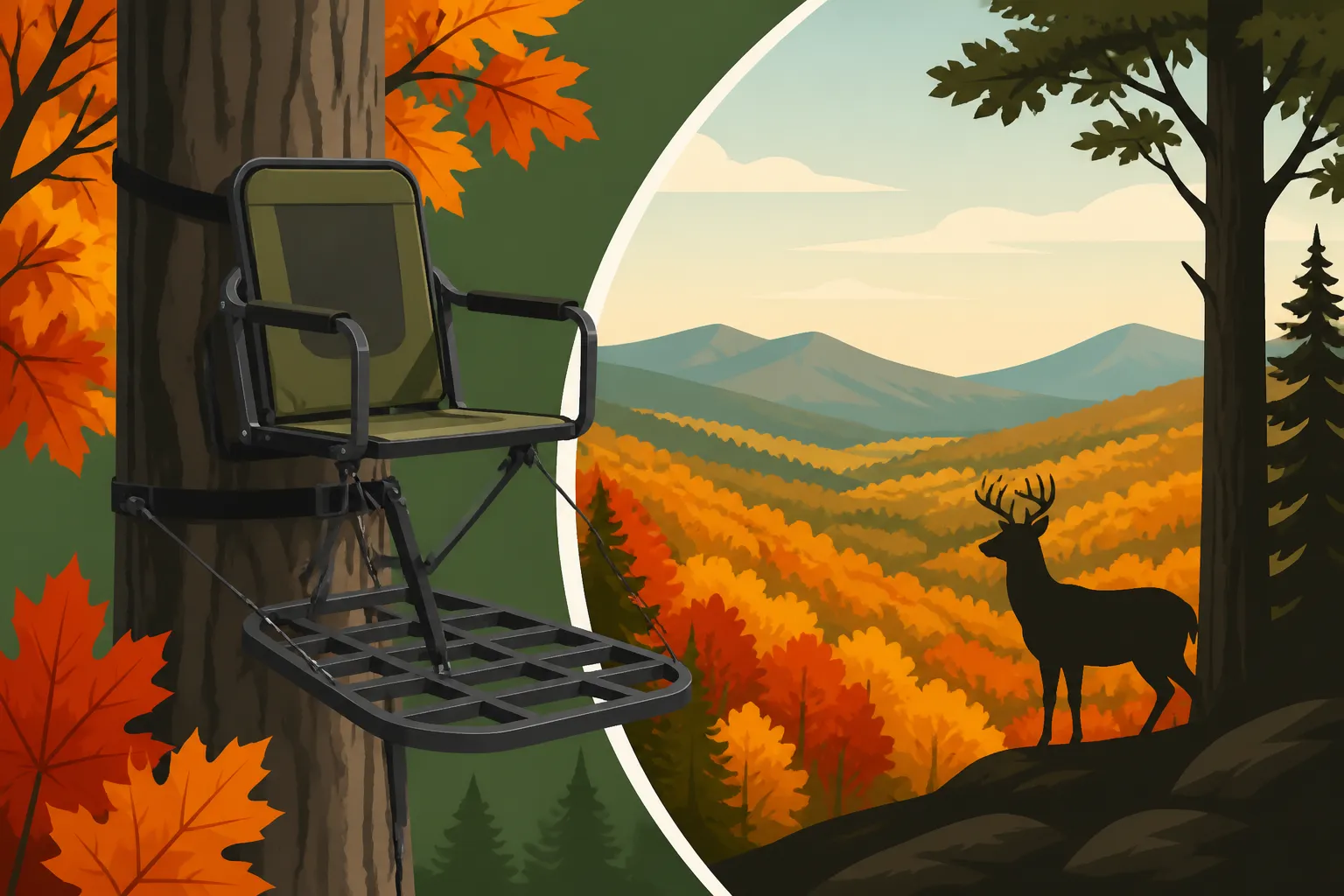
Best Climbing Stand for Vermont Hardwoods
There’s nothing quite like the feeling of finding that perfect patch of Vermont hardwoods, scouting out the fresh sign – perhaps a newly worked scrape line or a rub fresh enough to still smell of pine – and knowing that with the right gear, you can be right in the mix. But let's be honest, finding the best climbing stand for those gnarly, often limby, and always challenging Vermont hardwoods can feel like a quest in itself. You need something that's not just lightweight enough to pack in over steep terrain, but also quiet, stable, and capable of handling those varied tree trunks. This guide is all about helping you cut through the noise and zero in on the climbing stand that will truly enhance your hardwood hunting experience here in the Green Mountains.
Why Climbing Stands Shine in Vermont's Hardwoods
Vermont's hardwood forests are a hunter's paradise, but they demand a unique approach. Unlike vast open plains or dense, impenetrable thickets, our hardwoods offer a more dynamic hunting experience. Deer in these areas are often on the move, searching for mast crops, browsing on tender shoots, or navigating through familiar travel corridors. A climbing stand gives you the flexibility to adapt to their movements, rather than being stuck in one predetermined spot.
The Mobility Advantage
One of the biggest frustrations for static stand hunters is setting up, only to discover the deer have shifted their patterns. Maybe the acorns dropped in a different valley, or increased pressure pushed them to a new bedding area. In Vermont's expansive hardwood timber, deer are constantly adjusting to changing food sources, human activity, and the whims of the weather. That's where the climbing stand truly shines. You can pack it in, set up on a promising tree, hunt for a morning or an evening, and then pack it right back out, ready to chase fresh sign the next day.
Think about it: one day you might be focusing on a ridge-top saddle where bucks are cruising during the rut. The next, a cold front might push deer into a sheltered south-facing slope with some late-season browse. With a climbing stand, you're not committed to a permanent setup that might be obsolete by the following weekend. This mobility allows you to actively follow the deer, especially when you're Hunting the Rut in Early-to-Mid November and those bucks are covering serious ground. It empowers you to respond to new information gleaned from your scouting, whether that's finding a fresh rub line along a logging road or observing deer movement from a distance. The ability to relocate with minimal fuss can turn a slow hunt into a productive one, simply by allowing you to be where the deer actually are, rather than where you hoped they might be.
Elevated Concealment and Scent Control
Hunting at ground level in Vermont's relatively open hardwoods can be a real challenge. Those keen deer eyes are constantly scanning, and any movement on your part is likely to be spotted. Getting up into a climbing stand offers immediate advantages for both concealment and scent control. By elevating yourself 15-20 feet (or more, if the tree allows), you break up your human outline against the canopy, making you much harder for deer to spot. The subtle swaying of branches can help mask minor movements, and you're no longer staring at eye-level with every twitchy tail or flicking ear.
Beyond visual concealment, elevation also plays a critical role in scent control. Hot air rises, but wind currents are the true wild card in the woods. By getting up higher, your scent cone spreads out and dissipates over a wider area, making it less concentrated at ground level where deer are traveling. While no stand setup can entirely eliminate scent, being elevated significantly reduces your direct scent footprint on their travel routes. This is especially important in Wind and Thermals in Steep Green Mountain Terrain, where swirling air currents can make ground hunting incredibly difficult. Of course, you still need to be mindful of the wind direction relative to your approach and target areas, but the added height provides a crucial buffer. It allows you to sit closer to primary trails or feeding areas with a greater degree of confidence, knowing that your scent is being carried up and away, giving you a better chance to observe deer undisturbed.
Key Features to Look for in a Vermont Climbing Stand
Choosing the right climbing stand isn't just about grabbing the first one you see. For hunting Vermont's hardwoods, certain features become absolutely critical to your success and comfort. You're not just looking for a seat; you're looking for a portable, reliable, and comfortable hunting platform that can handle the unique demands of our terrain and conditions.
Weight and Portability
When you're packing your stand into a remote section of the Green Mountain National Forest, every pound feels like five. A heavy, bulky climbing stand quickly becomes a deterrent to venturing beyond the easy access points. This is why weight is often the number one consideration for Vermont hardwood hunters. You want a stand that’s light enough to carry comfortably over long distances and up steep hills, especially when you might be hiking into areas where others won't go to avoid Hunting Pressure on Vermont Public Land. Look for stands made from aluminum, which offers an excellent strength-to-weight ratio compared to steel.
Beyond the actual weight, consider how it carries. Does it nest together compactly? Are the shoulder straps padded and adjustable? Can you secure all the loose straps and pieces so they don't rattle or snag on brush as you walk? A good climbing stand designed for portability will often feature a backpack-style carrying system that distributes the weight evenly, making those pre-dawn hikes in comfortable, not a chore. Even if you're only walking a quarter-mile, a comfortable carry makes a world of difference when you're also lugging your bow or rifle, a daypack, and all your Best Base Layer for a Steep Green Mountain Hike clothing. A well-designed stand will feel like an extension of your body, rather than an awkward burden.
Platform Size and Comfort
Once you've hiked to your chosen tree, you're going to be spending hours on that platform. While portability is paramount, you can't sacrifice comfort entirely, especially for all-day sits during the rut. A cramped platform can lead to stiffness, poor circulation, and ultimately, impatience – which is the enemy of any hunter. Think about your hunting style: if you're primarily bowhunting, you'll need enough room to turn and draw comfortably in multiple directions without hitting the stand or compromising your shot. For rifle hunting, you might not need as much room to maneuver, but stability and a solid shooting rest are still key.
Look for a platform that offers adequate foot room, allowing you to shift your weight, stretch your legs, and maintain circulation. Many stands now feature adjustable seats or footrests that can make a huge difference in comfort over several hours. The seat itself is crucial; some are minimalist foam pads, while others offer thicker, more ergonomic designs. Consider if you'll be sitting with your back against the tree or facing away. Even small details like an integrated armrest or a quiet mesh seat can contribute significantly to your ability to sit still and stay focused for extended periods. Brands like GoHunt often feature reviews and detailed specifications that can help you compare these nuanced comfort features before you commit. Remember, a comfortable hunter is a patient hunter, and patience is often rewarded in the challenging Vermont woods.
Safety and Stability
No matter how light or comfortable a stand is, safety must always be the top priority. This is non-negotiable. Every time you leave the ground, you are putting your life in the hands of your equipment and your adherence to safety protocols. A full-body safety harness is absolutely essential and should be worn from the moment your feet leave the ground until you are safely back down. Never, ever climb without one. Beyond the harness, the stand itself needs to be inherently stable and reliable.
Examine the climbing mechanism and how securely it grips the tree. Does it have robust cables or chains that inspire confidence? Are the teeth or gripping surfaces sharp and durable, designed to bite into various bark types without slipping? Look for stands that exhibit minimal flex or wobble once you're at hunting height. Redundant safety features, like a backup strap or a solid connection between the top and bottom sections, are excellent indicators of a well-engineered stand. Practice setting up and taking down your stand at ground level multiple times until it becomes second nature. Understand how the different components work and regularly inspect your stand for wear and tear, especially before the season starts. Your life depends on it. Always refer to manufacturer instructions and local regulations regarding Treestand Rules on Vermont Public Land to ensure you're hunting safely and legally.
Navigating Specific Challenges in Vermont Hardwoods
Vermont's hardwood forests, while beautiful and productive, present a unique set of challenges for climbing stand hunters. It's not always as simple as finding a straight tree and going up. You'll encounter diverse tree species, unpredictable weather, and the ever-present need for quiet efficiency.
Tree Selection and Bark Type
One of the first things you'll notice in Vermont's hardwoods is the sheer variety of trees. You'll find smooth-barked beech, shaggy-barked oak, rough maples, and occasionally a straight-trunked cherry. Each type of bark interacts differently with a climbing stand's gripping mechanism. A stand that bites well into a rough oak might slip on a smooth beech, or vice versa. Finding a tree that is perfectly straight, relatively limbless for the first 20-30 feet, and has suitable bark can sometimes feel like finding a needle in a haystack, especially after the leaves have dropped and the canopy opens up.
When Scouting Vermont Public Land Before Season, make note of suitable trees in areas you plan to hunt. Ideal climbing trees are usually hardwoods with trunks between 8 and 20 inches in diameter, free of dead limbs or significant knots that could impede your climb. Avoid trees with excessive moss or loose bark. Before you even attempt to climb, always test the stand's grip at a low height, making sure it feels secure. Some stands come with interchangeable cables or unique gripping designs meant to handle a wider range of tree sizes and bark textures. This versatility can be a game-changer when your perfect spot has only less-than-perfect trees.
Weather Considerations
Vermont weather is notoriously unpredictable. A crisp, clear fall morning can quickly turn into a cold, driving rain, or a sudden snow squall. These conditions don't just affect your comfort; they can impact the safety and functionality of your climbing stand. Rain, freezing rain, or even heavy dew can make the tree bark slick, increasing the risk of a slip during the climb. Snow and ice can accumulate on the stand components, making them harder to operate quietly and safely.
When considering a climbing stand for Vermont, think about its construction and materials. Will it shed water effectively? Are the climbing aids designed to provide grip even when wet? How does the seat material hold up to moisture? Layering for a Wet Green Mountain Day is crucial for the hunter, but your gear also needs to be resilient. Some hunters even carry a small towel to wipe down slick tree trunks before climbing, a trick that can literally save your hide. Always err on the side of caution when the weather turns foul. If conditions seem too risky, it's better to hunt from the ground or postpone your hunt than to risk an accident high up in a slick tree.
Setting Up Quietly and Efficiently
The mature bucks of Vermont's hardwoods are legendary for their wariness. They didn't get big by being oblivious. Any unnecessary noise during your ascent or setup can instantly blow your chances. Imagine that perfect buck stepping out just as your stand scrapes loudly against the bark – game over. Setting up quietly and efficiently is an art form that requires practice and attention to detail.
Before you even leave your vehicle, prepare your stand. Secure all loose straps, ensure climbing cables are properly routed, and check for any potential rattling components. Many hunters use stealth strips or tape on metal parts to minimize noise. When you get to your chosen tree, approach slowly and deliberately. As you ascend, try to maintain a smooth, controlled motion, avoiding jerky movements that could cause metal-on-metal noise or a loud scrape against the bark. Practice climbing in the dark or with your eyes closed at home (at a very low height!) to get a feel for the stand and minimize reliance on sight. GoHunt often features videos and articles detailing best practices for silent climbing stand setup, which can be invaluable resources. The more comfortable and practiced you are with your stand, the less likely you are to make a sound that sends that trophy buck bolting for the next county. Paying attention to these small details can be the difference between a successful hunt and an empty freezer.
Recommended Climbing Stand Characteristics for Vermont
When you're outfitting yourself for Vermont hunting, especially if a climbing stand is on your radar, it pays to consider the general characteristics that will serve you best. It's not just about a brand name, but the fundamental design choices that make a stand excel in our unique environment.
Lightweight Aluminum vs. Durable Steel
This is often the first big decision point for many climbing stand buyers, and for good reason. Both aluminum and steel have their distinct advantages and drawbacks, particularly when used in Vermont's diverse terrain.
Lightweight Aluminum:
- Pros: Significantly lighter than steel, making those long treks into remote hardwood bottoms or up steep ridges much more manageable. When you're trying to reach that secluded deer yard high on a mountain bench, a few pounds less can make all the difference. Aluminum also tends to be less prone to rust, which is a consideration given Vermont's often damp conditions. Modern aluminum stands are incredibly strong and reliable.
- Cons: Generally more expensive upfront. While durable, aluminum can sometimes be prone to bending or denting if severely mishandled or dropped on rocky terrain, though this is less common with quality hunting stands. It can also be a bit noisier if parts rub together without proper silencing measures.
- Best For: Hunters who prioritize mobility and regularly cover long distances or hunt challenging, steep terrain. If you're frequently moving your stand to adapt to shifting deer patterns or to Finding Sign in Green Mountain Timber deep in the woods, an aluminum stand is almost always the better choice.
Durable Steel:
- Pros: Typically more affordable, making it a great option for hunters on a tighter budget. Steel is incredibly robust and resistant to bending or warping, offering a very solid and stable feel when you're up in the tree. It's often favored by hunters who might leave a stand in place for a few days or don't mind a bit more weight if it means perceived extra durability.
- Cons: The biggest drawback is weight. A steel climbing stand can easily add 5-10 pounds or more compared to its aluminum counterpart, which quickly becomes a burden on extended hikes. It's also more susceptible to rust, especially if not properly maintained, which can lead to squeaks and groans that will absolutely spook deer.
- Best For: Hunters who primarily hunt closer to vehicle access, or those who value maximum stability and ruggedness over extreme portability. If your hardwood hunting spots don't involve long hauls, a steel stand can be a perfectly viable and economical option.
Ultimately, for most Vermont hardwood hunters, especially those exploring public lands and varying terrains, the lightweight nature of aluminum often wins out due to the sheer advantage in packability.
Comfort Features for Long Sits
While a stand's primary function is to get you up a tree, your ability to remain still and focused for hours on end hinges on comfort. Overlooking comfort features can lead to restless fidgeting, cold feet, and ultimately, an early departure from your stand.
- Seat Design: This is paramount. Look beyond just a basic foam pad. Many stands offer thick, comfortable mesh seats that allow for airflow (preventing sweat buildup) and conform to your body. Some even have padded backrests or armrests, which can be a godsend during those hours of waiting. Consider if the seat can be flipped up and out of the way for standing shots, or if it's adjustable for height and angle. A good seat will allow you to maintain proper posture and reduce fatigue.
- Footrests and Platform Space: A generous platform allows for leg movement and stretching, which is crucial for circulation, particularly in cold weather. Many stands incorporate a footrest bar or an extended platform design that lets you get your feet up. This simple feature can significantly improve comfort and help ward off numbness, allowing you to stay on stand longer.
- Quiet Operation: While not strictly a "comfort" feature, a stand that operates quietly prevents stress and frustration. Look for components designed to minimize metal-on-metal contact. Rubberized coatings, nylon bushings, and thoughtful design can make a huge difference in silencing the stand during both setup and while hunting. Nobody wants to blow their hunt because of a creaking stand.
When you invest in a climbing stand, you're not just buying a piece of equipment; you're investing in your hunting experience. By prioritizing features like lightweight construction, ample platform space, and quiet operation, you'll be much better equipped to enjoy your time in Vermont's beautiful, challenging hardwood forests and stand a greater chance of success. It's worth researching and reading reviews, perhaps even on sites where brands like GoHunt are discussed, to see what other hunters are finding works best in similar conditions.
Comparative Look at Climbing Stand Features for Vermont Hardwoods
Let's break down some general characteristics you might find in climbing stands and how they relate to hunting in Vermont's hardwood forests. This isn't about specific models, but rather the attributes that make a stand suitable for different styles and conditions you'll encounter here.
| Feature Category | Key Characteristic | Benefit for Vermont Hardwoods | Consideration / Drawback |
|---|---|---|---|
| Material | Lightweight Aluminum | Easy to pack long distances, less rust in damp weather. | Higher cost, can be noisier if not dampened. |
| Durable Steel | More affordable, extremely robust, very stable feel. | Heavier for packing, more prone to rust. | |
| Platform | Open Front / Sit-and-Climb | Excellent for bowhunters needing full range of motion. | Less secure feeling for some, minimal rail. |
| Enclosed Front / Bar | Provides a secure feeling, good rifle rest, standing support. | Can impede bow draw, adds a bit of weight/bulk. | |
| Seat Design | Mesh/Sling Seat | Comfortable for long sits, breathable, quiet. | Can sag over time, may lack warmth without layers. |
| Padded Foam Seat | Good warmth, comfortable. | Can absorb water, may be less breathable. | |
| Carrying System | Padded Backpack Straps | Distributes weight, comfortable for long hikes. | Can add bulk if not well-designed. |
| Basic Straps | Minimalist, lighter. | Less comfortable for long carries. | |
| Grip Mechanism | Aggressive Teeth/Cables | Securely grips various bark types (maple, oak, beech). | Can damage softer bark if over-tightened. |
| Smooth Rubber Grips | Less bark damage, quieter climb. | May slip on wet or mossy bark. |
When looking at these features, it's clear there's a trade-off. A hunter focusing on deep wilderness hunts for Moose Hunting Vermont's Northeast Kingdom (though a climber is generally not for moose, the travel parallels) might lean heavily towards lightweight aluminum with a minimalist carrying system. Someone hunting a particular woodlot on private land might prefer the robust feel of steel with an enclosed front for added security and a solid rest.
Final Thoughts on Choosing Your Vermont Hardwood Climbing Stand
Stepping into Vermont's hardwood forests with the right climbing stand in hand can truly transform your hunting experience. It's about empowering you with the mobility to follow the deer, the elevation to remain unseen, and the comfort to stay on stand when it matters most. We've talked about the crucial balance between a stand's weight, its comfort features, and above all, its safety.
Remember, the "best" climbing stand isn't a one-size-fits-all answer. It's the stand that perfectly aligns with your personal hunting style, the terrain you navigate, and your comfort preferences. If you're consistently hiking deep into those Green Mountain ridgelines to get away from the crowds, a lightweight aluminum stand with a comfortable pack system is likely your best bet. If you prefer to stay closer to access roads and prioritize a rock-solid, spacious platform for all-day sits, a slightly heavier, more feature-rich steel stand might suit you better.
No matter which stand you choose, practice is paramount. Become intimately familiar with your stand's setup and takedown, especially in low light conditions. Always wear your full-body safety harness from the moment your feet leave the ground until they touch it again. And take the time to scout those hardwood trees, looking for the ideal straight, limbless candidates that will make your climb safer and more efficient. Sites like GoHunt provide a wealth of information and user reviews that can further guide your decision, offering insights into how various stands perform in real-world hunting scenarios.
By thoughtfully considering these elements, you'll find a climbing stand that becomes an invaluable tool in your Vermont hunting arsenal, allowing you to maximize your time in those beautiful, deer-rich hardwoods and perhaps, finally punch that tag on a mature buck.
Disclaimer
This article is for general informational purposes only and does not constitute professional advice. Laws, prices and regulations vary by location and change over time. Consult a qualified professional for guidance on your specific situation.