Duck Migration Timing Through Vermont
It’s a common frustration among Vermont waterfowl hunters: you scout hard, set up early, only to find the marsh silent and the skies empty. Duck migration timing in Vermont isn't a simple calendar date; it's a dynamic puzzle influenced by weather and food sources far beyond our state lines. This guide will walk you through the typical patterns of duck migration through the Green Mountain State, helping you better anticipate those thrilling days when the flights are on.
Early Season: The Local Birds and First Arrivals
Before the big pushes from the north begin, Vermont offers excellent early-season opportunities thanks to its resident duck populations and the first few waves of migrants. These initial weeks require a keen understanding of local habits and the very first shifts in continental weather.
Resident Ducks and Early Season Staples
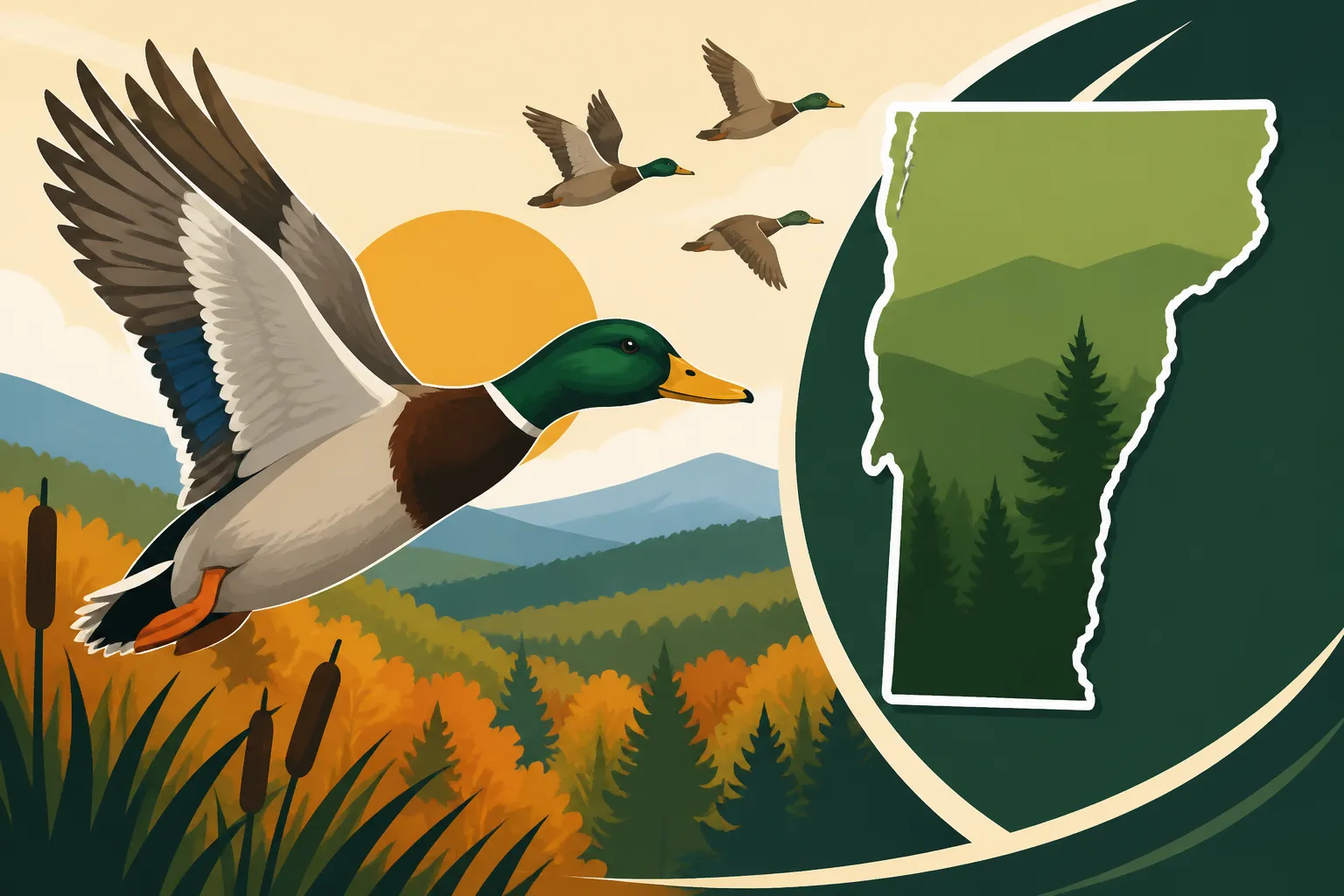
Many hunters, eager for the arrival of northern birds, sometimes overlook the strong populations of resident ducks we have right here in Vermont. Especially in the Champlain Valley and along the larger rivers, these local birds provide fantastic early season action. Think about those quiet beaver ponds, the slow-moving oxbows of smaller rivers, and the more secluded marshes you know. Mallards, wood ducks, and even some local teal are often born and raised in these very spots, and they'll stick around as long as food is abundant and water remains open. Their predictability can be a real advantage if you've done your summer scouting.
Wood ducks, with their absolutely incredible iridescent plumage, are usually among the first to consider heading south. They're quite sensitive to cold, and just a few frosty nights can send them packing quickly from their roosts. You might find excellent wood duck hunting in early to mid-September, especially around flooded timber and backwater areas, but by mid-October, their numbers often dwindle significantly. This makes the opening weeks of the season crucial for targeting these beautiful birds before they vanish.
Mallards, on the other hand, are a bit hardier and more adaptable. While many will join the general migration south, a good portion of our local mallards will often stay put until severe ice pushes them out. They're quick to find new food sources, shifting their diet from natural marsh vegetation to agricultural fields like cut corn or standing beans once those become available. Understanding this local movement and their feeding habits, especially their tendency to loaf in quiet backwaters during the day and fly out to feed at dusk, is a key to early season success.
The First Whispers of Migration
As September progresses and gives way to October, you'll start to feel those initial hints of autumn in the air – crisp mornings, noticeably shorter days, and perhaps even a hard frost that changes the foliage. These subtle environmental cues are often the triggers for the earliest northern migrants to begin their journey south. These first pushes are typically subtle, not the massive flights you see later, but they consistently add new birds to the mix, keeping things interesting for the vigilant hunter.
Teal, particularly blue-winged teal, are notorious for being early movers. They're often gone by the time many hunters are even seriously thinking about duck season. If you're targeting blue-wings, you really need to be out there on opening day and capitalize on those first couple of weeks, as their migratory instinct is strong and swift. Green-winged teal tend to stick around a bit longer, offering opportunities well into October, especially if the early fall weather remains relatively mild and food sources are plentiful.
During this period, you might also start to see fresh batches of mallards and black ducks arriving from Quebec or other points further north. These birds are often less wary than the local ducks that have already been educated by early season pressure. They'll drop into new areas, often exploring diverse habitats that haven't seen much activity. Keep a close eye on weather reports coming from our northern neighbors. A significant cold snap or early snowfall in Canada is a strong indicator that new birds are likely on their way to Vermont, offering renewed opportunities for hunters to call them in.
Mid-Season: The Peak Migration Push
Late October and especially November represent prime time for many Vermont waterfowl hunters. This is when the continental migration really starts to hit its stride, bringing in massive numbers of ducks and offering some of the most exciting hunting of the year.
Major Northern Flights and Diver Mania
The period from late October through November is when Vermont truly becomes a major staging area for migrating waterfowl. This is when the broadest array of species makes their appearance, turning quiet backwaters and large lakes into bustling feeding and resting grounds. We're talking about everything from various dabblers like gadwalls and wigeon to the more sought-after diver ducks such as ring-necked ducks, scaup, and buffleheads. These birds are driven by the freezing temperatures that begin to lock up water bodies in their northern breeding grounds, compelling them to find open water and abundant food sources further south.
Lake Champlain, with its vast expanse of open water and diverse habitat, becomes a major staging and travel corridor during this critical period. You'll see thousands of ducks moving through, using the lake as a major flyway. Similarly, the Connecticut River, with its long stretch and relatively consistent flow, acts as another significant migration corridor. Hunters in these larger water areas have the best chance to intercept these large, often fresh-from-the-north migratory flocks. This is when investing in quality mapping tools, like those offered by GoHunt, can really pay off, helping you identify potential resting, feeding, and travel areas on such extensive bodies of water. For those aiming for mallards on the big lake, Decoying Mallards on Lake Champlain offers excellent strategies.
Diver ducks, true to their name, feed by diving completely underwater to forage for aquatic vegetation, mollusks, and insects. This means they often favor deeper water areas, but they will also readily utilize shallower zones where submerged vegetation is plentiful. Ring-necked ducks are frequently found in freshwater lakes and ponds, while scaup, goldeneyes, and buffleheads will often frequent larger lakes and even transition to brackish or coastal areas if pushed further south. Observing their specific feeding patterns and preferred habitats is absolutely crucial for setting up successful decoy spreads and anticipating their flight paths.
The Impact of Cold Fronts and Strong Winds
Successful mid-season hunting often hinges directly on your understanding and tracking of broader weather patterns, not just local conditions. A strong northwest wind following a significant cold front originating from Canada is the waterfowl hunter's ultimate prediction tool. These conditions act like a natural conveyor belt, pushing ducks south in successive waves and often forcing them to commit to new areas they might not typically use. If you see such a front developing on the weather charts, it's time to clear your schedule and get out there, as a major flight could be imminent.
These powerful weather systems don't just move ducks; they also significantly influence their behavior once they arrive. Birds that have just completed a long, cold flight are typically hungry, tired, and often less wary, making them much more susceptible to well-placed decoy spreads and effective calling. They'll be actively looking for protected coves, sheltered marsh edges, or agricultural fields where they can quickly refuel and rest. Scouting during these intense migratory pushes, even if you can't hunt, will often reveal crucial flight lines and previously unknown feeding areas. This is also a perfect time to consider using active motion decoys, like Mojo Decoys for Vermont Puddle Ducks, to add that extra bit of visual attraction to your spread.
Conversely, prolonged periods of mild, stable weather can significantly slow migration to a crawl. Ducks will linger further north as long as food remains accessible and water bodies stay open. This can be incredibly frustrating for hunters, as it feels like the birds just aren't showing up as expected. Don't despair, though; keep a diligent eye on the long-range forecast. Eventually, winter will assert itself, and those ducks will be forced to move. Patience, persistence, and readiness for when the conditions change are key during these lulls.
Late Season: Braving the Freeze
As Vermont truly embraces winter, with temperatures dropping and ice forming, the nature of duck hunting changes dramatically. Opportunities become more concentrated, but for the dedicated hunter, late season can still yield incredible rewards.
Finding Open Water in a Freezing Landscape
By late November and certainly into December, much of Vermont's smaller ponds, marshes, and slow-moving streams will begin to freeze solid. This relentless progression of ice forces ducks to concentrate on the increasingly limited remaining open water. These critical refuges typically include larger rivers with strong currents that resist freezing, deep lakes that take longer to lock up, and occasionally, areas with geothermal activity or specific industrial discharges, though the latter are less common in traditional hunting spots. The main stem of the Connecticut River and the deeper, more active sections of Lake Champlain become absolutely critical during this period.
Hunting these late-season conditions demands a different approach entirely. Instead of sprawling marsh setups, you're often looking for very specific choke points, sharp river bends, or areas where consistent current or deep water keeps a hole open in an otherwise frozen landscape. Ducks will naturally funnel into these limited open spots. While you might not see the sheer numbers of birds from the mid-season peak, the ducks that remain are often big, wary, and highly educated. Success during this period often comes down to precise hide placement, meticulous concealment, and an understanding of how birds use these concentrated open water areas.
Consider observing where the morning sun hits the water earliest, creating small melt zones, or where a slight, consistent current prevents total freeze-up. Even a small patch of open water, perhaps only a few yards wide, can hold a surprising number of ducks when everything else is locked up tight. These can be tough, physically demanding hunts, but the satisfaction of bagging a late-season mallard or black duck against a snowy, stark backdrop is unparalleled. Remember to consult Vermont Waterfowl Zones and Seasons for any specific regulations that may apply to late season hunting windows, as they can sometimes vary by zone.
The Final Push and Wintering Birds
As ice encroaches further and winter conditions become truly severe, the last waves of migrating birds will make their final pass through Vermont, often in a hurry to reach more temperate climates. These are typically the hardiest species – common goldeneyes, various mergansers, and occasionally a resilient canvasback or redhead – all capable of enduring the bitter cold. They will make a bee-line for the Atlantic coast or other large, unfrozen bodies of water further south. Your last viable opportunities in Vermont often coincide with the final few days before widespread, prolonged ice truly locks down virtually everything.
For the truly dedicated and resilient hunter, scouting late-season agricultural fields that are adjacent to any remaining open water can still yield opportunities for mallards and black ducks that are actively seeking food. These ducks become incredibly sensitive to pressure and disturbance, so stealth, minimal movement, and flawless concealment are paramount. A well-placed layout blind, meticulously brushed into a corn stubble field, can be incredibly effective when ducks are forced to feed in fields. To learn more about this effective technique, refer to Layout Blind Hunting a Champlain Valley Field.
Ultimately, there comes a point in the season when the ducks have simply moved on, or the environmental conditions become too dangerous or unproductive to hunt safely and ethically. Knowing when to hang up the waders for the season is a crucial part of being a responsible and realistic hunter. But until that point, every new cold front, every remaining patch of open water, and every available food source holds the potential for one more memorable late-season duck hunt.
Key Factors Influencing Duck Movement in Vermont
While the general timing of migration follows predictable seasonal patterns, successful Vermont waterfowl hunting requires a deeper understanding of the specific variables that influence duck movements. Mastering these allows hunters to predict movements more accurately, making your scouting and hunting efforts significantly more effective.
Weather's Dominant Role
Weather is, without a doubt, the single most important factor dictating duck migration timing and behavior. It’s not just the temperature you feel here in Vermont, but critically, the conditions hundreds of miles north of us. A severe cold snap accompanied by snow in northern Quebec or Ontario will act as a powerful catalyst, pushing vast numbers of birds directly down to us. Conversely, a prolonged period of mild, stable weather can easily hold birds in Canada or even in neighboring states like New York, significantly delaying their arrival in Vermont. Tracking these broad continental weather patterns is absolutely critical for anticipating major flights. Using detailed weather apps, possibly even those integrated into advanced hunting platforms like GoHunt, can give you a significant edge by providing predictive conditions across the entire Atlantic Flyway migration corridor.
Wind direction and speed are also huge determinants of duck movement and flight patterns. Strong north or northwest winds are like a natural conveyor belt for migrating ducks, providing a powerful tailwind that aids them on their strenuous journey south. Birds will often fly lower and be much more apt to decoy in these strong, consistent wind conditions. Light, variable winds, or worse, persistent south winds, can significantly slow migration and make birds more reluctant to travel, often causing them to linger. Always pay meticulous attention to the wind forecast, as it dictates how and where birds will move and what kind of setup will be most effective.
Precipitation, whether in the form of heavy rain or significant snowfall, can also profoundly affect duck movements both regionally and locally. Heavy rain can ground birds, pushing them to seek temporary shelter in protected areas, while a significant snowfall up north often acts as a powerful trigger for a large, immediate migratory push. Locally, rain can raise water levels in marshes, creating brand new feeding opportunities in previously dry areas or opening up new access points for both birds and hunters.
Food and Water Availability
Ducks, like all wildlife, are driven by their fundamental need to eat and survive. Therefore, the availability of abundant food sources along their migration route and in their temporary wintering grounds is a primary, unwavering driver of their movements. In Vermont, this means hunters must pay close attention to the annual acorn crops in hardwood bottoms (especially crucial for wood ducks and mallards), the presence of agricultural fields with waste grain (like cut corn or harvested soybeans), and the health and abundance of natural marsh vegetation. If a particular area has been heavily grazed, overly flooded, or simply lacks sufficient food, ducks will instinctually bypass it for richer, more productive grounds.
Open water is just as critically important, particularly as the season progresses. As noted earlier, freezing temperatures directly correlate with major duck movements. When smaller ponds, marshes, and shallow waters begin to lock up with ice, ducks are forced to concentrate on larger, deeper, or current-fed waters that remain open. This natural concentration of birds in limited areas can lead to fantastic hunting opportunities, but it also means those accessible spots often become more heavily pressured by other hunters. Scouting efforts, combined with resources like Reading a Marsh for a Morning Flight, can offer great insights into identifying productive areas based on available food, cover, and water.
The dynamic interplay between fluctuating food availability and the ever-changing status of open water means that successful hunters are always, always scouting. A spot that was incredibly hot last week might be completely frozen this week, or the primary food source might be entirely depleted. Being adaptable, constantly observing, and having multiple potential locations in mind, ranging from big lake points to small river oxbows and hidden beaver flows, will significantly increase your chances of consistent success throughout the season.
Hunting Pressure and Local Disturbance
While not a natural environmental factor like weather or food, hunting pressure exerts a significant influence on local duck movement and behavior. Heavily hunted marshes or fields can quickly become "burnt out," with ducks learning to avoid them entirely or flying much higher to escape perceived danger. Even early season pressure on local resident birds can make them incredibly warier by mid-season, leading to much tougher hunting as they learn to recognize threats.
Ducks will often instinctively seek refuge in areas with less human disturbance, whether that means unhunted sections of public land, private land where hunting is restricted, or simply loafing spots during non-hunting hours. Understanding these patterns of refuge and daily movement can help you position yourself far more effectively. For example, ducks might feed actively in a particular cornfield at night but then fly directly to a large, relatively unhunted pond or lake during the day to rest and evade pressure.
Utilizing modern mapping tools like those offered by GoHunt can be incredibly beneficial in identifying potential low-pressure areas, especially within larger public tracts where finding ground others overlook is absolutely key. By understanding where ducks are seeking shelter, you can strategically plan your approach to intercept them on their way to or from these safe havens, giving you a much better chance to successfully call them into range and make a clean shot.
Migration Timing Summary Table
To give you a quick, at-a-glance overview, here's a general guide to duck migration timing in Vermont. Keep in mind, this is highly variable based on annual weather patterns and should be used as a guide, not a rigid calendar.
| Species Group | Early Season (Sept-Early Oct) | Mid-Season (Mid Oct-Late Nov) | Late Season (Dec-Jan) | Key Behavior & Notes |
|---|---|---|---|---|
| Local Dabblers | Resident Mallards, Wood Ducks | New Mallards, Black Ducks arriving from north | Hardy Mallards, Black Ducks (concentrated on major open water) | Wood Ducks are often the first to exit. Local Mallards and Black Ducks can linger until ice forces them out. |
| Early Migrants | Blue-winged Teal, Green-winged Teal, first Gadwall | Blue-winged Teal are typically gone by early October. Green-winged Teal often last longer, especially with mild weather. | ||
| Mid-Season Dabblers | Wigeon, Gadwall, Pintail, increased Green-winged Teal | Peak numbers often occur during the first strong cold fronts of November. Look for these birds in diverse habitats. | ||
| Diver Ducks | Ring-necked Ducks, Scaup, Goldeneye, Bufflehead, Canvasback, Redhead | Goldeneye, Bufflehead, Mergansers (primarily on larger, open waters) | Arrive with colder temperatures; they typically prefer larger, deeper water bodies and are resilient to cold. | |
| Geese | Resident Canada Geese | Migratory Canada Geese, occasional Snow Geese | Canada Geese (concentrated on major rivers/lakes with open water) | Resident geese often stay until deep snow. Migratory geese push through heavily in November, especially with cold. |
This table provides a general snapshot, but remember to always consult official Vermont Waterfowl Zones and Seasons for precise dates, species-specific bag limits, and any other regulations, as these can vary by zone and change from year to year. For those specifically targeting geese, Pass-Shooting Geese on the Connecticut River offers unique insights for one of Vermont's primary waterfowl corridors. Furthermore, ensure you fulfill the Vermont Federal Duck Stamp Requirement and Vermont HIP Certification for Bird Hunters before heading afield.
Disclaimer
This article is for general informational purposes only and does not constitute professional advice. Laws, prices and regulations vary by location and change over time. Consult a qualified professional for guidance on your specific situation.