Vermont Catamount History and Extirpation
The Green Mountain State is steeped in a rich tapestry of wildlife, but few creatures capture the imagination quite like the elusive catamount. For many Vermonters, the idea of a wild cougar still roaming the deep woods feels like a persistent rumor, a whisper carried on the wind. This guide dives deep into the historical truth of the catamount in Vermont, exploring when these magnificent predators truly lived here, what led to their eventual disappearance, and why their legend continues to haunt our forests even today, clearing up the mystery behind those fleeting glimpses and age-old tales.
The Original Wild Cats of Vermont: A Historical Look at the Eastern Cougar
Imagine a time when the deepest, most remote parts of Vermont weren't just home to deer and bear, but also to a sleek, powerful cat, a true apex predator. That was the reality for centuries before European settlement truly took hold. The eastern cougar, often called a catamount here in New England, was a vital part of our ecosystem, shaping the landscape in ways we can only now begin to fully appreciate. They weren't just animals; they were a symbol of the wildness of these mountains.
Tracing Their Ancestry and Range
The eastern cougar was a subspecies of the larger cougar (Puma concolor), a species with an incredibly vast historical range across North and South America. Here in Vermont, their preferred habitat was exactly what you'd expect: vast, unbroken tracts of dense forest, particularly in the mountainous regions. Think of the Green Mountains and the sprawling, wilder expanses of the Northeast Kingdom, rich with hardwoods and softwoods alike. These were ideal territories for a large, solitary hunter.
They were masters of stealth and ambush, perfectly adapted to navigate the rugged terrain and dense undergrowth. Their diet primarily consisted of white-tailed deer, which were abundant, but they wouldn't shy away from smaller game like snowshoe hare, beaver, or even wild turkeys if the opportunity arose. As the top predator, they played a crucial role in maintaining the health and balance of prey populations, culling the weak or sick, and ensuring that deer herds remained robust and resilient. Without them, the natural order of things was fundamentally different, impacting everything from plant growth to the spread of disease among other species. Their presence was a constant, subtle force shaping the wildness of Vermont. You might use a tool like GoHunt to scout for current game, but back then, you'd be scouting for their sign too.
Early Encounters and Folk Tales
When European settlers first arrived in Vermont, they quickly became aware of the catamount's presence. Unlike some other wildlife, a creature as large and powerful as a cougar was hard to ignore, especially when livestock became part of the picture. These encounters, whether direct sightings or the discovery of their tracks and kills, undoubtedly sparked a potent mix of fear and awe. Imagine building a homestead on the edge of a vast, dark forest, knowing such a formidable hunter prowled nearby. It's no wonder that the catamount quickly entered local folklore, becoming a legendary figure in many communities.
Tales were spun around campfires, passed down through generations, often depicting the catamount as a ghost-like presence, rarely seen but always felt. This gave rise to the term "catamount," a uniquely New England colloquialism that perfectly captures the mystique of a "cat of the mountain." Place names across Vermont still echo their legacy – Catamount Hill, Catamount Trail – testaments to a time when these animals were an undeniable, often intimidating, part of the natural landscape. These stories served as both warnings and reminders of the untamed wilderness that once defined Vermont, long before modern understanding of wildlife management or Vermont Hunter Education Requirements came into being.
The Pressure Mounts: Factors Leading to Extirpation
The arrival and expansion of European settlement brought profound changes to Vermont's landscape and its wildlife. For the catamount, these changes proved to be insurmountable. It wasn't one single event, but a confluence of factors that gradually, yet relentlessly, pushed these magnificent creatures out of existence within our borders. It's a somber lesson in how human activity can irrevocably alter an ecosystem, often before we fully understand the consequences.
Habitat Loss and Fragmentation
Perhaps the most significant blow to the catamount population was the relentless pace of habitat destruction. Early settlers didn't just build a few cabins; they cleared vast swaths of forest for agriculture. Imagine the expansive Green Mountain timberlands being systematically felled to make way for pastures for cattle and sheep, or fields for corn and hay. This wasn't a slow process over centuries; it accelerated rapidly as technology improved and more people moved into the region.
The consequence was a landscape that became increasingly fragmented. A wide-ranging predator like a cougar needs large, contiguous blocks of forest to roam, hunt, and reproduce without constant human disturbance. As these blocks were broken up into smaller, isolated patches, the catamounts found their territories shrinking and their ability to find mates and establish new home ranges severely compromised. Even if some areas, like portions of Public Hunting Land in Vermont or Hunting Vermont's Green Mountain National Forest, were eventually protected, the damage was already done to the vast, connected wilderness that once supported them. A fragmented habitat is a death knell for species that require extensive, undisturbed spaces.
Direct Persecution and Predator Control
Beyond habitat loss, catamounts faced direct and intense persecution. In an era when wildlife was often viewed as either a resource to be exploited or a threat to be eliminated, large predators like cougars were seen as direct competitors for game animals and, more critically, as a danger to settlers' livestock. Farmers, struggling to make a living, could ill afford to lose sheep, cows, or even horses to a wild cat. This led to widespread and government-supported campaigns to eradicate them.
Bounties were a common tool. Local towns and the state itself often offered rewards for the hides or bodies of predators, encouraging hunters and trappers to pursue catamounts relentlessly. This wasn't just about protecting livestock; it was also driven by a deep-seated cultural fear of large, wild animals that represented the untamed wilderness settlers were trying to "conquer." The prevailing attitude was that "the only good predator is a dead predator." This aggressive, often merciless, culling combined with habitat loss, made it incredibly difficult for the catamount population to recover or even sustain itself. The historical records of Vermont Bear Population Estimate and how those populations have fluctuated offer some insight into changing attitudes towards large predators over time.
Decline of Prey Species
Adding to the catamount's woes was a significant decline in their primary food source: white-tailed deer. While today we benefit from healthy populations of White-Tailed Deer Across Vermont, early settlement often meant unregulated hunting pressure from settlers themselves. Without modern wildlife management, bag limits, or regulated seasons, deer populations were often decimated in certain areas. This created a scarcity of food for predators that relied heavily on them.
A lack of sufficient prey meant that remaining catamounts either starved, moved into more settled areas in desperation (leading to more conflicts and persecution), or simply failed to reproduce successfully. It's a classic ecological domino effect: reduce the prey, and the predators that depend on them will inevitably suffer. This triple threat of habitat loss, direct killing, and food scarcity created a perfect storm that the eastern cougar simply couldn't weather, sealing its fate within Vermont's borders.
The Ghost of the Green Mountains: Modern Sightings and Misidentifications
Despite the scientific consensus that the eastern cougar is extirpated from Vermont, the mystique of the catamount lives on. Walk into almost any general store or rural diner, and you're bound to hear a whispered tale of a large, long-tailed cat spotted crossing a logging road or glimpsed on a distant ridge. These stories aren't just folklore; they reflect a genuine human desire to believe in the wildness that once was, and perhaps, still could be.
Persistent Reports and Public Fascination
The persistent reports of cougar sightings in Vermont are a testament to the enduring fascination these animals hold. Whether it's a blurry photo, a fleeting glimpse at dusk, or tracks found in the mud, people want to believe that a wild catamount still roams the backcountry. This longing is understandable; there's something incredibly powerful about the idea of a top predator, a ghost of the past, still stalking our forests. It speaks to a deeper connection with the wild.
These sightings often spark debates online and in local communities. While wildlife agencies track and investigate these reports, the vast majority remain unconfirmed or are eventually attributed to other animals. Still, the allure of the "Green Mountain Ghost" is undeniable. It's a powerful narrative that reminds us of the wild legacy of places like Hunting the Northeast Kingdom or the deep woods of Vermont Wildlife Management Areas. Even if you're using modern tools like GoHunt to scout for game animals like deer or bears, that underlying awareness of what could be out there still exists. People are always looking at those aerial maps and wondering what might be lurking in the thickest, most remote sections.
Understanding Misidentifications and Explanations
The truth behind most modern catamount sightings often lies in misidentification. Vermont's diverse wildlife includes several species that, under certain conditions or in poor light, can be mistaken for a cougar.
Here’s a common breakdown of what people often see:
| Animal Often Misidentified | Key Distinguishing Features | Common Scenario of Confusion |
|---|---|---|
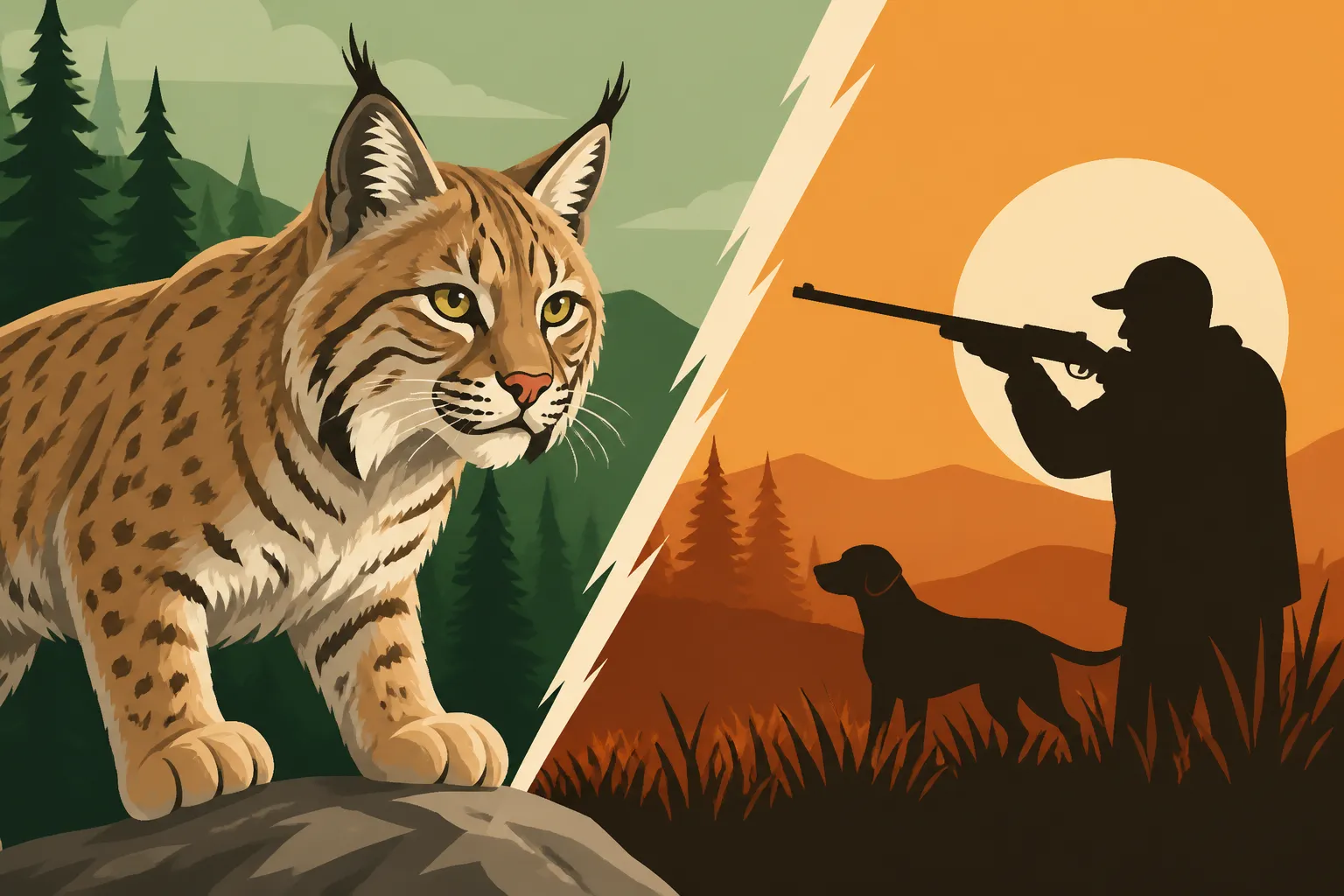
| Bobcat | Short, "bobbed" tail; spotted or striped coat; stockier build. | Seen at a distance, especially if the bobbed tail isn't clear. |
| Coyote | Long, bushy tail; dog-like appearance; often lean. | Seen from behind, or if its movements are fluid and cat-like. |
| Domestic Cat | Size (much smaller), sometimes larger feral cats. | Very large domestic cats can be mistaken for cougar kittens. |
| Dog (especially large breeds) | Variety of breeds, but distinct canine features. | In poor light, a large dog can appear to have a long, thick tail. |
| Fisher | Long, dark body, bushy tail, but much smaller and low to the ground. | Quick movement, especially when seen briefly. |
Beyond native wildlife, there's also the possibility of transient cougars. These are typically young male cougars that have dispersed from established western populations, traveling incredible distances eastward. These individuals are extremely rare and usually don't survive long or establish breeding populations. Additionally, there have been instances of captive cougars escaping or being released illegally, further contributing to unconfirmed sightings.
While a tool like GoHunt is excellent for identifying land features, property lines, and game sign when you're preparing for Fall Turkey Hunting Vermont's Statewide Archery Window or Hunting Vermont's New Archery-Rifle Overlap, it doesn't help much with confirming elusive cryptids! The reality is that for a breeding population to exist undetected, it would require a significant number of animals, and Vermont's ecosystem, while wild in many places, would likely show more definitive signs, like consistent tracks, scat, or prey kills. The ongoing Vermont's CWD-Free Deer Herd status relies on careful monitoring, and a breeding cougar population would certainly leave noticeable evidence.
The Path Forward: Conservation and Coexistence
The story of the catamount in Vermont is a poignant reminder of our past interactions with the wild. While their physical presence is gone, the lessons learned from their extirpation resonate deeply in modern conservation efforts. Understanding what we lost helps us appreciate what we still have, and what we need to protect for the future.
The Value of Apex Predators
Ecologists universally agree on the critical importance of apex predators to a healthy ecosystem. These top-tier hunters are not just efficient killers; they are architects of balance. By preying on herbivores like deer, they help regulate their populations, preventing overgrazing that can degrade forests, impact plant diversity, and even lead to widespread disease outbreaks within the herd. For instance, without predators, a deer population might become so dense that it struggles with issues like Vermont's CWD Prevention Rules.
Beyond population control, predators can also influence the behavior of prey animals, keeping them moving and preventing them from concentrating in one area, which again benefits the overall health of the ecosystem. The return of large predators in other parts of the country has shown remarkable ripple effects, restoring ecological integrity and biodiversity. While Vermont doesn't have its native cougars anymore, the health of our Black Bears in Vermont and even our Vermont Bobcat Population Trends are crucial indicators of our wild places. We've learned that every piece of the puzzle, especially the big ones, plays an indispensable role.
Lessons Learned and Future Considerations
The catamount's disappearance serves as a powerful historical case study. It highlights how rapidly human development and uncontrolled hunting can impact even the most formidable species. This understanding now informs our approach to managing existing wildlife populations, such as White-Tailed Deer Across Vermont and Moose in Vermont's Northeast Kingdom. Today, wildlife agencies meticulously monitor populations, set regulations, and work to protect critical habitat to prevent similar fates for other species.
While the natural re-establishment of a breeding cougar population in Vermont remains highly improbable due to geographic isolation and continued human presence, the idea of preserving and connecting large blocks of wilderness is more important than ever. These "wild corridors" are vital for the movement of current wildlife and for promoting biodiversity. Who knows what the distant future might hold, but for now, the enduring legend of the catamount reminds us to be diligent stewards of the wild Vermont we cherish. It inspires us to protect the habitats of all creatures, great and small, from the smallest Vermont Squirrel and Rabbit Populations to our magnificent Vermont Bear Population Estimate. Perhaps, in our dedication to conservation, we honor the ghost of the Green Mountain catamount most profoundly.
Disclaimer
This article is for general informational purposes only and does not constitute professional advice. Laws, prices and regulations vary by location and change over time. Consult a qualified professional for guidance on your specific situation.