Vermont Peregrine Falcon Recovery
Oh, friends, if you've spent any time exploring the rugged cliffs and vast open skies of Vermont, you know there's a certain magic in spotting a truly magnificent creature. But for decades, one of our most iconic raptors, the peregrine falcon, was teetering on the brink, a silent void where their piercing calls once echoed. This guide isn't just a history lesson; it's a celebration of how Vermonters, through sheer dedication and smart conservation, brought this incredible hunter back from the edge, showcasing a wildlife recovery success story that truly inspires.
The Peregrine's Plight: A Look Back at a Near Loss
It's easy to take for granted the sight of a peregrine falcon streaking across the sky today, a blur of speed and power. But for those of us who remember the mid-20th century, the landscape felt different, quieter in a way that spoke of loss. The absence of these magnificent birds wasn't just a local issue; it was a symptom of a much larger environmental crisis that threatened to silence our wild places forever. Understanding their decline helps us appreciate just how incredible their comeback truly is.
From Cliff Nesting to Near Extinction
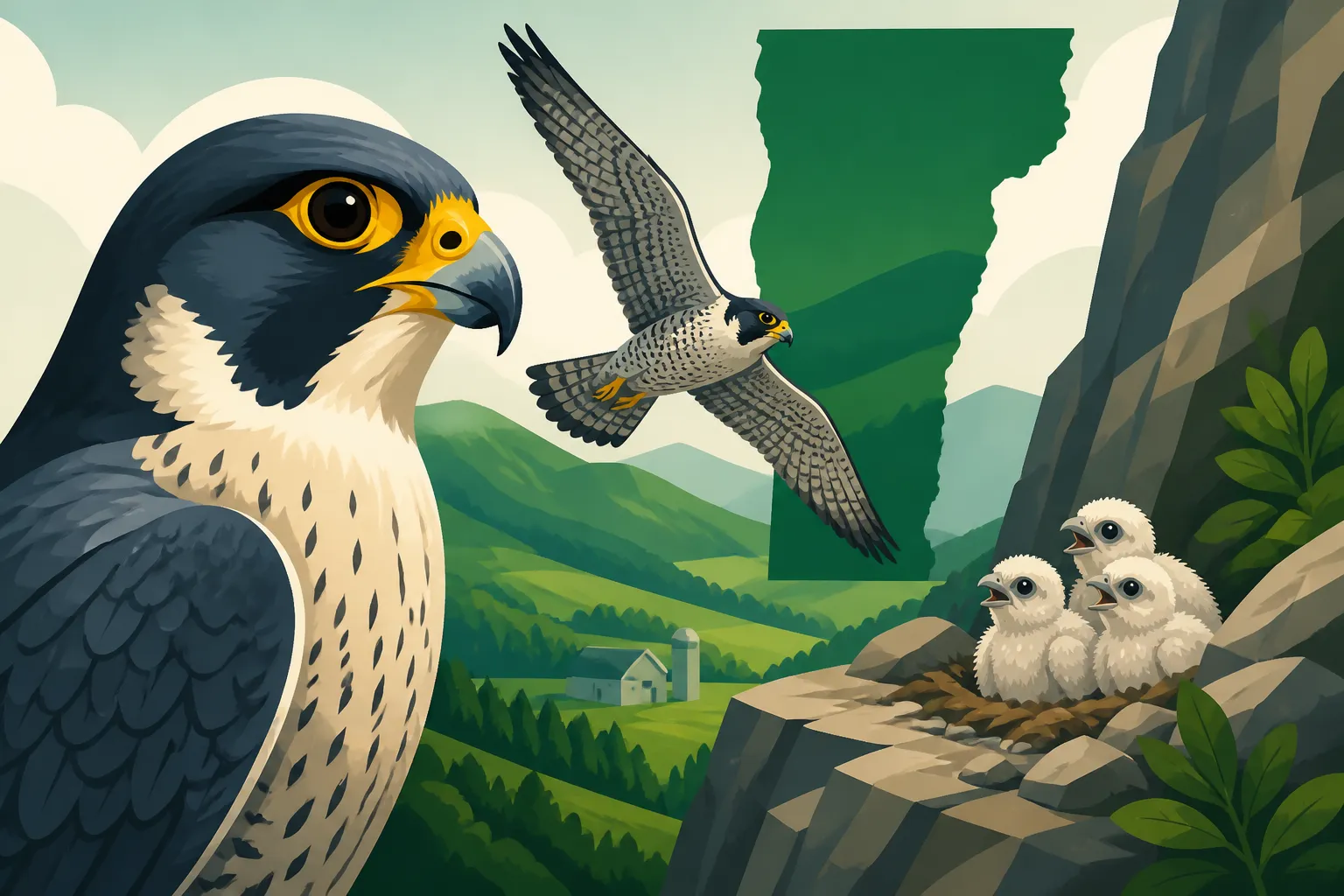
Peregrine falcons are true marvels of the avian world, renowned for their incredible speed and aerial prowess. They prefer dramatic, tall cliffs for nesting, often overlooking rivers or vast valleys, which makes Vermont's rugged topography, especially in the Green Mountains and along the shores of Lake Champlain, perfect prime real estate for them. For centuries, these birds were a natural, vibrant part of our state's ecosystem, their distinct territorial calls a familiar sound to anyone who ventured into the higher elevations or craggy river gorges. They are built for hunting, specifically other birds, which they often catch in mid-air with breathtaking dives.
Their historical presence was a testament to the health of our environment, an apex predator sitting at the top of a complex food web. They raised their young in eyries carved into sheer rock faces, fiercely defending their nests against any perceived threat. Their powerful wings and keen eyesight allowed them to patrol vast territories, a constant symbol of wild, untamed Vermont. Yet, as the industrial age progressed and new chemicals entered our environment, this natural rhythm was tragically disrupted, leading to a silence where their cries once reverberated.
The Silent Spring and DDT's Devastation
The primary culprit behind the peregrine falcon's dramatic decline, not just in Vermont but across North America, was a pesticide called DDT. For years, DDT was hailed as a miracle chemical, used widely in agriculture and for mosquito control, with little understanding of its long-term ecological impact. What scientists eventually discovered was that DDT, and its breakdown products, persisted in the environment, accumulating in the food chain. Birds that ate contaminated insects or fish would then pass on these toxins to the raptors that preyed on them.
For peregrines, which primarily hunt other birds, this meant a steady diet of DDT. The chemical didn't kill the adult falcons outright, at least not always. Instead, it interfered with their calcium metabolism, causing them to lay eggs with dangerously thin shells. These fragile eggs would often crack or break during incubation, unable to support the weight of the parent bird. Year after year, nest after nest failed, and without successful reproduction, the peregrine population plummeted. By the mid-1960s, peregrine falcons had vanished completely from the eastern United States, a stark and chilling example of Rachel Carson's "silent spring" prophecy. It was a wake-up call that forced us to re-evaluate our relationship with the natural world and consider the unforeseen consequences of our actions.
Vermont's Comeback Story: Collaborative Conservation in Action
The disappearance of the peregrine falcon was a heavy blow to Vermont's wildlife legacy. But Vermonters aren't ones to sit idly by when something precious is lost. What followed was a multi-decade effort, a true testament to collaboration between state agencies, private organizations, and countless dedicated volunteers. It's a story that proves that even when things look dire, with enough passion and perseverance, we can make a difference.
Reintroduction Efforts and Dedicated Volunteers
With DDT finally banned in the United States in 1972, the door opened for reintroduction efforts. This wasn't a simple task of just releasing a few birds. It required a strategic, painstaking process known as "hacking." Young peregrine chicks, often sourced from healthy wild populations in other regions or captive breeding programs, were placed in artificial nest boxes high up on Vermont's cliffs – locations that historically held peregrine nests. These "hack sites" mimicked natural nests, but with human caretakers providing food and monitoring the young birds. The goal was to allow the chicks to fledge naturally, imprint on the Vermont landscape, and hopefully return to nest in the state as adults.
The Vermont Fish and Wildlife Department, along with partners like The Peregrine Fund and many local volunteers, spearheaded these efforts starting in the late 1970s. Imagine the commitment: scaling sheer rock faces, hauling supplies, and then carefully monitoring these precious young birds day after day, through all sorts of weather. It was dangerous work, demanding incredible patience and a deep love for these raptors. Every successful fledge was a triumph, a tiny step towards rebuilding a lost population. The dedication of these early pioneers laid the groundwork for the success we see today, slowly but surely bringing life back to those silent cliffs.
Monitoring Success and Habitat Protection
The reintroduction was just the first phase. Once peregrines started to establish nesting territories, intense monitoring became, and continues to be, crucial. Teams of biologists and volunteers annually climb cliffs or use powerful optics to observe nests, counting eggs, checking on chicks, and banding young birds to track their movements and survival rates. This data is vital for understanding the population's health and identifying any new threats that might emerge. This is where tools that help with scouting and understanding terrain, like a mapping application from GoHunt, might be used by researchers in a different context to plan access to remote sites for monitoring.
Beyond direct monitoring, habitat protection has been a cornerstone of the recovery. Many of Vermont's nesting cliffs are on public lands, such as those found in Hunting Vermont's Green Mountain National Forest or certain Vermont Wildlife Management Areas. This allowed for specific regulations to be put in place, often closing off climbing routes or establishing buffer zones around active nests during the critical breeding season (typically April through August). This minimizes disturbance to the highly sensitive nesting falcons, giving them the peace and quiet they need to successfully raise their young. The success of these combined efforts is clear: by the early 2000s, peregrines were officially removed from Vermont's endangered species list, a moment of profound joy for everyone involved. Their recovery stands as a shining example of what collaborative conservation can achieve.
| Status Period | Population Trend | Key Factors |
|---|---|---|
| Pre-DDT (Historic) | Common, widespread across suitable cliff habitats | Abundant prey, stable nesting sites |
| 1960s-1970s (Decline) | Near extinction in Eastern U.S. (extirpated from VT) | DDT pesticide causing eggshell thinning |
| 1970s-1990s (Recovery) | Slow but steady increase, reintroduction efforts | DDT ban, hacking programs, active nest protection |
| 2000s-Present (Stable) | Healthy, self-sustaining population, delisted | Continued monitoring, habitat preservation, public awareness |
Where to See Vermont's Recovered Raptors Today
One of the greatest joys of the peregrine falcon's recovery is the opportunity to witness these incredible birds in their natural habitat. For many, catching a glimpse of a peregrine in action, whether it's soaring effortlessly on thermals or plunging into an incredible dive, is a truly unforgettable experience. It reminds us of the power of nature and the positive impact of human stewardship.
Prime Viewing Locations and Respectful Observation
If you're hoping to spot a peregrine falcon in Vermont, you're in luck! While they won't just appear in your backyard (unless your backyard is a massive cliff face), several locations are well-known for their nesting activity and provide excellent viewing opportunities. Iconic spots along the length of the Green Mountain range, particularly those with sheer rock faces, are prime territory. Areas like Smugglers' Notch, Bolton Mountain, and certain cliffs overlooking sections of Hunting the Champlain Valley or even in the wilder parts of the Hunting the Northeast Kingdom have historically been active nesting sites. Sometimes, these birds can even be seen hunting over major waterways, showcasing their incredible hunting prowess.
Remember, though, that these birds are still sensitive, especially during their nesting season, which typically runs from early spring through late summer. Observing them respectfully is paramount. This means using binoculars or a spotting scope to view them from a distance, never approaching a nesting cliff, and always adhering to any posted closures or advisories from the Vermont Fish and Wildlife Department or land managers. These closures are put in place to protect the birds from disturbance, which can lead to nest abandonment. A good pair of optics will allow you to enjoy their stunning aerial displays without causing stress to the birds. Learning about their behaviors and preferred habitats, perhaps by reviewing public land maps on an app like GoHunt, can also help you understand where best to look without intruding.
What Their Presence Means for the Ecosystem
The return of the peregrine falcon to Vermont isn't just a win for the species itself; it's a profound indicator of a healthier, more balanced ecosystem overall. As an apex predator, the peregrine sits at the top of a specific food chain. Their robust presence suggests that the populations of their prey (various bird species) are also healthy, and, crucially, that the environment is relatively free of harmful contaminants like DDT. They are a living barometer of environmental health.
Furthermore, the recovery of one iconic species often sparks broader conservation interest and efforts. The lessons learned from the peregrine's plight and recovery have informed approaches to managing other sensitive species, from large mammals like moose, which face different challenges like those detailed in Vermont Moose Population Decline Since the 1990s, to other raptors. Their aerial hunts help to regulate populations of smaller birds, contributing to natural selection and ensuring the overall vitality of the bird community. The peregrine’s return is a symbol of hope, demonstrating that with concentrated effort, we can reverse the damage we’ve done and restore the intricate balance of nature. This success story stands alongside others, like the impressive comeback of the Vermont Bald Eagle Recovery and the efforts to protect nesting platforms for species like the Vermont Osprey Nesting Platforms, showing a broader pattern of recovery for Vermont's raptor populations.
Supporting Vermont's Wildlife Beyond Hunting
For many of us who love the outdoors, hunting is a direct way we connect with and support wildlife conservation. But the story of the peregrine falcon recovery highlights a crucial truth: wildlife conservation is a broad umbrella, and it takes contributions from everyone, hunters and non-hunters alike, to ensure a thriving ecosystem. Understanding how various groups contribute helps us appreciate the full picture of stewardship in Vermont.
How Non-Hunters Contribute to Conservation
It's a common misconception that hunters are the only ones funding wildlife conservation. While hunters and anglers certainly play a massive role through license fees and excise taxes on gear (which goes into the Pittman-Robertson and Dingell-Johnson Acts, respectively), non-hunters are equally vital in different, but equally significant, ways. For species like the peregrine falcon, whose recovery didn't directly involve game management, public awareness, advocacy, and direct donations to conservation organizations were absolutely critical. People who enjoy birdwatching, hiking, or simply appreciating wild spaces often contribute financially to land trusts, wildlife rehabilitation centers, or specific species recovery programs.
Volunteer efforts, like those involved in monitoring peregrine nests, are often driven by individuals who might not hunt but possess a deep love for wildlife. These "citizen scientists" provide invaluable data, helping state agencies like Vermont Fish and Wildlife keep tabs on populations and identify issues. Their voices in advocating for environmental protection, such as stricter pesticide regulations or the protection of critical habitats, are also powerful. This collective effort, from direct donations to boots-on-the-ground volunteerism and political advocacy, forms a robust network of support that benefits all of Vermont's wildlife, from the smallest songbird to the largest buck, and plays a role in ongoing efforts to monitor species health, as seen in programs like the Vermont Wildlife Disease Monitoring Program and the crucial Vermont's CWD Surveillance Program for deer.
The Broader Impact of Species Recovery
The peregrine falcon's return ripples through the entire Vermont landscape. It's not just about one bird; it's about the health of the entire ecosystem. When an apex predator recovers, it indicates a stable foundation beneath it – healthy prey populations, clean water, and unpolluted air. This broader environmental health benefits countless other species, many of which are indeed game animals that hunters pursue. Healthy habitats mean more deer, more turkeys, and more opportunities for everyone to enjoy Vermont's wild resources.
Moreover, the success of such programs often paves the way for greater public understanding and appreciation of wildlife management. It shows that even seemingly insurmountable environmental challenges can be overcome with scientific research, dedicated effort, and broad public support. This collective sense of achievement strengthens the conservation ethic in our state, encouraging future generations to continue protecting and cherishing Vermont's natural heritage. Whether you're tracking deer in fresh snow as discussed in Tracking a Deer in Fresh Green Mountain Snow or simply watching a Vermont Common Loon Population glide across a pristine lake, the health of our wildlife is interconnected, and every success story, like the peregrine's, adds to the richness of our shared outdoor experience.
Disclaimer
This article is for general informational purposes only and does not constitute professional advice. Laws, prices and regulations vary by location and change over time. Consult a qualified professional for guidance on your specific situation.