Vermont Bat Population and White-Nose Syndrome
It’s easy to focus on the game animals we pursue here in Vermont, but sometimes the real drama in our woods is playing out with creatures we rarely see, like our native bats. Many Vermonters are keenly aware of the devastating impact of White-Nose Syndrome on our precious bat populations, and it’s truly heartbreaking to witness. This guide is here to shed light on this critical issue, delving into what White-Nose Syndrome is, how it has affected Vermont's bats, and what conservation efforts are underway to protect these vital insect-eaters.
The Silent Crisis: Understanding White-Nose Syndrome
Imagine a fungal disease so aggressive it can wipe out millions of animals, silently and swiftly, often before humans even realize the full scope of the disaster. That's essentially what White-Nose Syndrome (WNS) has done to bat populations across North America, and Vermont has certainly not been spared its wrath. It's a tragedy unfolding largely out of sight, deep in the caves and mines where these fascinating creatures hibernate.
What is White-Nose Syndrome (WNS)?
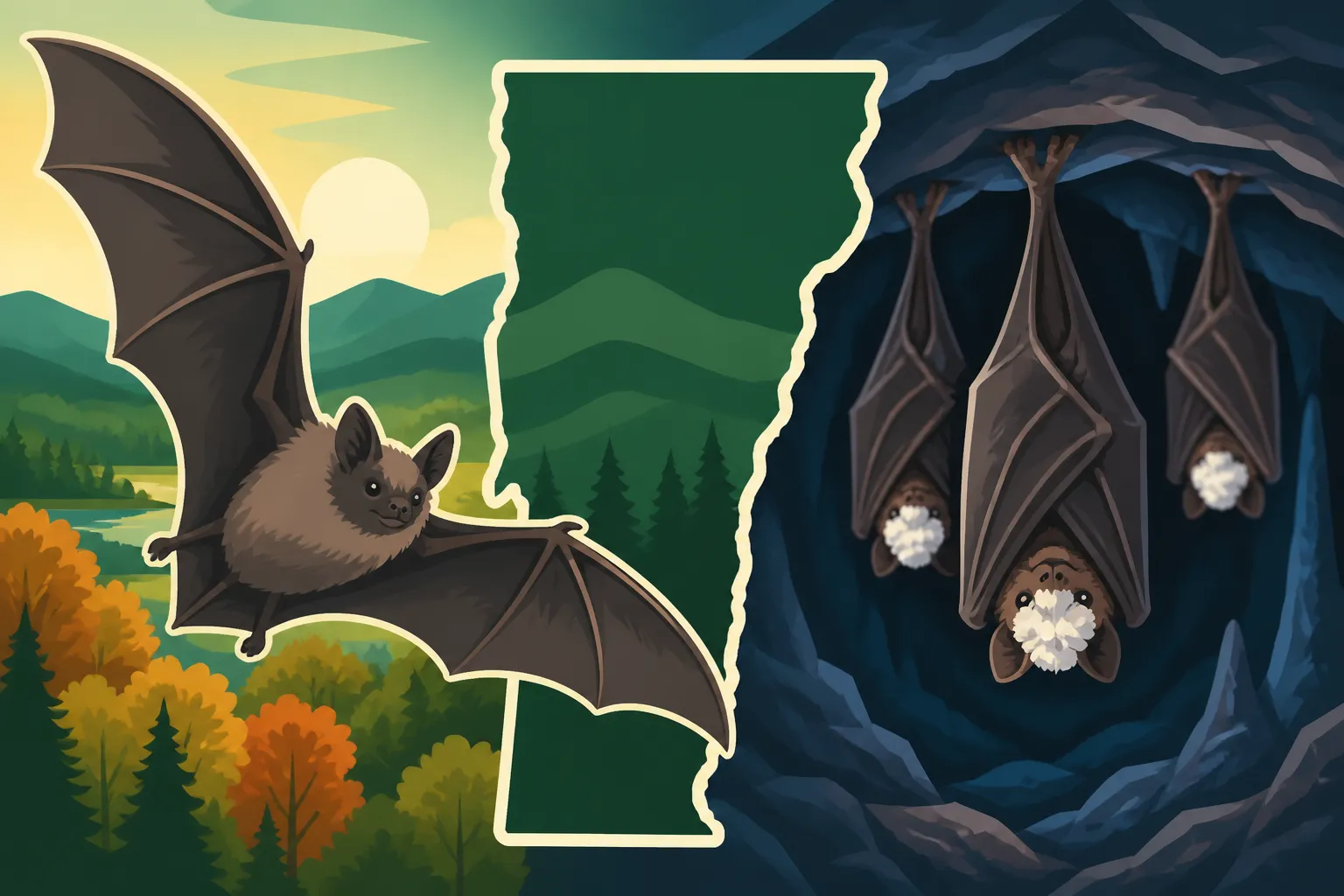
White-Nose Syndrome is a serious affliction caused by a cold-loving fungus called Pseudogymnoascus destructans (or Pd for short). This fungus thrives in cold, damp environments, precisely the conditions found in many bat hibernacula – the caves and abandoned mines where bats spend their winter dormancy. The "white-nose" part of the name comes from the visible fuzzy white growth of the fungus often seen on the muzzles, ears, and wings of infected bats. It's not just a cosmetic issue; this fungus literally eats away at their tissues. The fungus irritates the bats during hibernation, causing them to wake up more frequently than they should. Each time a bat rouses from torpor, it expends precious fat reserves that are meant to sustain it through the entire winter.
How WNS Spreads and Its Impact on Hibernating Bats
The Pd fungus is incredibly efficient at spreading. It can be transmitted directly from bat to bat through contact in crowded hibernacula. This is why species that cluster together in large numbers are often the most severely impacted. Unfortunately, humans can also inadvertently spread the fungus. If a caver explores an infected cave and then visits another cave without properly decontaminating their gear, they can carry the fungal spores from one site to another, acting as an unwitting vector. This is why many caves and mines in affected regions, including some in Vermont, have restricted access or require strict decontamination protocols.
The physiological impact of WNS is truly devastating. When bats wake up repeatedly due to the irritation and damage from the fungus, their stored fat reserves are rapidly depleted. They literally starve to death before winter is over. You might see bats flying around in mid-winter when they should be in deep hibernation – a sure sign they are suffering from WNS and desperately, but often futilely, searching for food that isn't available. The fungus also damages their wings, which are vital for flight, thermoregulation, and water balance, further compounding their struggle for survival.
Vermont's Bat Species Most Affected by WNS
Vermont is home to several species of bats, and many have been hit incredibly hard by WNS. Some species, once common, have seen population declines upwards of 90-99% since the arrival of WNS in the mid-2000s.
Here are some of the species most affected in our state:
| Species Name | Typical Habitat (Pre-WNS) | WNS Impact (Observed) | Status |
|---|---|---|---|
| Little Brown Bat | Widespread, common, often found in human structures | Catastrophic decline, one of the first and hardest hit | Endangered (State and Federal) |
| Northern Long-eared Bat | Forested areas, roosting under tree bark | Severe decline, population decimated | Endangered (State), Threatened (Federal) |
| Tri-colored Bat (Eastern Pipistrelle) | Forests, often solitary or in small groups | Significant decline, also highly susceptible | Endangered (State), Threatened (Federal) |
| Big Brown Bat | Widespread, often in buildings, more resilient | Significant decline, but showing some localized recovery | Special Concern (State), Widespread (Federal) |
| Eastern Small-footed Bat | Rock crevices, talus slopes | Decline, but perhaps less severe due to solitary nature | Special Concern (State) |
The little brown bat, in particular, was once our most common bat, readily found roosting in attics and barns during the summer. Now, seeing even a small colony is a rare and hopeful sign. The northern long-eared bat, a species that prefers to roost under bark and in tree cavities during the summer, has also faced a dramatic downturn, leading to its federal listing. These shifts have profound implications for our ecosystem, as bats play a crucial role in insect control.
Tracking Vermont's Bat Populations in the Face of WNS
Monitoring something as elusive and nocturnal as a bat population is a monumental task, even without the added complication of a deadly disease. The folks at the Vermont Fish & Wildlife Department, along with dedicated partners like the Vermont Center for Ecostudies and other conservation groups, work tirelessly to understand what's happening to our bats. It's a continuous effort that combines cutting-edge technology with good old-fashioned fieldwork.
Monitoring Efforts and Data Collection
Tracking bat populations in Vermont involves a multi-pronged approach. One key method is acoustic monitoring. Specialized detectors are deployed in various locations, listening for the ultrasonic calls that bats emit as they navigate and hunt. These calls are unique to different species, allowing researchers to identify which bats are present in a given area. This can help establish baseline activity levels and track long-term trends. Imagine trying to identify a hunter in the woods based on the sound of their footsteps alone – that's a bit like what acoustic monitoring does for bats, only with sounds beyond human hearing.
Another critical method is mist-netting, typically done during the summer months. Fine nets, almost invisible to bats, are set up in flight paths. When bats fly into them, they are carefully removed, identified, measured, banded (with tiny, harmless bands on their forearms), and then released. This allows researchers to gather detailed data on individual bats, including their health, reproductive status, and movements. Finally, during the winter, researchers conduct hibernacula counts, carefully entering known caves and mines (following strict decontamination protocols) to count hibernating bats and assess for signs of WNS. It’s incredibly challenging work, often in freezing, dark, and damp conditions, but it's essential for understanding the true impact of the disease. The data gathered helps inform management strategies and reveals subtle changes in population trends.
The Decline: Pre and Post-WNS Numbers
Before White-Nose Syndrome arrived in Vermont around 2008, many of our bat hibernacula hosted thousands of individuals, especially little brown bats. These sites were bustling (or rather, silently hibernating) with life. Some of the larger caves and mines could easily hold ten thousand or more bats across several species. The total state population was robust, offering significant insect control across our farmlands and forests.
The arrival of WNS changed everything almost overnight. Within just a few years of its detection, counts in these same hibernacula plummeted. Instead of thousands, researchers began counting dozens, or even single-digit numbers. For some species, the reduction was nearly absolute, leaving only a tiny fraction of the original population. While we can't share exact figures here, the visual representation of this decline in official reports shows a precipitous drop, like falling off a cliff. For hunters accustomed to Reading a Vermont Harvest Report or understanding Vermont Deer Population Estimate fluctuations, imagining a decline of this magnitude in any game species is truly sobering. It illustrates the devastating power of a novel pathogen when a species lacks immunity.
The Importance of Citizen Science and Public Reporting
While professional researchers do incredible work, the vastness of Vermont means they can't be everywhere at once. This is where you, the everyday Vermonter, whether you're a hunter, hiker, farmer, or just an interested resident, can make a real difference. Citizen science is absolutely crucial in tracking bat populations and understanding the effects of WNS.
Reporting bat sightings, especially unusual activity, is invaluable. If you see bats flying during the middle of winter, or find dead bats outside a roost, or observe bats acting strangely (e.g., struggling to fly, appearing disoriented), it's important to report it to the Vermont Fish & Wildlife Department. These observations can provide critical data points, helping to identify new problem areas or potential survivors. Knowing what to look for and where to report it can literally help guide conservation efforts. Even knowing where summer roosts are located, such as in old barns or under bridge decks, is important information. For those who enjoy exploring public lands, understanding the nuances of the environment is key. A mapping tool like GoHunt might help you identify potential bat habitats or areas that should be treated with care to avoid disturbing delicate ecosystems.
Conservation Strategies and Hope for Vermont's Bats
Despite the bleak picture, there's a strong commitment in Vermont and across the region to fight WNS and help our bat populations recover. It's a long-term battle, but every effort, no matter how small, contributes to the survival of these ecologically essential creatures. Conservation isn't just about protecting game animals; it's about safeguarding the entire ecosystem, as detailed in broad efforts like the Vermont Wildlife Disease Monitoring Program.
Protecting Hibernacula and Summer Roosts
One of the most direct ways to help bats is by protecting the places they call home, both in winter and summer. Hibernacula – those cold, damp caves and abandoned mines – are ground zero for WNS. Minimizing human disturbance in these critical wintering sites is paramount. This often means restricting access to known bat caves, particularly during the hibernation period, to prevent accidental spread of the Pd fungus by humans and to reduce stress on hibernating bats. Signage and gating might be used to deter entry. It’s about creating safe, undisturbed sanctuaries where bats can attempt to survive the winter without added human-caused pressures.
Summer roosts are equally important. Many bat species, like the little brown bat, depend on structures like old barns, attics, or even tree cavities in mature forests (a key feature when Finding Sign in Green Mountain Timber). Protecting these roosts means ensuring these structures aren't unnecessarily torn down, or if they must be, ensuring alternative roosting sites are provided, like properly designed bat houses. Landowners play a crucial role here, as do those who manage public lands such as Vermont Wildlife Management Areas or Vermont State Forests and Reservations. Educating people about the benefits of bats and how to coexist with them is also a big part of the strategy.
Research into Treatments and Management
While protecting habitat is vital, scientists are also working hard to understand WNS at a deeper level and develop potential treatments or management strategies. Researchers are exploring various avenues, from antifungal agents that might inhibit the growth of Pd in caves to probiotics that could boost a bat's natural defenses. The challenge is immense, as any solution must be safe for bats, effective in the complex cave environment, and scalable enough to impact wide-ranging populations.
Some studies are looking at genetic resistance, trying to understand if a small percentage of bats are naturally more resistant to the fungus, and if this resistance could be fostered. Other projects investigate the microbiome of bats, looking for beneficial bacteria that might offer protection. While there's no silver bullet treatment that has been widely deployed in the field yet, the ongoing research offers a glimmer of hope. It's similar to the complex challenges faced when managing other wildlife diseases, where proactive prevention and scientific understanding are key, as seen with Vermont's CWD Prevention Rules.
What Hunters and Outdoor Enthusiasts Can Do
As outdoor enthusiasts, hunters are often keenly aware of the health of our natural world. We spend a lot of time in the woods and on the water, and we can play a vital role in helping our bat populations.
Here are some practical things you can do:
- Respect Cave and Mine Closures: If you stumble upon a cave or abandoned mine, especially on public land like the Green Mountain National Forest or Hunting Vermont's Green Mountain National Forest, and see signs restricting access, please respect them. These closures are often in place for bat protection.
- Decontaminate Gear: If you ever do enter a cave or mine (only if it's permitted and safe, of course), follow strict decontamination protocols for your boots, clothing, and any gear. This means scrubbing off dirt and then disinfecting everything to prevent carrying fungal spores to other sites. Think of it like preventing the spread of invasive species or other wildlife diseases, like when considering Vermont's Rule Against Urine-Based Deer Lures Explained.
- Install Bat Houses: Consider putting up a bat house on your property. Properly designed and placed bat houses can offer crucial summer roosting habitat for species like little brown bats, providing them a safe place to raise their young.
- Report Unusual Bat Sightings: As mentioned, if you see bats flying in winter, or find dead or sick bats, report it to the Vermont Fish & Wildlife Department. Your observation could be critical. You might even find some valuable habitat information using mapping tools, like those found through GoHunt, which can help you identify areas with old barns or mature timber that might serve as bat roosts, making you more aware of where these creatures might be.
- Minimize Pesticide Use: Since bats eat vast quantities of insects, reducing the use of insecticides, particularly around your home and garden, can help ensure a healthier food supply for them.
Every bit of awareness and responsible action helps.
The Future of Bats in the Green Mountain State
The journey to recovery for Vermont's bats will be a long and arduous one, but there are reasons for cautious optimism. The incredible resilience of nature, coupled with dedicated conservation efforts, provides a path forward, even if it's a slow and difficult one.
Slow Recovery and Long-Term Outlook
After the initial, catastrophic declines, researchers are now seeing some very subtle signs of stabilization and, in a few isolated instances, extremely slow increases in bat numbers at some hibernacula. This doesn't mean the crisis is over; far from it. Populations are still a tiny fraction of what they once were, and Pd is still very much present in the environment. However, it suggests that a small percentage of bats might be developing some level of resistance or perhaps have behavioral adaptations that help them survive exposure.
The long-term outlook hinges on continued vigilance, research, and protection of critical habitats. It also depends on the bats' ability to evolve and adapt to this persistent threat. Their recovery won't be like the rebound of a deer herd after a hard winter; it's more like a slow, painstaking climb from the brink, one bat at a time. This is a long-term commitment for all of us who care about Vermont's natural heritage.
Why Bats Matter: Their Ecological Role
Beyond their intrinsic value as fascinating creatures, bats play an absolutely essential role in Vermont's ecosystems. They are nature's pest control. A single little brown bat can consume thousands of insects in a single night – mosquitoes, moths, beetles, and agricultural pests. Imagine the sheer volume of insects consumed by a healthy, pre-WNS bat population across the state! This natural insect control saves farmers significant money by reducing the need for pesticides and helps keep mosquito populations in check, making our evenings more enjoyable.
They are also indicators of environmental health. A thriving bat population suggests a healthy, balanced ecosystem. Their decline highlights significant ecological stress. Protecting bats means protecting the intricate web of life that makes Vermont's outdoors so special. Their role is just as important, though perhaps less visible, as the game animals we pursue, from White-Tailed Deer Across Vermont to Black Bears in Vermont or even Wild Turkeys in Vermont. Their well-being is intertwined with the health of the entire Green Mountain State.
Disclaimer
This article is for general informational purposes only and does not constitute professional advice. Laws, prices and regulations vary by location and change over time. Consult a qualified professional for guidance on your specific situation.