Hunting a Beaver Meadow
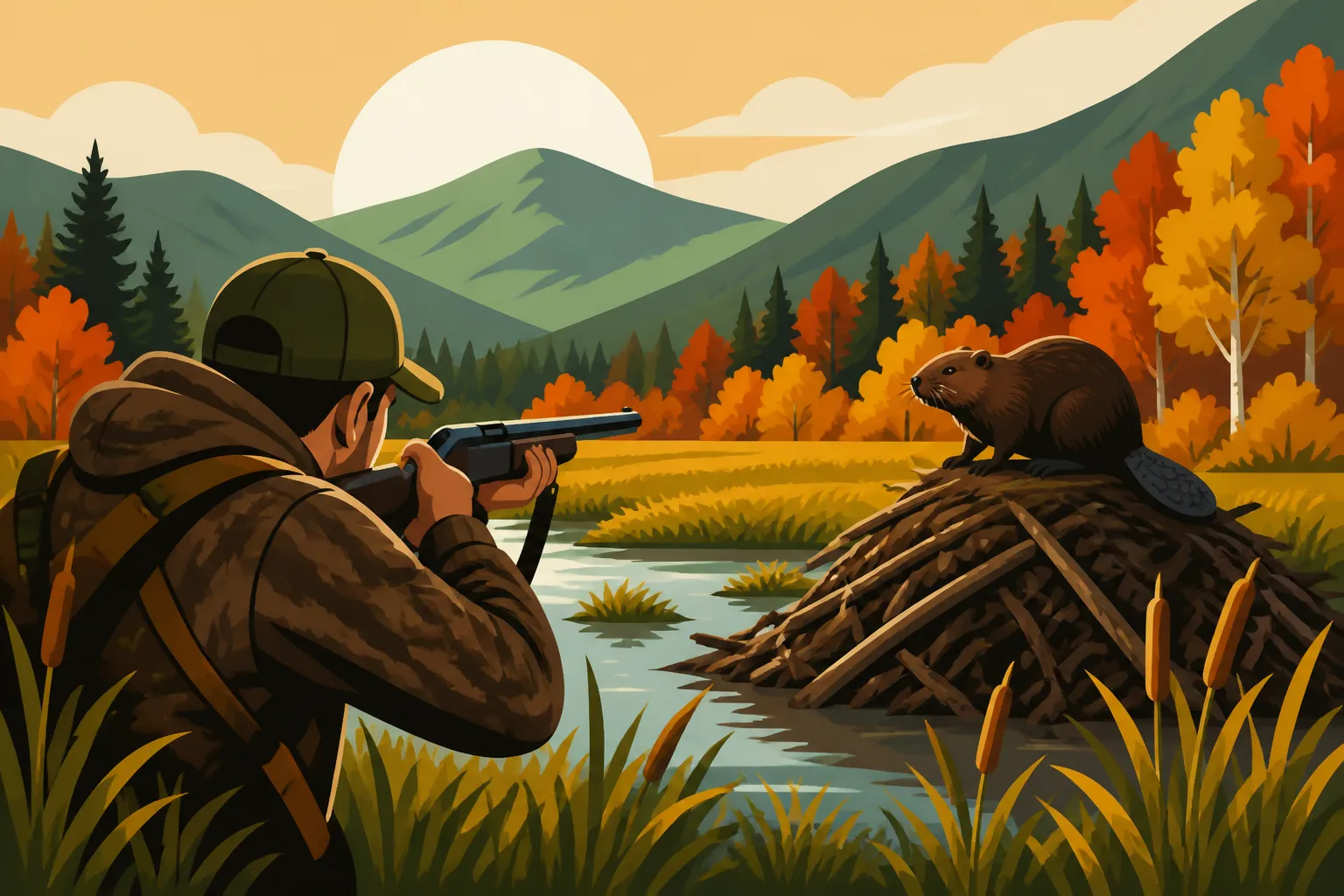
Hunting a beaver meadow in Vermont can feel like stepping into a wild, untamed corner of the Green Mountain State, often presenting a unique blend of challenge and incredible opportunity. These areas, shaped by the tireless work of beavers, create diverse ecosystems that draw in all sorts of wildlife, from big bucks and bears to waterfowl. However, navigating the thick cover, deep mud, and unpredictable water can be incredibly frustrating if you don't know what you're getting into. This guide will walk you through understanding these dynamic habitats, effective scouting techniques, and practical hunting strategies to increase your success in Vermont's beaver meadows, helping you unlock their hidden potential.
Understanding the Beaver Meadow Ecosystem
A beaver meadow isn't just a patch of soggy ground; it's a living, breathing landscape constantly being reshaped by its resident engineers. Beavers dam up streams, flooding low-lying areas and creating impoundments. Over time, these impoundments can silt in, grow dense marsh vegetation, and eventually, if the beaver colony moves on, revert to a more open, grassy or shrubby meadow. This dynamic process creates a mosaic of open water, marsh, wet meadow, and dense shrubby edges that are incredibly attractive to a wide array of game species.
Why Game Animals Gravitate Towards Beaver Meadows
So, what makes these watery havens so appealing to Vermont's wildlife? It's a combination of vital resources that are often scarce elsewhere.
First off, food is a massive draw. The rich, fertile soil that builds up in these areas supports an abundance of lush vegetation, including tender forbs, grasses, and wetland shrubs like willow and alder, which deer, moose, and even bears will browse on. During the late season, these areas might offer some of the last green browse or accessible mast crops. Additionally, the standing dead timber that results from flooding provides excellent insect habitat, which bears will actively seek out, tearing apart logs for grubs.
Secondly, water is fundamental. Whether it's for drinking, cooling off, or simply as a travel corridor, the presence of standing water and small meandering channels is a constant magnet. Deer will often skirt the edges, using the dense cover for security while accessing the water. Late-Season Food Sources for Vermont Whitetails are often found near such water bodies.
Finally, security and cover are paramount. The thick, often impenetrable tangles of alders, willows, and cattails along the edges of a beaver meadow provide phenomenal bedding and hiding spots. Hunters often overlook these areas due to their difficult nature, making them prime sanctuaries where animals can feel safe from human pressure. The very act of the beaver creating the wetland makes travel difficult for larger predators and humans, offering a natural defense for deer and other animals. In some parts of Vermont, especially where hardwoods dominate, a beaver meadow offers a completely different kind of dense cover than is typically available.
Identifying Key Features and Scouting Strategies
Before you even think about setting up a stand or still-hunting, thorough scouting of a beaver meadow is absolutely critical. You can't just walk in blindly; these places demand respect and a strategic approach. It's not just about finding fresh tracks; it's about understanding the entire flow of the ecosystem.
Utilizing Mapping Tools to Pinpoint Potential Hotspots
Modern mapping apps are your best friend when it comes to scouting beaver meadows. Tools like onX Hunt allow you to virtually scout from your couch, identifying potential areas before you even lace up your boots. Look for areas on aerial photos that show the tell-tale signs of beaver activity: irregular-shaped ponds, flooded timber (often visible as grey snags), and distinct boundaries where the water meets the upland forest.
Pay close attention to pinch points and funnels. These are natural constrictions in the landscape that force animal movement into predictable patterns. A narrow strip of dry ground between two flooded sections, a hard-edged bank that deer walk along, or a section where a small creek enters or exits the main impoundment can be a highway for game. Reading Aerial Photos for Green Mountain Deer can help you identify these features. Use the satellite imagery to zoom in and see the transition lines, the subtle differences in vegetation that indicate drier ground versus deep bog.
Also, consider public versus private land boundaries. Some of the best beaver meadows are found on public lands like Green Mountain National Forest or specific Wildlife Management Areas, where access is guaranteed. Others might be on private land, requiring you to Knocking on Doors in Champlain Valley Farm Country or other regions to gain permission. Mark potential access points and plan your entry and exit routes meticulously, taking into account prevailing winds.
On-the-Ground Reconnaissance: Reading the Sign
Once you've identified promising areas on your map, it's time to hit the ground. This is where the real work begins. Your goal is to confirm what you saw on the map and find fresh, actionable sign.
Start by walking the perimeter of the meadow, keeping an eye out for well-used game trails that enter or exit the dense cover. Look for tracks in soft mud, droppings, and rubs or scrapes, especially in the transitional zones between the wet ground and the upland forest. Deer, in particular, will often stage on these slightly higher, drier spots before venturing into the deeper cover or open areas.
Don't be afraid to get your feet wet – or at least close to it. Look for distinct travel lanes within the dense marsh grass or shrubbery. Animals will often create tunnels through the thickest vegetation, offering them maximum security. Pay attention to downed logs or humps of earth; these are often preferred travel routes over soggy ground. A key sign to look for in a beaver meadow is what's called a "beaver run" or a "game trail" where animals have consistently walked across a shallow, muddy section, creating a distinct path.
If you're hunting bears or moose, look for more specific signs. Bears might leave claw marks on trees near the edges, or torn-up logs where they've been foraging for insects. Moose will leave enormous tracks and often browse on the taller willows and alders, snapping branches as they feed. Remember, Scouting Vermont Public Land Before Season is not just about finding sign, but understanding why the sign is there and what pattern it reveals.
It's also essential to note the water levels. Beaver meadows can change dramatically with heavy rains or prolonged dry spells. A trail you scouted in late summer might be under three feet of water by fall. Understanding these fluctuations will inform your stand placement and access routes.
| Feature | Primary Game Attracted | Key Scouting Sign | Optimal Conditions |
|---|---|---|---|
| Open Water/Ponds | Waterfowl, Moose, Deer | Droppings, tracks in mud, feeding sign (clipped plants) | Calm mornings, late season when other water freezes |
| Dense Shrub Edges | Deer, Bear, Moose | Well-worn trails, rubs/scrapes, bedding areas | Anytime for bedding/cover, often travel corridors |
| Wet Meadow Grasses | Deer, Moose, Small Game | Grazing sign, droppings, distinct trails | Early season for lush browse, late season for remaining greens |
| Flooded Timber | Bear, Waterfowl, Raccoons | Torn-up logs, denning signs, aquatic insect activity | Anytime for bear foraging, waterfowl resting |
| Upland Transition | Deer, Bear, Moose | Heavy traffic, rubs, scrapes, staging areas | Peak rut for deer, general travel between cover/food |
Effective Hunting Strategies for Beaver Meadows
Now that you've got a handle on the ecosystem and how to scout it, let's talk about putting yourself in a position to succeed. Hunting a beaver meadow isn't like hunting open hardwoods; it requires patience, adaptability, and often, a willingness to get a little uncomfortable.
Stand Placement and Wind Considerations
Your stand placement in a beaver meadow is even more critical than in many other environments because the terrain often forces animals into narrower travel corridors. Look for mature trees along the upland edges, overlooking those pinch points, funnels, or heavy game trails you identified during scouting. A treestand can be effective here, allowing you to see over the dense underbrush that often characterizes these areas. Hanging a Stand on a Champlain Valley Field Edge might involve similar principles of finding those hard edges.
Wind is always a factor, but in a beaver meadow, thermals can be tricky due to the combination of open water, dense cover, and often surrounding hills. As the sun rises, warm air will often start to lift from the open water and carry scent upwards. In the evenings, cooler air will sink. Always try to position yourself so your scent is blowing away from the expected travel routes of the animals. If the wind is swirling or unpredictable, a ground blind brushed into thick cover might be a better option than a treestand, as it helps contain your scent cone more effectively.
Consider the sun's position. You don't want to be staring directly into the rising or setting sun, silhouetting yourself or hindering your vision. Choose a spot that offers good visibility into the key travel lanes without putting you at a disadvantage.
Still-Hunting and Ground Blind Tactics
Still-hunting a beaver meadow can be incredibly productive, but it demands extreme patience and quiet. The dense cover means visibility is often limited to short distances, making close encounters more likely. Move slowly, literally one step at a time, pausing frequently to scan for movement, listen for subtle sounds, and use your binoculars to pick apart the thick vegetation.
Focus on the edges where the dry ground meets the wet. Animals will often parallel these transition zones. Use the terrain and cover to your advantage, stalking from island to island of drier ground, or hugging the treeline. Remember that beavers are constantly changing the landscape, so what was a dry path last year might be submerged this year. A good pair of waterproof Boots for Northeast Kingdom Bog Hunting is absolutely essential.
Ground blinds are another excellent option, especially if you're targeting a specific travel corridor or a feeding area within the meadow. They offer excellent concealment and help mitigate scent, particularly if you've done a good job brushing them in. You can use natural materials found in the area—like cattails, dead branches, or fallen leaves—to create a completely natural-looking setup. Set up your blind well in advance of the season, allowing animals to get accustomed to its presence.
Don't forget about waterfowl if the meadow has significant open water. Setting up decoys and a ground blind can offer fantastic duck and goose hunting opportunities, especially during migration periods. Decoying Ducks on Lake Champlain shares strategies that can be adapted to smaller water bodies like beaver meadows.
Post-Shot Recovery Challenges
One of the biggest realities of hunting a beaver meadow is the difficulty of post-shot recovery. If you shoot an animal, particularly a deer or bear, and it runs into the thick, wet cover, the tracking job can become a nightmare. The soft ground often means faint blood trails, and the dense vegetation makes visibility minimal.
Always try to get a clear, ethical shot that anchors the animal quickly. If it does run, give it plenty of time before you start tracking, especially if it's a marginal hit. When you do track, move slowly and methodically. Look for disturbed vegetation, broken branches, and any droplets of blood, no matter how small. Mark your last known blood trail with flagging tape so you don't lose it.
Consider bringing a partner for tracking, if possible. Two sets of eyes are always better than one, especially in dense cover. If it's getting dark, remember that Blood Trailing After Dark in Vermont is possible with good lights, but the challenges of the terrain are magnified. Be prepared for a tough retrieve, which might involve getting very wet and muddy. A game cart might be useless in these conditions, so a sturdy backpack frame might be your only option for getting quarters out.
Safety and Practical Considerations for Beaver Meadow Hunters
Hunting beaver meadows offers incredible rewards, but it also comes with a unique set of challenges that demand careful preparation and attention to safety. Don't underestimate these environments; they can be unforgiving.
Navigating Wet and Uneven Terrain
The most obvious challenge is the terrain itself. Beaver meadows are, by definition, wet. This means deep mud, standing water, hidden stump holes, and unstable ground. A misstep can lead to a twisted ankle, a submerged boot, or even a fall into surprisingly deep water.
Footwear is non-negotiable. You need high-quality, knee-high rubber boots or waders. Not just "water-resistant" hunting boots; you need full-on waterproof protection. Even then, be aware of water deeper than your footwear can handle. Boots for Northeast Kingdom Bog Hunting highlights the importance of this specialized gear. Always test the ground ahead of you with a walking stick or your foot to assess its stability and depth before committing your full weight.
Recognize that travel will be slow. What looks like a short distance on a map can take significantly longer to traverse in a beaver meadow. Account for this in your hunt planning, especially when considering pre-dawn entry or post-dusk exits.
Dressing for the Conditions: Layering and Protection
Hunting in a beaver meadow means you're almost guaranteed to get wet, whether from sweat, rain, or the environment itself. Therefore, layering is absolutely critical. Start with a moisture-wicking base layer to draw sweat away from your skin. Then add insulating layers appropriate for the temperature. Best Base Layer for a September Archery Sit or Best Mid-Layer for a November Rifle Hunt will vary dramatically depending on the season.
Your outer layer needs to be waterproof and breathable. A good rain jacket and pants are essential, even if the forecast is clear, because brushing through wet vegetation will soak you quickly. Consider gaiters to prevent water and mud from entering the tops of your boots.
Don't forget about insect protection, especially during the warmer months. Mosquitoes, black flies, and ticks can be relentless in these damp environments. Pack insect repellent and consider treating your clothing with permethrin.
Respecting the Environment and Other Users
Beaver meadows are vital habitats, and it's our responsibility as hunters to treat them with respect. This means packing out everything you pack in, leaving no trace behind. Avoid disturbing the beaver dams themselves; they are critical to maintaining the ecosystem.
If you're hunting on public land, be aware that these areas might also be used by hikers, birdwatchers, or trappers. Always wear appropriate blaze orange during legal seasons, even if you are bowhunting during a rifle overlap. How Much Blaze Orange Vermont Requires is a good read. Communicate with any other users you encounter, and be courteous. We share these wild spaces, and a respectful attitude ensures everyone can enjoy them.
Finally, always carry a comprehensive first-aid kit, a map and compass (or a fully charged GPS device like your onX Hunt app with offline maps downloaded), a headlamp with extra batteries, and sufficient water and emergency food. Cell service can be spotty in remote Vermont wetlands, so don't rely on your phone for navigation or emergencies. These essential items can make a huge difference in an unexpected situation, keeping you safe in these challenging but incredibly rewarding hunting grounds.
Disclaimer
This article is for general informational purposes only and does not constitute professional advice. Laws, prices and regulations vary by location and change over time. Consult a qualified professional for guidance on your specific situation.