Rifles and Calibers for Vermont Big Game
When you're preparing for a Vermont big game season, whether it's for whitetails, black bear, or that once-in-a-lifetime moose tag, the sheer number of rifle and caliber options can feel overwhelming. It's easy to get bogged down in ballistics charts and forum debates, wondering if you've truly picked the right tool for the job when you're facing those thick Green Mountain woods or vast Northeast Kingdom clear-cuts. This comprehensive guide aims to cut through the noise, breaking down the best rifle and caliber choices for Vermont's unique hunting conditions, helping you make an informed decision with confidence.
Understanding Vermont's Legal Framework for Rifles
Before we even talk about ballistics or bullet weights, it's absolutely crucial to understand the legal landscape for firearms in Vermont. The Green Mountain State has its own specific rules, and what's legal in one state might not fly here. This isn't just about avoiding a fine; it's about ensuring your hunt is legitimate and ethical from the start. Trust me, the last thing you want is to find out you've unknowingly violated a regulation after a successful harvest.
Legal Firearms for Deer Hunting
Vermont is pretty clear about what you can and cannot use to chase whitetails. Generally, modern centerfire rifles are permitted during the November rifle season. This means you have a wide array of choices, from classic lever actions to bolt-action tack drivers. However, there are distinctions, especially when it comes to things like magazine capacity on public land, though generally, for hunting, capacity isn't as restrictive as for other purposes. What's most important is ensuring your chosen firearm and ammunition comply with the specific legal requirements.
For instance, certain calibers might be deemed too small for big game, or restrictions could exist on fully automatic or certain semi-automatic rifles that are designed for military use. Always double-check the current regulations, especially if you're bringing a firearm from out of state or trying a new platform. The Vermont Fish and Wildlife Department's official regulations are your go-to source, and platforms like GoHunt can also offer user-friendly breakdowns of these rules, making it easier to prepare.
Muzzleloader and Shotgun Alternatives
While this guide focuses on rifles, it’s worth noting that Vermont offers other avenues for big game. We have dedicated muzzleloader seasons, often in October and December, which require a completely different approach to firearms. These traditional weapons have their own set of rules regarding propellant, projectiles, and ignition systems. Similarly, shotguns are legal for deer hunting, and in certain dense areas or for specific types of hunting, they can be incredibly effective, particularly with slugs.
These alternatives aren't just for those looking for a different challenge; they can extend your hunting opportunities if you don't secure a rifle tag or prefer a specific season. Many hunters I know will switch between a modern rifle for the November season and a muzzleloader for the later December hunt, effectively extending their time in the woods. Each weapon type presents a unique set of skills and considerations, from trajectory to effective range, all of which demand careful consideration for ethical hunting.
Choosing a Caliber for Vermont Whitetails: The Workhorses
Vermont whitetails, while often not as massive as their Midwestern cousins, are still robust animals, and the terrain they call home can make for challenging shot opportunities. From the thick softwood swamps of the Northeast Kingdom to the rolling hardwoods of the Champlain Valley, you need a caliber that can deliver enough energy to ensure a quick, humane harvest. We're talking about woods where a 100-yard shot can feel like a long one, but also open fields where 200 yards isn't uncommon.
The .30-06 Springfield: An American Classic
You'd be hard-pressed to find a more iconic hunting cartridge than the .30-06 Springfield. It's been putting meat in freezers for over a century, and for good reason. It’s incredibly versatile, capable of handling a wide range of bullet weights, typically from 150 to 180 grains, making it suitable for everything from whitetails to black bear, and even moose in a pinch. Its power is unquestionable, providing ample knockdown energy for Vermont deer.
Many old-timers swear by the .30-06, and I can tell you from experience, it’s earned its reputation. Whether you’re sending a round through a thick shoulder or reaching across a cut cornfield, the .30-06 generally gets the job done. The recoil is manageable for most adult shooters, and ammunition is readily available almost anywhere you look. If you want a do-it-all rifle for your Vermont big game pursuits, the .30-06 is a solid, proven choice that will rarely let you down.
The .308 Winchester: Compact Power
For those looking for a more compact rifle platform without sacrificing too much power, the .308 Winchester is an outstanding choice. It achieves ballistic performance very similar to the .30-06, often with slightly less recoil and in a shorter action rifle, which can be a real advantage when maneuvering through dense undergrowth or climbing into a treestand. It typically favors bullet weights between 150 and 165 grains, perfectly suited for Vermont deer.
The .308 has gained immense popularity over the years, not just with hunters but also in tactical and precision shooting communities. This means there’s an abundance of high-quality ammunition available, with various bullet types tailored for hunting. Its flatter trajectory out to moderate ranges makes it excellent for those shots across wider openings or longer field edges. If you're hunting tight timber and want a nimble rifle, the .308 Winchester is a fantastic caliber to consider. You can find out more about what it takes to get a deer down by reading up on Best Rifle Caliber for Vermont Whitetails.
The 6.5 Creedmoor: Modern Precision
The 6.5 Creedmoor is a relative newcomer to the hunting scene compared to the venerable .30-06, but it has quickly carved out a significant niche, especially among those who appreciate precision and lighter recoil. It’s renowned for its excellent ballistic coefficient, meaning bullets retain energy and resist wind drift very well, leading to impressive accuracy, particularly at longer ranges. For Vermont, where a shot might stretch across a logging road or a powerline cut, that precision can be a real asset.
Typically firing bullets in the 120-140 grain range, the 6.5 Creedmoor delivers plenty of energy for whitetails while producing noticeably less recoil than a .30-06 or .308. This makes it a great option for hunters who are sensitive to recoil, or for younger hunters and those looking for faster follow-up shots. While some might question its "knockdown power" compared to larger calibers, with proper shot placement and a good bullet, it's more than capable of cleanly taking any deer in Vermont.
Stepping Up: Calibers for Vermont Black Bear
Vermont's black bear population has been thriving, and bear hunting offers an exciting challenge. Bears are notoriously tough animals, built like tanks with thick hides, heavy bones, and a dense layer of fat. When you're pursuing these magnificent creatures, especially if you're hoping to take one on a spot-and-stalk hunt along a beech ridge or over a bait site, you need a caliber that offers a significant step up in power and bullet construction to ensure a clean, ethical kill. Many hunters utilize the general bear season that runs through late summer and into fall, allowing for opportunities to pursue them. Bear Hunting Vermont's Long September-to-November Season covers this in more detail.
The .30-06 Springfield (Again): A Versatile Performer
Yes, the .30-06 Springfield makes a reappearance here, highlighting its incredible versatility. While it’s an excellent whitetail cartridge, when targeting bear, it’s crucial to select the right bullet. Opt for heavier, well-constructed bullets, typically in the 180-grain range, designed for deep penetration and controlled expansion. This is where premium hunting ammunition really shines, ensuring the bullet holds together and drives through heavy muscle and bone.
A well-placed shot with a quality 180-grain bullet from a .30-06 will absolutely put down a Vermont black bear. The key, as always, is shot placement. Bears have a smaller vital zone relative to their body size, and their anatomy can be tricky. Knowing your rifle, practicing regularly, and understanding bear anatomy are paramount when using this versatile caliber. It truly is a workhorse, capable of handling multiple species with the right ammunition choice.
The .300 Winchester Magnum: Serious Power
When you want to leave no doubt, the .300 Winchester Magnum steps in as a formidable choice for black bear. This magnum cartridge delivers significantly more energy and velocity than the .30-06, translating to flatter trajectories and increased knockdown power. It's often used with bullets ranging from 180 to 200 grains, driving them with impressive force, making it ideal for those situations where a bear might be quartering away or presenting a less-than-perfect broadside shot.
The trade-off, as with all magnum calibers, is increased recoil. For some hunters, this might mean more practice is needed to shoot accurately, or perhaps a rifle equipped with a muzzle brake or heavier stock. However, for those who can handle it, the .300 Win Mag offers a substantial advantage in terms of energy delivery and confidence when a large bear steps out. If you're heading to the Northeast Kingdom and hoping to fill an early season bear permit, the .300 Win Mag provides that extra margin of power.
The .338 Winchester Magnum: Bear Specific Authority
For the dedicated bear hunter, or someone who wants absolute authority in the field, the .338 Winchester Magnum is an outstanding choice. This caliber was essentially designed with large North American game in mind, offering a significant jump in bullet diameter and weight (often 200-250 grains) over the .30-caliber magnums. This means it delivers a truly massive amount of kinetic energy and creates a larger wound channel, increasing the likelihood of a quick, humane kill on even the biggest black bears.
While its use in Vermont might be considered "overkill" by some for whitetails, for bear, it’s simply a professional tool. The recoil is substantial, requiring a shooter who is comfortable with heavy-hitting cartridges. However, if you are serious about bear hunting and want a caliber that will anchor a large bruin with confidence, the .338 Win Mag is a top-tier performer. It's the kind of caliber that inspires confidence, especially when you're deep in bear country.
The Heavy Hitters: Calibers for Vermont Moose
Vermont's moose hunting is a highly sought-after, limited draw opportunity, primarily in the Northeast Kingdom. If you're lucky enough to draw a tag, you're pursuing one of North America's largest big game animals. Moose are truly immense creatures, with dense bone structure, massive shoulders, and a thick hide. Taking one down requires not just immense power but also deep penetration and heavy bullet construction. This is not the time for marginal calibers; you need a rifle that can deliver a decisive blow. For those dreaming of this hunt, applying for a Vermont Moose Permit Lottery is the first step.
The .300 Winchester Magnum: Entry-Level Moose Power
While the .300 Winchester Magnum is a great bear caliber, it also serves as an excellent, almost "entry-level" magnum for moose. Again, bullet selection is absolutely critical. You'll want to use the heaviest, most robustly constructed bullets available, typically 180-200 grains, designed for maximum penetration. These aren't speed demons; they're designed to punch through tough hide, muscle, and bone, reaching the vitals of a large moose.
Many successful Vermont moose hunters have used the .300 Win Mag, proving its capability. Its flatter trajectory can be an advantage when you might need to reach across a large clear-cut or a wide swamp opening. If you’re comfortable with the recoil and prioritize versatility for other big game like elk or larger bears, the .300 Win Mag is a strong contender for your Vermont moose hunt. Just ensure your chosen bullet is up to the task of deep penetration.
The .338 Winchester Magnum: The Gold Standard for Moose
If there's a consensus "gold standard" caliber for moose hunting in North America, the .338 Winchester Magnum is arguably it. This is where you get into calibers designed specifically for truly large game. The larger diameter and heavier bullet weights (200-250 grains) deliver immense energy, create significant wound channels, and most importantly, provide exceptional penetration. A good .338 Win Mag bullet will drive straight through the shoulder of a bull moose, ensuring a clean pass-through for a blood trail.
The .338 is particularly forgiving of less-than-perfect shot angles due to its power and bullet integrity, though excellent shot placement remains paramount. Recoil is substantial, as mentioned earlier, but for a hunt of this magnitude, investing time at the range to become proficient with this powerful cartridge is a small price to pay for the confidence it instills. For many, it's the ideal choice for a Moose in Vermont's Northeast Kingdom.
The .375 H&H Magnum: Overkill or Absolute Insurance?
For those who believe in bringing a cannon to a knife fight, or simply want the ultimate insurance, the .375 H&H Magnum stands as an almost legendary choice for large game. This powerful cartridge, often firing 270-300 grain bullets, provides an immense amount of stopping power and penetration, far exceeding what's necessary for most deer and bear. For moose, it guarantees maximum effectiveness.
While some might argue it's overkill for Vermont, particularly given the relatively shorter shot distances often encountered, the .375 H&H offers unparalleled confidence. If you're tracking a moose through thick alders or need to anchor a bull quickly in challenging conditions, the sheer power of the .375 H&H provides an undeniable advantage. Recoil is stout, but in a well-fitted rifle, it's a "push" rather than a sharp "kick." It’s a classic safari caliber that transitions perfectly to North American heavyweights. Best Bullet Weight for a Vermont Moose will delve deeper into specific projectile choices.
Vermont Big Game Caliber Comparison
When you're trying to decide, it helps to see how these common calibers stack up for Vermont's distinct big game species. Remember, shot placement is king, but the right tool helps ensure success.
| Caliber | Primary Use in Vermont | Typical Bullet Weight (Grains) | Pros | Cons |
|---|---|---|---|---|
| 6.5 Creedmoor | Whitetail Deer | 120-140 | Low recoil, excellent accuracy, flat trajectory, effective for deer | Some debate on energy for larger game, less common for bear/moose |
| .308 Winchester | Whitetail Deer, Smaller Bear | 150-165 | Compact, moderate recoil, good power, ample ammo availability, accurate | Less reach than magnums, marginal for large bear/moose without premium bullets |
| .30-06 Springfield | Whitetail Deer, Black Bear | 150-180 | Versatile, proven power, widely available, good for all Vermont big game with proper bullets | More recoil than .308/6.5, less flat trajectory than magnums |
| .300 Winchester Magnum | Large Bear, Moose, Long-Range Deer | 180-200 | Significant power, flatter trajectory, good for larger animals or longer shots | Increased recoil, louder report, more expensive ammo |
| .338 Winchester Magnum | Moose, Large Bear | 200-250 | Excellent stopping power, deep penetration, designed for heavy game, highly effective on moose | Substantial recoil, heavy rifle, less versatile for deer, ammo less common |
| .375 H&H Magnum | Moose (Ultimate Assurance) | 270-300 | Unparalleled power and penetration, provides maximum confidence on largest game | Very heavy recoil, large/heavy rifle, niche use, expensive and less common ammo |
Rifle Actions and Features for Vermont Hunting Conditions
Beyond the caliber itself, the rifle's action, stock material, barrel length, and other features play a huge role in its suitability for Vermont hunting. Our diverse landscapes, from dense timber to open agricultural fields, and our variable weather, from crisp fall days to late-season snow, demand a robust and reliable firearm.
Bolt-Action Rifles: Accuracy and Reliability
Bolt-action rifles are, without a doubt, the most popular choice for big game hunting in Vermont, and for good reason. Their simple, strong design lends itself to exceptional accuracy and reliability. With fewer moving parts than semi-automatics, they are less prone to mechanical failures in harsh weather conditions, which is a huge plus when you're miles back in the Green Mountain National Forest and a sudden snow squall blows in.
Many bolt-actions offer excellent adjustability in triggers and stocks, allowing hunters to fine-tune their fit and feel. The controlled feed actions on some models also provide a level of reliability that can be crucial when feeding rounds in a hurry. When you're climbing to a high-elevation bench, you want a rifle that is dependable and accurate, and the bolt-action excels in both categories. Best Rifle Caliber for a Northeast Kingdom Buck often points to the accuracy inherent in these rifles.
Lever-Action and Semi-Automatic Options
While bolt-actions dominate, other rifle actions have their place in Vermont. Lever-action rifles, particularly in calibers like .30-30 Winchester or .45-70 Government, are classic "woods guns." They're quick handling, often lighter, and provide rapid follow-up shots. For dense timber hunting where shots are almost always under 100 yards, a lever-action can be a very effective and nostalgic choice.
Semi-automatic rifles are also legal for deer in Vermont, though certain configurations might have restrictions. They offer the fastest follow-up shots, which can be advantageous in some scenarios. However, they are often heavier, can be more complex to clean, and some hunters find the noise of the action cycling to be distracting in the quiet woods. Regardless of your action choice, practice is key to proficiency.
Stock Materials and Barrel Length
When considering a rifle for Vermont, think about the stock material. Traditional wood stocks are beautiful but can be prone to swelling and warping in wet conditions, potentially affecting accuracy. Synthetic stocks, often made from fiberglass, carbon fiber, or polymer, are generally more durable, weather-resistant, and lighter, making them an excellent choice for rugged Vermont terrain.
Barrel length also plays a role. Shorter barrels (18-22 inches) are handier in thick cover, easier to maneuver in a treestand, and lighter to carry, but they can result in a slight loss of velocity and increased muzzle blast. Longer barrels (22-26 inches) maximize velocity for flatter trajectories and greater energy retention, which might be desirable for longer shots across open land, but they are less maneuverable in tight spaces. Finding the right balance for your typical hunting scenario is key.
Optics and Accessories: Completing Your Vermont Rig
A great rifle is only as good as the shooter behind it, and the quality of your optics and accessories can significantly enhance your effectiveness in the field. Vermont's varied terrain and light conditions demand optics that are bright, clear, and rugged, capable of performing in low light at dawn and dusk, and holding zero through harsh weather.
Quality Scopes for Low-Light Performance
Vermont hunting often means low-light situations: dawn breaking over a frosted field, or dusk settling into a dense cedar swamp. A quality rifle scope with good light transmission is absolutely crucial. Look for scopes with larger objective lenses (40mm or more) and fully multi-coated optics. Variable power scopes, typically in the 3-9x or 4-12x range, offer versatility for both close-quarters timber shots and longer ranges.
Reliable turrets and a clear, uncluttered reticle are also important. You need a scope that holds its zero even after a tumble or a long day of rattling through the brush. Brands known for their robust construction and excellent glass are worth the investment. Think about how much light actually makes it to your eye, especially in those critical first and last minutes of legal shooting light. Optics for Vermont's Green Mountain Terrain dives deeper into selecting the right glass.
Binoculars and Rangefinders for Situational Awareness
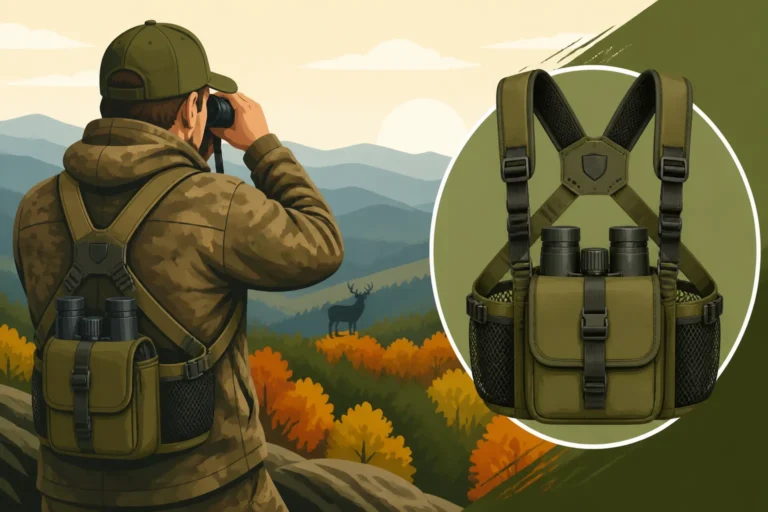
While your rifle scope is for aiming, a good set of binoculars is indispensable for spotting game, especially when still-hunting the edges of a beaver flowage or glassing a powerline cut. Look for 8x or 10x magnification with 42mm objective lenses for a good balance of magnification, light gathering, and steady viewing. Binoculars help you pick apart cover, identify antlers, and confirm whether that dark patch is a stump or a bear.
A rangefinder, particularly for rifle hunting, is no longer a luxury but a necessity. Knowing the exact distance to your target is critical for ethical shot placement, especially with today's flatter-shooting calibers. In Vermont's undulating terrain, judging distance by eye can be deceiving. A laser rangefinder gives you an instant, accurate reading, allowing you to compensate for bullet drop and ensure you're making a clean shot. This is especially true if you are hunting longer range shots along a Hunting a Ridge-Top Saddle for Rutting Bucks.
Slings, Cases, and Cleaning Kits
Don't overlook the basics! A comfortable, durable rifle sling is essential for carrying your rifle through miles of Vermont woods. A padded sling can make a world of difference on a long hike to a remote stand. Ensure it's adjustable and has reliable swivels that won't give out.
A good hard case is critical for protecting your rifle during transport, especially if you're traveling significant distances or flying. For field protection, a soft case can protect it from scratches and dings on the way to the truck. And finally, a basic cleaning kit – bore cleaner, patches, and oil – is vital for maintaining your rifle's accuracy and reliability throughout the season and for years to come. Rust is the enemy, particularly in Vermont's damp climate, and proper care will extend the life of your valuable investment. Using resources like GoHunt for pre-season scouting can even help you plan your gear loadout based on terrain maps, ensuring you're only carrying what's essential.
A Note on Ammunition and Ethical Shot Placement
Choosing the right rifle and caliber is only half the battle; selecting the appropriate ammunition and committing to ethical shot placement are equally, if not more, important. Even the most powerful magnum won't cleanly take an animal if the bullet hits in the wrong spot, or if it's designed for target shooting rather than hunting.
Bullet Construction and Performance
For big game hunting, especially for bear and moose, bullet construction is paramount. You generally want a bullet designed for controlled expansion and deep penetration. This means avoiding fragile, rapidly expanding bullets meant for varmints or thin-skinned game. Look for bonded core bullets, partition designs, or monolithic copper projectiles that are engineered to retain their weight and drive through muscle and bone, reaching the vitals.
The weight of the bullet should also be appropriate for the game. For deer, a 150-165 grain bullet in a .30-caliber is typically excellent. For bear, moving to 180 grains, or even 200 grains in a magnum, provides more insurance. For moose, the heaviest, most robustly constructed bullets in your chosen caliber are the way to go. Think about the bullet's intended purpose and match it to the animal you're pursuing.
Practice, Practice, Practice
I can't stress this enough: your rifle is only as accurate as you are. Spending time at the shooting range before the season is absolutely non-negotiable. Don't just sight in your rifle; practice shooting from various field positions – offhand, kneeling, sitting, and from a bipod or shooting sticks. Simulate the conditions you might encounter in the woods.
Practice quickly acquiring targets, managing recoil, and making ethical shot decisions under simulated pressure. Know your rifle's trajectory at different ranges. A solid rest can make a 200-yard shot feel like 50, but you might not always have that luxury. The more comfortable and proficient you are with your firearm, the more confident and ethical you will be in the field. This confidence directly translates to clean, humane harvests.
Maintenance and Season-Long Readiness
A rifle isn't just a tool; for many of us, it's a cherished piece of equipment, often passed down through generations. Proper maintenance ensures its longevity, reliability, and accuracy, which are all critical for success and safety in the Vermont woods. Neglect can lead to rust, malfunctions, and diminished performance, something no hunter wants to experience when a prime buck steps out.
Regular Cleaning and Inspection
After every hunt, especially if your rifle has been exposed to rain, snow, or even heavy humidity, give it a thorough cleaning. This includes swabbing the bore, wiping down all metal surfaces with a lightly oiled cloth, and checking for any signs of rust or damage. Pay particular attention to the crown of the barrel and the chamber, as these areas are critical for accuracy.
Periodically, you'll want to perform a deeper cleaning, disassembling the bolt and cleaning the action. This removes accumulated grime, spent powder, and old lubricants that can gum up the works. While cleaning, inspect all parts for wear and tear. Are the scope rings tight? Is the stock free of cracks? Are there any loose screws? A quick inspection can prevent a major headache in the field.
Safe Storage and Transportation
When not in use, store your rifle safely and securely. A locked gun safe is the best option, protecting your firearms from theft and unauthorized access, particularly by children. Ensure the storage area is cool, dry, and has good air circulation to prevent rust. Some hunters use dehumidifiers or desiccant packets inside their safes to combat moisture.
For transportation, always unload your rifle and store it securely in a case. Vermont has specific laws regarding the transport of firearms, especially loaded firearms in vehicles. Always be aware of these regulations. When you're driving to your hunting spot, your rifle should be unloaded and safely cased or secured to prevent accidental discharge and to comply with the law. This attention to detail is part of being a responsible hunter, not just in the field but also in daily life, an ethos Vermont holds dear. Vermont Legal Firearms for Deer Hunting is a great resource to revisit regularly.
Final Thoughts on Your Vermont Hunting Rifle
Choosing a rifle and caliber for Vermont big game hunting is a deeply personal decision, influenced by your hunting style, the species you pursue, and your comfort level with different firearms. There's no single "best" answer, but by understanding the capabilities of various calibers, the features of different rifle actions, and the importance of quality optics and accessories, you can make an informed choice.
Whether you opt for the classic versatility of a .30-06, the compact power of a .308, the modern precision of a 6.5 Creedmoor, or the authoritative punch of a .338 Win Mag for moose, remember that proficiency and ethical shot placement are always paramount. Invest in quality gear, practice diligently, and always prioritize safety. With the right preparation, your chosen rifle will be a trusted companion on countless memorable hunts in the beautiful Green Mountain State.
Disclaimer
This article is for general informational purposes only and does not constitute professional advice. Laws, prices and regulations vary by location and change over time. Consult a qualified professional for guidance on your specific situation.