Best Rain Gear for a Wet Green Mountain Hunt
Oh, the joy of hunting in Vermont's Green Mountains… until that inevitable drizzle turns into a relentless, bone-soaking downpour. There's nothing quite like the misery of being miles deep in the woods, shivering, with every layer clinging to you like a wet rag. It doesn't just make you uncomfortable; it can be downright dangerous in cold weather and definitely puts a damper on your focus. This guide is all about equipping you with the knowledge to pick the absolute best rain gear, ensuring you stay dry, warm, and ready to make the most of your hunt, no matter what Mother Nature throws your way.
The Unpredictable Reality of Vermont's Green Mountain Weather
Vermont's Green Mountains are absolutely stunning, no doubt about it. But they're also notorious for their fickle weather patterns. You can start your day with crisp, clear skies, feeling optimistic, only for a thick fog to roll in, followed by a cold rain by lunchtime. It’s not just a nuisance; it’s a fundamental challenge that every hunter here learns to respect.
Why Green Mountain Rains are Different
When we talk about rain in the Green Mountains, we're not always talking about a gentle shower. Often, it's a cold, penetrating rain, especially in the late fall or early winter during seasons like Vermont's November Rifle Season or Muzzleloader Deer Hunting in Vermont. The elevation changes mean you can start in a valley with a light mist and climb to a ridge where it's a full-blown, wind-driven deluge. The trees, while offering some initial cover, eventually funnel water directly down on you. Plus, the constant humidity means things dry slowly, if at all, once they get wet. This isn't just a matter of staying comfortable; it's about staying safe and effective as a hunter. The type of rain gear you might use for a casual hike simply won't cut it when you're still-hunting through thick timber or sitting for hours on a cold, wet morning.
The Impact of Being Wet and Cold
Picture this: you've spent weeks scouting, found the perfect pinch point, and set up your stand before dawn. An hour into your sit, the skies open up. If your rain gear fails, within minutes, your base layers are damp, then your mid-layers, and soon, your core temperature starts to drop. Shivering isn't just annoying; it makes it nearly impossible to hold your bow steady, quietly draw a rifle, or even concentrate on the faint rustle of leaves that might signal a deer approaching. Beyond the immediate hunt, prolonged exposure to cold and wet conditions can lead to hypothermia, even in temperatures above freezing. It zaps your energy, compromises your decision-making, and frankly, takes all the enjoyment out of being in the woods. We spend so much time and effort preparing for the hunt itself; it’s a real shame to let inadequate rain gear ruin it all.
Essential Features of Top-Tier Rain Gear for Hunting
When you're shelling out your hard-earned cash for rain gear, especially for something as critical as a hunt in the Green Mountains, you need to know what you're looking for. It's not just about a pretty pattern or the lowest price. It's about a combination of features that will truly protect you when you need it most. Many experienced hunters, myself included, will tell you that sacrificing quality here is a mistake you'll only make once.
Waterproofing Beyond the Drizzle
This might seem obvious, but there's a huge spectrum of "waterproof" out there. For Vermont hunting, you need gear that offers serious waterproof protection. Look for ratings that indicate how much water pressure the fabric can withstand before it leaks. Beyond the fabric itself, pay close attention to construction details. Seams are the weak points where water loves to sneak in. Truly waterproof gear will have fully taped seams, not just critically taped or stitched. Zippers are another common culprit. High-quality rain gear will feature water-resistant or waterproof zippers, often with storm flaps covering them.
Consider the actual membrane technology. Brands like Gore-Tex, eVent, or various proprietary membranes offer excellent protection. These aren't just coatings; they're intricate structures designed to prevent liquid water from passing through while allowing water vapor (sweat) to escape. A cheap poncho might keep you dry for a brief shower, but a prolonged Green Mountain downpour will test its limits, and often, it will fail. You need gear that stands up to hours of continuous rain, not just a quick dash to the truck.
Breathability: The Unsung Hero
Here's the rub: if your rain gear is too good at keeping water out and doesn't allow moisture vapor (sweat) to escape, you'll end up just as wet from the inside. This is where breathability becomes absolutely critical. Imagine you're climbing a steep ridge, scouting for deer or bear, bundled up in your Layering for Vermont's Long Hunting Season system, and it starts to rain. Your body is generating heat and sweat. If that sweat can't escape through your rain gear, it condenses on the inside, making your layers damp and eventually chilling you.
High-end rain gear uses microporous membranes that are designed to do both jobs: block large water droplets from the outside, but allow smaller water vapor molecules from your body to pass through. This balance is tough to strike, and it's why good breathable waterproof gear costs what it does. Features like pit zips, adjustable cuffs, and breathable panels can also help manage internal moisture. When you're actively Still-Hunting Green Mountain National Forest Timber or packing out game, you'll quickly appreciate rain gear that breathes.
Durability to Withstand Vermont's Terrain
Vermont's hunting grounds are rarely manicured lawns. We're talking thick brush, briar patches, rocky scrambles, downed timber, and abrasive bark from mature hardwoods. Your rain gear needs to be tough enough to withstand this abuse without tearing or snagging. Thin, lightweight nylon rain shells might be great for trail running, but they often won't last a single season in the Green Mountain woods.
Look for fabrics with a higher denier rating, especially in high-wear areas like the shoulders, elbows, knees, and seat. Reinforcements in these zones are a big plus. Ripstop fabrics are excellent, as they incorporate a grid of stronger fibers to prevent small tears from spreading. Think about the silent movement factor too; some highly durable fabrics can be a bit noisy. Many specialized hunting brands like Sitka or Kuiu prioritize quiet, durable fabrics, and even a quick search on GoHunt can show you reviews highlighting how different materials hold up to abuse. It's an investment, and you want that investment to last through many seasons of tough hunting.
Packability and Weight for Backcountry Trips
Even if the forecast is clear, carrying reliable rain gear is a non-negotiable for any serious Vermont hunter. But you don't want to be lugging around unnecessary bulk and weight, especially if you're venturing deep into the backcountry, perhaps after moose in the Northeast Kingdom or chasing deer on remote public land.
The ideal rain gear strikes a balance between durability and packability. It should compress down small enough to fit easily into your pack without taking up too much critical space. Many excellent rain jackets and pants can stuff into their own pockets or a small stuff sack. Consider the overall weight. Every ounce adds up, particularly when you're climbing to a Green Mountain Ridgeline Public Access point. Ultralight options exist, but often at the expense of durability. For serious hunting, you'll likely want something in the middle: robust enough to handle abuse, but engineered to be as light and compact as possible. Checking gear specs on platforms like GoHunt can give you a good idea of typical packed dimensions and weights for various options.
Choosing the Right Rain Gear System
There's no single "best" rain gear for every hunter or every situation in Vermont. Your choice will depend on the intensity of the rain, the type of hunting you're doing, and your personal preferences for mobility and protection. Let's break down the main systems you'll encounter.
Full Rain Suits: Head-to-Toe Protection
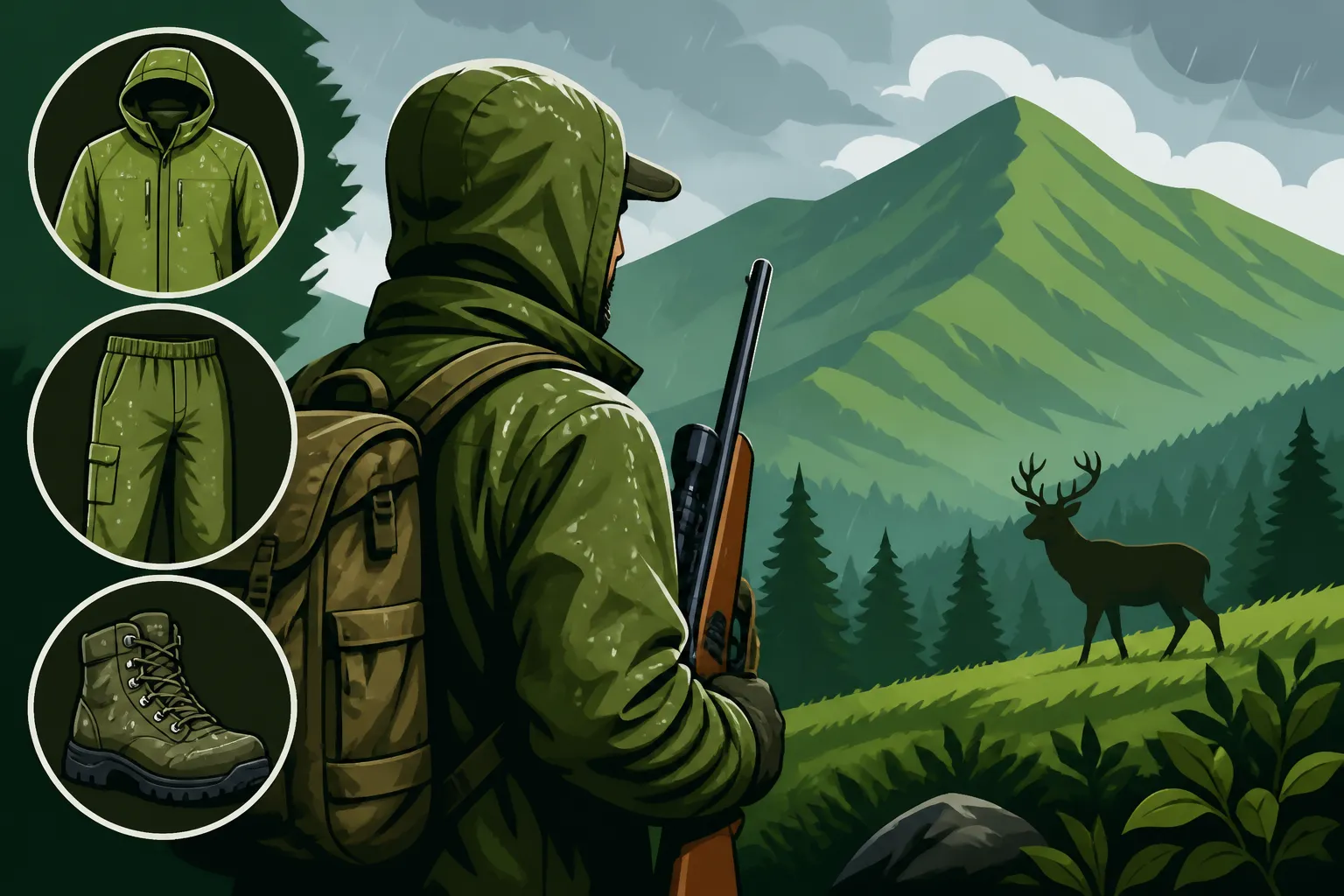
A full rain suit typically consists of a waterproof jacket and matching pants, often designed to be worn over your regular hunting clothes. This system offers maximum head-to-toe protection, creating a complete barrier against the elements. This is often the preferred choice for long, exposed sits in a treestand or ground blind, especially during cold, driving rains in late October or November. If you're planning on Cold-Weather Sitting Strategy in the Northeast Kingdom, being completely sealed off from moisture is a huge advantage.
The benefit here is comprehensive coverage. You don't have gaps where rain can seep in, like between a short jacket and regular pants. Many full suits also incorporate features like adjustable hoods that fit over hats, elastic or zippered cuffs to seal around boots, and drawstrings at the waist and hem to keep water out. The downside can be mobility – some heavier suits can feel a bit restrictive – and breathability, as more fabric means more potential for internal moisture buildup if you're very active. However, for sheer protection from a serious downpour, a well-designed full rain suit is hard to beat.
Shell Jackets and Pants: Versatility for Changing Conditions
Many hunters prefer a separate waterproof shell jacket and a pair of rain pants. This offers incredible versatility. On days with intermittent showers, you might only need the jacket. If the rain intensifies, you can quickly pull on the pants. This system is often favored by hunters who are more active, like those spot-and-stalk hunting for bear on Spot-and-Stalk Bear Hunting Vermont Ridges or still-hunting for deer through varied terrain.
The key to a good shell system is finding components that work well together. Your Best Rain Gear for a Wet Green Mountain Hunt jacket should be long enough to cover your waist when sitting or bending, preventing water from running down into your pants. The pants should be easy to pull on over your boots and offer good freedom of movement. Many shell pants have full-length side zippers, allowing you to put them on or take them off without removing your boots, which is a game-changer when conditions suddenly change. While it might not offer the same "sealed cocoon" feeling as a full suit, the increased mobility and adaptability often make it a more practical choice for many Vermont hunting scenarios.
Emergency Ponchos and Lightweight Options
Sometimes, you need something quick, light, and compact for unexpected situations. This is where emergency ponchos or very lightweight rain gear can come in handy. These are not typically designed for sustained, heavy rain or rough terrain, but they can be a lifesaver in a pinch.
An emergency poncho, often made of thin plastic or treated nylon, is incredibly packable and inexpensive. It's fantastic to throw in your pack for those "just in case" moments or for unexpected showers while you're Scouting Vermont Public Land Before Season. The loose fit provides good ventilation, but also means it can snag easily and offers little protection against wind-driven rain or brush. For a dedicated hunting trip, especially during seasons prone to cold, wet weather, you'll want something more robust. However, as a backup, or for fair-weather hunts where a brief shower is the only concern, a lightweight option like this has its place. It's about understanding its limitations and not relying on it for serious protection.
Here's a quick comparison of common rain gear types for hunting:
| Feature | Full Rain Suit (Jacket & Pants) | Shell Jacket & Pants (Separate) | Lightweight Poncho / Emergency Gear |
|---|---|---|---|
| Protection | Excellent (head-to-toe, often insulated) | Excellent (layered as needed, versatile) | Fair (for light, short showers) |
| Breathability | Good to Moderate (depends on membrane, can be warm) | Excellent (often feature pit zips, vents) | Excellent (open design) |
| Durability | Good to Excellent (often reinforced) | Good (depends on fabric, reinforced options) | Poor (prone to tearing, single-use often) |
| Mobility | Moderate (can be bulky, especially when layered) | Excellent (allows for freedom of movement) | Excellent (very loose fit) |
| Packability | Moderate to Low (can be bulky) | Good to Excellent (can pack down small) | Excellent (very compact) |
| Cost | High | Moderate to High | Low |
| Best Use | Long, stationary sits in heavy rain/cold | Active hunting, variable weather, layering | Emergency, brief unexpected showers, backup |
Integrating Rain Gear into Your Layering System
Rain gear isn't a standalone item; it's the outermost layer of your defense against the elements. How effectively it performs depends heavily on what you're wearing underneath. Think of it as a team effort, where each layer plays a specific role in keeping you dry and comfortable.
The Importance of Your Base and Mid-Layers
Before you even think about your rain shell, consider your base and mid-layers. These are crucial for managing moisture from the inside out. Your base layer, worn directly against your skin, should be made of moisture-wicking material like merino wool or synthetic fabrics. Cotton is an absolute no-go; it absorbs moisture and holds it against your skin, making you cold very quickly once wet. If your base layer gets soaked with sweat, even the best rain gear won't prevent you from getting chilled. Best Base Layer for a Steep Green Mountain Hike would be a perfect example of what you'd want.
Your mid-layers, like a fleece or insulated jacket, provide warmth. Again, synthetics or wool are the best choices because they retain insulating properties even when damp. If you're wearing a Best Mid-Layer for a November Rifle Hunt that gets saturated from sweat because your rain gear isn't breathable, or from rain because your outer shell failed, you're going to lose warmth rapidly. The entire system works together: your base layer wicks moisture, your mid-layer insulates, and your rain shell provides the impermeable barrier to external water while allowing internal moisture vapor to escape.
Strategic Ventilation and Moisture Management
Even with the most breathable rain gear, you're going to generate some internal moisture, especially if you're moving actively. This is where strategic ventilation comes into play. Look for rain jackets with features like large pit zips (zippers under the armpits) that allow you to dump excess heat and moisture quickly without having to take off the entire jacket. Adjustable cuffs, hem drawcords, and full-zip fronts also contribute to your ability to regulate temperature and airflow.
Rain pants with full-length or three-quarter length side zippers are invaluable for quick ventilation and for pulling them on over boots without wrestling. When you're climbing a steep section of the Green Mountain National Forest, you might open your pit zips and slightly open the main zipper on your jacket to vent. As you reach the ridge and the wind picks up, you can zip everything back down to conserve warmth. Mastering this active management of your layers is key to staying comfortable throughout the day, whether you're dealing with light drizzle or a full-blown downpour. It also helps prevent that clammy feeling that can contribute to getting cold.
Layering for a Wet, Cold Sit
Sitting still in a treestand or ground blind during cold, wet weather presents a unique challenge. You're not generating much body heat, so staying warm and dry is paramount. Your rain gear needs to be robust enough to block wind and precipitation completely, acting as a complete outer barrier. For these conditions, you might want to consider a rain jacket with some integrated insulation, or ensure your mid-layers are substantial, such as an Best Insulated Layer for a December Muzzleloader Hunt.
Ensure your rain pants cover your boots adequately to prevent water from running down into them. A good pair of waterproof Boots for Vermont's Steep Terrain with high gaiters can also make a huge difference in keeping your feet dry. Don't forget waterproof gloves or mittens; even the best rain gear can be undermined by cold, wet hands. Consider a pair of Best Gloves for Cold-Weather Glassing that are also waterproof. When layering for a sit, you want to create a pocket of warm, dry air around your body, sealed off from the external environment. This means minimizing openings where wind and rain can penetrate, while still allowing for internal moisture to dissipate.
Maintaining Your Rain Gear for Longevity and Performance
You've invested in good rain gear, and just like your rifle or bow, it requires proper care to perform season after season. Neglecting your waterproof hunting apparel can significantly reduce its effectiveness, leaving you soaked when you least expect it. A little effort goes a long way here.
Cleaning and Re-Waterproofing
Over time, dirt, oils, and grime can clog the microscopic pores of your rain gear's waterproof-breathable membrane, reducing its breathability and causing the outer fabric (Durable Water Repellent, or DWR) to "wet out." When this happens, water no longer beads up and rolls off; instead, it soaks into the fabric, making the garment heavy and causing you to feel cold, even if the membrane itself isn't leaking.
Regular cleaning is vital. Always follow the manufacturer's instructions, but generally, use a technical cleaner specifically designed for waterproof breathable fabrics. Avoid conventional detergents, as they can leave residues that impair performance. After washing, you might need to reapply a DWR treatment. There are various spray-on or wash-in products available that restore the water-shedding properties of the outer fabric. This process not only keeps you drier but also helps the garment breathe more effectively, as water on the surface can also impede vapor transfer. Checking your gear's DWR before Vermont Rifle Season Dates or Vermont Muzzleloader Season Dates is a smart habit. Many hunting forums and gear review sites like GoHunt offer detailed tips and product recommendations for proper care.
Proper Storage for Off-Season
How you store your rain gear during the off-season is just as important as how you care for it during the hunt. Don't just wad it up and throw it in the bottom of a bin or a damp garage corner. This can compress the membrane, create permanent creases, and lead to mildew if there's any residual moisture.
Before storing, ensure your rain gear is thoroughly clean and completely dry. Hang it loosely in a cool, dry place away from direct sunlight and extreme temperatures. Avoid compressing it under heavy items. If you have limited space, consider using a breathable garment bag. Proper storage helps maintain the integrity of the waterproof membrane and the DWR finish, ensuring your gear is ready to perform at its best when you pull it out for the next season. Taking these simple steps will ensure your investment lasts for many rugged hunts in Vermont's beautiful, but often wet, wilderness.
Disclaimer
This article is for general informational purposes only and does not constitute professional advice. Laws, prices and regulations vary by location and change over time. Consult a qualified professional for guidance on your specific situation.