Best Camp Stove for a Backcountry Hunt
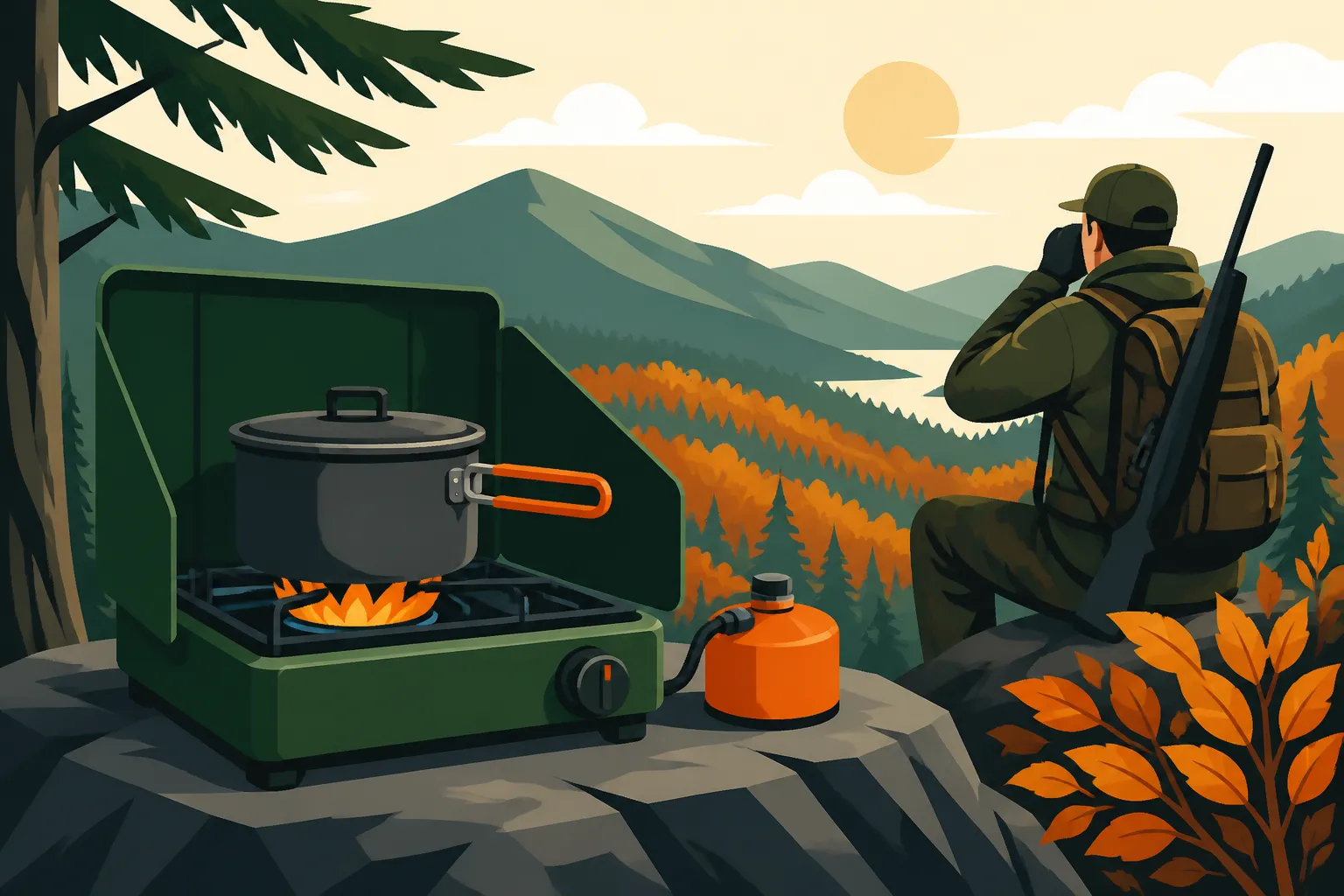
There’s nothing quite like a steaming hot meal or a strong cup of coffee after a long, cold day spent chasing whitetails up a ridge in the Green Mountains, or sitting in a blind through a frosty morning. But making that happen deep in Vermont's backcountry, miles from your truck, requires the right gear. This guide will walk you through choosing the best camp stove to ensure you’re fueled, warm, and ready for whatever your next hunting day in Vermont throws at you.
Why Your Camp Stove is Your Backcountry Best Friend in Vermont
When you’re deep in the Vermont woods, whether it’s in the remote stretches of the Northeast Kingdom chasing moose or navigating the dense timber of the Green Mountain National Forest for deer, your camp stove isn't just a luxury—it's an absolute necessity. Forget about those romanticized images of cooking over an open fire; in reality, those fires are often hard to start in damp conditions, leave a trace, and can be dangerous. A reliable camp stove, however, provides a quick, clean, and efficient way to prepare food and drink, which directly impacts your comfort, energy levels, and overall success on a challenging hunt.
Think about those early November mornings when the temperature dips well below freezing, and you’ve been up since 3 AM to get to your stand before legal light. Coming back to camp, or even just stopping for a mid-day break, and being able to quickly boil water for coffee, hot chocolate, or a dehydrated meal can be a game-changer. It warms you from the inside out, rejuvenates your spirits, and helps stave off the chill that can creep into your bones. A cold, miserable hunter is rarely an effective hunter, and nothing saps motivation faster than being perpetually cold and hungry.
Beyond just comfort, your stove is a critical piece of your survival kit. The ability to melt snow for drinking water in a late-season hunt, or to sterilize water from a backcountry stream, could literally save you from dehydration or illness. When you're pushing hard, maybe even recovering a deer from a steep ravine, having the quick energy of a hot meal can make all the difference in staying alert and strong. A good stove is an investment in your safety and endurance, allowing you to focus on the hunt itself rather than being distracted by a grumbling stomach or chattering teeth.
Combating Vermont's Variable Weather
Vermont’s weather is notoriously fickle, especially during hunting season. A crisp, sunny fall day can turn into a blustery, wet, and freezing ordeal in a matter of hours. From the early fall Hunting Vermont's Expanded Archery Zones in September to the bitter cold of Hunting Into the December Muzzleloader Close, you need a stove that can perform in all conditions. This means considering how well your chosen stove will handle driving rain, high winds, and plummeting temperatures.
A stove that struggles in the cold, or is easily extinguished by a gust of wind, can lead to frustration and wasted fuel—precious resources when you’re many miles from the nearest road. You don't want to be fumbling with a stove that won't light when your fingers are numb and you're desperate for that warm beverage. The reality of hunting in Vermont often involves damp leaves, morning dew, and sometimes even unexpected snow, all of which can make building and sustaining a traditional fire a difficult, if not impossible, task. Your stove needs to be ready to go, no matter what Mother Nature is dishing out.
Reliability in adverse weather also extends to the type of fuel your stove uses. Some fuel types perform better than others in cold temperatures, a crucial factor when you're Cold-Weather Sitting Strategy in the Northeast Kingdom. Understanding these nuances will help you select a stove that won't leave you in the lurch when you need it most. It's not just about getting a hot meal; it's about maintaining morale and physical well-being when the elements are stacked against you.
Types of Camp Stoves for Backcountry Hunting
When you start looking at camp stoves, you'll quickly realize there's a whole world out there, each designed with different priorities in mind. For backcountry hunting in Vermont, where portability, reliability, and efficiency are paramount, three main types tend to stand out: canister stoves, liquid fuel stoves, and the more niche, compact wood stoves. Each has its own set of advantages and drawbacks, and the "best" one truly depends on your specific hunting style, the duration of your trip, and the conditions you expect to encounter.
Canister Stoves: Lightweight and Convenient
Canister stoves, often called "pocket rockets," are incredibly popular among backpackers and lightweight hunters for good reason. They are generally the lightest and most compact option available, screwing directly onto a fuel canister (usually a blend of isobutane and propane). Lighting them is typically quick and easy, and they boil water rapidly. This makes them fantastic for those quick meals or hot drinks when you just need to rehydrate a freeze-dried meal or brew some coffee.
The convenience factor is huge here. There’s no priming involved, no pumping, and no messy fuel spills. You simply attach the stove, turn on the gas, and light it. This ease of use is a massive plus when your hands are cold, or you're trying to set up a quick meal in a cramped shelter. They’re excellent for short, fast-paced hunts where every ounce counts and you're mostly boiling water. Many serious backcountry hunters use a system like the Jetboil or MSR PocketRocket, which are renowned for their efficiency and minimal bulk. If your typical hunting trip is 1-3 days and you're primarily consuming dehydrated meals, a good canister stove is tough to beat. You can learn more about managing your gear for such trips by reading Packing for a Northeast Kingdom Moose Hunt, even if you're not after moose, the principles of efficient packing apply.
However, canister stoves do have their limitations, especially in the variable Vermont climate. Their performance can degrade significantly in cold temperatures, particularly as the fuel canister empties. The pressure inside the canister drops, leading to a weaker flame and slower boil times. This can be a real issue when you're faced with freezing temperatures, common during late fall and early winter hunts. Additionally, while the canisters are convenient, they produce waste that you'll have to pack out, and they can be more expensive per use than bulk liquid fuel. Finding the right fuel canisters in remote Vermont towns can also sometimes be a challenge.
Liquid Fuel Stoves: Robust and Reliable in the Cold
Liquid fuel stoves, which typically run on white gas (though some are multi-fuel compatible, burning kerosene, diesel, or even unleaded gasoline), are the workhorses of the backcountry. While often heavier and a bit more complex to operate than canister stoves—requiring priming and pumping to pressurize the fuel bottle—they excel in harsh conditions. Their ability to maintain strong performance in sub-freezing temperatures makes them an invaluable asset for serious cold-weather hunting in Vermont, particularly if you're embarking on a longer excursion.
Imagine trying to get a hot meal cooked during a frigid December muzzleloader hunt; a liquid fuel stove will consistently provide a powerful flame, regardless of the thermometer's reading. The fuel itself is usually less expensive when bought in bulk, and you can easily monitor how much you have left in the clear fuel bottles, unlike the opaque canisters. Plus, many models are built like tanks, designed to withstand the rigors of repeated abuse in the backcountry. Brands like MSR and Coleman offer highly regarded liquid fuel options that have proven their mettle over decades of use in extreme environments.
The main downsides are their weight, bulk, and the learning curve associated with priming and maintenance. They also tend to be a bit noisier and can be prone to flare-ups if not primed correctly. But for hunters who prioritize absolute reliability and performance in extreme cold, or who are planning extended trips where fuel economy is crucial, a liquid fuel stove is often the superior choice. If you're out there Hunting Into the December Muzzleloader Close or on a multi-day expedition, the robustness of a liquid fuel stove can provide invaluable peace of mind.
Compact Wood Stoves: For the Minimalist or Base Camp
Compact wood stoves are a different breed altogether. These small, collapsible stoves use twigs, leaves, pinecones, and other biomass found in nature as fuel. The appeal is clear: you don't have to carry any fuel, relying instead on what the forest provides. This makes them incredibly lightweight in your pack, as the only weight is the stove itself. For a minimalist hunter, or for someone setting up a longer-term base camp, these can be an intriguing option.
However, relying on natural fuel sources comes with significant caveats, especially in Vermont. Finding dry fuel can be a constant battle, particularly after a rain shower or during periods of high humidity. Even seemingly dry wood in Vermont's dense forests can hold a lot of moisture, leading to smoky fires, slow cooking times, and frustration. Furthermore, burning wood creates smoke, which isn't ideal if you're trying to remain scent-free for deer or other game. They also leave behind ash and require careful attention to fire safety, as sparks can easily ignite dry leaves.
While they can be great for boiling water and providing a small amount of warmth in a designated, safe spot, they are generally not suitable for quick, on-the-go meals, or for situations where speed and stealth are crucial. They're more for the hunter who wants to really connect with nature and enjoys the process of foraging for fuel, or for a camp where you don't mind spending a bit more time on fire management. For typical mobile backcountry hunting, where you're constantly on the move, these are often less practical than gas or liquid fuel options.
Here's a quick comparison of the three main types:
| Stove Type | Pros | Cons | Best Use Cases in Vermont |
|---|---|---|---|
| Canister Stoves | Lightweight, compact, easy to use, fast boil | Poor cold-weather performance, expensive fuel, canister waste | Short trips (1-3 days), mild weather, boiling water for dehydrated meals |
| Liquid Fuel Stoves | Excellent cold-weather performance, reliable, inexpensive bulk fuel | Heavier, bulkier, requires priming/maintenance, can be messy | Longer trips, sub-freezing temperatures, cooking more complex meals |
| Compact Wood Stoves | No fuel to carry, very lightweight, sustainable fuel | Requires dry fuel, smoky, slower, weather-dependent, not stealthy | Minimalist hunting, established base camps, when fuel resupply is impossible |
Key Features to Consider for Your Vermont Backcountry Stove
Choosing the right camp stove for your Vermont backcountry adventures isn't just about picking a type; it's about delving into the specifics of each model and matching them to your individual needs and the unique challenges of hunting in the Green Mountain State. Several key features can make or break your experience, impacting everything from your pack weight to your ability to enjoy a hot meal when you need it most.
Weight and Packability: Every Ounce Counts
For any backcountry hunter, weight and packability are paramount. You’re already hauling a rifle or bow, ammunition, optics, emergency gear, and hopefully, a substantial amount of meat out of the woods. Adding unnecessary bulk or ounces to your pack can lead to fatigue, reduced mobility, and a generally tougher hunt. When you're hunting a ridgeline saddle for rutting bucks or on a multi-day trip deep in the forest, every gram of gear that isn't absolutely essential needs to be scrutinized.
Consider the total system weight: not just the stove itself, but also the fuel you’ll need to carry for the duration of your trip. A super lightweight canister stove might seem appealing, but if you need to carry five small fuel canisters for a week-long hunt in cold weather, its weight advantage quickly diminishes. Similarly, a liquid fuel stove might be heavier on its own, but a single large bottle of white gas could last you the entire trip, potentially making the overall system lighter for extended excursions. Look for stoves that break down easily, fit into small spaces in your pack, and don't have awkward protruding parts that could snag or get damaged. Some stoves even nest perfectly inside their cooking pots, creating a highly efficient packing solution.
Fuel Efficiency and Availability
Fuel efficiency isn't just about saving money; it’s about reducing the amount of weight you have to carry and ensuring you don't run out of heat mid-hunt. A stove that sips fuel will allow you to carry less, which directly translates to a lighter pack. When evaluating efficiency, look at how many liters of water a stove can boil per ounce of fuel, or how long a standard canister or bottle will last under typical use. Manufacturers often provide these figures, though real-world performance can vary based on conditions like wind and temperature.
The availability of fuel is also a practical concern in Vermont. While white gas is fairly common in outdoor stores, and canister fuels are widely available, consider how easily you can resupply if your hunt takes an unexpected turn or extends longer than planned. In smaller, more remote towns, certain specialty fuels might be hard to come by. Having a stove that uses a commonly available fuel type, or one that’s multi-fuel compatible, offers a layer of flexibility and peace of mind. For example, if you're on a long bear hunting expedition through the Bear Hunting Vermont's Long September-to-November Season, knowing you can get fuel if needed is crucial.
Cold Weather Performance and Simmer Control
Vermont winters can be brutal, and even early season hunts can bring unexpected cold snaps. Your stove’s ability to perform in freezing temperatures is critical. Canister stoves, as mentioned, often struggle as temperatures drop, due to the butane component not vaporizing efficiently. Some systems, like those with integrated regulators or inverted canister designs, can mitigate this, but liquid fuel stoves generally reign supreme in extreme cold. If you expect to be out when the mercury plummets, this feature should be at the top of your list.
Beyond just boiling power, consider simmer control. While many hunters primarily use their stoves to boil water for coffee or dehydrated meals, the ability to simmer can significantly enhance your backcountry culinary options. Imagine being able to gently rehydrate a more complex meal, melt snow without burning it, or even cook some fresh-caught fish or small game if the opportunity arises. Good simmer control prevents scorching and allows for more versatile cooking, making your meals far more enjoyable than just boiling water. This might seem like a small detail, but after a long day of Hunting After a Poor Acorn Year or Tracking a Deer in Fresh Green Mountain Snow, a well-cooked meal can be a huge morale booster.
Durability and Ease of Maintenance
The Vermont backcountry is tough on gear. Your stove will be bumped, jostled, potentially dropped, and exposed to moisture and dirt. You need a stove that is built to last, made from robust materials that can withstand the rigors of hunting. Flimsy parts, easily bent pot supports, or fragile ignition systems are red flags. Look for solid construction, reputable brands, and read reviews from other hunters and backpackers about long-term durability.
Ease of maintenance is also important. While all stoves require some care, liquid fuel stoves often benefit from occasional field cleaning and part replacement. Can you easily clean the jet, replace an O-ring, or troubleshoot a common issue in the field? Carrying a small repair kit for your stove can be a lifesaver if a minor problem arises miles from civilization. A stove that's easy to understand and maintain, even with numb fingers, contributes directly to its reliability when you're counting on it most. Before you finalize your choice, online resources like GoHunt can be excellent for comparing various stove models, reading user reviews, and getting a sense of their real-world durability and maintenance needs.
Making the Right Choice for Your Vermont Backcountry Hunt
So, you've sifted through the types and considered the key features. Now it's time to put it all together and make an informed decision for your specific Vermont hunting style. There's no single "best" stove for everyone, but by honestly evaluating your needs, you can find the perfect companion for your backcountry adventures.
First, take a hard look at the typical duration and conditions of your hunts. Are you mostly doing quick, overnight trips during the Hunting the Regular Archery Opener in October when temperatures are moderate? A lightweight canister stove might be your ideal choice, saving ounces where it counts. You'll appreciate its simplicity and speed when you just need a quick coffee and oatmeal before heading back out.
However, if your passion lies in longer, more arduous expeditions, perhaps Moose Hunting Vermont's Northeast Kingdom, or pushing the limits into the deep cold of late season, a liquid fuel stove will offer the unwavering performance you need. The extra weight and the priming process will be a small price to pay for reliable heat when the mercury plummets. It’s also often better for melting snow for water, a critical task on winter hunts.
Evaluating Your Culinary Needs in the Backcountry
Be honest with yourself about what you actually plan to cook. Are you a minimalist, content with rehydrated meals and instant coffee? Then a simple, fast-boiling stove is probably all you need. If you dream of something a bit more gourmet—maybe frying up some success-meat or simmering a hearty stew—then features like excellent simmer control and a stable pot support system become much more important. While it's tempting to think you'll cook elaborate meals, the reality of backcountry hunting often means quick, calorie-dense options are favored.
Consider also how many people you'll be cooking for. A solo hunter might get by with a tiny, ultralight stove, but if you're part of a small group, a stove with a larger burner and more robust pot supports might be better suited for handling bigger pots and feeding multiple mouths. Group hunts, like those for Deer Drives With Three or Four Hunters, often benefit from a more communal cooking setup.
Test, Test, Test Before You Go
Once you've made your decision and purchased a stove, the most important step is to test it thoroughly before you ever take it into the field. Don't wait until you're shivering in a remote lean-to to discover that your stove is finicky or that you don't know how to properly prime it. Practice lighting it, boiling water, and even trying out a few simple meals in your backyard or at a local campsite. Understand its quirks and how it performs in different conditions.
This trial run will not only build your confidence in the gear but also help you gauge actual fuel consumption, allowing you to pack precisely what you need for your planned hunt. Nothing is worse than running out of fuel halfway through a cold trip because you miscalculated. Remember, your camp stove is more than just a piece of equipment; it's a vital part of your backcountry survival and comfort system, allowing you to stay focused on the hunt and make lasting memories in Vermont's wild places.
Disclaimer
This article is for general informational purposes only and does not constitute professional advice. Laws, prices and regulations vary by location and change over time. Consult a qualified professional for guidance on your specific situation.