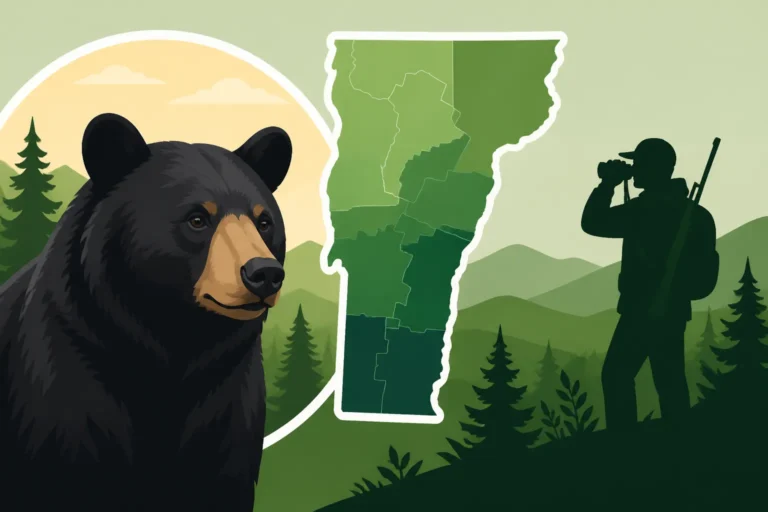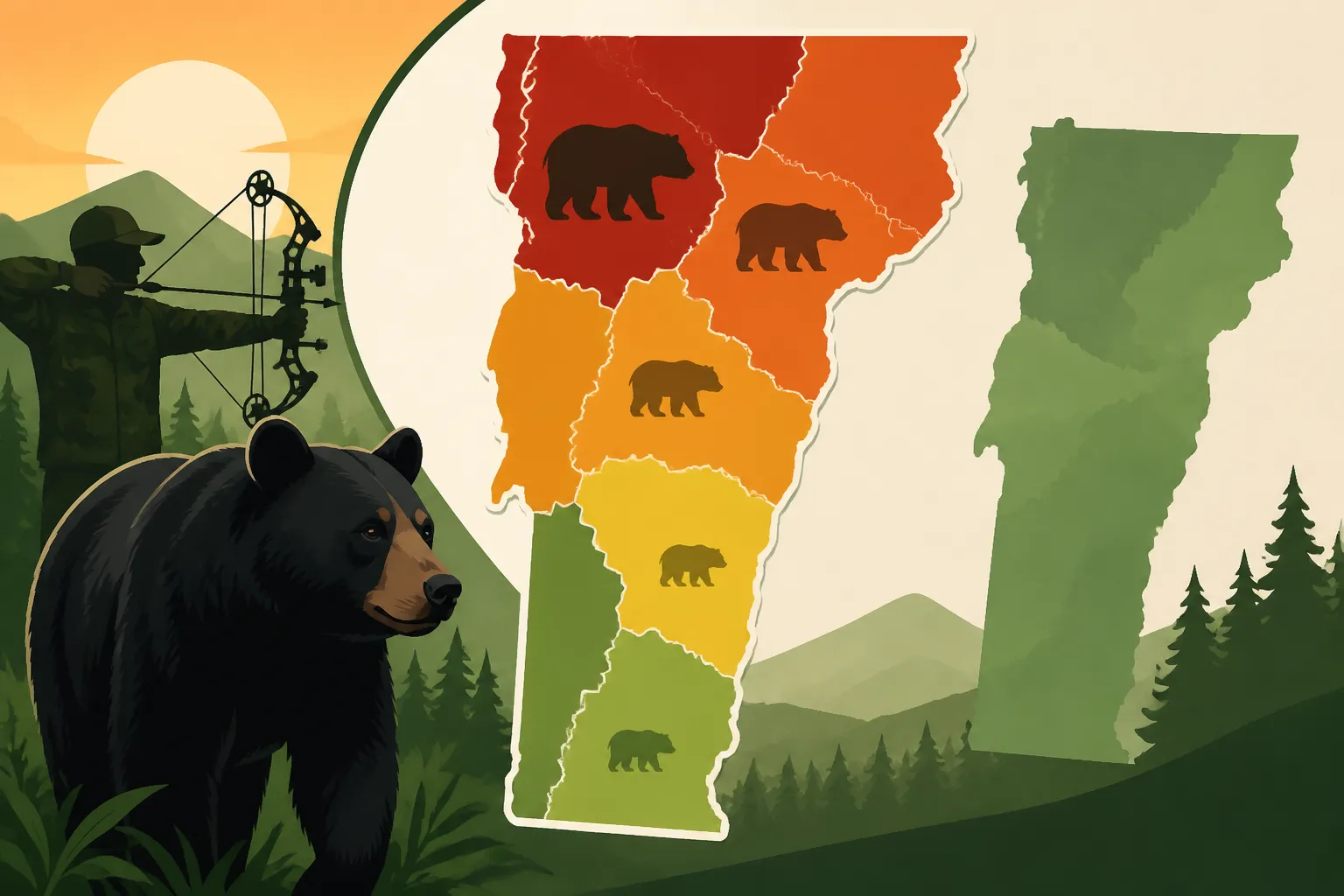
Vermont Bear Density by Region
It's a frustrating feeling, isn't it? You've got your gear ready, your season picked out, and you're dreaming of a Vermont black bear, but then you wonder, "Where are they? Where should I even start looking?" Vermont is a wild state, but bears aren't evenly distributed like sprinkles on a donut. Knowing where the highest densities are can save you countless hours of scouting and vastly improve your chances of a successful hunt. This guide will walk you through the regional bear density patterns across Vermont, helping you understand where to focus your efforts and why.
Understanding Vermont's Black Bear Population
Before we dive into specific regions, let's take a moment to appreciate Vermont's black bear population as a whole. It’s a conservation success story, truly. Not long ago, bears were far less common across much of the state, often relegated to the most remote, wild corners. But through dedicated management and habitat recovery, their numbers have rebounded significantly.
Today, black bears are a thriving part of Vermont’s ecosystem, and their range has expanded considerably. While you could theoretically encounter a bear almost anywhere in the state, from the deep woods to the edge of a rural town, their presence isn't uniform. Understanding the overall health of the population gives us a good baseline for appreciating why certain areas now boast higher densities than others. This isn't just about more bears; it's about bears finding suitable habitat and food sources that allow them to flourish. The state’s wildlife biologists work hard to track these trends, and their efforts help inform our understanding of where these impressive creatures are most concentrated.
Factors Contributing to Overall Population Growth
Several key factors have played a role in the healthy growth of Vermont's bear population. One of the biggest is habitat. As agricultural land use patterns have shifted over the decades, many marginal farms have reverted to forest. These regrowing woodlands provide crucial cover, denning sites, and food sources like berries, nuts, and insects for bears. It’s a slow process, but over time, these reforested areas create vast, interconnected tracts of ideal bear country.
Another significant factor has been management strategies. Vermont has a long and proud tradition of wildlife management, and bears have benefited from thoughtful regulations that balance hunting opportunities with population sustainability. This includes careful monitoring of harvest numbers and adjusting season lengths and bag limits to ensure the population remains robust. Unlike some areas where bears might be seen as a nuisance, in Vermont, they're generally valued as an important game species and a vital part of the wild landscape. This societal value often translates into policies that support their well-being.
The Bear's Adaptability to Vermont's Landscape
Black bears are incredibly adaptable animals, and Vermont's varied landscape offers them a smorgasbord of opportunities. From dense conifer stands that provide excellent cover for winter dens to vast hardwood forests producing acorns and beechnuts, bears can find what they need. They're opportunistic eaters, too, which helps them thrive. While they love a good berry patch, they'll also forage for grubs, raid ant hills, and yes, sometimes get into human-related food sources if not properly secured. This adaptability means that while certain areas are ideal, bears can and do establish themselves in less obvious spots, especially as their overall numbers climb. This makes a hunt challenging, but also incredibly rewarding when you find success. If you're looking to understand more about these fascinating creatures, you might enjoy reading about Black Bears in Vermont.
Regional Breakdown: Where Vermont's Bear Density is Highest
Alright, let's get down to brass tacks: where are the bears? While a bear can technically pop up almost anywhere, certain regions of Vermont consistently hold higher densities due to a combination of habitat, food availability, and human population density. It's not always about sheer wilderness; sometimes it's about the right kind of wilderness mixed with accessible food.
The Northeast Kingdom: Bear Central
Without a doubt, if you’re looking for high bear density in Vermont, the Northeast Kingdom (NEK) should be at the top of your list. This region, encompassing Essex, Orleans, and Caledonia counties, is often described as Vermont's wild heart, and for good reason. It boasts vast, unbroken tracts of forest, including significant portions of public land, numerous smaller mountains, and a lower human population density compared to other parts of the state.
The habitat here is ideal: a mosaic of mixed hardwoods and softwoods, numerous swamps, bogs, and abundant berry-producing shrubs. Bears thrive on this diverse diet. The relative remoteness also means less human disturbance, allowing bears to establish larger home ranges and reproduce successfully. Many hunters focus their efforts here, whether it's for Moose in Vermont's Northeast Kingdom or for bears. If you're looking to consistently find bear sign, from scat to rubbed trees, the NEK is your best bet. Places like Victory Basin Wildlife Management Area and the vast timberlands are classic bear country, offering plenty of room for both bears and hunters.
Green Mountains: Backbone of Bear Habitat
Stretching down the spine of the state, the Green Mountains provide another critical habitat corridor for black bears. While perhaps not as universally dense as the NEK, the sheer size and wildness of the Green Mountain National Forest (GMNF) and surrounding state forests make it a stronghold for bears. The higher elevations, steep terrain, and extensive forest cover provide excellent cover and denning opportunities.
Here, bear density tends to be concentrated in the more remote, less-trafficked areas, particularly where there are rich mast crops like beech nuts and acorns. Hunters often find success tracking bears in these areas during fall when they're actively feeding to bulk up for winter. While the terrain can be challenging, a bear taken from the rugged Green Mountains is a truly earned trophy. Remember, bears in these areas often travel significant distances, so understanding Wind and Thermals in Steep Green Mountain Terrain can be crucial for a successful stalk.
Transition Zones and Valleys: Opportunistic Bears
Beyond the prime bear country of the NEK and GMNF, you’ll find bears, often at lower but still significant densities, in the transition zones between heavily forested areas and more developed valleys. This includes parts of the Champlain Valley bordering the Green Mountains, and the Connecticut River Valley where larger tracts of forest remain.
These areas, while having more human activity, still offer good habitat patches and, importantly, diverse food sources. Bears here might be more opportunistic, taking advantage of agricultural fields, apple orchards, and even unsecured garbage or bird feeders if given the chance. This doesn't mean they are less wild, but rather that they are adept at living closer to human development. Hunters here often focus on edges, thick cover adjacent to food sources, or smaller woodlots connected by travel corridors. Hunting these areas often requires a slightly different approach than the deep woods, perhaps more focused on understanding deer movement as well, since bears will follow similar food sources.
Southern Vermont: A Growing Presence
Southern Vermont, while historically having lower bear densities than the northern parts of the state, has seen a steady increase in its bear population in recent decades. As habitat has improved and the overall population has expanded, bears have successfully colonized new areas. Counties like Bennington and Windham now offer good bear hunting opportunities, especially in the more mountainous and less populated sections.
The habitat here often consists of smaller, fragmented blocks of forest compared to the NEK, but these blocks can still be incredibly productive. Bears in Southern Vermont often utilize a mix of public and private lands, making scouting and gaining permission from landowners even more critical. While you might not find the highest density of bears here, the expanding population offers exciting potential for hunters willing to put in the legwork.
Factors Influencing Local Bear Density
Even within the broader regions we just discussed, local bear density can fluctuate dramatically. It's not just about the name of the county; it's about the specific conditions on the ground. Understanding these finer points can make all the difference in your hunt. A veteran lifestyle blogger might tell you, it's about reading the landscape like a book.
Food Availability: The Bear's Driving Force
When it comes to bears, food is king. Their movements, their home ranges, and where they choose to spend their time are heavily dictated by what's available to eat. In Vermont, this means paying close attention to mast crops.
- Acorns and Beechnuts: These hard mast crops are absolute magnets for bears, especially in the fall. A good acorn or beechnut crop in a particular woodlot or ridge can draw bears from miles around. Conversely, a poor mast year can scatter bears as they search for alternative food sources, making them harder to pattern. Learning to identify these trees and scouting their production can be a game-changer.
- Berries and Soft Mast: Throughout the summer and early fall, bears feast on wild berries like blueberries, raspberries, and blackberries. They also love apples, especially from old, abandoned orchards that dot the Vermont landscape. These soft mast sources are crucial for bears to put on weight before winter. Scouting for these areas in late summer or early fall is a fantastic way to find active bear sign.
- Insects and Grubs: Don't underestimate a bear's love for protein. They'll tear apart rotting logs, overturn rocks, and dig for ant colonies. These smaller food sources are always available and can sustain bears even when mast crops are scarce.
A smart hunter, using a mapping application like GoHunt, can often overlay public land boundaries with satellite imagery to identify potential food sources like old clear-cuts (often rich in berries) or mature hardwood stands (for mast) and plan their approach accordingly.
Habitat Suitability: Cover and Denning
Beyond food, bears need good habitat for safety, raising cubs, and denning. Dense, unbroken forest cover is paramount.
- Dense Cover: Bears are reclusive creatures. They prefer areas with thick undergrowth, conifer thickets, and deep woods where they can move unseen. These areas provide security from both predators (though adult black bears have few natural predators) and humans. When you're scouting, look for those dense, uninviting patches of forest that you might otherwise walk past; that's often where the bears are holed up.
- Denning Sites: Come winter, bears need a safe, sheltered spot to den. This could be a hollow log, a rock cave, a brush pile, or even just a dense mat of conifer branches. While you won't be hunting bears in their dens, knowing what constitutes good denning habitat can give you clues about where bears might be spending their time in the lead-up to winter. These areas are often in quiet, undisturbed parts of the woods.
Human Presence and Activity
Bears are incredibly sensitive to human activity. While they are adaptable, sustained human presence can push them into more remote areas.
- Hunting Pressure: During the hunting season, areas with high hunter traffic will often see bears retreat to quieter corners. This means that finding ground others walk past, or hunting deeper in the backcountry, can be more productive. This is especially true during the regular rifle season when hunter numbers are highest.
- Recreational Use: Hiking trails, mountain biking paths, and other recreational areas, while often beautiful, can also push bears away. If you're scouting, look for areas off the beaten path, away from popular recreation spots.
- Human-Provided Food Sources: Unfortunately, bears can become habituated to human food sources like trash, bird feeders, or poorly managed compost piles. While this can lead to nuisance bear problems, it also means that rural areas bordering good habitat might attract bears if these food sources are available. Hunters should always prioritize fair chase and ethical hunting practices and avoid areas where bears are clearly habituated to human handouts. If you're planning a trip to the Northeast Kingdom, knowing how to approach baiting ethically and legally is vital, and you can learn more by checking out Baiting Bears Legally in Vermont.
Applying Bear Density Knowledge to Your Hunt
Knowing where bear densities are generally higher is one thing, but how do you translate that information into a successful hunt? It's about combining that big-picture understanding with meticulous local scouting and smart hunting strategies.
Scouting for Localized Sign
The statewide and regional density maps are a great starting point, but bears move. You need to verify their presence in a specific area. This is where diligent scouting comes in. Look for the actual physical evidence they leave behind.
- Tracks and Trails: Bears have a distinct gait. Look for their large, five-toed paw prints in soft ground, mud around water sources, or along old logging roads. Pay attention to how fresh they are. Bears often use the same travel corridors, especially between bedding and feeding areas. A clear, well-used bear trail is like a highway sign for a hunter.
- Scat: Bear droppings tell a story about what they’re eating and how recently they were in the area. Fresh scat indicates a bear is nearby. The contents can tell you if they're feeding on berries, nuts, or something else entirely.
- Rub Trees and Claw Marks: Bears love to rub against trees, especially conifers, to leave their scent and scratch an itch. Look for hair on the bark, or even distinct claw marks higher up the trunk. These are territorial markers and clear indicators of bear activity.
- Overturned Rocks and Logs: As mentioned, bears are constantly foraging for insects and grubs. If you see signs of recent digging or overturned rocks and logs, especially near a water source or in a damp area, a bear has been working that spot.
Using modern tools like GoHunt can help you mark these signs on a map and build a picture of bear movement over time. This kind of detailed information is invaluable for pinpointing specific stand locations.
Strategic Stand Placement and Still-Hunting
Once you've identified an area with good bear density and fresh sign, it's time to think about your hunting strategy. This will often revolve around food sources and natural travel corridors.
- Focus on Food: If you’ve found a productive mast crop (acorns, beechnuts) or a patch of ripe berries, setting up a stand overlooking these areas can be incredibly effective. Bears will return to consistent food sources. Position yourself downwind, and consider how a bear will approach the area.
- Intercept Travel Corridors: Bears often move along distinct routes: ridge lines, saddles, creek bottoms, old logging roads, and edges between different types of cover. A stand placed to intercept these natural funnels can be highly productive, especially during the morning and evening hours when bears are most active. You might even find yourself on a "scrape line along a logging road" which can be an unexpected bonus for deer, but also a travel route for bears.
- Still-Hunting: In areas with good bear density and diverse cover, still-hunting can be a fantastic approach. This involves moving slowly and deliberately through the woods, stopping frequently to observe, listen, and glass ahead. It requires patience and a keen eye, but it allows you to cover more ground and potentially intercept a bear moving between feeding and bedding areas. This is particularly effective in areas where bears are moving through thick softwood cover.
Understanding Seasonal Movements
Bear density isn't static; it changes throughout the season based on food availability and breeding cycles.
- Early Season (Late Summer/Early Fall): Bears are often focused on soft mast (berries, apples) and preparing for the fall breeding season. They might be found in more open areas with berry patches or old orchards. The Vermont Bear Season Opening Day finds bears in this pattern.
- Mid-Season (Fall): This is when hard mast like acorns and beechnuts become critical. Bears will concentrate heavily in areas with good mast crops, feeding intensely to put on weight for winter. This is a prime time for hunting over these food sources.
- Late Season (Late Fall/Early Winter): As temperatures drop and mast crops dwindle, bears are seeking out denning sites. They might be less active but still feeding opportunistically on anything they can find. If you're lucky enough to be hunting during this window, understanding how to apply Cold-Weather Sitting Strategy in the Northeast Kingdom is key.
Remember, patience and persistence are your best friends in bear hunting. While Vermont's bear density is generally healthy, these are smart, elusive animals. Combine your knowledge of regional densities with thorough scouting and a thoughtful hunting strategy, and your chances of success will soar.
Table: General Bear Density by Vermont Region
To give you a clearer visual, here's a general overview of bear density across Vermont's primary regions. Keep in mind, these are broad generalizations, and local conditions will always dictate specific bear presence.
| Vermont Region | Primary Counties | Typical Bear Density | Key Habitat Characteristics | Hunting Strategy Notes |
|---|---|---|---|---|
| Northeast Kingdom | Essex, Orleans, Caledonia | High | Vast, unbroken mixed forest, bogs, swamps, low population | Focus on large tracts of public land, mast crops, berry patches. |
| Green Mountains (Central) | Washington, Lamoille, Addison | Moderate to High | Steep, rugged forested terrain, GMNF, high elevation | Access remote areas, focus on high-elevation mast, travel corridors. |
| Connecticut River Valley | Windsor, Orange, Caledonia | Moderate | Mix of forest, agriculture, river bottoms | Hunt river breaks, agricultural edges, remaining large woodlots. |
| Champlain Valley (East) | Chittenden, Addison | Moderate | Forested foothills, smaller woodlots, agricultural edges | Target edges, old orchards, small woodlots adjacent to cover. |
| Southern Vermont | Bennington, Windham | Moderate (Increasing) | Mixed forests, fragmented habitat, some higher elevations | Scout extensively for private land access, focus on larger timber blocks. |
This table is a simplified snapshot, but it illustrates the general trend of higher densities in the wilder, less populated, and more continuously forested parts of the state. When planning your hunt, use this as a guide to begin your deeper dives into specific areas.
Disclaimer
This article is for general informational purposes only and does not constitute professional advice. Laws, prices and regulations vary by location and change over time. Consult a qualified professional for guidance on your specific situation.