Vermont Waterfowl Banding Programs
For many of us who chase ducks and geese across Vermont's marshes, rivers, and fields, there's a certain thrill that goes beyond the hunt itself. It's the moment you retrieve a bird and feel that small, cool band around its leg. It's a connection to something bigger, a glimpse into the incredible journey that bird has made. But what exactly are these bands, who puts them there, and what do they tell us? This guide will dive deep into Vermont's waterfowl banding programs, unraveling the science, the effort, and most importantly, your crucial role in making it all work.
The Purpose and Process of Waterfowl Banding in Vermont
Waterfowl banding isn't just a cool curiosity for hunters; it's a cornerstone of modern waterfowl management and conservation. Imagine trying to manage a population of birds that might travel from the Arctic to the Gulf Coast without knowing where they go, how many survive, or how many are harvested. It would be like trying to run a business blindfolded. That's why dedicated biologists and technicians, often from the Vermont Fish & Wildlife Department and the U.S. Fish and Wildlife Service, put in countless hours each year to band thousands of ducks and geese right here in Vermont.
Why We Band Ducks and Geese in the Green Mountain State
The primary goal of banding is to gather critical data that informs waterfowl management decisions. This data allows wildlife agencies to make educated choices about everything from season lengths and bag limits to habitat conservation efforts. Think about it: without knowing migration routes, how would we set up appropriate flyway management? Without understanding survival rates, how would we know if a population is healthy or declining? These tiny aluminum bands unlock a treasure trove of information, providing insights into:
- Migration Routes and Staging Areas: Bands help track the specific paths birds take, revealing key stopover points and wintering grounds. This is vital for understanding the complex network of the Vermont Waterfowl on the Atlantic Flyway. We learn if a mallard banded on Lake Champlain winters in Chesapeake Bay or heads further south.
- Survival Rates: By comparing the number of banded birds released to the number reported in subsequent years, biologists can estimate how many birds survive from one year to the next. This is a direct measure of population health.
- Harvest Rates: When hunters report bands, it provides data on what percentage of the banded population is harvested each year. This is a crucial piece of the puzzle for setting sustainable hunting regulations and ensuring that future generations of hunters will have birds to pursue.
- Age and Sex Ratios: During the banding process, biologists can often determine the age and sex of the birds, adding another layer of data to population models.
- Population Dynamics: All these data points combine to give wildlife managers a comprehensive picture of waterfowl populations, allowing them to detect trends, identify potential issues, and adapt management strategies as needed.
How Waterfowl Banding Operations Work Here
Banding operations in Vermont are a fascinating blend of science and patience. Biologists typically conduct banding efforts in late summer and early fall, before the major migrations begin, but after most young birds are capable of flight. This timing allows them to capture a representative sample of local breeding birds and their offspring.
One common method for capturing ducks, especially mallards and black ducks, involves baiting specific sites, often using corn. Once birds become accustomed to feeding at a particular location, biologists might deploy a "cannon net" or "rocket net." These nets are launched over the feeding birds from a hidden position, safely capturing a group. Another technique for ducks, particularly in marshy areas, involves "drive trapping," where birds are herded into large funnels or pens. For geese, especially large molting flocks in summer, biologists might use specialized drive traps where they herd flightless geese into pens. Mist nets, fine mesh nets designed to entangle birds without harm, are also sometimes used for smaller species.
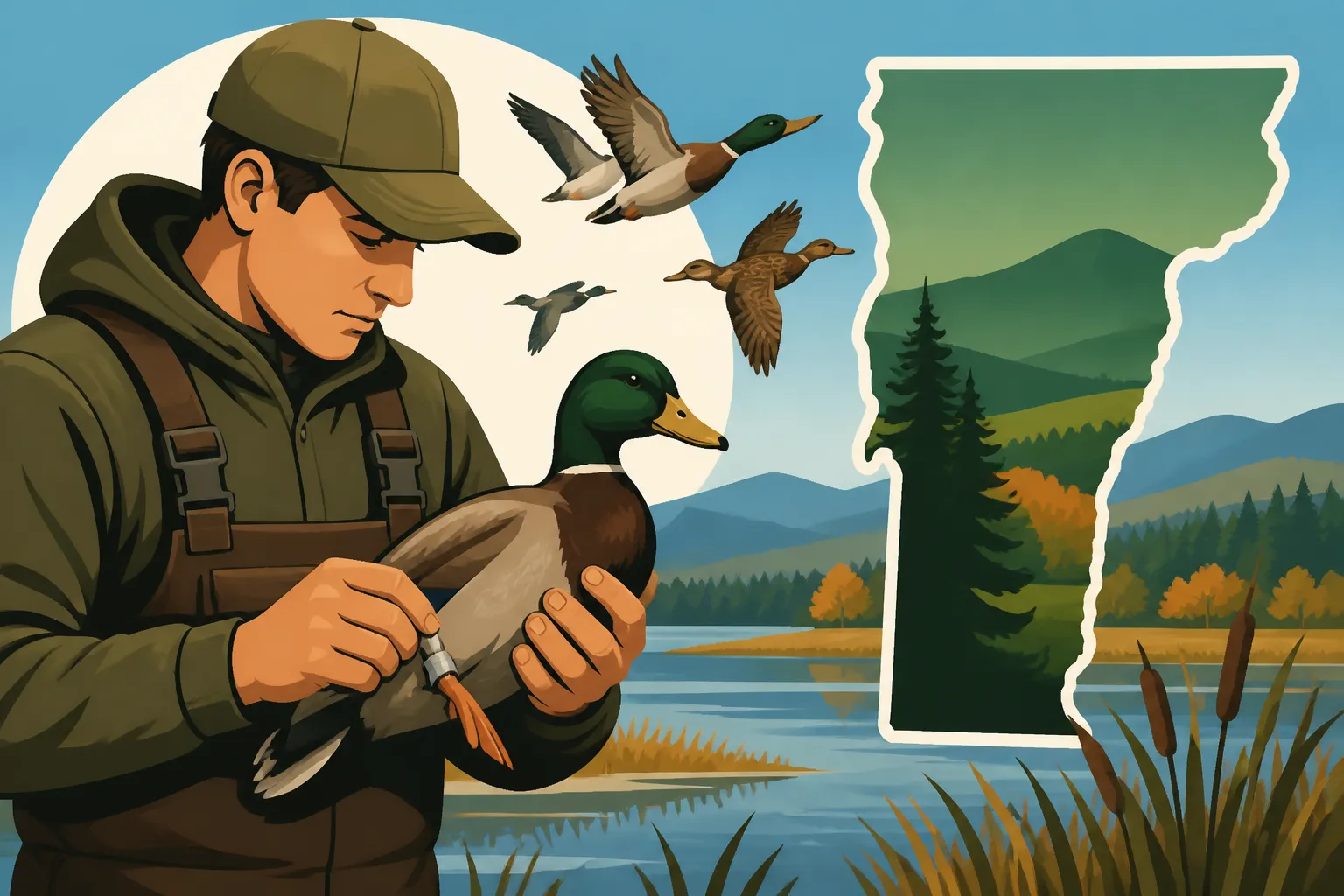
Once captured, each bird is carefully handled by trained personnel. They record species, age, and sex. A small, individually numbered aluminum band is then gently affixed to one leg. This band is lightweight and doesn't impede the bird's flight or daily activities. Before release, a quick health check is performed to ensure the bird is in good condition. It’s a labor-intensive process, requiring specialized equipment and a deep understanding of waterfowl behavior, but the data gleaned is absolutely invaluable for managing species like Mallards and Geese on Lake Champlain.
What Information a Band Contains
The bands themselves are simple but effective. Each band typically contains a unique numerical code, often a combination of letters and numbers, along with instructions to "REPORT BAND" and a website address or sometimes a toll-free phone number. This unique code is the key identifier, allowing biologists to track individual birds over their lifetime, should they be encountered again. Sometimes, hunters find color bands, often plastic, in addition to the metal band. These usually relate to specific local studies and don't require reporting to the federal system, though it's always worth noting them if you see them. The primary data comes from that small, federal metal band.
Decoding the Data: What Bands Reveal for Conservation
Every reported band is a piece of a much larger puzzle, contributing to decades of scientific research. It's truly a collaborative effort between dedicated wildlife professionals and passionate hunters like us. The information gleaned from these banding programs helps shape the future of waterfowl hunting and conservation across North America, including right here in Vermont.
Migration Mysteries Unraveled Across the Atlantic Flyway
One of the most exciting aspects of waterfowl banding is its ability to map the incredible journeys these birds undertake. Before banding became widespread, much of what we knew about bird migration was theoretical or anecdotal. Now, with bands, biologists can trace the exact movements of individual birds. For instance, a hunter might shoot a pintail in a Layout Blind Hunting a Champlain Valley Field that was banded years earlier in Saskatchewan. This data confirms the bird's breeding grounds and migration corridor, showing the interconnectedness of habitats across the continent.
This helps define the boundaries of the major flyways—the Pacific, Central, Mississippi, and Atlantic—and allows for management tailored to the distinct populations that use each. For Vermont, being part of the Vermont Waterfowl on the Atlantic Flyway means our local birds interact with populations stretching from the Canadian Maritimes all the way down to Florida. By analyzing hundreds of thousands of band reports over the years, biologists can pinpoint crucial staging areas, identify bottlenecks in migration, and understand how different weather patterns might shift migration routes. This detailed understanding is vital for protecting the habitats these birds rely on throughout their annual cycle.
Population Dynamics and Health: Guiding Bag Limits
Beyond migration, banding provides crucial insights into the health and stability of waterfowl populations. Think of it like a long-term medical study for ducks and geese. When biologists band a large sample of birds, and hunters dutifully report those bands year after year, it creates a powerful dataset.
- Survival Estimates: If a certain percentage of banded birds are reported each year, biologists can use statistical models to estimate the overall annual survival rate for that species. A declining survival rate can be an early warning sign that a population is in trouble, perhaps due to habitat loss, disease, or increased predation.
- Recruitment (Reproductive Success): While not directly measured by bands, survival and harvest rates, combined with population surveys, help biologists understand how many young birds are successfully entering the breeding population. If adult survival is good but recruitment is low, it points to issues on the breeding grounds.
- Impact on Regulations: This comprehensive data directly influences the hunting regulations we see each season. If a species like the American Black Duck shows consistently low survival or harvest rates that exceed sustainable levels, wildlife agencies might adjust Vermont Duck and Goose Bag Limits or season lengths to allow the population to recover. Conversely, a robust population might support more liberal hunting opportunities. The data ensures that decisions are based on science, not guesswork, to protect the resource for the long haul. This scientific approach, using real-world data, is something serious hunters often track, perhaps using resources like GoHunt to stay informed about population trends and upcoming season projections in different regions.
Harvest Rates and Hunter Impact: Ensuring Sustainable Hunting
The hunter's role in reporting bands is perhaps most critical when it comes to understanding harvest rates. Every time a hunter reports a band, it gives wildlife managers concrete information about how many banded birds are being taken.
Consider a scenario: a thousand Canada Geese are banded in the Lake Champlain Valley. Over the course of the next several seasons, perhaps 100 of those bands are reported by hunters. This allows biologists to estimate the harvest rate for that local population. This data is then compared to population counts and survival estimates to determine if the current hunting pressure is sustainable.
This feedback loop is incredibly important. It helps answer questions like:
- Are hunters having a significant impact on specific populations of Vermont Resident Canada Goose Population?
- Does hunting pressure vary greatly between different Vermont Waterfowl Zones and Seasons?
- Are certain species, like scaup or pintails, being harvested at rates that concern biologists?
By continually monitoring these numbers, wildlife agencies can ensure that waterfowl hunting remains a sustainable activity, allowing for traditional pursuits while safeguarding the populations for the future. The data helps balance hunter opportunity with conservation needs, a balancing act that requires constant vigilance and accurate information. The detailed records of Vermont Duck Harvest Numbers are built upon the foundation of these band reports, showing just how vital each hunter's contribution truly is.
Your Role as a Vermont Hunter: Reporting Banded Birds
You, the hunter, are the final and most critical link in the waterfowl banding chain. Without your reports, all the effort put into capturing and banding birds would be for naught. Finding a band is more than just a souvenir; it's a direct contribution to conservation and the future of our hunting heritage.
Finding a Band: What to Do Next
Imagine you're out hunting on a crisp fall morning, maybe Decoying Ducks on Lake Champlain, and you retrieve a mallard. As you pick it up, you notice that glint of metal on its leg. That's the moment! Here's what to do:
- Don't Lose It: First and foremost, secure that band! It's small and can easily slip off or be overlooked if you're excited or distracted.
- Record Key Information: Before you forget, jot down the unique band number. Also, make sure to note the species of bird, the exact location where you harvested it (as specific as possible, like "Lake Champlain, near Ferrisburgh," or "Connecticut River, just south of Brattleboro"), and the date you harvested it. Having this information handy makes the reporting process much smoother.
- Keep the Band: Once reported, the band is yours to keep. Many hunters attach them to their lanyards, display them on calls, or keep them as cherished mementos. It's a tangible connection to a bird's journey and your contribution to conservation.
It can be a rare occurrence to find a band. Some hunters go a lifetime without finding one, while others seem to find them regularly. Each one is special, and each one tells a story.
The Reporting Process: Making Your Contribution Count
Reporting a band is straightforward, thanks to modern technology. There are generally two main ways to report a band:
- Online: The most common and easiest method is to report the band online through the USGS Bird Banding Laboratory website. You'll input the band number, species, date, and location of the recovery. The system is user-friendly and walks you through each step.
- By Phone: If you prefer, you can also call the toll-free number often printed on the band (or found on the USGS website) to report it directly to a representative.
Regardless of how you report it, be prepared to provide the unique band number, the species of bird, and the exact date and location of recovery. Accuracy is key here. The system will then process your report, and usually, within a few weeks, you'll receive a Certificate of Appreciation via email or postal mail. This certificate will provide details about when and where your bird was originally banded, giving you the full story of its journey. It's a fantastic feeling to see that information and know you played a direct part in filling in the data gaps for biologists.
Why Every Report Counts for Future Generations
You might think, "It's just one band, does it really make a difference?" The answer is an emphatic YES! Every single band report is a vital data point. Wildlife management isn't built on a handful of reports; it's built on thousands, sometimes hundreds of thousands, of individual data points collected over decades. Each band you report contributes to the statistical models that guide decisions for Vermont's Three Waterfowl Zones Explained, influence bag limits, and protect critical habitats.
Without hunters reporting bands, a huge portion of the necessary data would simply disappear. The intricate tapestry of migration routes, survival rates, and harvest estimates would have gaping holes. So, when you find a band, you're not just getting a cool trinket; you're actively participating in the scientific process that ensures sustainable waterfowl populations for ourselves, our children, and all future hunters. It's a direct way to give back to the resource that provides us so much enjoyment.
Common Waterfowl Species and Their Bands in Vermont
Vermont's diverse habitats, from the vast expanse of Lake Champlain to countless small beaver ponds and river systems, attract a wide variety of waterfowl. Consequently, banding efforts in the state focus on several key species, each providing unique insights into their population dynamics and movements.
Mallards and Black Ducks: The Mainstay of Many Vermont Efforts
Mallards are perhaps the most commonly banded duck species across North America, and Vermont is no exception. These adaptable birds breed widely throughout the state. Black Ducks, often found in similar habitats, are also frequently banded. The data from these two species is particularly important because they are popular game birds, and understanding their population health and harvest rates directly impacts hunting regulations.
Bands recovered from mallards and black ducks often reveal short-to-medium distance migrations, with many wintering along the Atlantic seaboard from New England down to the Carolinas. However, some show much longer journeys. The longevity of these birds means a band from a duck harvested during the Hunting the Youth Waterfowl Weekend might have been placed several years prior, offering a window into the life span and annual movements of these crucial species. Tracking these patterns helps biologists ensure that enough birds are returning to breed each spring.
Canada Geese: Distinguishing Locals from Migrants
Canada Geese are a prominent feature of Vermont's waterfowl scene, especially our booming resident populations. Banding efforts are crucial for differentiating these resident birds, which often nest and spend their entire lives within a relatively small area, from the migratory "Atlantic Population" geese that breed in Quebec and Labrador and only pass through or winter in Vermont.
Biologists use different banding strategies for these two groups. Resident geese are often banded as flightless adults during their summer molt, or as goslings. Migratory geese are typically banded on their northern breeding grounds. When a hunter reports a band from a Canada Goose, the band number helps determine its origin. This distinction is vital for management, as resident and migratory populations are managed under separate harvest strategies. For example, if you shoot a goose in a Pass-Shooting Geese on the Connecticut River setup, reporting the band helps tell whether it was a local bird or one that flew in from far north. This allows for targeted management to address specific population goals for each group, such as controlling rapidly growing resident populations while protecting more vulnerable migratory ones.
Wood Ducks and Teal: Tracking Unique Migration Patterns
While mallards and Canada geese often dominate banding numbers, other species like Wood Ducks and various species of teal (Blue-winged and Green-winged) are also important targets for banding in Vermont. Wood Ducks, with their stunning plumage and preference for wooded swamps and riparian areas, present their own unique challenges and insights. Their bands often reveal more localized movements or shorter migrations to southern states within the Atlantic Flyway.
Teal, particularly the early-migrating Blue-winged Teal, offer another piece of the puzzle. These birds often leave their northern breeding grounds much earlier than other species, heading for distant wintering grounds in Central and South America. Recoveries of banded teal highlight the incredible distances these smaller ducks cover and the extensive network of habitats they require. Reading a Marsh for a Morning Flight for teal in early September can often be a chance to encounter a banded bird that has already traveled hundreds of miles.
The Atlantic Flyway Connection: A Bigger Picture
Ultimately, all these individual banding efforts in Vermont contribute to a much larger, continent-wide dataset. Vermont's location within the Atlantic Flyway means that our waterfowl populations are intrinsically linked to those in other states and provinces. Data from bands helps wildlife managers across the flyway coordinate their efforts, ensuring that conservation strategies are comprehensive and effective from breeding grounds to wintering areas. It reinforces the idea that waterfowl management is truly a continental endeavor, where every state, and every hunter, plays a role in the health and future of this shared resource.
Here's a quick summary of the information collected during banding and what you'll provide when reporting:
| Action | Information Collected by Biologists (When Banding) | Information Provided by Hunter (When Reporting) |
|---|---|---|
| At Banding Site | Species, Age, Sex, Band Number, Date, Location of Banding | (Not applicable, this is the start of the data chain) |
| At Recovery | (Not applicable, this is the end of the data chain) | Species, Band Number, Date of Harvest, Location of Harvest |
| Result | Data entered into federal database, tracking bird's origin. | Certificate of Appreciation sent to hunter, detailing banding info. |
Disclaimer
This article is for general informational purposes only and does not constitute professional advice. Laws, prices and regulations vary by location and change over time. Consult a qualified professional for guidance on your specific situation.