Best Vermont Ground for Public Land Grouse
Finding good grouse hunting grounds on public land in Vermont can feel like chasing a ghost through the thick woods. Many hunters get frustrated, walking miles through seemingly perfect cover only to hear nothing, or worse, flush a bird out of range. This guide is dedicated to helping you decipher Vermont's diverse landscapes and pinpoint the prime public tracts where ruffed grouse are most likely to be found, saving you countless hours and boosting your success.
Understanding Vermont Grouse Habitat Preferences
Before we dive into specific locations, it's crucial to understand what makes a piece of land attractive to ruffed grouse. These birds are particular, and simply "woods" isn't enough. They thrive in specific conditions that offer food, protection from predators, and nesting cover. Knowing what to look for on a map, or even just as you're driving by, will be your biggest asset.
Young Forest and Early Successional Growth
This is the holy grail for grouse hunters. Ruffed grouse absolutely love young, regenerating forests. Think of areas that have been logged within the last 5 to 20 years, where new growth is incredibly dense. This includes thickets of aspen, birch, alder, and brushy saplings that are just a few feet high. This tangled understory provides incredible overhead cover from aerial predators like hawks and owls, and it's so thick that ground predators like coyotes and foxes struggle to move through it silently. It's tough walking for us, but it's home for grouse. They feed on the buds of these young trees and the berries and seeds from the regenerating shrubs. Look for areas on maps or even from the road where timber has recently been cut, or where natural events like ice storms have knocked down older trees, opening the canopy for new growth. These clearings, especially if they're on a diverse landscape, will attract grouse.
Edge Cover and Water Sources
While young forest is key, grouse often don't live exclusively in the middle of a massive clear-cut. They are often found along the edges where different types of habitat meet. This could be the fringe where a dense young forest transitions into a mature hardwood stand, or where a thicket meets an old logging road. These "edges" provide a buffet of different food sources and easy access to denser escape cover. Imagine a logging road running through a young clear-cut; grouse will often be found dusting in the road or feeding on the edges, ready to dive into the thick stuff. Similarly, while grouse don't typically spend a lot of time in water, they appreciate being near it. Moist areas often support the kinds of dense, shrubby growth that grouse prefer, like alder thickets along stream bottoms or swampy fringes. Knowing how to read a Vermont mud for fresh deer movement might also give you clues about other wildlife activity, including grouse, that frequent these edge habitats.
Hardwoods and Softwoods: A Seasonal Dance
The specific type of trees matters, and how grouse use them can change throughout the hunting season. In early fall, you'll often find them feasting on a variety of berries, seeds, and insects in hardwood forests, especially if there's a good mast crop of acorns or beechnuts. As the season progresses and food becomes scarcer, they might shift more towards softwood cover – particularly dense conifer stands like hemlock, spruce, or balsam fir. These softwoods provide critical thermal cover during cold weather and snow, helping the birds conserve energy. They'll also bud on trees like aspen and birch, which are often found growing alongside or interspersed with these softwoods. A classic grouse setup is a mix of young hardwoods for food and dense softwoods nearby for roosting and escape.
Top Public Land Types for Grouse in Vermont
Now that we know what habitat grouse prefer, let's talk about where on Vermont's public lands you're most likely to find it. Vermont offers a good amount of public access, but not all of it is created equal when it comes to chasing drumming birds. Focus your efforts on these types of areas for the best chance at success.
Wildlife Management Areas (WMAs)
Vermont's Wildlife Management Areas are often your best bet for grouse. These lands are specifically managed by the Vermont Fish and Wildlife Department with wildlife habitat in mind. This means you'll often find active timber management practices, such as clear-cuts, selective logging, and brush hogging, designed to create and maintain that crucial early successional habitat that grouse crave. Many WMAs are specifically managed for multiple species, and grouse benefit greatly from these efforts.
When you're looking at a map of Vermont Wildlife Management Areas, pay close attention to the larger ones, especially those with varied topography and a history of logging activity. For instance, areas like Victory Basin Wildlife Management Area in the Northeast Kingdom or Steam Mill Brook Wildlife Management Area are known for their dense cover and often hold good numbers of grouse. While Victory Basin is often highlighted for its moose and deer, the underlying habitat of regenerating timber and bog edges is fantastic for grouse. These areas are typically well-marked and often have designated parking, making access relatively straightforward. Always check specific WMA rules before you go, as some may have unique regulations regarding vehicle access or special use permits.
State Forests and Select Town Forests
Beyond the dedicated WMAs, Vermont's numerous State Forests and reservations also offer excellent grouse opportunities. These lands, managed by the Department of Forests, Parks, and Recreation, often have active timber harvest programs. While not always primarily focused on game habitat in the same way WMAs are, their logging activities frequently create that young, brushy habitat that grouse need. The key here is to do your homework and scout. Look for recent timber sales or areas marked for future harvest.
Many individual towns in Vermont also manage their own Town Forests. These can be hidden gems. They're often smaller parcels, but sometimes less pressured than larger state or federal lands. Access rules can vary greatly from town to town, so it's always wise to check with the town clerk or local forester regarding hunting regulations. These smaller tracts, especially if they're near agricultural fields or other diverse habitat, can sometimes hold surprisingly good numbers of birds. A mix of old orchards within a town forest or edges of fields bordering these woods can be particularly productive. Look up Vermont State Forest hunting rules before heading out.
Green Mountain National Forest
The vast expanse of the Hunting Vermont's Green Mountain National Forest offers incredible hunting opportunities, and grouse are certainly among them. However, hunting the GMNF for grouse requires a slightly different approach than WMAs or state forests. Much of the GMNF is mature forest, which isn't ideal for grouse. But within its two districts (the Manchester and Middlebury-Rochester Ranger Districts), there are active timber management projects, old logging roads, and natural disturbances that create excellent grouse habitat.
The trick with the GMNF is finding those pockets of younger growth. This often means focusing on the fringes of older cuts, areas along power lines, or sections where smaller, targeted timber sales have occurred. Don't be afraid to put some miles on your boots. The sheer size of the GMNF means you can often find unpressured areas, especially if you're willing to walk a bit deeper into the woods. Utilizing mapping tools to identify these areas is critical here, as the forest is simply too vast to scout randomly.
Leveraging Technology and Scouting for Grouse Success
Finding grouse isn't just about knowing where to go; it's about knowing how to find the specific cover within those larger public tracts. Modern technology and old-fashioned scouting are your best allies.
Mapping Apps and Aerial Imagery
This is where tools like onX Hunt or GoHunt become absolutely indispensable for the modern grouse hunter. Forget static paper maps; these apps allow you to overlay property lines with incredibly detailed aerial imagery. You can literally sit at home and "scout" vast areas of public land. What should you be looking for?
- Timber Cuts: Identify areas that appear lighter green or have distinct boundaries, indicating recent logging. On
onX Hunt, you can often find timber harvest layers or use the historical imagery to see changes over time. Look for cuts that are 5-20 years old. These areas will show a dense, almost impenetrable texture from the air, often with a network of old logging roads or skid trails running through them. - Edge Cover: Trace property boundaries or changes in forest type. Look for where dense young growth transitions into mature timber, or where a forest meets an old field.
- Water Features: Follow stream bottoms or look for swampy areas, which tend to have dense, brushy growth that grouse favor.
- Topography: Grouse often prefer flatter ground or gentle slopes, but don't rule out the occasional bird on a steep hillside with good cover.
Mark potential grouse cover on your app before you even step foot in the woods. This allows you to walk with purpose, focusing your efforts on the highest probability areas. Using the GPS feature in these apps will also keep you oriented in dense cover, ensuring you know exactly where you are on Vermont public land hunting hours or where to turn back to your vehicle. Scouting with the Vermont Fish and Wildlife App can also provide useful data points for broader planning.
Reading the Land and Fresh Sign
No amount of digital scouting replaces getting boots on the ground. Once you've identified potential areas on your map, it's time to actually go and see what's there. Even in the off-season, you can learn a tremendous amount. Look for:
- Preferred Food Sources: Are there wild apple trees, hawthorns, dogwoods, or patches of clover? What about aspen or birch saplings with prominent buds?
- Droppings: Grouse droppings are distinct – small, dark, and often cylindrical, found on drumming logs or under favored roosting trees.
- Dusting Areas: Patches of fine dirt or sand where grouse have taken dust baths to preen their feathers. These are often found on old logging roads, at the base of trees, or in sunny clearings.
- Drumming Logs: A male grouse's "drumming" display during the spring is his way of attracting a mate. He'll stand on a favored log, typically a large, fallen tree in dense cover, and beat his wings. Even if you're not spring hunting, these logs indicate a long-term, preferred habitat.
When you're actually hunting, pay attention to where you flush birds. Often, several birds will be found in the same general area or utilizing very similar cover. Finding sign in Green Mountain timber for deer can also help you understand overall wildlife presence in a particular block of woods.
Seasonal Considerations and Pressure
Grouse behavior and location can shift as the season progresses. In early fall, birds might be more spread out, feeding heavily on berries and insects. As colder weather sets in, they often tighten up in denser thermal cover, making them a bit more predictable but also harder to flush. Understanding Vermont ruffed grouse population cycles can give you an idea of overall bird numbers in any given year, but local conditions are always key.
Hunting pressure also plays a huge role. Areas with easy access, like those right off main roads or with well-maintained trails, tend to get hit harder. If you're willing to walk a bit further, you'll often find less-pressured birds. Use your mapping app to identify areas that are a half-mile or more from any established parking area or trail. These remote spots, especially within larger public land blocks like the GMNF, can be goldmines. Don't forget that hunting seasons overlap; what might be quiet during archery season could see increased foot traffic during rifle season. Knowing about hunting pressure on Vermont public land for deer also applies to grouse – move away from easily accessible areas for better success.
Essential Gear and Tactics for Vermont Grouse
Grouse hunting in Vermont isn't a complex affair, but having the right gear and a solid strategy will certainly tip the odds in your favor. These birds are quick, and the cover is often unforgiving.
Shotguns and Loads
For ruffed grouse, a lightweight shotgun that swings easily is paramount. These are typically close-range, snap-shooting opportunities in thick cover. Most hunters opt for a 12-gauge or 20-gauge, with a 20-gauge being a popular choice due to its lighter weight and less recoil, which can be appreciated after a long day of walking. Open chokes are usually preferred – improved cylinder or modified are common – to allow the shot pattern to spread quickly in the dense cover.
As for loads, smaller shot sizes are ideal. A 7.5 or 8 shot in a field load is perfect for grouse. These smaller pellets create a dense pattern, increasing your chances of connecting with a fast-flying bird without overkill. Remember, the goal is a quick, clean kill without destroying too much meat.
Footwear and Clothing
You'll be doing a lot of walking, often through tangled briars, wet undergrowth, and up and down varying terrain. Your footwear is probably the most critical piece of gear. Invest in comfortable, waterproof, and supportive boots. Look for boots with good ankle support and a stiff sole that can handle uneven ground. Many grouse hunters prefer boots with briar-resistant uppers to protect against thorns and sharp sticks.
Your clothing should be layered, durable, and brush-resistant. A good pair of brush pants or chaps will save your legs from endless scratches and tears. Blaze orange is always a good idea for safety, especially if you're hunting during an overlap with deer seasons. A lightweight, breathable jacket that can shed light rain and resist snags is also important. Given the terrain, a reliable pair of boots for Vermont's steep terrain is a must.
Working With or Without a Dog
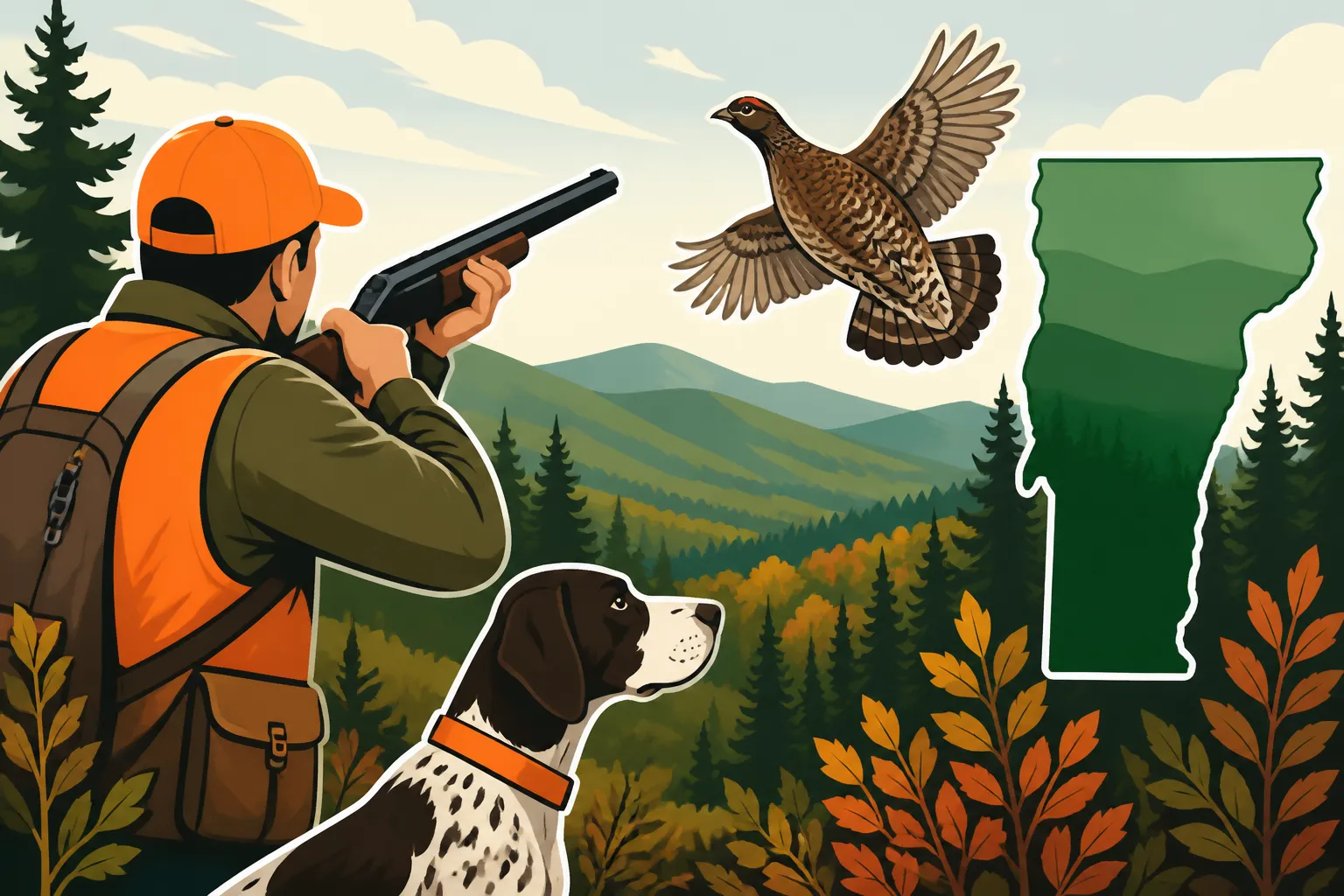
A well-trained bird dog can be an incredible asset for grouse hunting. Breeds like English Setters, Brittanys, and various pointing or flushing spaniels are popular choices. A good dog will systematically work the cover, locate birds, and either point them for a flush or flush them within gun range, giving you more opportunities and greatly increasing your efficiency. They're also invaluable for finding downed birds in thick cover, which can be nearly impossible without canine assistance.
However, many successful grouse hunters don't use dogs. Hunting without a dog requires a different approach. You'll need to focus on still-hunting, moving slowly and deliberately through prime cover, pausing frequently to listen and scan. Many hunters develop a rhythmic stop-and-go walk, hoping to make a nervous grouse flush as they pause. You'll also rely more heavily on your scouting and knowledge of preferred habitat to maximize your chances. Walking slower, paying attention to every rustle, and anticipating where a bird might flush from behind a log or out of a thicket becomes key.
| Public Land Type | Key Characteristics for Grouse | Pros | Cons |
|---|---|---|---|
| Wildlife Management Areas | Active habitat management | Specifically managed for wildlife | Can see higher hunting pressure |
| State Forests | Timber harvest programs | Varied habitat, often good access | Management not always grouse-specific |
| Town Forests | Smaller, local management | Often less pressure, potential hidden gems | Varying rules, potentially smaller tracts |
| Green Mountain National Forest | Vast, diverse terrain | Ample space, remote unpressured areas | Can be challenging to navigate, vast mature timber |
Ultimately, finding the best public ground for grouse in Vermont is about combining diligent research with persistent boots-on-the-ground effort. Utilize all the tools at your disposal, from high-tech mapping apps to classic woodsmanship, and you'll be well on your way to filling your vest with these elusive and challenging birds.
Disclaimer
This article is for general informational purposes only and does not constitute professional advice. Laws, prices and regulations vary by location and change over time. Consult a qualified professional for guidance on your specific situation.