Hunting Green Mountain’s High-Elevation Ridges
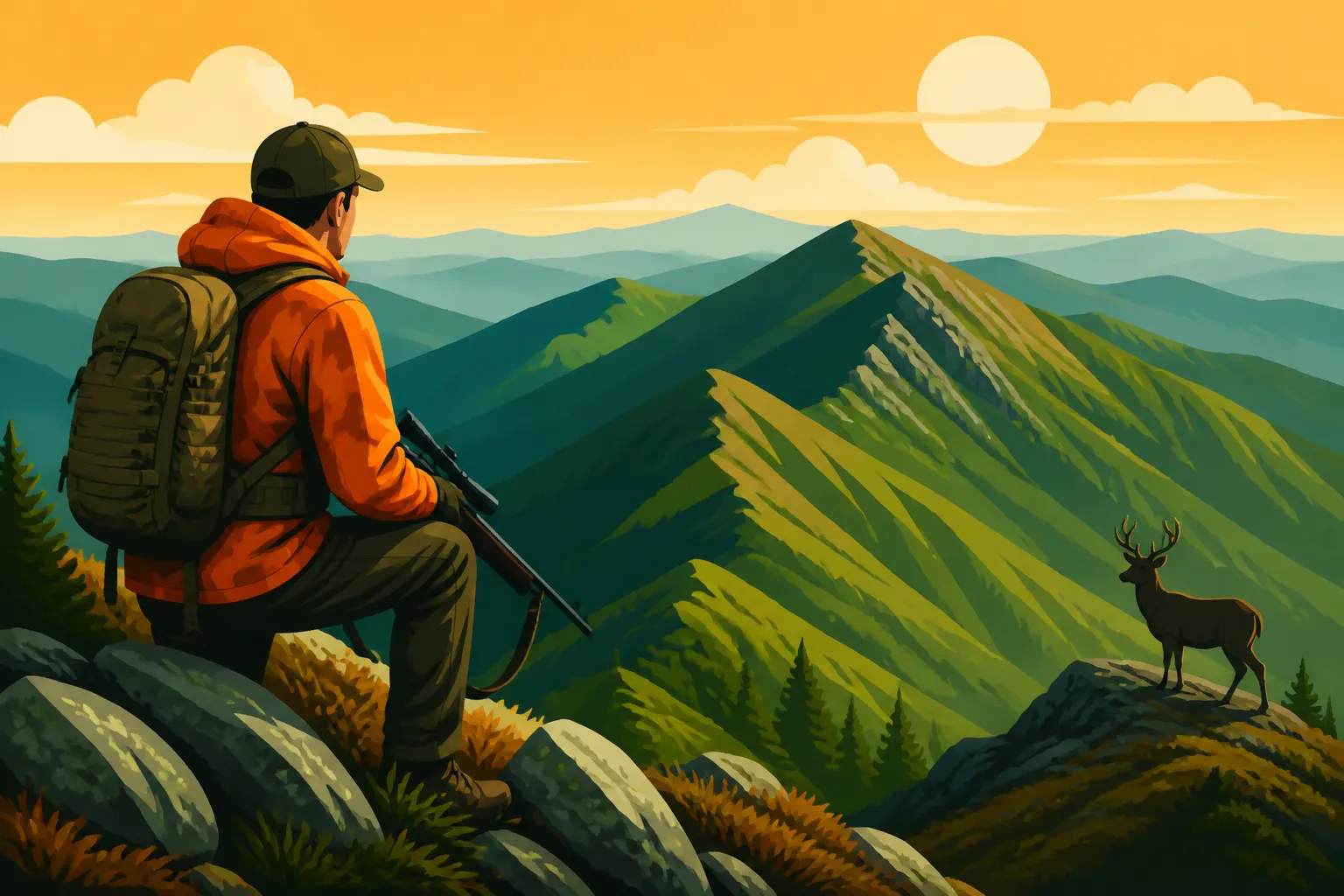
Hunting Vermont's high-elevation ridges is a challenge that many deer hunters dream of, but few truly master. It's a land of breathtaking views, demanding climbs, and the promise of encountering a mature buck that has eluded hunters in lower, more pressured areas. If you've ever found yourself staring up at those imposing Green Mountain peaks, wondering how to even begin to approach such vast and rugged terrain, you're not alone. This guide is dedicated to helping you unlock the secrets of these incredible high-country hunting grounds, offering practical advice and strategies to make your next ridge-top adventure a successful one.
Understanding High-Elevation Deer Behavior
Hunting the high country isn't like sitting on a field edge in the Champlain Valley. Deer behavior shifts dramatically as you gain elevation, influenced by food sources, cover, and hunting pressure. You're often dealing with animals that are more reclusive, more attuned to their environment, and potentially older simply because fewer hunters are willing to make the grueling effort to reach them.
Why Deer Seek High Ground
The primary draw for deer to higher elevations, especially mature bucks, is often sanctuary. During opening days and peak hunting pressure in more accessible areas, deer will gravitate to the steepest, thickest, and most remote ridges. They learn very quickly where the pressure is, and they'll move into areas where they feel safe. Think about it: every hunter wants an easy walk, a quick drag. The harder the climb, the fewer boots hit the ground, and deer know this. They'll bed in thick spruce and fir stands on north-facing slopes, using the dense cover for thermal regulation and security. These high-elevation strongholds offer a sense of isolation that these older, wiser deer crave.
Beyond just sanctuary, high elevations can offer specific food sources at certain times of the year. During years of good mast crops, beech ridges at higher elevations can be an absolute magnet for deer. They'll move up to feed on those coveted beechnuts, or browse on tender new growth in clear cuts or blowdowns that might be higher up the mountain. Don't dismiss the smaller, less obvious food sources either; deer are incredibly opportunistic browsers, and even a patch of preferred forbs or woody browse can hold them in an area. Remember, when Hunting After a Poor Acorn Year, deer become even more reliant on these alternative, higher-elevation food sources.
Impact of Weather and Thermals
Weather plays an enormous role in high-elevation deer movement. A cold snap, an early snowfall, or even just heavy rain can send deer scurrying for the best thermal cover. Conversely, mild weather can keep them higher longer, extending their access to food sources up top. But the real game-changer in the mountains is thermals. Unlike the relatively consistent wind patterns in flatlands, thermals in steep terrain are a constant dance of rising and falling air currents. In the morning, as the sun warms the slopes, air rises, carrying your scent upwards. In the evening, as the air cools, it sinks into the valleys.
This daily cycle means your approach and exit routes need to be carefully considered. Approaching a bedding area from below in the morning is a recipe for disaster, as your scent will be carried directly to the deer. Conversely, trying to sneak out of a valley in the evening after bumping deer can be equally frustrating if the thermals are taking your scent right back to them. Learning to read these invisible currents is absolutely critical; it's a skill that only comes with time spent in the mountains and close observation. Understanding Wind and Thermals in Steep Green Mountain Terrain is not just helpful, it's essential for success in this environment.
Scouting and E-Scouting Green Mountain Ridges
Before you ever set foot on a high-elevation ridge during hunting season, you should have a solid game plan. This starts with extensive scouting, both from the comfort of your home and with boots on the ground. The sheer size of Green Mountain National Forest and other public lands means you can't just wander aimlessly. You need a strategy to identify high-potential areas and understand the lay of the land.
Leveraging Mapping Software for Pre-Season Intel
Modern technology has revolutionized how we approach scouting, especially in vast, rugged areas like Vermont's high country. Tools like onX Hunt or even Google Earth are invaluable for "e-scouting" your potential hunting grounds. Start by looking for distinct features:
- Ridges and Saddles: Deer often use saddles as travel corridors between drainages or to cross from one ridge system to another. These are natural funnels.
- Benches and Terraces: These flatter areas on a steep hillside can be prime bedding locations or staging areas before deer move to feed. Look for subtle contour lines indicating these breaks in the slope; Climbing to a Green Mountains High-Elevation Bench often puts you right in the deer's wheelhouse.
- Thick Cover: Identify areas of dense evergreen timber (spruce, fir, hemlock) or steep, rocky slopes with heavy brush. These are escape cover and prime bedding zones.
- Water Sources: Even small seeps or springs on a ridge can be crucial, especially during dry periods.
- Access Points and Pressure: Use your mapping app to identify potential parking areas, logging roads, and trails. Then, look for areas that are furthest from these points, or that would require a significant physical effort to reach. These are often where mature deer seek refuge from hunting pressure. Remember, GoHunt can also be a valuable resource for identifying hunting access and public land boundaries. Use these digital tools to develop a baseline understanding before you physically commit to a location. onX Layers for Vermont Land Status can show you not just public vs. private, but also timber cuts, old roads, and other features.
| Scouting Method | Pros | Cons | Best Use Case |
|---|---|---|---|
| E-Scouting | Time-efficient, broad overview, identifies key features remotely | No real-world scent/visual confirmation, ground truth needed | Initial planning, identifying remote access points, finding potential funnels |
| Boots-on-the-Ground | Confirms e-scouting, finds fresh sign, reads thermals | Time-consuming, physically demanding, can spook deer if not careful | Verifying e-scouting, finding fresh rubs/scrapes/beds, understanding terrain |
On-the-Ground Reconnaissance
Once you've narrowed down your e-scouting to a few promising areas, it's time to hit the ground. Pre-season scouting (well before the season starts, to minimize disturbance) is critical. Hike the ridges, walk the saddles, and explore those benches. Your goal is to find fresh deer sign: rubs, scrapes, tracks, and most importantly, bedding areas. Look for well-used game trails that traverse benches or connect different cover types. These are the highways deer use. Pay close attention to the prevailing wind directions and how the thermals behave in different areas during the morning and evening.
Search for Finding Sign in Green Mountain Timber – this could be anything from fresh droppings to beds tucked under thick evergreens. Don't just look for what deer are currently doing, but try to envision how they would move through that terrain given different wind directions or hunting pressure. Consider setting up some trail cameras on heavily used trails or near potential rub lines, especially if you can get to a remote area without causing too much disturbance. This intel can be invaluable in understanding patterns of movement and the quality of deer in the area. Scouting Vermont Public Land Before Season is about putting in the effort when deer aren't on high alert, allowing you to learn their habits undisturbed.
Tactics for Hunting High-Elevation Terrain
High-elevation hunting demands a different approach than hunting woodlots or farm edges. The vastness, steepness, and unpredictable nature of the mountains mean you need to be adaptable, patient, and physically prepared.
Still-Hunting the Ridgelines
For many, still-hunting is the most effective way to cover ground and find deer in the high country. This isn't about rushing; it's about moving incredibly slowly, pausing often, and using your binoculars to pick apart every piece of cover. Take two steps, stop, scan. Repeat. Use the contours of the land to your advantage, staying just below the crest of a ridge to keep your silhouette hidden and to allow you to peek over the top without being seen. Work into the wind or with a crosswind that favors your approach, always mindful of those unpredictable thermals.
Focus on edges: where thick softwood transitions to more open hardwoods, along the edges of benches, or where blowdowns create dense tangles. These are natural places for deer to stage or bed. Listen carefully for subtle sounds: a rustling leaf, a twig snap, a distant grunt. In the quiet solitude of the high mountains, these sounds carry far. Remember, the deer in these areas are often older and have a keen sense of survival; they will bust you if you're not meticulous. This is especially true when Still-Hunting Green Mountain National Forest Timber where visibility can be limited.
Strategic Stand Placement
While still-hunting is often the go-to, judicious stand placement can be deadly, especially in key funnels or food sources. Look for natural pinch points:
- Ridge Saddles: As mentioned, these are natural travel corridors. A stand placed overlooking a saddle can intercept deer moving between drainages.
- High-Elevation Benches: If you've identified a well-used bench with fresh sign, a stand there could be effective, particularly if it's a staging area before deer move to feed or a bedding area that's hard to approach otherwise.
- Transition Zones: Where different types of timber meet, or where thick cover gives way to a more open feeding area.
- Water Sources: A small spring or seep on a dry ridge can be an absolute magnet, especially if other water sources are scarce.
Always prioritize wind direction. A stand is useless if your scent is blowing directly into the area you expect deer to approach from. Have multiple stand locations or be prepared to abandon a spot if the wind isn't right. Often, a well-placed ground blind, brushed into natural cover, can be just as effective as a treestand in these rugged areas and much easier to deploy. Consider how deer will navigate the steep terrain; they prefer paths of least resistance, even if it's still steep. Look for those subtle breaks or benches they use.
Mastering Wind and Thermals
This cannot be overstated: mastering wind and thermals is paramount for high-elevation success. The Green Mountains are notorious for their tricky air currents. Start by understanding the basic principle: warm air rises, cool air falls.
- Morning Hunt: As the sun hits the slopes, air begins to warm and rise. Plan to hunt areas where the thermal will carry your scent away from where you expect deer to be bedded or traveling. This might mean starting higher and working your way down, or sitting on a downwind slope where rising air carries your scent over the top.
- Evening Hunt: As the sun sets and the air cools, thermals begin to fall into the valleys. This often means hunting from below your target area, allowing your scent to be carried down and away from approaching deer.
However, it's never that simple. Valleys and drainages can create their own swirling currents, and dense timber can hold pockets of cool air even on a warm day. Always carry a wind checker – a small squeeze bottle of powder or milkweed seeds – and use it constantly. Before you take another step, check the wind. Before you settle into a stand, check the wind. Observe how your scent plume moves. Be prepared to adjust your route or even your hunting location based on what the air currents are doing at that exact moment. This active awareness is the difference between an unseen encounter and a quickly spooked buck.
Essential Gear for Ridge Hunting
The Green Mountains are beautiful but unforgiving. Being prepared with the right gear isn't just about comfort; it's about safety and efficiency. Hunting high-elevation ridges requires a more robust and carefully considered kit than a typical flatland hunt.
Footwear and Layering for Dynamic Conditions
Your feet are your most important tool in the mountains. You need boots that provide excellent ankle support, superior traction on wet leaves, mud, and rock, and enough stiffness to handle side-hilling without your feet fatiguing. Waterproofing is non-negotiable, as you'll encounter dewy mornings, unexpected stream crossings, and potential rain or snow. Look for Best Boots for Green Mountain Ridge Terrain that are built for rugged, uneven ground. There are many excellent brands out there, but invest in quality and break them in thoroughly before the season. Blisters in the backcountry are not just uncomfortable, they can be dangerous.
Layering is equally critical. Vermont weather, especially at higher elevations, can change on a dime. You might start your climb in cool, damp air, sweat profusely on the ascent, and then sit in frigid wind on a exposed ridge top.
- Base Layers: Wicking materials (merino wool or synthetic) are essential to move sweat away from your skin and prevent chilling. Best Base Layer for a September Archery Sit can mean the difference between comfort and hypothermia.
- Mid-Layers: Insulating layers like fleece or puff jackets that can be easily added or removed as your activity level changes.
- Outer Shell: A waterproof and windproof jacket and pants are a must. They don't need to be heavily insulated, as your mid-layers will provide that. Their job is to protect you from the elements.
- Blaze Orange: Don't forget your How Much Blaze Orange Vermont Requires if you're hunting during rifle season, even if you're archery hunting during the overlap.
Navigation and Emergency Preparedness
Getting lost in the Green Mountains is a serious concern, particularly in vast areas with limited cell service. Never rely solely on your phone.
- GPS Device/App: A dedicated GPS unit or a reliable mapping app like onX Hunt or Gaia GPS on your phone (with downloaded offline maps!) is non-negotiable. Understand how to read topo lines and navigate with it before you head out. Best GPS App for Vermont Public Land means having your maps downloaded for areas without cell service.
- Physical Map and Compass: Always carry a physical map of the area and a compass, and know how to use them. This is your fail-safe.
- Headlamp: A powerful headlamp with extra batteries is crucial for early morning starts and unexpected late exits.
- First-Aid Kit: A compact but comprehensive first-aid kit should always be in your pack. Include items for blisters, cuts, sprains, and any personal medications.
- Signaling Device: A whistle and/or a small signal mirror can be vital if you get lost or injured.
- Fire Starter: Waterproof matches, a lighter, or a ferro rod.
- Water and Snacks: Carry more water than you think you'll need, and high-energy snacks. Dehydration and bonking on a steep climb are real risks.
Packing Out Your Harvest
One of the biggest challenges of high-elevation hunting is the "if you kill it, you have to pack it out" reality. A trophy buck at the top of a remote ridge can quickly turn into a monumental task.
- Quality Backpack: Invest in a sturdy backpack with a good frame that can handle heavy loads. This might be a dedicated hunting pack with a meat shelf. Best Pack for a Northeast Kingdom Moose Hunt (though it mentions moose, the principles of a good, load-bearing pack apply equally to quartering out a deer).
- Game Bags: Lightweight, breathable game bags are essential for keeping meat clean and allowing it to cool.
- Knives and Bone Saw: A sharp knife for field dressing and a small bone saw for quartering will make the job much easier. Best Knife for Field Dressing a Whitetail is a key piece of gear.
- Hauling Assistance: Consider bringing a small, lightweight rope to help drag quarters or gear up and down steep sections, or even to lower equipment.
It's a good idea to physically train for the demands of mountain hunting. Hike with a loaded pack, climb hills, and build your stamina. The better shape you're in, the safer and more enjoyable your high-elevation hunt will be. Having a clear plan for Recovering a Deer From a Steep Ravine before you pull the trigger is always a good idea.
Disclaimer
This article is for general informational purposes only and does not constitute professional advice. Laws, prices and regulations vary by location and change over time. Consult a qualified professional for guidance on your specific situation.