Layering for Vermont’s Long Hunting Season
We've all been there: bundled up like the Michelin Man for a frigid pre-dawn sit, only to be shedding layers by 9 AM as the sun beats down, or worse, starting out light only to have a biting wind roll in mid-afternoon, leaving you shivering. Vermont's hunting seasons are notoriously long, stretching from early fall's crispness right through the depths of winter, and the weather here can swing wildly in a single day, let alone across weeks. This guide is all about equipping you with the knowledge and strategy to master the art of layering, ensuring you stay comfortable, focused, and effective, no matter what unpredictable Green Mountain weather rolls your way.
The Unpredictable Nature of Vermont's Hunting Weather
Hunting in Vermont isn't just about knowing where the deer are or how to call a turkey; it's about being prepared for whatever Mother Nature decides to throw at you. Our state is famous for its sudden shifts, and if you're not ready, a beautiful morning can turn into a miserable, hypothermia-inducing experience faster than you can say "frostbite." The key to success, and frankly, enjoyment, lies in anticipating these changes and having a system that allows you to adapt on the fly.
From Crisp Autumn Mornings to Mid-Day Swelter
Imagine heading out during Vermont's early archery season in September. You leave the truck with frost on the windshield, the air so cold you can see your breath. You're grateful for that extra fleece as you climb into your stand. But then, as the sun crests the ridge and climbs higher, that crispness fades. By 10 AM, you're sweating under your layers, perhaps even feeling a little sticky. The deer aren't moving much in the warmth, and you're now more focused on your discomfort than on scanning the woods. That sweat, though seemingly harmless in the moment, will become your enemy later when the temperature dips again, or if a cloud bank rolls in. It's a classic Vermont scenario, making smart layering absolutely essential for those long sits where conditions can fluctuate dramatically. Hunting Vermont's Expanded Archery Zones in September requires being ready for these shifts.
Even into October, during the regular archery season, you might experience mornings where a light jacket feels perfect, only to find yourself shedding it by midday, or having to put on a heavier shell as an unexpected drizzle moves in. It’s not uncommon to start a day needing a warm hat and gloves, only to feel perfectly fine with just a base layer and a light vest a few hours later, especially if you’re moving. The ground might be damp, creating a cool microclimate, but direct sunlight can rapidly warm things up in a clearing. The key is to avoid that uncomfortable clammy feeling, which is the precursor to a deep chill once the sun starts to drop again.
The Relentless Green Mountain Wind and Elevation Changes
Beyond temperature swings, Vermont's terrain adds another layer of complexity. The Green Mountains aren't just pretty; they create their own weather patterns. You might be perfectly comfortable in a sheltered valley, but as soon as you crest a ridge or move into an exposed clear-cut, the wind can whip through, stealing your body heat at an alarming rate. That "feels like" temperature can plummet by 10 or 15 degrees in an instant, turning a pleasant hunt into a test of endurance. A good weather app can give you a general idea, but local thermals and wind tunnels in the mountains are something you truly learn by experience.
Elevation changes play a huge role too. Climbing a steep ridge to get to your favorite bench stand will generate a lot of body heat, and you'll quickly work up a sweat. If you don't have a plan to manage that, once you stop moving, that sweat will cool, leaving you shivering even if the ambient air temperature isn't terribly low. Conversely, a quiet descent into a valley can feel significantly colder due to inversions, where cold air sinks. This is especially true as you start to get into Hunting the Rut in Early-to-Mid November, when winds can be quite strong and temperatures are consistently lower. Understanding how wind interacts with terrain, perhaps with mapping tools like those offered by GoHunt, can help you predict where you might need to add or remove layers before you even get there.
The Fundamental Principles of a Layered System
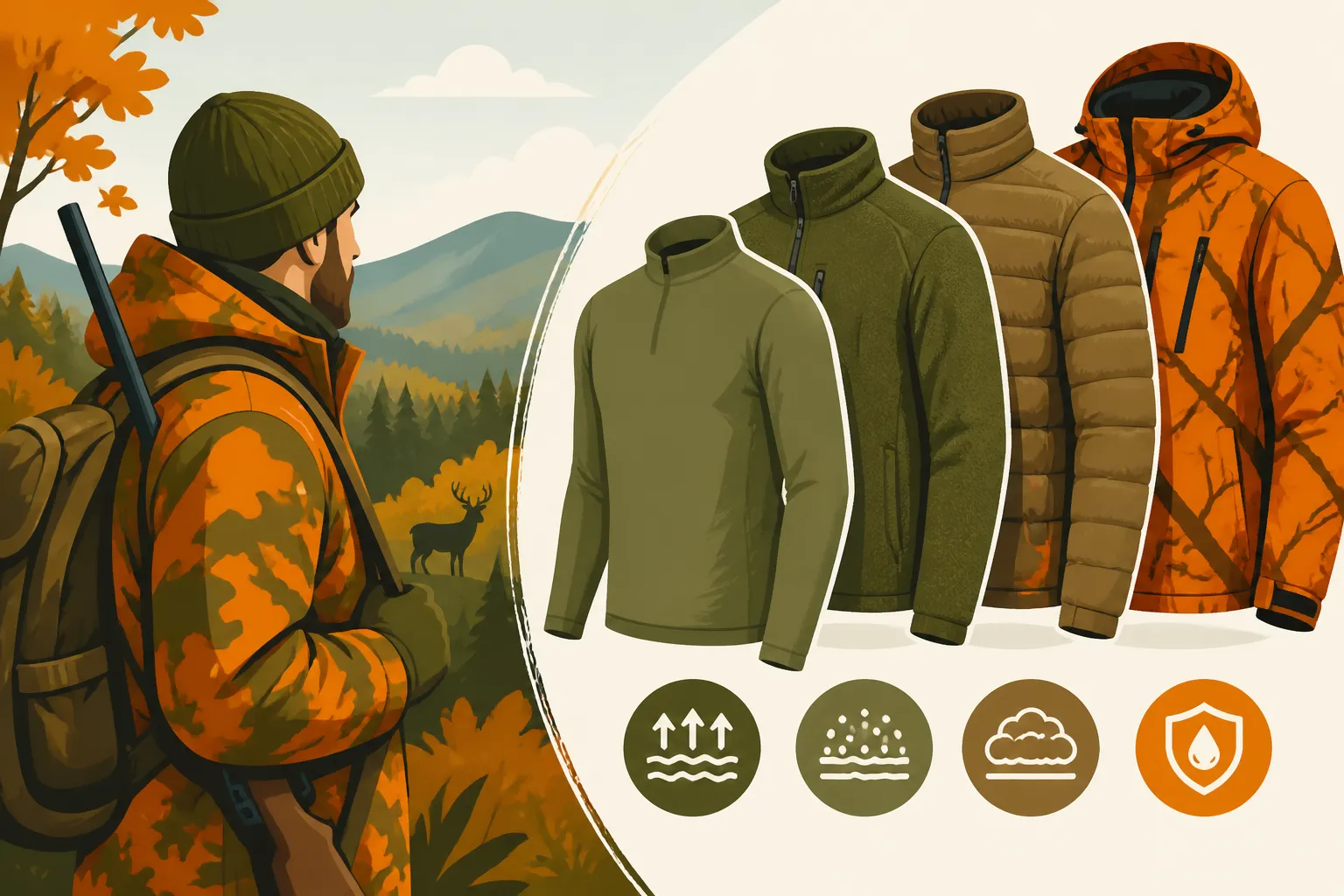
Thinking about your hunting clothes as a "system" rather than just a collection of garments is the game-changer. Each layer has a specific job, and when they work together, they create a versatile, adaptable microclimate around your body. This system allows you to add or subtract insulation and protection as conditions, and your activity level, dictate. Forget bulky, single-purpose jackets; a well-chosen layering system will keep you warmer, drier, and more comfortable with less weight and more flexibility.
The Moisture-Wicking Base Layer: Your First Defense
This is arguably the most critical layer, yet it's often overlooked. Your base layer sits directly against your skin, and its primary job is to manage moisture – specifically, your sweat. When you exert yourself, your body produces sweat to cool down. If that sweat stays on your skin, it will eventually cool, drawing heat away from your body and making you feel cold and clammy. This is particularly dangerous in cold weather, as it can lead to hypothermia. A good base layer wicks that moisture away from your skin and transfers it to the outer layers where it can evaporate.
Think of it like this: your skin needs to stay dry to stay warm. A quality base layer acts like a one-way sponge, pulling moisture outward. Different weights of base layers are available, from ultra-light for warm early season hunts to heavy-weight for extreme cold. For a Best Base Layer for a Cold September Sit, you might choose a mid-weight option, knowing you can easily add or remove other layers on top. Materials like merino wool and synthetic blends are champions in this category, offering excellent wicking properties without retaining odors. You want a snug fit here, not restrictive, but close to the skin to ensure maximum contact for moisture transfer.
The Insulating Mid-Layer: Trapping Vital Warmth
Once your base layer has moved moisture away from your skin, your mid-layer steps in to trap warm air and provide insulation. This is your primary warmth provider. Unlike your base layer, a mid-layer doesn't need to be tight against your skin; in fact, a bit of loft is beneficial as it creates air pockets, and trapped air is what truly insulates. The thicker and fluffier your mid-layer, the more warm air it can trap, and thus, the warmer you'll be.
Mid-layers come in various forms, from fleece jackets and vests to lightweight puffy jackets filled with down or synthetic insulation. The beauty of the mid-layer is its versatility. On a cool, dry day, you might wear your mid-layer as your outer layer. If you're exerting yourself, you might shed it entirely and just wear your base layer and shell. When Hunting the Regular Archery Opener in October, you might carry a vest and a light fleece as your mid-layer options, giving you flexibility. Having a Best Mid-Layer for a November Rifle Hunt means choosing something robust enough for colder temperatures, but still easy to pack away if you get active. The ability to easily add or remove this layer is key to regulating your core temperature throughout the day.
The Protective Outer Shell: Shielding Against the Elements
Your outer shell is your fortress against the external world. Its job is to protect your inner layers and, most importantly, your body from wind, rain, and snow. It's the final piece of the puzzle, and often the most expensive, but for good reason. A good outer shell needs to be durable, quiet (crucial for hunting!), and highly effective at repelling moisture and blocking wind, all while still allowing some breathability to let the moisture wicked by your base layer escape.
Outer shells range from lightweight, packable rain jackets to heavy, insulated parkas. For Vermont hunting, you'll likely want something that's waterproof or highly water-resistant and windproof. Look for features like adjustable cuffs, hoods, and drawcords at the hem to seal out the elements. Zippers should be waterproof or covered by storm flaps. A common mistake is to rely on an insulated outer shell as your primary warmth layer. While some shells do offer insulation, their main function is protection. Your warmth should primarily come from your mid-layers. If you're preparing for Hunting a Muzzleloader Tag After Rifle Season Closes, a tough, waterproof, and windproof outer shell is absolutely essential to brave the late-season elements.
Choosing the Right Materials for Each Layer
The effectiveness of your layering system hinges not just on the number of layers, but on the materials each layer is made from. Different fabrics have distinct properties that make them ideal for specific roles in your system. Understanding these properties is crucial to building an efficient and comfortable setup that truly performs in the field.
Natural Wonders: Merino Wool's Unmatched Performance
If there's a superstar in the layering world, it's merino wool. This natural fiber, shorn from merino sheep, offers an incredible combination of properties that make it almost perfectly suited for hunting. First and foremost, it's an exceptional insulator, trapping warmth even when wet. This is a huge advantage over cotton, which loses all insulating properties once it gets damp. Secondly, merino wool is renowned for its moisture-wicking capabilities, pulling sweat away from your skin and regulating your body temperature.
But perhaps its most celebrated feature for hunters is its natural odor resistance. Unlike synthetics that can start to smell after a few hours, merino wool can be worn for days without developing that tell-tale "hunter funk." This is invaluable on multi-day hunts or when you're making long, pre-dawn treks to your stand. While it can be a bit pricier than synthetics, its comfort, performance, and odor control make it a worthwhile investment for any serious Vermont hunter, especially when you're relying on stealth and long hours in the woods. Best Base Layer for a Cold September Sit often means merino wool.
Synthetic Savvy: Durable, Quick-Drying Powerhouses
Synthetic fabrics like polyester, nylon, and various blends have come a long, long way. They are excellent choices for base layers and mid-layers, offering distinct advantages. Synthetics are typically more durable and abrasion-resistant than merino wool, making them a good choice if you're bushwhacking through thick cover. They also tend to be more affordable, which can be a factor if you're building out a complete wardrobe. Modern synthetics excel at wicking moisture, often drying faster than wool, which can be a benefit if you get soaked through or need to wash and dry layers quickly on an extended trip.
The downside historically has been odor retention. However, many contemporary synthetic garments now incorporate antimicrobial treatments (like silver salts) to combat this issue. For an active hunter who generates a lot of sweat, or for an outer shell that needs to shed water, synthetics often offer the best performance-to-cost ratio. When you're considering Best Mid-Layer for a November Rifle Hunt, a good synthetic fleece or a lightweight synthetic puffy could be an excellent choice, providing warmth without excessive bulk.
The Insulation Battle: Down, Synthetics, and Fleece
When it comes to mid-layer insulation, you'll typically be looking at three main categories: down, synthetic insulation, and fleece. Each has its strengths and weaknesses.
- Down: Lightweight, incredibly warm for its weight, and highly compressible, down is fantastic for static cold weather sits. It's made from the soft under-feathers of ducks or geese. The main drawback? Down loses almost all its insulating power when it gets wet. If you anticipate heavy rain or wet snow, you might think twice about relying solely on down as your primary insulation. However, for dry, cold conditions, it's hard to beat.
- Synthetic Insulation: Modern synthetic insulations (like Primaloft or Thinsulate) mimic down's loft and warmth but perform much better when wet. They'll still provide warmth even if damp, which can be a lifesaver in Vermont's unpredictable wet conditions. They tend to be slightly bulkier and heavier than down for the same warmth but are often more durable and easier to care for. For a Best Insulated Layer for a December Muzzleloader Hunt, especially in snowy or damp conditions, synthetic insulation is a very strong contender.
- Fleece: Fleece is a highly versatile synthetic fabric that provides good warmth, breathes well, and dries relatively quickly. It's often used for mid-weight mid-layers and is very durable. While not as warm as down or high-end synthetic puffies for its weight, fleece is affordable, comfortable, and a workhorse in any layering system. It's an excellent choice for active hunting where you need to dump heat, or as a secondary insulating layer.
No single material is perfect for every situation, which is why a thoughtful combination of these materials across your layering system will give you the most adaptability.
| Layer Type | Primary Function | Ideal Materials | Key Benefits | Considerations |
|---|---|---|---|---|
| Base Layer | Moisture Management (Wicking) | Merino Wool, Polyester, Polypropylene | Dries fast, wicks sweat, odor control (merino) | Fit is crucial; avoid cotton at all costs |
| Mid-Layer | Insulation (Traps Warm Air) | Fleece, Down, Synthetic Insulation (Primaloft) | Warmth-to-weight, compressibility (down), warmth when wet (synthetics) | Down loses warmth when wet; synthetics can be bulkier |
| Outer Shell | Protection (Wind/Water Barrier) | Gore-Tex, eVent, proprietary waterproof fabrics | Windproof, waterproof, breathable | Must be quiet for hunting; can be expensive; check DWR |
| Extremities | Targeted Insulation/Protection | Merino/Synthetic blends for hats/gloves, wool socks | Prevents heat loss, maintains dexterity | Hand warmth impacts overall comfort and shooting ability |
Crafting Your Layering Strategy for Each Vermont Season
Vermont's hunting calendar is a journey through vastly different weather patterns. What works for a warm September bow hunt will leave you freezing during the December muzzleloader season. Developing a season-specific layering strategy is paramount to staying comfortable and effective in the field.
Early Archery: Light and Versatile for Warm Starts
The early archery season, particularly in September, often presents the most challenging layering puzzle due to those drastic temperature swings we talked about. You might start your morning in the low 40s or 50s, but by noon, it could be pushing 70 degrees, especially if the sun is out and you're in a sheltered spot. Your strategy here needs to prioritize moisture management and versatility. You want to avoid sweating out on the walk in or during the mid-day warm-up, as that dampness will chill you later.
A lightweight or mid-weight merino wool or synthetic base layer is your foundation. Think about a long-sleeve top and bottoms. Over that, a light fleece vest or a thin long-sleeve shirt might be enough for a mid-layer. Your outer layer could be a quiet, uninsulated softshell jacket or a very light windbreaker, primarily for breaking the chill of the morning or a sudden breeze. The key is to have something easily packable in your backpack that you can shed or put on as needed. A pair of lightweight hunting pants that breathe well is also crucial. Remember, you'll be actively walking to your stand, which generates heat, so planning for that initial exertion is key. You'll often find yourself with only your base layer and outer shell on during the warmer parts of the day.
Rifle Season: Adapting to Peak Rut's Varied Temperatures
November is prime time for deer hunting in Vermont, encompassing the rifle season and much of the peak rut. This is when the weather can really start to show its teeth. While you might still get some mild days, you should also be prepared for frigid mornings, biting winds, rain, and even early snow. The air temperatures will generally be lower and more consistent than in September, but those daily swings can still catch you off guard. Hunting Vermont's November Rifle Opener demands a robust layering system.
For this period, a heavier weight base layer is often a good idea, providing more initial warmth. Your mid-layers become more substantial. You might layer a mid-weight fleece over your base, and then add a puffy vest or jacket with synthetic insulation if you're going to be stationary for long periods. Your outer shell needs to be truly windproof and waterproof. This is not the time for a flimsy rain jacket; you want something durable that will protect you from constant drizzle, driving snow, and stiff winds. Remember Blaze Orange Layering Options are also critical during rifle season, so consider how your blaze orange outer layer integrates with your insulation strategy. You might wear an insulated blaze orange vest over a non-orange insulating layer, or have a heavier blaze orange shell.
Late Season Muzzleloader: Battling the Deep Chill
When the muzzleloader season rolls around in December, especially after the rifle season has closed, you're officially in winter hunting mode. Temperatures are consistently cold, often hovering around freezing or well below. Snow is a real possibility, and bitter winds can make things feel even colder. Static hunting from a stand in these conditions demands serious insulation. Hunting Into the December Muzzleloader Close requires meticulous layering.
Your base layers should be heavy-weight merino or synthetic. On top of that, you'll want multiple insulating mid-layers. Think a heavy fleece jacket, perhaps combined with a substantial synthetic puffy jacket or even a down jacket if you're sure it won't get wet. The goal is to create as many pockets of trapped air as possible. Your outer shell should be your warmest, most robust, and absolutely waterproof/windproof option. Focus on insulating your extremities even more intensely, as heat loss from your head, hands, and feet will quickly make your core feel cold. Hand warmers become indispensable at this point. A pair of Boots for Vermont's Steep Terrain needs to be well-insulated, waterproof, and offer excellent traction for icy or snowy conditions.
Layering for Different Hunting Styles and Exertion Levels
Your layering strategy isn't just about the calendar; it's also deeply influenced by how you plan to hunt. A still-hunter moving constantly through the woods has very different needs than someone sitting motionless in a treestand for hours. Ignoring the impact of your activity level on your body temperature is a surefire way to get uncomfortable.
Static Stand Hunting: Maximizing Passive Warmth
If your plan is to sit in a treestand or ground blind for extended periods, especially during colder seasons, your primary goal is to maximize passive warmth. You won't be generating much body heat through movement, so your layers need to do all the work. This means you'll generally need more insulation than an active hunter would for the same temperature. For Cold-Weather Sitting Strategy in the Northeast Kingdom, this is particularly vital.
When heading to a stand, you might be walking a mile or more with your gear, generating significant heat. The trick here is to underdress slightly for the walk in. Wear just your base layer and perhaps a light mid-layer, carrying your heavy insulators and outer shell in your pack. Once you reach your stand, before you cool down, quickly put on your insulating layers and outer shell. This prevents you from sweating out on the hike, which would leave you damp and susceptible to a deep chill once you stop moving. Consider an insulated seat pad or cushion to prevent heat loss to your stand or the cold ground. Those extra layers, like a Best Insulated Layer for a December Muzzleloader Hunt, are designed to be put on once you’re stationary.
Active Still-Hunting and Tracking: Managing Heat and Sweat
For those who prefer to be on the move, whether still-hunting slowly through the timber, tracking a wounded animal, or actively chasing small game, the challenge shifts from generating warmth to managing the heat and sweat you will produce. Overdressing for active hunting will lead to profuse sweating, which, as we've discussed, is a hunter's worst enemy.
The goal here is a highly breathable system that allows excess heat and moisture to escape efficiently. Start with a moisture-wicking base layer, ideally a mid-weight one. Your mid-layer might be a lighter fleece or even just a heavy base layer. Your outer shell should be breathable but still offer protection from wind and light precipitation. Look for shells with pit zips or other ventilation options to dump heat quickly. The concept of "venting" becomes crucial: unzipping your jacket, opening cuffs, or removing your hat can all help regulate temperature without having to fully shed a layer. It's a continuous balancing act of adding and removing air from your system to maintain optimal comfort. Hunting a Funnel Between Two Woodlots often involves significant walking, making this strategy essential.
Packing Out Game: The Crucial De-Layering Act
You've done it! You've successfully harvested an animal, whether it's a big Vermont buck or a black bear. Now comes the real work: field dressing and packing it out. This is where many hunters make a critical layering mistake. The exertion involved in quartering and hauling out an animal, especially a large one like a moose, will cause your body to generate an incredible amount of heat. If you're still bundled up for a cold sit, you will quickly become soaked with sweat.
The moment you start field dressing, begin stripping layers. Get down to your base layer or even just a t-shirt if conditions allow. This might feel counter-intuitive if it's cold, but the alternative is becoming drenched in sweat, which will lead to a dangerous chill once the work is done and you stop moving. You can always add a dry layer back on once the animal is processed and you're ready to start the retrieve. If you're Packing Out a Vermont Moose, you'll be glad you shed those heavy layers. Having extra dry layers (especially a fresh base layer) packed in a dry bag for after the heavy work is complete is a pro move that will significantly enhance your comfort and safety on the way back to the truck.
Beyond the Torso: Protecting Your Extremities
While we often focus on layering our core, neglecting your head, hands, and feet is a common mistake that can quickly undermine your entire layering system. These extremities are crucial for regulating overall body temperature and maintaining dexterity and comfort in the field.
Head and Neck: The Often-Forgotten Heat Sinks
It's a myth that you lose 70% of your body heat through your head, but you do lose a significant amount, particularly if it's exposed. Your head and neck are highly vascularized, meaning they have a lot of blood flow close to the surface, making them efficient radiators of heat. Keeping them covered and warm is essential for overall thermal regulation.
A warm hat is one of the quickest ways to warm up your entire body. For varying conditions, consider a thin, merino wool beanie that can be worn under a hooded jacket, or a thicker fleece or wool hat for colder temperatures. Neck gaiters or balaclavas are also invaluable, protecting your neck and face from biting winds. They can be pulled up over your nose and mouth in extreme cold, or pushed down around your neck when you're exerting yourself. Having options for headwear, from a simple beanie for cool mornings to a heavy, insulated hat for bitter December days, allows you to dump or retain heat as needed. Plus, a good neck gaiter adds an extra layer of scent control around your breath, which can be an advantage when trying to remain undetected by wary game.
Hands and Feet: Keeping Them Warm and Functional
Cold hands and feet are more than just uncomfortable; they can significantly impact your hunting ability. Numb fingers can make it impossible to manipulate your rifle, draw your bow, or even zip up a jacket. Cold feet lead to discomfort and distract you from the hunt. Protecting these extremities requires a thoughtful approach.
For your hands, a layering system is just as important as for your torso. Start with thin, wicking glove liners (merino or synthetic) that you can wear when you need dexterity. Over these, you might add a warmer, insulated glove or a pair of mittens. Mittens are generally warmer than gloves because they allow your fingers to share warmth. Many hunters opt for fingerless gloves or mitts with flip-back finger covers that allow you to quickly free your trigger finger or nocking hand. Hand warmers, either chemical packets or rechargeable electric ones, are a godsend in extreme cold, placed inside your gloves or in hand-muff pockets.
For your feet, the foundation is a good pair of moisture-wicking wool or synthetic socks. Avoid cotton at all costs; wet cotton socks will lead to cold feet and blisters. Layering socks can sometimes help, but be careful not to make your boots too tight, as this can restrict circulation and actually make your feet colder. Your boots themselves are a critical piece of gear. For general Vermont hunting, you'll want waterproof, insulated boots with good ankle support. The amount of insulation (measured in grams of Thinsulate or similar material) should correspond to the temperatures you'll be hunting in. For early season, 200-400 grams might suffice, but for late-season hunts, 800-1200 grams or more can make a huge difference. Good traction is also essential, especially when navigating Green Mountain Ridgeline Public Access or icy trails.
Common Layering Pitfalls and How to Avoid Them
Even with the best intentions, it's easy to make mistakes when layering for a long day in the Vermont woods. These common pitfalls can quickly turn a promising hunt into a miserable experience. Knowing what to avoid is just as important as knowing what to do.
The Cotton Catastrophe: A Hunter's Worst Enemy
Let's say it loud and clear: Cotton kills in the cold. This isn't hyperbole; it's a fundamental truth for anyone spending time outdoors in chilly or damp conditions. While your favorite cotton hoodie might feel soft and comfortable around the house, it is absolutely the worst choice for any layer, especially your base layer, when hunting in Vermont.
Why? Cotton absorbs moisture (like sweat) and holds onto it. Once wet, cotton loses all its insulating properties. Instead of keeping you warm, it actively draws heat away from your body as it tries to dry out. This can quickly lead to a dangerously low body temperature, even on days that aren't bitterly cold. Imagine walking into your stand with a cotton t-shirt as your base layer, sweating from the exertion. As you sit motionless, that damp cotton shirt will chill you to the bone, making you shiver uncontrollably and completely ruining your hunt. Stick to merino wool or synthetics for all layers that touch your skin or are meant for insulation. This rule applies to socks, underwear, and any shirts or pants that aren't an outer waterproof shell.
Overdressing: The Sweat-Induced Chill Trap
It's natural to want to be warm, especially when you know you'll be sitting still in the cold for hours. The temptation is to pile on every warm layer you own before you even leave the house. However, this often leads to a classic mistake: overheating and sweating profusely. You start the walk to your stand, feeling a little warm, then a lot warm, then you're actively sweating. By the time you get to your stand, your base layers are damp, if not soaking wet.
As soon as you stop moving and your body cools down, that trapped moisture will start to chill you. The very layers you put on to keep you warm now become a conduit for heat loss. It's a vicious cycle that leaves you shivering and miserable. The key is to dress for the activity you will be doing, not the temperature outside. For the walk in, dress lightly, even if it feels a little cold at first. Carry your heavier insulating layers in your pack and put them on after you've reached your stand and cooled down. Think about your energy levels; if GoHunt mapping shows a steep climb to your spot, you'll want to start even lighter.
Neglecting Adjustments: Staying Flexible as Conditions Change
The whole point of a layering system is its adaptability, but it only works if you actually use it! Many hunters make the mistake of putting on their layers and then never adjusting them, even as the weather changes or their activity level fluctuates. This static approach defeats the purpose of the system.
Be proactive in managing your layers. If you feel yourself starting to get warm on the walk in, unzip your jacket, open your cuffs, or take off your hat before you start sweating heavily. If the sun goes behind clouds, or a cold wind picks up, add a layer or pull up your neck gaiter before you start shivering. Vermont's weather is dynamic, and your layering needs to be just as dynamic. This constant adjustment, stripping a layer off as you climb a ridge and putting it back on as you settle into your stand, is the hallmark of a comfortable and successful hunter. It's much easier to prevent getting cold or too hot than it is to recover once you've crossed that threshold. Being mindful of Layering for a Wet Green Mountain Day means constantly checking for precipitation and adjusting your outer shell or adding a waterproof layer before you get soaked through.
Disclaimer
This article is for general informational purposes only and does not constitute professional advice. Laws, prices and regulations vary by location and change over time. Consult a qualified professional for guidance on your specific situation.