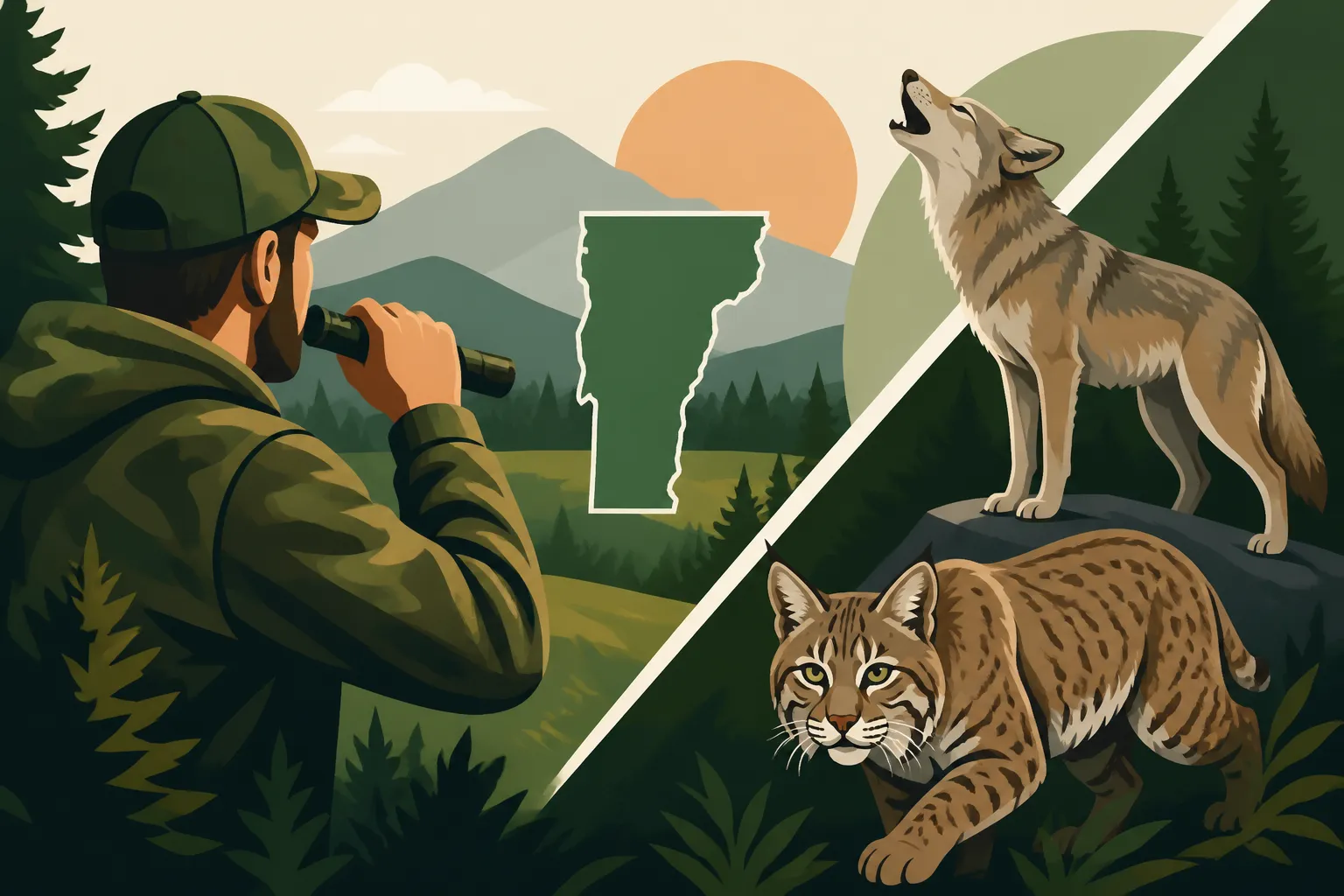
Predator Calls for Vermont Coyote and Bobcat
There's nothing quite like the thrill of a predator hunt in Vermont, but let's be honest, getting those elusive coyotes and bobcats to commit to a call can feel like trying to convince a teenager to clean their room – almost impossible! Many of us spend countless hours in the woods, blowing on calls, only to be met with silence or, worse, a distant howl that never gets closer. This guide is here to walk you through the nuances of predator calling in the Green Mountain State, helping you understand the animals, the calls, and the strategies that really work to bring these wary critters into range.
Understanding Vermont's Elusive Predators
Hunting coyotes and bobcats in Vermont isn't like hunting deer; it requires a different mindset, a deeper understanding of their behaviors, and a whole lot of patience. These aren't creatures that just wander out into the open when they hear a bleat. They're intelligent, incredibly cautious, and masters of their environment.
The Elusive Nature of Vermont Coyotes
Vermont's coyotes are survivors. They've adapted to everything from deep woods to farm edges, and they've learned to be extremely wary of humans. You might see tracks in the snow or hear their haunting chorus at night, but getting one to step out during daylight hours is a whole different ballgame. They've been hunted, trapped, and pursued for generations, making them inherently suspicious of anything that sounds too good to be true. This wariness is what makes them such a challenge and, let's be honest, why we keep coming back for more.
They often travel in packs, but a lone coyote might respond to a call more readily. They're opportunistic feeders, meaning they're always on the lookout for an easy meal, which is where distress calls come into play. However, they're also territorial, and that's where challenge howls can be incredibly effective. The terrain in Vermont, from the dense hardwoods to the open agricultural fields, plays a huge role in how coyotes move and respond to calls. A coyote in a thick stand of pines might be more likely to circle downwind and try to get a visual before committing, while one on a wide-open field edge might be more cautious about exposing itself. Understanding these tendencies is your first step.
Unraveling the Mystery of Vermont Bobcats
Now, if coyotes are a challenge, bobcats are often considered the ultimate prize in predator calling. These stealthy felines are even more reclusive and secretive than coyotes. You might live in Vermont for years and never see a wild bobcat, let alone call one in. Their movements are often nocturnal or crepuscular, and they prefer dense cover, making them exceptionally difficult to locate. They're mostly solitary animals, which means you're not calling in a pack, but rather a single, highly focused predator.
Bobcats are primarily ambush predators, relying on their incredible camouflage and silent stalking to surprise prey. This means they're less likely to come charging in heedlessly. They're looking for weakness, for an easy meal that's not going to put up too much of a fight. While they respond to distress calls, their approach is often agonizingly slow and deliberate. They might appear out of nowhere, seemingly materialize from the shadows, making it critical to maintain constant vigilance and be ready for a shot at any moment. You'll need to know your Vermont Bobcat Population Trends to understand where they might be densest.
Key Differences in Predator Behavior for Calling
The biggest mistake a predator hunter can make is treating coyotes and bobcats the same. While both are predators and respond to some similar calls, their behavior and approach are vastly different. Coyotes are often more vocal, more curious, and can be more aggressive when challenged. They might come in quickly, often circling downwind to catch your scent, or they might hang up at a distance, trying to pinpoint the source of the sound. Coyote Calling Vermont Farm Country can sometimes involve faster sequences.
Bobcats, on the other hand, are typically silent, incredibly cautious, and will take their time. They are less concerned with scenting you directly and more focused on getting a visual of the "prey" from a secure position. Their approach is usually much slower, often pausing and observing, sometimes for several minutes, before taking another step. This difference in behavior dictates everything from your calling sequence to your setup location. It also means your stand times for bobcats will almost always be longer than for coyotes.
The Different Types of Predator Calls for Vermont Hunters
When you walk into a sporting goods store, the array of predator calls can be overwhelming. From simple mouth calls to sophisticated electronic units, each has its place in a Vermont predator hunter's arsenal. Choosing the right call often depends on the situation, the species you're targeting, and your personal preference.
Mouth Calls: Open Reed and Closed Reed
Mouth calls are the bedrock of predator calling, offering an intimate connection to the sound you're producing. They require practice, but the control you gain over tone, volume, and inflection is unmatched.
- Open Reed Calls: These calls, often resembling a small plastic or wooden tube with a reed, are incredibly versatile. You can produce a wide range of sounds, from rabbit distress to fawn bleats, and even some bird distress calls. The beauty of an open reed is its flexibility. With practice, you can easily change pitch and volume by adjusting lip pressure and airflow. This versatility is fantastic for mimicking various prey animals that might be in distress in Vermont's diverse habitats. However, they do have a learning curve; producing consistent, realistic sounds takes dedication. The ability to instantly change the sound can be crucial when a coyote hangs up, or a bobcat needs that extra nudge of a different tone. Many veteran hunters swear by open reeds for their realism and the subtle nuances they can create, especially when trying to lure in a call-shy animal.
- Closed Reed Calls: These calls are generally simpler to use than open reeds, making them a great starting point for beginners. They typically have a fixed reed inside a chamber, producing a more consistent, albeit less variable, sound. Most closed reed calls are designed to mimic a specific animal, like a cottontail rabbit or a jackrabbit. While less versatile, their ease of use means you can focus more on your setup and scanning, rather than on the intricate technique of the call itself. They're excellent for producing loud, piercing distress calls that can carry across large open areas, potentially reaching distant coyotes. They might lack the subtle range of an open reed, but for consistent, high-volume distress, they are hard to beat. They're also less prone to freezing up in very cold, wet Vermont weather, which can be a real consideration during late-season hunts.
Electronic Calls: The Modern Advantage
Electronic calls have revolutionized predator hunting, especially for those looking to cover a lot of ground or work with complex sound sequences. They offer volume, consistency, and a huge library of sounds that are difficult, if not impossible, to replicate with mouth calls.
Electronic calls project sound with incredible volume, which is vital for reaching distant predators or cutting through wind. Most come with remote controls, allowing you to place the caller away from your position, drawing the predator's attention away from you. This is a huge advantage, as a predator will typically focus on the sound source, giving you a better chance to go undetected. The sheer variety of sounds available on a modern electronic caller is staggering, from dozens of different distress calls (rabbit, fawn, bird, rodent) to coyote howls, barks, pup distress, and even bobcat chirps. This allows you to tailor your calling to the specific situation and the animals you're targeting. When you're trying to cover a lot of territory in the Hunting Vermont's Green Mountain National Forest, an electronic call can be a game-changer. They also let you remain completely still while the sound is playing, minimizing movement that could spook an approaching animal. Brands like Foxpro, Primos, and Lucky Duck offer robust electronic calling options, many with pre-programmed sequences that can make calling much simpler for novices. When using a platform like GoHunt to scout areas, you might identify certain prey species in an area, and your e-caller can instantly replicate those sounds.
Distress Sounds Versus Howls and Chirps
Understanding what sound to make is just as important as how you make it. Predator calls generally fall into two categories: distress sounds and vocalizations.
- Distress Sounds: These mimic an injured or dying animal, such as a rabbit, mouse, bird, or even a deer fawn. The goal is to appeal to a predator's instinct for an easy meal. For coyotes, rabbit distress is often a go-to. For bobcats, smaller rodent or bird distress calls can be more effective. The key is to make the sound convey panic and vulnerability. This is your bread and butter for bringing in hungry predators, especially when you suspect they are actively hunting. The frantic, high-pitched cries communicate urgency and an opportunity that’s hard for a predator to ignore. Varying the intensity and duration of these calls can add to their realism, making them sound like a real struggle is taking place.
- Howls, Barks, and Chirps: These are vocalizations specific to the predators themselves. Coyote howls can be used to locate other coyotes (asking howls), challenge rivals (challenge howls), or simulate a lost pup (pup distress). These are fantastic for engaging with territorial coyotes or drawing in curious individuals. Bobcat chirps or growls are less common but can sometimes be effective for territorial disputes or maternal calls, though they require a deeper understanding of bobcat vocalizations. These sounds tap into the social structure and territorial instincts of predators, rather than just their hunger. Using a series of howls to initiate a response, then switching to distress once a coyote is located, is a classic and highly effective strategy. GoHunt maps can help you identify areas where coyote densities are higher, increasing the chances of a territorial response.
| Call Type | Primary Target | Key Feature | Best Use Case | Learning Curve | Pros | Cons |
|---|---|---|---|---|---|---|
| Open Reed | Coyote/Bobcat | Versatile pitch/volume control | Mimicking various distress, subtle nuances | Medium-High | Highly realistic, adaptable to specific situations, great control | Requires practice, can be difficult in cold/wet weather, inconsistent for beginners |
| Closed Reed | Coyote | Consistent sound, easier to use | Loud, consistent distress for distant coyotes | Low | Simple to learn, good volume, less prone to freezing | Limited sound variety, less nuanced |
| Electronic | Coyote/Bobcat | Wide sound library, remote operation | Reaching distant predators, hands-free operation | Low | Huge sound variety, high volume, draws attention away from hunter, hands-free operation | Cost, battery life, can sound artificial if misused, potential for technical issues |
| Coyote Howls | Coyote | Mimics coyote vocalizations | Locating, challenging, or drawing in territorial coyotes | Medium | Taps into social instincts, good for locating | Less effective on non-territorial or call-shy coyotes, requires realistic cadence |
| Bobcat Chirps | Bobcat | Mimics bobcat vocalizations | Rare, for territorial/maternal responses | High | Can draw in very specific responses (though rare) | Extremely challenging to master, bobcats less vocal, might not elicit response at all |
| Distress | Coyote/Bobcat | Mimics injured prey | Appealing to hunger, general purpose calling | Low-Medium | Universal appeal, triggers predatory instinct | Can spook educated predators if overused or unrealistic, requires proper setup |
Effective Calling Strategies for Vermont Coyotes
Calling coyotes is both an art and a science. It's about more than just making noise; it's about understanding the environment, the animal, and presenting a believable scenario.
Setting Up for Success: Location and Wind
Your setup is arguably more important than the call itself. Coyotes have an incredible sense of smell and hearing. If they get downwind of you, the jig is usually up.
- Choose Your Stand: Look for locations that offer good visibility in at least two or three directions, ideally with a thick backdrop that breaks up your silhouette. Think about logging roads with clearings, field edges, or elevated points that give you an advantage. Consider where the coyotes are likely to come from, and set up so they have to expose themselves to get to the sound. Places where different habitats meet, like a field meeting a dense woodlot, are often prime locations. These edge habitats provide both cover for the coyote and potential prey, making them natural travel corridors. When I'm Still-Hunting Green Mountain National Forest Timber, I always look for a natural funnel or a pinch point where I can maximize my visibility and limit the coyote's approach angles.
- Play the Wind: Always, and I mean always, keep the wind in your favor. Set up so the wind is blowing from the direction you expect coyotes to approach, towards you. This sounds counterintuitive, but it's crucial. Coyotes will almost always circle downwind to get a whiff of the "prey" before committing. By placing yourself upwind of your calling location, you force them to either expose themselves to your view as they try to get downwind, or they'll be downwind of the caller (if using an e-caller) but still upwind of you. This gives you a shooting opportunity before they scent you. If using a mouth call, you want the wind blowing from where you expect them to come, towards your setup, carrying your sound. A good mapping app, especially with a wind direction overlay, can be incredibly helpful for planning your setup.
- Consider Sun and Shadows: Early morning or late evening hunts often mean low sun angles. Try to set up with the sun at your back, shining into the coyote's eyes, making it harder for them to spot you. Utilizing shadows to break up your outline is also a smart move, especially in open areas. Don't forget the importance of proper camouflage, matching your surroundings, and staying absolutely still.
The Art of the Sequence: Lure, Locate, and Close
Calling coyotes isn't just a random series of sounds; it's a strategic sequence designed to lure them in.
- The Opener: Start with a series of loud, frantic distress calls. Think about a rabbit in serious trouble. This is to grab attention and get distant coyotes moving. Keep this initial burst short and intense, maybe 30-60 seconds. Then, pause. Coyotes might respond with a howl to locate the source, or they might just start moving in. This is also a good time to incorporate a challenge howl if you're in an area known for territorial coyotes. A confident male howl or a female invitation howl can pique curiosity or ignite aggression.
- The Waiting Game: After your initial burst, be patient. Wait 2-5 minutes, scanning intensely. Many new callers make the mistake of calling too much. Silence can often be more effective than continuous calling, as it makes the "prey" seem like it's fading or trying to hide, triggering the coyote's urge to investigate. During these pauses, listen for return howls, barks, or the subtle rustle of leaves as a coyote approaches.
- Drawing Them Closer: If you don't see anything, resume calling with shorter, less frantic bursts. Vary the distress sound slightly, making it sound like the "prey" is struggling more intermittently. If a coyote hangs up at a distance, try a pup distress call or a whimpering sound. This can tap into their parental instincts or curiosity. Sometimes, a subtle mouse squeak or bird chirping call can be the final trigger needed to bring a wary coyote into range. Don't be afraid to experiment with different prey sounds. Remember, these animals are highly intelligent, and sometimes a change-up in the sequence is exactly what's needed. Hunting a Funnel Between Two Woodlots can make this closing sequence particularly effective, as their approach is more predictable.
Calling in Different Vermont Habitats
Vermont offers a diverse range of habitats, and your calling strategy should adapt to each.
- Deep Woods/Green Mountains: In dense timber, visibility is limited, and sound doesn't travel as far. Here, focus on shorter, sharper bursts of calls, allowing for longer pauses to listen. Coyotes in these areas might come in tighter and more cautiously. You might need to make more stands to cover an area effectively. Electronic calls with high volume can really help penetrate the dense foliage. Using a setup that funnels coyotes along a ridge or a game trail can be very effective here. When you're Predator Calling Green Mountain Backcountry, consider using a more aggressive series of howls mixed with distress, as these coyotes are often less pressured and more territorial.
- Farm Country/Champlain Valley: In more open agricultural areas, sound travels farther, and visibility is generally better. Here, you can get away with longer call sequences and louder distress sounds. Coyotes in these areas are often more educated, meaning you might need to use more subtle calls or mix in different vocalizations. Pay extra attention to wind direction, as coyotes have more space to circle downwind undetected. Look for draws, fencerows, and small woodlots adjacent to open fields where coyotes might approach from. Hunting a Champlain Valley Dairy Farm Edge is a prime example where using an electronic caller placed a distance from you, coupled with a highly realistic distress sound, can draw attention away from your hiding spot and give you the edge.
- Swamps and River Bottoms: These areas can be fantastic for coyotes, offering dense cover, water, and plenty of prey. The challenge is often navigating the terrain and dealing with potential scent issues from stagnant water. Use a mix of distress calls that mimic marsh animals, like ducklings or muskrats. Be prepared for coyotes to use the thick cover to their advantage, slipping in silently. Focus on setting up on slight elevations or along natural breaks in the cover, giving you a vantage point.
Mastering the Art of Calling Vermont Bobcats
Calling in a bobcat is often considered the pinnacle of predator hunting, demanding extreme patience, precise calling, and a deep understanding of their secretive nature.
Bobcat Behavior and Optimal Calling Conditions
Bobcats are not coyotes; they operate on a different schedule and possess an entirely different temperament. Understanding their unique behaviors is crucial for any successful calling attempt.
- Prime Time: While bobcats are often most active during dawn and dusk, they can be called in at any time of day, especially in winter when food is scarce. Overcast, still days are often ideal, as they reduce human visibility and allow sound to carry effectively. Cold weather, particularly after a snowfall, can make bobcats more responsive to calls, as they are actively seeking food. Avoid calling in high winds, as it disperses scent and sound too quickly, and high-pressure days often see them less active. In Vermont, knowing your When Vermont Bucks Shed Antlers can sometimes indicate when other animals like bobcats might be more active, as they too are looking for easy meals or less pressure from human activity.
- Their Approach: Bobcats rarely come charging in. Their approach is almost always slow, cautious, and deliberate. They will often pause, sometimes for minutes at a time, to observe their surroundings, listen, and ensure the coast is clear. They use every bit of available cover, from downed logs to thick brush, to remain unseen until the last possible moment. This means you need to be absolutely motionless and prepared to spot the slightest movement. They may appear as if from nowhere, silently materializing at the edge of your vision.
- Sound Perception: Bobcats have incredible hearing, but they are also highly intelligent. They are less likely to respond to overly aggressive or continuous calling. They are looking for an easy meal, not a fight. This means your calls should be realistic, conveying vulnerability without sounding too desperate or artificial.
Patience is Key: Slower Calling and Longer Stands
If there's one word to describe bobcat calling, it's patience. Everything about it is slower than coyote calling.
- The Slow Play: Start with subtle, soft distress calls. Think mouse squeaks, bird chirps, or very soft rabbit distress. Let the sounds convey a sense of a small, struggling animal, not a frantic, panicked one. Your calling sequences should be much shorter and less frequent than for coyotes. A short burst of 10-15 seconds, followed by 5-10 minutes of absolute silence and intense scanning, is a good starting point. This mimics a small prey animal that might be hiding and intermittently crying out.
- Longer Stand Times: Don't pack up after 15 or 20 minutes. A bobcat might take 30, 45, or even 60 minutes to finally commit to a call and appear. They are incredibly deliberate. If you leave too soon, you might be walking out just as a bobcat is making its final approach. Plan for stand times of at least 45 minutes to an hour, especially in areas where you know bobcats exist. This long waiting period is where many hunters lose faith, but it's often when the magic happens. GoHunt's mapping tools can help you identify dense cover areas that bobcats favor, which might require longer stands due to limited visibility.
- Subtle Volume Changes: Instead of dramatic volume shifts, focus on subtle changes. Mimic an animal that's struggling, then resting, then struggling again. This adds to the realism. Avoid calling too loudly initially, as you might blow out a close bobcat. Gradually increase volume only if you suspect the bobcat is at a distance and not responding to softer calls. The key is to draw them in gently, giving them confidence that what they're hearing is truly an easy meal.
Integrating Visuals for Finicky Felines
While sound is primary, a visual can be the final trigger for a cautious bobcat.
- Motion Decoys: A small, battery-operated motion decoy, like a "critter" or "feather topper" that mimics a small struggling bird or rodent, can be incredibly effective. Place it about 15-20 yards from your calling location, drawing the bobcat's eye and giving them something tangible to focus on. The subtle movement can seal the deal for a bobcat that's hesitant to commit solely to sound. The key is for the decoy to be small and realistic. Large, flashy decoys can spook a bobcat.
- Static Decoys: Sometimes, a simple, realistic rabbit or bird decoy can work. While it lacks movement, it provides a visual confirmation of the "prey" for the bobcat. Position it in a way that suggests a vulnerable animal. Combining a static decoy with a motion decoy can create an even more compelling scene.
- Placement is Key: Ensure your decoy is visible from multiple angles and is placed in an open enough spot that a bobcat can see it, but not so open that it makes the bobcat feel exposed. Remember, the bobcat will likely approach slowly and cautiously, often from cover, so give them a clear line of sight to the decoy once they get close. Setting a decoy where a bobcat would naturally observe it from cover, perhaps at the edge of a small clearing, is ideal. If you're Hunting a Green Field Planted for Deer, a decoy near the edge of the timber could be perfect.
Essential Gear and Setup for Successful Predator Calling
Beyond the calls themselves, having the right supporting gear can make all the difference in your predator hunting success in Vermont. From seeing your quarry to staying hidden and safe, every piece plays a role.
Optics: Seeing the Unseen
Predator hunting, especially for bobcats, often involves long periods of intense scanning. Good optics are non-negotiable.
- Binoculars: A good pair of binoculars (8×42 or 10×42 are popular choices) is your best friend. You'll spend a lot of time scanning edges, brush piles, and distant treelines for the slightest movement. Look for clear glass, good low-light performance, and a comfortable feel. You're trying to pick out a tiny twitch of an ear or the flick of a tail against a camouflaged background. Don't skimp here; quality glass will reduce eye strain and allow you to spot animals that cheaper optics would miss. In the varied terrain of Vermont, from dense undergrowth to open fields, Optics for Vermont's Green Mountain Terrain are invaluable.
- Rangefinders: Knowing the exact distance to your target is crucial for accurate shooting, especially with wary predators that might hang up at 100+ yards. A good rangefinder will quickly give you the confidence to take the shot. Many modern rangefinders now offer angle compensation, which is a huge benefit in Vermont's hilly and mountainous terrain. When a coyote or bobcat finally commits, you often only get a fleeting window, and fumbling with estimations can mean a missed opportunity.
- Thermal/Night Vision (Where Legal): If you're hunting coyotes at night (check Night Hunting Rules for Vermont Coyotes), thermal or night vision optics can be an absolute game-changer. Thermal allows you to see heat signatures, making it incredibly easy to spot animals in total darkness or dense cover. Night vision amplifies ambient light. These tools greatly expand your hunting opportunities and can be particularly effective on educated coyotes that move mostly under the cover of darkness. Always ensure you are aware of and compliant with all local regulations regarding night hunting and the use of such devices.
Decoys and Scent Control
Decoys can be the final piece of the puzzle, and scent control is always critical.
- Motion Decoys: As mentioned for bobcats, a small, subtle motion decoy can grab attention. For coyotes, a larger, more active decoy like a flapping bird or a rabbit-sized critter can draw them in with more urgency. Place decoys far enough from you to draw attention away, but close enough to the call to create a realistic scene. The decoy should look like the animal in distress you are mimicking with your call. If you're using GoHunt to scout, consider how terrain features might obscure your decoy, and adjust placement accordingly.
- Scent Eliminators: Coyotes, in particular, have an incredible sense of smell. Using scent-eliminating sprays on your clothing and gear, showering with scent-free soap, and storing your hunting clothes in airtight containers are all important steps. Even if you play the wind perfectly, an approaching coyote might cross your old trail or catch a whiff of residual human odor. Minimizing your scent profile is a fundamental aspect of predator hunting.
- Cover Scents: Some hunters also use cover scents, like skunk essence or fox urine, to mask human odor. While these can sometimes work, be cautious; a coyote might react negatively to a scent it associates with a competitor or a threat. It's generally safer to focus on eliminating human odor rather than trying to mask it with another scent.
Protecting Yourself: Camouflage and Safety
Being unseen and safe are paramount in predator hunting.
- Camouflage: Matching your camouflage to the specific Vermont habitat you're hunting is crucial. In hardwoods, a pattern with leafless tree branches and browns is excellent. In snow, white camo is necessary. The goal is to break up your human outline. Don't forget face paint or a face mask, as your face is a prominent, uncamouflaged area. Camo Patterns for Vermont Hardwood Cover can make you virtually disappear in the timber.
- Blaze Orange (if applicable): If you are hunting during a firearms deer season that requires blaze orange, remember to comply, even if you are calling predators. However, most dedicated predator seasons do not require blaze orange. Always check the current Vermont hunting regulations to be sure, as rules can change. If you are bowhunting during the rifle season overlap, remember Blaze Orange Requirements for Bowhunting the Overlap.
- Shooting Sticks/Bipods: Especially for coyotes, which can offer a shot at longer distances, a stable shooting platform is invaluable. Shooting sticks or a bipod can significantly improve your accuracy and confidence when taking a shot from a sitting or kneeling position. This steady rest is particularly useful during those moments of intense excitement when a predator finally steps out.
- First Aid Kit: As with any backcountry hunting, always carry a basic first aid kit. You're often in remote areas, and a small cut or scrape can become a bigger issue without proper care. It's a fundamental part of responsible hunting preparedness.
Common Challenges and How to Overcome Them
Predator calling, especially in Vermont, is never without its challenges. From educated animals to uncooperative weather, there are many factors that can test a hunter's resolve.
Dealing with Call-Shy Predators
Vermont's predators, particularly coyotes, are intelligent and often encounter hunters. This can lead to "call shyness," where they've learned to associate certain sounds with danger.
- Change Up Your Sounds: If coyotes in your area are consistently hanging up or ignoring a specific call, it's time to change tactics. Experiment with different distress calls (e.g., from rabbit to bird to fawn). Sometimes a less common prey sound is all it takes. Electronic callers excel here, offering a vast library of unique sounds. You might try mimicking a different type of rabbit distress, or a bird you rarely hear called.
- Vocalizations Over Distress: For call-shy coyotes, switching to vocalizations like howls, barks, or pup distress can be very effective. This taps into their social instincts or territoriality rather than just their hunger. A challenge howl might bring in a dominant coyote looking to defend its turf, while pup distress can draw in a curious or protective female. Knowing Vermont Coyote Range and Density in your hunting area can help you gauge if territorial calls are likely to be effective.
- Go Silent or Go Subtle: Sometimes, the best call is no call at all. Set up in a high-traffic area, remain absolutely silent and still, and let the animals come to you naturally. Alternatively, use extremely subtle, soft calls like mouse squeaks or faint bird chirps. This low-pressure approach can sometimes fool an educated predator that's wary of loud, obvious distress calls. It requires even more patience, but it can be worth it.
- Longer Stand Times: Educated predators will take more time to commit. Extend your stand times significantly, sometimes up to an hour or more, especially for bobcats. They will often circle widely or spend a long time observing before making a move.
Weather and Environmental Factors
Vermont weather can be unpredictable and plays a huge role in calling success.
- Wind: High winds are your enemy. They disperse sound, carry your scent, and make it difficult to hear approaching animals. Try to hunt on calm or lightly breezy days. If you must hunt in wind, find sheltered areas like draws, river bottoms, or the lee side of ridges. Place your caller (if electronic) strategically so the sound is pushed into areas you want to hunt.
- Rain and Snow: Light rain or snow can actually be beneficial, as it dampens human scent and muffles sounds, allowing you to move more silently. However, heavy rain or snow can make calling difficult and reduce visibility. Ensure your electronic calls are waterproof and protect mouth calls from moisture. If hunting in snow, consider Tracking a Deer in Fresh Green Mountain Snow, as fresh snow can reveal predator travel routes.
- Temperature: Extreme cold can impact electronic call batteries and make mouth calls freeze. Be prepared with extra batteries and keep mouth calls tucked against your body to keep them warm. Predators are often more active and responsive to calls in colder weather, especially when food sources are scarce, so don't let the cold deter you entirely. Dress in layers to stay warm and comfortable during long sits.
- Noise: Avoid areas with excessive human noise like roads, construction, or active logging operations. These sounds will drown out your calls and make it harder for predators to hear you, and for you to hear them. Seek out quiet, remote areas where your calls can cut through the natural sounds of the forest. Hunting Green Mountain's Backcountry Wilderness Areas offers great quiet opportunities.
Legal Considerations and Ethical Practices
Responsible predator hunting in Vermont means adhering to all regulations and maintaining ethical practices.
- Vermont Regulations: Always check the latest Vermont Fish and Wildlife Department regulations for specific season dates, legal hunting hours, weapon restrictions, and any permit requirements for coyotes and bobcats. Regulations can change, so a quick check each year is essential. This includes understanding Vermont Coyote Hunting Season Rules and any specific requirements for bobcat harvest.
- Night Hunting: If considering night hunting for coyotes, ensure you understand all specific rules regarding legal methods, lighting, and any equipment restrictions. As mentioned, Vermont has specific Night Hunting Rules for Vermont Coyotes you must follow.
- Landowner Permission: If hunting on private land, always obtain explicit permission from the landowner. Do You Need Written Permission in Vermont? is a crucial question to answer for private land hunting. Respect private property, close gates, and leave no trace. Building good relationships with landowners is vital for continued access.
- Ethical Shots: Only take ethical shots when you are confident of a clean kill. Avoid shooting at running animals or at extreme distances where accuracy is compromised. This ensures a quick, humane harvest and minimizes wounded game. Always practice with your rifle or shotgun before the season to be proficient at various ranges.
- Respect the Animal: Predator hunting is about management and tradition, not cruelty. Respect the animals you pursue, and if you're not going to use the fur or meat, ensure you're hunting for a valid purpose, such as managing nuisance animals or for the challenge of the hunt.
By understanding these nuances and preparing thoroughly, you'll significantly increase your chances of bringing a wary Vermont coyote or a secretive bobcat into range, turning those frustrating silences into thrilling moments of success.
Disclaimer
This article is for general informational purposes only and does not constitute professional advice. Laws, prices and regulations vary by location and change over time. Consult a qualified professional for guidance on your specific situation.