Reading Vermont Mud for Fresh Deer Movement
Many hunters in Vermont know the frustration of scouting timber or thick cover, searching for deer sign, only to find sparse, faded tracks or ancient rubs that tell you nothing about current deer activity. It's like reading a mystery novel with half the pages missing, leaving you guessing about where the deer truly are! This guide aims to turn you into a master detective of the forest floor, teaching you how to read the mud in Vermont's diverse landscapes to pinpoint fresh deer movement and put you precisely where the deer are.
Why Mud Is Your Secret Weapon for Pinpointing Deer Movement
Vermont is a beautiful state, but its varied terrain can be incredibly challenging for hunters. From the rocky, steep slopes of the Green Mountains to the dense, wet bogs of the Northeast Kingdom and the open agricultural fields of the Champlain Valley, finding reliable, current deer sign often feels like a losing battle. Thankfully, nature provides us with an often-overlooked secret weapon: mud.
The Challenge of Vermont's Diverse Terrain
Imagine walking through a mature hardwood stand in October. The ground is carpeted with freshly fallen leaves, rustling with every step, making it nearly impossible to see faint tracks or subtle disturbances. Or picture navigating a thick softwood swamp where the ground is a mix of matted needles and dense undergrowth, offering no clear canvas for deer to leave their calling card. These scenarios are all too common in Vermont. You might stumble upon an old rub from last season or a faded track from weeks ago, but what does that truly tell you about a deer's current whereabouts or behavior? Not much, usually.
This constant ambiguity can lead to wasted scouting hours and days spent in the stand in areas that deer frequented last week, but not today. Hunters often feel like they're playing a perpetual game of catch-up, always a step behind the deer. It’s frustrating when you’ve put in the effort to get out, but the ground just isn’t cooperating with intel. This is why it’s so critical to get precise, actionable information about where deer are moving now.
The Unmistakable Evidence of Fresh Mud Sign
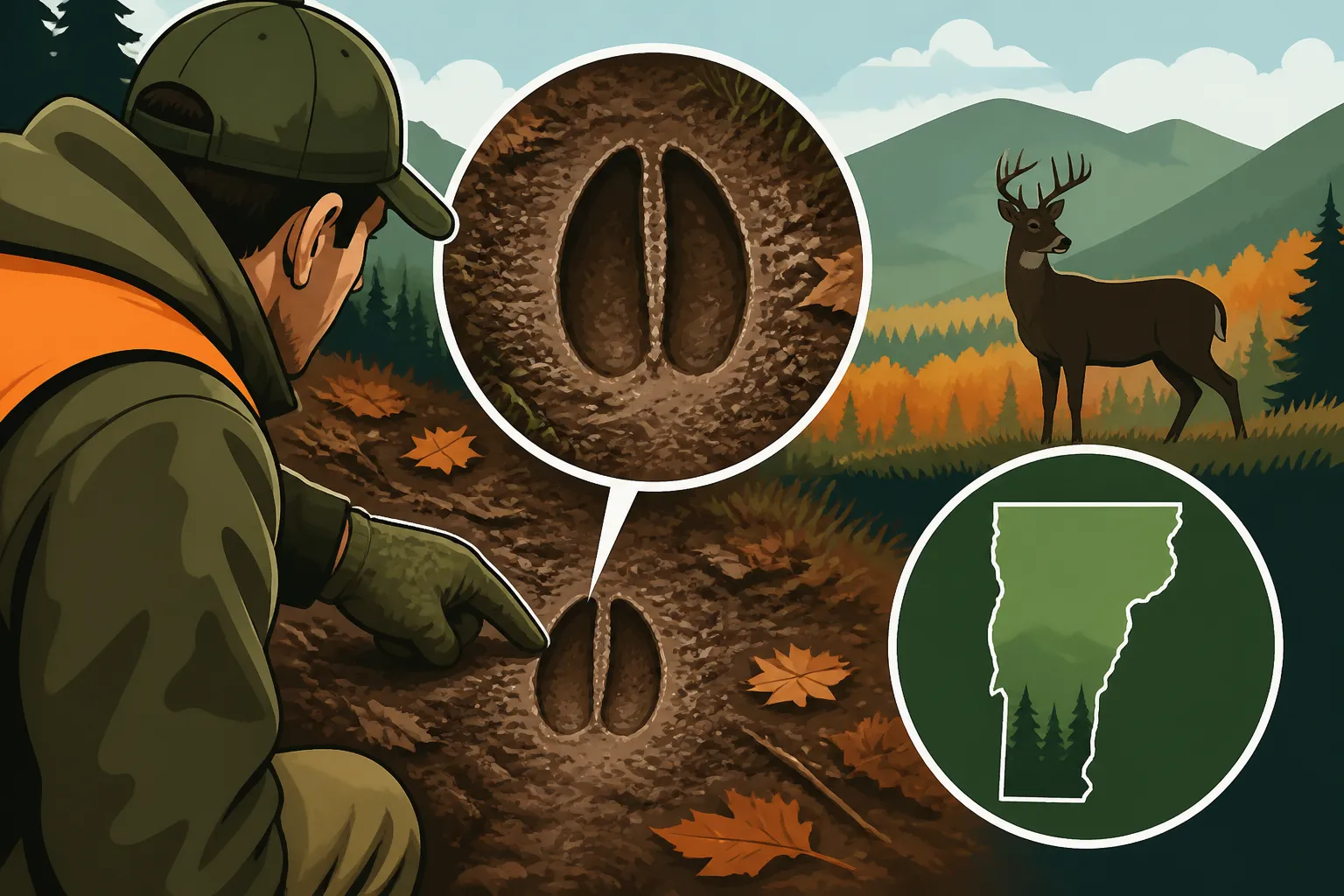
This is where mud shines. When the ground is soft and saturated, every step a deer takes leaves a distinct, undeniable impression. A clear hoof print in soft mud after a rain shower isn't just a sign; it's a timestamped photograph of a deer's recent passage. Unlike faded rubs or sun-baked tracks, fresh mud sign is crisp, sharp, and unmistakably recent. You can almost feel the deer's presence when you see it.
But it’s not just hoof prints. Mud also records a host of other critical activities. Perhaps you'll find the distinct paw prints of a coyote trailing a deer, or disturbed earth where a buck has rooted for acorns. You might even spot the impression of a deer having recently lain down for a midday nap. This immediacy allows you to make real-time decisions, transforming your scouting from guesswork into a focused, strategic effort. If you find fresh tracks leading into a thicket, you know there’s a high probability deer are in there, or passed through very recently. This kind of intel is invaluable for setting up a stand or planning a tactical still-hunt. When you're Scouting Vermont Public Land Before Season, zeroing in on these muddy hotspots can give you a significant advantage.
Decoding Deer Tracks: The Finer Details
Once you find tracks in the mud, the real detective work begins. It’s not enough to simply see a track; you need to understand the story it tells. From distinguishing between a buck and a doe to determining how recently the track was made, every detail matters.
Identifying Buck vs. Doe and Age
Deer tracks, while similar, do offer clues to the animal's sex and even approximate age. Generally, mature bucks tend to have wider, more blunt hooves compared to the daintier, more pointed tracks of a doe. Because of their heavier body weight, a buck's tracks might also appear deeper and more splayed, especially the front hooves, as they bear more weight. Does, on the other hand, typically leave tracks that are narrower and often have a more distinct "heart" shape.
Another key indicator is the presence of dew claw impressions. While all deer possess dew claws, they are far more likely to register in the mud with heavier, faster-moving, or larger deer – all characteristics that often point to a mature buck. If you see distinct dew claw marks in soft mud, it’s a strong signal you're on the trail of a substantial animal. Stride length also provides insight; a longer, more deliberate stride often signifies a bigger, more mature deer. A series of tracks can reveal the animal's pace: a walking deer maintains a consistent, measured stride, while a running or bounding deer will leave widely splayed tracks with a much longer, irregular stride. You'll often notice these nuances when Reading a Green Mountain Deer Yard, where deer frequently travel through varying snow and mud conditions.
| Feature | Buck Track (Mature) | Doe Track (Mature) |
|---|---|---|
| Shape | Wider, rounder, blunter toe | More pointed, narrower, often heart-shaped |
| Size | Typically larger overall | Generally smaller overall |
| Splay | Often splayed outward, especially front | Straighter, less splayed |
| Dew Claws | More likely to register in soft mud | Less likely to register, unless running |
| Depth | Deeper impression due to heavier weight | Shallower impression |
| Stride | Longer, more deliberate | Shorter, more delicate |
Aging Tracks: The Story of Time
This is arguably the most crucial aspect of mud-reading. A track tells you what was there, but its freshness tells you when. Fresh tracks will have crisp, sharp edges, almost as if they were just pressed into wet clay. You might even observe small displaced mud particles or water still slowly seeping into the deepest parts of the print. The mud within the track will still be moist and pliable to the touch.
As tracks age, their edges begin to soften and lose that distinct definition. Rain will gradually fill them, the sun will dry and crack the mud, and wind will blow leaves, dirt, or debris into them. A track that's only a day old, especially if exposed to direct sunlight or heavy dew, will look significantly different from one made just an hour or two ago. The moisture level of the mud itself is a key indicator: is it still glistening wet, or has a dry crust formed on the surface? Knowing how to age tracks is vital for making informed decisions. If you're seeing pristine, sharp tracks, you know deer are currently using that area. This intel is invaluable when trying to decide if it's worth setting up or pursuing a specific line of travel. For instance, when exploring a Hunting a Champlain Valley Dairy Farm Edge after a light rain, fresh tracks in the soft, churned earth will be an unmistakable sign of recent activity.
Interpreting Direction and Pace
Don't just examine individual tracks; look at the entire sequence. The leading edge of the hoof print, where the hooves first struck, points forward. Observe how the mud is displaced – it will invariably be pushed slightly in the direction the deer was moving. This simple detail is your primary compass when trying to determine where a deer is headed.
Pay close attention to the stride and gait. A deer walking casually will leave a fairly straight, consistent line of tracks. A deer trotting will have a slightly longer, more spaced-out stride. A running or bounding deer, perhaps spooked or moving quickly, will leave very long, widely splayed tracks. You might even see all four hooves landing in different spots or bunched together, indicating speed and urgency. Understanding the pace can give you an idea of the deer's demeanor: was it casually browsing and likely still close, or was it fleeing from something? When you're actively tracking, following a consistent line of fresh tracks is the most direct way to get closer to a deer, especially when they are heading into Where Vermont Bucks Bed in Thick Cover. Utilize mapping apps like GoHunt to mark the direction and follow cautiously, always anticipating what the deer might do next.
Beyond Tracks: Other Muddy Clues
Deer don't just leave tracks in the mud; they leave a whole range of other valuable signs that can tell you a detailed story about their activities. Expanding your focus beyond just footprints can unlock a deeper understanding of deer behavior in your hunting area.
Muddy Scrapes and Rubs
During the pre-rut and especially during Hunting the Rut in Early-to-Mid November, bucks become incredibly active, leaving behind tell-tale signs like rubs on trees and scrapes on the ground. While rubs are generally on trees, scrapes often feature a patch of disturbed earth, typically pawed clean, with an overhanging branch. If this scrape happens to be in a muddy area, the disturbed earth will be even more evident, becoming a clear focal point.
A fresh muddy scrape will look as if someone just raked the ground. The mud will be moist, possibly still clumpy, and you’ll frequently see distinct hoof prints within or immediately surrounding the cleared area. The overhanging branch above the scrape might also have fresh antler damage, showing where the buck has worked it with his head. Older scrapes in mud, by contrast, will have dried, cracked earth, or leaves will have been blown back into them, obscuring the fresh appearance. Finding a hot, fresh muddy scrape is a strong indicator that a buck is actively working that area, making it an excellent spot for a stand. While rubs themselves aren't in the mud, you'll often find fresh tracks in the mud leading directly to a newly rubbed sapling, creating a clear link between the buck's travel path and his rutting activity.
Feeding and Browsing Sign in Soft Ground
Deer are almost constantly feeding, and when they do so in soft, muddy areas, they leave behind obvious clues about their recent meals. Look for disturbed earth where they’ve rooted around for acorns, beechnuts, or other mast crops. This is especially telling if it's been Hunting After a Poor Acorn Year, as deer will work harder to find whatever food sources are available.
In agricultural regions, such as those found in the Champlain Valley, deer frequently browse along field edges. If a field has recently been harvested, you might find tracks in the soft earth where deer have been picking up dropped grains or leftover silage. This is particularly true if you are Hunting a Standing Apple Orchard or near a clover plot, where deer will actively seek out nutritious forage. Fresh deer droppings found in muddy areas are another obvious sign; the appearance of the droppings (moist, dark, and shiny) combined with the fresh tracks around them can confirm that deer have been recently feeding in that precise spot. Also, look for areas where vegetation has been nipped or torn at low levels, with fresh tracks in the mud indicating where the deer stood while feeding. This can often be observed along swamp edges, near beaver flows, or in regenerating clear-cuts where tender shoots are abundant.
Bedding Areas and Travel Corridors
Finding a fresh deer bed in soft mud is like hitting the jackpot for a hunter. A deer bed will be an oval-shaped depression in the ground, and if it's fresh, the mud within it will still be moist and compacted, sometimes even showing the faint impression of the deer's coat. The edges of the bed will be crisp and well-defined.
These muddy beds are often found in sheltered spots offering good thermal cover, perhaps on a sunny slope on a cold day, or tucked away in dense cover away from common Hunting Pressure on Vermont Public Land. If you discover multiple fresh beds in close proximity, you've likely located an active bedding area. Travel corridors, or well-used deer trails, frequently cross muddy sections, especially near creeks, wet swales, or low-lying depressions. These muddy sections of trails will be choked with fresh tracks if they are actively being used. Pay close attention to the number of tracks and their freshness to gauge the intensity of use. These natural funnels often lead to Late-Season Food Sources for Vermont Whitetails, making them strategic places to intercept deer. Utilize modern mapping tools like GoHunt to identify these low-lying areas or natural pinch points on a topo map. Overlaying satellite imagery can help you visualize these natural funnels that force deer through muddy bottlenecks, allowing you to focus your efforts.
Timing and Terrain: Maximizing Your Mud-Reading Success
Knowing what to look for is only half the battle; knowing when and where to look for the freshest mud sign is the other. The timing of your scouting trips and your choice of terrain can dramatically influence your success in finding actionable intel.
Post-Rain Scenarios: The Prime Opportunity
The most obvious and impactful time to read mud is directly after a rain shower or a prolonged period of heavy rain. A fresh rainfall saturates the ground, and any subsequent deer movement leaves an almost perfect impression. This essentially "resets the clock" for sign reading, providing a clean slate for new activity. If you can get out into the woods immediately after a rain, or a few hours later, you will be looking at the freshest sign possible. This is particularly valuable during the early archery season or the Hunting the Regular Archery Opener in October, when falling leaves and dry conditions can otherwise obscure ground sign.
While heavy, torrential downpours can wash away delicate tracks, a gentle, soaking rain that softens the earth without creating rushing water is truly ideal. Even after patchy rain, make sure to check areas known for holding moisture, such as shaded creek bottoms or dense softwood thickets. Combining this knowledge with your hunting strategy is key. If it rains overnight, plan to scout or hunt key travel corridors and muddy areas first thing in the morning. This is one of the best ways to gather fresh intelligence before a hunt or during a break in your active hunting.
Low-Lying Areas and Water Crossings
Vermont's landscape is crisscrossed with countless small streams, wet drainage ditches, beaver flows, and marshy low spots. These areas are natural magnets for mud and, consequently, for deer tracks. Deer frequently use these wet areas for cover, to access water, or as convenient routes to move between different parts of their home range.
Focus your scouting efforts particularly around beaver ponds, stream crossings, and the edges of swamps. These are places where deer have to get their feet wet, and thus have to leave sign in the soft earth. You can learn an immense amount about what deer are doing by checking these natural bottlenecks. Consider how Wind and Thermals in Steep Green Mountain Terrain might also influence how deer use these low-lying areas. In extremely cold weather, deer might avoid overly wet spots, but in moderate temperatures, these areas offer both water and often denser cover. Specific regions, like the deltas of rivers flowing into Lake Champlain or the wet bottomlands of the Connecticut River Valley, are prime locations to find excellent mud sign due to their constant moisture and rich habitat. An area like Hunting a Beaver Flowage Edge at Dusk can be teeming with fresh tracks as deer come out to feed.
Field Edges and Logging Roads
While scouting thick timber can be an arduous task, the edges of agricultural fields and old logging roads offer excellent, often easier opportunities for reading mud. Deer frequently utilize these transitional zones as efficient travel routes and prime feeding areas, making them ideal places to find concentrated sign.
Farm fields, especially those planted with corn, soy, or hay, often have soft, churned-up earth around their perimeters. Deer will consistently walk these edges, leaving clear tracks in the muddy soil as they move between bedding cover and feeding opportunities. This is particularly effective if you are Hunting a Funnel Between Two Woodlots that leads directly into a field. Old logging roads, even those that are overgrown and seemingly forgotten, often become muddy corridors after a rain. Not only do they collect water, but the disturbed earth from past vehicle traffic creates a perfect substrate for holding tracks for extended periods. These roads often serve as major travel arteries for deer, especially mature bucks looking to avoid dense undergrowth. When scouting these areas, pay close attention to where deer are consistently entering and exiting the field or road. Are they utilizing a certain pinch point or crossing? This can indicate a prime stand location or a place to intercept a deer moving between feeding and bedding areas. Don't forget to use your GoHunt app to mark these hotspots for future reference!
Disclaimer
The information provided in this guide is intended for educational and entertainment purposes only. Hunting regulations and conditions can change rapidly. Always consult the most current Vermont Fish & Wildlife Department regulations and local land-use rules before engaging in any hunting activities. Safety should always be your top priority.