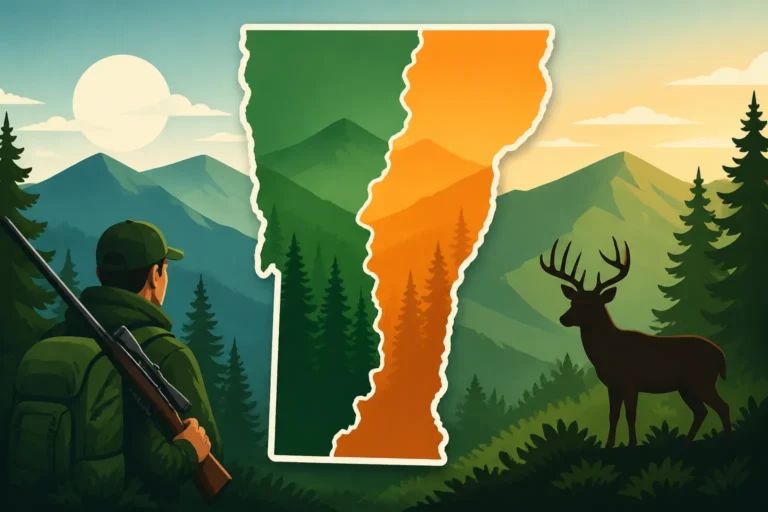
Hunting the Green Mountains High Country
The call of the Green Mountain high country is undeniable for many Vermont hunters, yet it often presents a steep learning curve. The unforgiving terrain, rapidly shifting weather, and sheer physical demands can turn a promising hunt into a grueling test of endurance and resolve. This guide is designed to help you navigate those challenges, offering practical advice and strategies for successfully hunting deer, bear, and other game in Vermont's elevated landscapes, transforming your high-country aspirations into tangible successes.
Understanding the Green Mountain High Country Environment
Hunting Vermont's high country isn't just about finding game; it's about understanding and respecting the unique environment itself. These elevated zones present a whole different set of circumstances compared to hunting the valleys or lower elevations, from the physical landscape to the temperamental weather and the specific types of habitat you'll encounter.
The Rugged Landscape and Its Impact
When we talk about the Green Mountain high country, we're picturing steep, unforgiving inclines and descents that seem to go on forever. You're not just walking; you're often climbing, scrambling over rocks, and navigating slippery leaf litter or deep snow. This isn't flat farmland hunting where you might stroll a few hundred yards to your stand. Here, a mile can feel like three, especially with a pack full of gear or, even better, a quartered deer on your back. The elevation changes aren't just scenic; they dictate everything from how game moves to how quickly you tire out.
These areas are also characterized by deep ravines, rocky outcroppings, and dense thickets that can be almost impenetrable. These features provide excellent cover for game, but they also make travel incredibly difficult for hunters. It’s easy to get disoriented, and a simple walk through the woods can quickly become an exercise in bushwhacking. The remoteness means fewer roads, fewer trails, and often, fewer other hunters, but it also means a higher degree of self-reliance is needed.
The physical impact on a hunter is profound. You need to be in good shape, no two ways about it. Carrying a rifle, a daypack, and climbing those endless hills will test your lungs and your legs. Many a hunter has underestimated the physical toll, only to find themselves exhausted miles from the truck, perhaps with a downed animal still to contend with. This landscape demands respect, preparedness, and a level of physical conditioning that often goes beyond what's needed for flatter terrain.
Unpredictable Weather Patterns
If there's one thing you can count on in the Green Mountain high country, it's that the weather will do what it wants, often with little warning. You might start your morning hunt in crisp, clear air, only to find yourself enveloped in a dense fog by midday or pounded by a sudden rain shower that turns to sleet as the afternoon progresses. Temperatures can drop dramatically with just a few hundred feet of elevation gain or as a cold front sweeps through the notches. Early snow isn't uncommon, even in October.
These rapid weather changes don't just affect your comfort; they significantly impact game movement and your ability to hunt effectively. Deer might hunker down during a heavy downpour or become more active after a cold snap. Fog can make visibility zero, turning a familiar area into a disorienting maze. Snow, while a blessing for tracking, can also make travel treacherous and recovery even harder. It's a constant game of adaptation, where flexibility and robust gear are your best allies.
This unpredictability means you can never under-prepare. Checking the forecast is a start, but always pack for worse conditions than predicted. A sunny morning doesn't mean you won't need full rain gear and extra insulating layers by noon. Being able to shed or add layers quickly is key to regulating your body temperature and staying comfortable enough to remain alert and focused throughout your hunt. Don't let a sudden change in the weather send you scurrying back to the truck prematurely.
Vegetation Zones and Habitat
As you ascend into the Green Mountain high country, you'll notice distinct changes in the vegetation, which in turn dictates the available habitat and food sources for game. At lower to mid-elevations, you'll primarily find mixed hardwoods like maples, beeches, and oaks. These areas, particularly where beech and oak are prevalent, can be crucial for mast crops that attract deer and bear. When a good acorn or beech nut crop hits, these higher ridges can be absolute magnets for game.
Further up, the landscape transitions into softwoods—spruce and fir—forming dense, dark thickets that provide excellent thermal cover and bedding areas, especially during harsh weather. These evergreen stands offer shelter from wind, rain, and snow, making them prime spots for deer to bed down or seek refuge. Identifying the transition zones, or "edges," between hardwoods and softwoods can be incredibly productive, as game will often travel along these interfaces, moving between feeding and bedding areas.
Understanding these different cover types helps you predict game movement and strategize your approach. Deer, for example, might feed in a high-elevation beech stand in the morning and then retreat to a dense spruce thicket on a leeward slope to bed for the day. Bears will often be found gorging on beech nuts on high ridges in the fall. Learning to "read" the vegetation and recognize what it offers to the animals is a critical skill for any high-country hunter, guiding your scouting and hunting decisions.
Key Game Species and Their Habits in High Country
While the high country presents many challenges, it also offers some incredible opportunities, often holding mature game that has learned to avoid pressure by utilizing these rugged, remote areas. Understanding how species like whitetail deer and black bears adapt to and thrive in this elevated environment is crucial for a successful hunt.
Whitetail Deer: Adapting to Elevation
Whitetail deer in the Green Mountain high country are a different breed, or at least they behave differently than their valley-dwelling cousins. They utilize the high country primarily for two reasons: thermal cover and escape from human pressure. During colder periods, dense softwood thickets found at higher elevations offer crucial thermal protection from biting winds and deep snow. These "deer yards" are vital wintering areas, and understanding them can clue you into deer movement patterns even outside of winter. When food sources like beech nuts or browse are abundant on high ridges, deer will gladly climb to access them, often finding a sense of security from the fewer hunters willing to make the trek.
Deer movement patterns in this terrain are highly influenced by topography. They tend to stick to the paths of least resistance, using saddles between peaks, benches along steep hillsides, and the natural contours of the land as travel corridors. Ridge lines, especially those with good cover, become superhighways for bucks cruising during the rut or deer moving between feeding and bedding. They'll often bed on leeward slopes, just below the ridge, where they can catch thermals rising in the morning and detect anything approaching from below, while also watching their backtrail. Don't forget to study Reading a Green Mountain Deer Yard before your hunt, as these areas are vital.
Food sources at elevation can be more sporadic but intensely concentrated when available. Beech stands are golden tickets for deer when they're dropping nuts. Beyond mast, deer rely heavily on browse – twigs and buds of various shrubs and young trees. After a poor acorn year in the lower elevations, high country beech ridges can become even more important. Hunters who learn to identify these high-value food sources and combine them with an understanding of travel corridors and bedding areas will dramatically increase their odds in these challenging environments.
Black Bears: Foraging and Denning High
Black bears are true high-country residents, often spending a significant portion of their active season foraging and denning in the Green Mountains. Their reliance on mast crops, particularly beech nuts, draws them to high ridges and slopes where these trees are prevalent. During a strong mast year, you can find bears gorging themselves for weeks on end, building up crucial fat reserves for the winter ahead. Identifying active beech stands, especially those with evidence of feeding (claw marks on trees, broken branches, fresh droppings), is a critical step in finding bears.
Bears have distinct travel corridors, often following ridge lines, old logging roads, and even well-worn deer trails between feeding areas and denser cover. Unlike deer, who might pick their way through thickets, bears often bulldoze a path, leaving behind subtle but identifiable signs like broken branches or fresh rubs. They'll also create "wallows" – muddy depressions where they cool off or rub against trees. Learning to distinguish fresh bear sign from older evidence is essential for focusing your efforts. Spot-and-Stalk Bear Hunting a Beech Ridge is an excellent resource to dive deeper into this.
Hunting bears in the high country requires patience and meticulous scouting. They are incredibly intelligent animals, and while they might seem less wary than a rutting buck, they'll quickly adjust their patterns if they detect human presence. Understanding their feeding preferences, travel routes, and bedding habits – often in dense, inaccessible areas – will be key. Pay attention to how they use topography to their advantage, often moving quietly and surprisingly quickly through cover, making them a formidable quarry in the Green Mountains.
Wild Turkeys and Other Upland Birds
While many people associate turkey hunting with rolling fields and woodlots, wild turkeys also utilize the Green Mountain high country, especially during the fall season. In autumn, flocks will move into higher elevations to capitalize on abundant mast crops, much like deer and bears. High ridges with mature hardwoods provide excellent feeding opportunities, and the tall, expansive trees in these areas offer ideal roosting sites. Finding these high-country roosts can be a game-changer, allowing you to intercept birds as they descend to feed in the morning.
Their movement from roosts to feeding areas can be quite predictable once you understand the terrain. They'll often fly down from their roosts on a high ridge and work their way along benches or down into valleys, scratching for nuts and insects. In the late afternoon, they'll reverse course, working their way back up to higher ground for their evening roost. This daily migration makes understanding topography and knowing where to set up critical for intercepting these wary birds. Working a Fall Flock Apart Statewide With a Bow is a great article to get more specific.
Beyond turkeys, the Green Mountain high country also offers opportunities for other upland birds. Ruffed grouse thrive in successional forests, and you'll often find them in regenerating clear-cuts, along old logging roads, or in pockets of mixed forest at various elevations. Their explosive flush can be startling, but their presence indicates healthy forest habitat. Woodcock, while often found in wetter, lowland areas, can also be encountered along small seepages or brushy cover at mid-elevations during their migration through Vermont, particularly where the soil is soft and worm-rich.
Scouting Strategies for Elevated Terrain
Successful high-country hunting in Vermont isn't just about showing up; it's about meticulous preparation and smart scouting. The sheer scale and ruggedness of these mountains demand a strategic approach, blending modern technology with good old-fashioned boots-on-the-ground effort.
Pre-Season Map and Satellite Reconnaissance
Before you even step foot in the woods, your scouting should begin from the comfort of your home. Modern digital mapping tools like onX Hunt or GoHunt are absolute game-changers for high-country hunters. These platforms allow you to pour over detailed topographic maps, satellite imagery, and even land ownership boundaries, all from your computer or phone. You can identify potential access points, study contour lines to understand the steepness of slopes, and pinpoint saddles, benches, and draws that act as natural funnels for game.
The satellite imagery is invaluable for identifying different vegetation types, such as dense softwood thickets (prime bedding or thermal cover) versus open hardwoods (potential feeding areas). You can mark specific points of interest, like a suspicious-looking dip in a ridge that might be a saddle, or a darker patch of timber on a leeward slope that could hold deer. Look for natural pinch points where multiple ridges converge, or areas where thick cover meets a more open hardwood stand. These are often high-traffic zones for game moving between feeding and bedding areas.
Don't just look at one potential spot; plan multiple entry and exit routes. The Green Mountains are vast, and having a plan B (or C) for access or for getting a downed animal out is crucial. Mark potential bail-out points, water sources, and any existing trails or old logging roads. The more thoroughly you "hunt" the area on your map, the more efficient and successful your physical scouting and actual hunt will be. Remember, technology is a powerful tool to complement your real-world experience. You might also find Scouting With the Vermont Fish and Wildlife App helpful for official data.
Boots-on-the-Ground Scouting
No amount of digital map analysis can replace the invaluable information gained from boots-on-the-ground scouting. Once you've identified promising areas on your maps, it's time to hit the woods. This is where you verify your assumptions and discover the subtle nuances that satellite imagery can't show. You're looking for fresh sign: rubs and scrapes from bucks, tracks along trails and creek bottoms, droppings, and browse lines that indicate active feeding. Pay close attention to historical sign too – old rubs and trails often remain productive year after year.
While scouting, focus on learning how deer and other game actually use the terrain you've identified. Where are the subtle humps and hollows they navigate? Which side of the ridge do they prefer for travel? You'll also get a real feel for the wind and thermals, which behave differently in steep country. What the forecast says at the base of the mountain might be completely different at 2,500 feet. Understanding these micro-thermals and localized wind currents is absolutely critical for effective hunting, especially when setting up a stand or planning a still-hunt. Wind and Thermals in Steep Green Mountain Terrain offers excellent insights into this complex topic.
This physical reconnaissance also helps you learn the lay of the land, building a mental map that will serve you well during the hunt. Identify specific trees, rock formations, or other landmarks that can aid navigation, especially in low light or fog. This isn't just about finding game; it's about building confidence in your ability to move through the terrain efficiently and safely. The more time you spend on the ground, the more intimate your knowledge of the area becomes, and that knowledge directly translates to hunting success.
Leveraging Trail Cameras
Trail cameras can be incredibly effective scouting tools in the high country, but they require strategic placement and careful management. Don't just hang them randomly; place them on identified travel corridors like saddles, benches, natural funnels, or along the edges of dense cover. Look for pinch points where deer are naturally funneled into a narrower area due to terrain features. If you've found a high-elevation food source like a good beech stand, cameras strategically placed on the trails leading into it can reveal when and how game is using it.
Managing trail cameras in remote, high-country locations comes with its own set of challenges. Battery life is paramount, especially in cold weather, so investing in good quality, long-lasting batteries or external power sources is wise. Consider cellular trail cameras if you want real-time intelligence without disturbing the area with frequent visits, though cell service can be spotty in many high-country areas. Always check your service provider's coverage maps before relying solely on cellular cameras in remote zones. You will find more specific guidance in Where to Hang a Camera on a Logging Road.
Interpreting the data from your cameras is the final, crucial step. Don't just look at the pictures; analyze the timing, the direction of travel, and the types of animals you're seeing. Are bucks moving through at night or during daylight hours? Are they using a particular trail more than others? This information can inform your stand placement, hunting times, and overall strategy. It's like having a team of silent, tireless scouts working for you around the clock, revealing patterns you might never uncover otherwise.
Hunting Methods Tailored for the High Country
Hunting in Vermont's Green Mountain high country demands methods that are as rugged and adaptable as the landscape itself. What works in a flat agricultural field likely won't cut it on a steep, timbered ridge. Success here often comes down to patience, stealth, and a deep understanding of how game uses the challenging terrain.
Still-Hunting and Slow Tracking
In the dense, broken terrain of the Green Mountains, still-hunting is often one of the most effective strategies. This isn't about sitting stationary; it's about moving through the woods with extreme stealth, taking a few steps, then pausing for several minutes to observe, listen, and scan. You're covering ground, but at a glacial pace, allowing you to pick apart the cover and detect subtle movements or sounds. Focus on moving into the wind or with a quartering wind, always thinking about how game might detect you. Still-Hunting Green Mountain National Forest Timber explains this in detail.
When you do move, make every step count. Pick up your feet, avoid snapping twigs, and use terrain features – fallen logs, large rocks, the backside of a small rise – to break up your silhouette. The varied terrain of the high country offers natural advantages for stealth; use the undulations and thick cover to mask your approach. This method is particularly effective when you're targeting areas identified through scouting as travel corridors or feeding areas, especially during the rut when bucks are actively cruising for does.
If fresh snow covers the ground, still-hunting can transition into slow tracking. The snow not only reveals fresh sign but also muffles your footsteps, giving you a distinct advantage. Focus on identifying fresh tracks, particularly those of a mature buck, and then meticulously follow them, moving slowly and deliberately. The moment you pick up a fresh track, your senses should sharpen. Every pause should involve intensely scanning the cover ahead and to the sides, anticipating where the animal might be bedded or moving. This is a game of chess, not checkers, where patience and precision are rewarded.
Strategic Stand Placement
While still-hunting is productive, strategic stand placement also plays a crucial role, especially when you've identified key travel corridors or feeding areas. In the high country, your stand might not be overlooking an open field, but rather a subtle saddle, a bench along a steep hillside, or a pinch point where cover funnels game. Portable stands, like lightweight climbers or hang-ons, are invaluable here because they allow you to adapt to new information or changing game patterns. They can be grueling to pack in, but the flexibility they offer is often worth the effort.
When choosing a stand site, always consider thermals and wind direction. In mountainous terrain, thermals play a significant role. In the morning, cold air sinks, pulling your scent down into the valleys. In the evening, as the air warms, thermals rise, carrying your scent uphill. Plan your entry and exit routes carefully to avoid blowing your scent through your hunting area. Often, this means approaching from below in the morning and above in the evening, or using specific ridge lines or creek bottoms that mitigate your scent cone. Remember, even a slight shift in wind can expose you, so having multiple options or being ready to move is key.
Focus your stand placement on areas where you expect game to be moving naturally, not just on food sources. Look for trails leading to or from bedding areas, or along benches that offer easier travel across steep slopes. Don't forget to study Climbing to a Green Mountains High-Elevation Bench as it will help you understand the dynamics. Positioning your stand slightly off a primary trail can also be effective, catching deer that are skirting the main route, especially if they are pressured. The goal is to intercept game when they are relaxed and unaware, maximizing your shot opportunity.
The Art of the Ridge Hunt
Hunting ridgelines is a time-honored strategy in the Green Mountain high country, especially during the peak of the rut. Bucks, particularly, will utilize ridgelines as efficient travel corridors when searching for does. These elevated routes offer them a panoramic view of their surroundings, allowing them to spot potential mates or danger, and the slightly less dense cover often found along ridges makes for easier travel. During the rut, a buck might cruise a ridge for miles, scent-checking for receptive does on either side.
To effectively hunt a ridge, you need to understand how deer use both sides of it. They might travel just below the crest on the leeward side, sheltered from the wind, or walk right on top if the cover is sufficient. If you're still-hunting, working just below the crest on the leeward side can be effective, allowing you to peek over the top periodically. If you're planning a stand, a saddle in a major ridge line is often a gold mine, as it forces deer to cross a more confined area when moving between drainages or larger sections of the mountain. Check out Hunting a Ridge-Top Saddle for Rutting Bucks for more in-depth advice.
Glassing from a ridge can also be incredibly productive, especially in areas with more open timber or clear-cuts. Find a vantage point with a good view, set up your binoculars or spotting scope, and patiently scan for movement. The ability to spot game at a distance and then plan a stalk can be a huge advantage in these expansive landscapes. Remember that visual cues are often subtle – the flick of an ear, a patch of deer hair, or a horizontal line in a vertical world can betray an animal's presence.
Essential Gear for Green Mountain High Country Hunts
Hunting in Vermont's Green Mountain high country isn't just physically demanding; it requires specialized gear that can withstand the rigors of the terrain and the whims of the weather. Skimping on quality here can mean the difference between a successful, comfortable hunt and a miserable, potentially dangerous one.
Layering for Dynamic Conditions
Perhaps no other aspect of high-country gear is as critical as your layering system. The Green Mountains are notorious for rapid, dramatic weather changes, and intense physical exertion followed by long periods of sitting still. Your base layer should wick moisture away from your skin, preventing chills when you stop moving. Merino wool or synthetic fabrics are excellent choices here, as cotton will soak up sweat and hold it against you, a recipe for hypothermia in cold weather. Best Base Layer for a September Archery Sit is a good starting point.
Your insulating mid-layers are crucial for retaining warmth. Fleece, down, or synthetic puffy jackets work well, providing warmth without excessive bulk. The key is to have multiple mid-layers that you can easily add or remove as your activity level and the temperature change. A good rule of thumb is to start slightly cold, knowing you'll warm up quickly once you begin climbing. Then, as you approach your hunting spot or settle into your stand, you can add layers to stay warm.
Finally, your outer shell needs to be both waterproof and windproof. Green Mountain rain can be relentless, and high-country winds can cut right through lesser fabrics. This layer protects you from the elements while allowing moisture vapor from your body to escape. Look for breathable membranes that can handle prolonged exposure. And always, always pack an extra set of dry socks and a warm hat; they can be lifesavers. You might find Layering for a Wet Green Mountain Day to be a helpful guide.
Navigation and Communication
In the vast and often remote Green Mountain high country, robust navigation and communication tools are non-negotiable. While a smartphone app like onX Hunt is incredibly powerful, it should never be your sole navigation device. Always carry a dedicated handheld GPS unit with extra batteries, or a physical map and compass. Learn how to use them proficiently; electronics can fail, and paper maps don't run out of battery. Marking your truck, your stand, and any key landmarks on your map is crucial. Best GPS App for Vermont Public Land can help you choose the right tools.
Cell service in much of the high country is nonexistent or extremely spotty. This is where a satellite communicator becomes an essential piece of safety gear. Devices like those from Garmin or Zoleo allow you to send and receive text messages, share your location, and, most importantly, send an SOS signal in an emergency, even when outside of cell service range. These are not luxuries; they are vital for remote hunting safety.
Beyond fancy electronics, don't forget the basics: a loud whistle to signal for help, a powerful headlamp with extra batteries for pre-dawn hikes and post-dusk game recovery, and a small, reliable fire-starting kit. Being prepared to spend an unexpected night in the woods is a sober reality when hunting these remote mountains, and having these essential items can literally save your life.
Packs, Footwear, and Optics
Your pack needs to be comfortable and capable of carrying everything you need for a full day, or even multiple days, in the high country, including water, food, extra layers, and potentially game meat. Look for a pack with a good internal or external frame that distributes weight efficiently to your hips, not just your shoulders. The ability to compress the pack when empty and expand it for a heavy load is a huge advantage. If you're serious about packing out an animal, a dedicated pack frame or a large hunting pack with integrated meat shelf is a wise investment. Best Pack for a Northeast Kingdom Moose Hunt provides useful insights here.
Footwear is another non-negotiable item. You need durable, waterproof boots with excellent ankle support and aggressive traction. The Green Mountains feature steep, rocky, often muddy or snow-covered terrain. A twisted ankle miles from the nearest road can quickly turn into a serious emergency. Ensure your boots are well broken-in before the season starts to avoid blisters and discomfort. Consider insulation levels appropriate for the temperatures you expect to encounter. Boots for Green Mountain Ridge Terrain offers advice on selecting the right pair.
Finally, quality optics are not a luxury but a necessity for high-country hunting. A good pair of binoculars (10×42 is a common choice) allows you to pick apart distant cover, identify game, and evaluate animals without unnecessary movement. A rangefinder is also essential for accurate shot placement in varied and often deceptive terrain. Distances can be hard to judge uphill or downhill, and a rangefinder takes the guesswork out of it. If you're hunting more open areas or clear-cuts, a compact spotting scope might also prove useful for extended glassing sessions. Best Binoculars for a Northeast Kingdom Bog also contains useful considerations for glassing in mountainous regions.
Navigating Public Access and Regulations
Hunting in Vermont's Green Mountain high country means often utilizing extensive public lands. While these lands offer incredible opportunities, they come with specific rules and regulations that every hunter must understand and respect to ensure a safe and legal hunt.
Green Mountain National Forest Specifics
The Green Mountain National Forest (GMNF) encompasses a vast amount of rugged, high-country terrain and is a prime destination for many Vermont hunters. However, it's not a monolithic entity; it has specific rules regarding vehicle access, camping, and even certain activities. Most of the GMNF is open to hunting, but understanding its boundaries and designated areas is crucial. Use detailed maps, including those from onX Hunt or GoHunt, to identify GMNF land, which is clearly marked.
Vehicle access within the GMNF is often restricted to designated roads. Many roads are gated, requiring you to walk or bike in, especially into more remote high-country areas. Camping is generally allowed, but there are rules regarding distance from water sources, roads, and trails, and certain wilderness areas have stricter regulations. Always check the specific district's rules (there are two main districts in Vermont) for the most up-to-date information before you head out. This due diligence ensures you're not inadvertently trespassing or violating regulations. More information can be found in Hunting Vermont's Green Mountain National Forest.
Beyond regulations, it's important to remember that the GMNF is a multi-use area. You'll likely encounter hikers, mountain bikers, and other outdoor enthusiasts. Practicing good trail etiquette and respecting other users is paramount. Adhere to Leave No Trace principles, pack out everything you pack in, and minimize your impact on the environment. This helps ensure continued access and positive public perception of hunters.
State Forests and Wildlife Management Areas
In addition to the GMNF, Vermont boasts numerous State Forests and Wildlife Management Areas (WMAs) that offer excellent high-country hunting opportunities. These areas are managed by the Vermont Department of Fish and Wildlife and can provide a slightly different hunting experience compared to the vastness of the National Forest. Some WMAs are specifically managed for certain game species or habitat types, and many include significant tracts of elevated, rugged terrain. Vermont Wildlife Management Areas will help you get started with locating these spots.
Each State Forest and WMA may have its own specific set of rules, though most fall under general statewide hunting regulations. Some might have restrictions on baiting, the use of ATVs, or even specific access points that are only open during certain seasons. For instance, some WMAs might have areas designated for particular activities or wildlife observation, where hunting might be restricted. It's always best to check the Vermont Fish and Wildlife Department's website or contact the district office responsible for the area you plan to hunt to confirm any unique regulations.
These areas can be real gems, often holding less pressured game simply because they require more effort to access. Don't overlook them in your scouting. They can range from small, secluded parcels to large, expansive tracts with miles of backcountry. Learning how these areas are managed for timber and wildlife can also give you an edge, as recent cuts or specific plantings can create prime habitat for deer, bear, and other species.
Permits, Licenses, and Blaze Orange
Before you even consider setting foot in the Green Mountain high country, you must ensure all your necessary Vermont hunting licenses and permits are in order. This includes your basic hunting license, any required big game tags (like deer or bear tags), and migratory bird permits if you're pursuing waterfowl or upland birds. There's nothing worse than having a successful hunt only to realize you're not legally permitted to be out there, or worse, you can't register your game. You can learn more about this by reading Vermont Hunting Licenses and What They Cost.
Understand the season dates for the species you're pursuing, as these can vary by weapon type (archery, rifle, muzzleloader) and sometimes by specific Wildlife Management Unit (WMU). While high country often aligns with general statewide seasons, access considerations and local nuances might exist. Make sure you're clear on antlerless permit rules and whether you hold the correct tags for the area you're hunting.
Finally, and critically for safety, adhere strictly to blaze orange requirements. During Vermont's rifle season, a significant amount of blaze orange is required, even if you are bowhunting during the Hunting a Bow During the Rifle Season Overlap. This bright color is essential for your visibility to other hunters in the dense timber and broken terrain of the high country. Always know How Much Blaze Orange Vermont Requires and wear it properly. It's not just a regulation; it's a vital safety measure that could prevent an accident, ensuring everyone comes home safely from the woods.
Overcoming High Country Challenges
Hunting the Green Mountain high country is inherently challenging, and recognizing those difficulties is the first step toward overcoming them. From the sheer physical demands to the complexities of game recovery and ensuring your safety, a proactive approach is key to success and enjoyment.
Physical Demands and Conditioning
Let's be blunt: hunting in Vermont's high country is physically brutal. It's not a stroll in the park. The sustained climbing, descending, and navigating of uneven terrain—often with a heavy pack—will test your cardiovascular endurance, leg strength, and mental fortitude. Many hunters underestimate this aspect, only to find themselves gasping for air and utterly exhausted hours into a hunt. This isn't just about discomfort; physical exhaustion can lead to poor decisions, increased risk of injury, and an inability to safely recover game.
For this reason, pre-season physical conditioning is not just recommended; it's essential. Incorporate activities that mimic hunting efforts: hiking with a weighted pack (gradually increasing the weight), stair climbing, and general strength training for your legs and core. Don't wait until a week before the season to start. Begin months in advance, building up your stamina and strength systematically. The fitter you are, the more effectively you can hunt longer, stay focused, and safely handle the challenges of the terrain.
During the hunt itself, pacing is crucial. Don't blow yourself out on the first climb. Take breaks, manage your hydration, and fuel your body properly with calorie-dense snacks. Listen to your body and know your limits. Being well-conditioned allows you to maintain peak performance throughout the day, increasing your chances of success and, importantly, ensuring you have the energy needed for game recovery—which can be even more physically demanding than the hunt itself.
Game Recovery in Steep Terrain
There's no feeling quite like downing an animal after a hard-fought high-country hunt. That elation, however, is quickly followed by the daunting realization of game recovery, especially if that animal tumbles down a ravine or comes to rest on a steep, inaccessible slope. Recovering a deer or bear from the Green Mountain high country can be a monumental task, far more challenging than the shot itself. It requires planning, muscle, and often, extra hands. The article Recovering a Deer From a Steep Ravine can give you an excellent head start on what to expect.
Preparation for recovery starts before you even pull the trigger. If possible, try to position yourself for a shot that minimizes the animal's potential to fall into an impossible location. Once an animal is down, take a moment to collect yourself, mark the last-seen spot, and then methodically track it. If it's a long recovery, prioritize getting the animal field-dressed and cooled as quickly as possible, especially in warmer weather. Game bags are essential for keeping meat clean and protected as you break down the animal into manageable pieces.
For really tough recoveries, a strong rope, a quality pack frame, and the willingness to quarter an animal on the spot are non-negotiable. Don't be afraid to call for help from hunting partners or friends. Attempting to drag an entire deer out of a steep ravine by yourself is not only incredibly difficult but also dangerous. Safety first: navigate treacherous terrain carefully, even after the shot, and always ensure your footing. The goal is to get the animal out safely and respectfully, preserving the meat you worked so hard for.
Safety and Emergency Preparedness
Hunting in remote, rugged high country inherently carries increased risks compared to hunting closer to civilization. The potential for falls, injuries, exposure, or getting lost is magnified. For this reason, safety and emergency preparedness must be at the forefront of every high-country hunt. Never assume you'll be fine; always plan for the worst-case scenario.
One of the most critical safety measures is informing someone of your hunting plans. Provide a detailed itinerary: where you'll be hunting (as specific as possible, including trailheads and intended areas), your planned entry and exit points, who you're with, and your expected return time. If you don't check in by that time, they'll know to initiate a search or call for help. A satellite communicator, as mentioned earlier, adds another layer of security, allowing you to update your status or call for assistance even without cell service.
Always carry a comprehensive first-aid kit, tailored for potential hunting-related injuries (cuts, sprains, blisters) and general outdoor emergencies. Include items like pain relievers, bandages, antiseptic wipes, and any personal medications. Beyond the medical kit, pack essentials for an unexpected night out: a lightweight emergency shelter or tarp, extra warm layers, a reliable fire starter, and high-energy food. Being self-sufficient for 24-48 hours in the backcountry can make all the difference in a survival situation. The Green Mountains are beautiful but unforgiving, and a prepared hunter is a safe hunter.
| Feature | High Country Hunting | Valley Hunting |
|---|---|---|
| Terrain | Steep, rugged, rocky, deep ravines, dense timber | Flatter, rolling hills, open fields, woodlots |
| Physical Demands | Very high: intense climbing, long hikes, difficult recovery | Moderate: easier walking, often closer to access |
| Weather | Highly unpredictable, rapid changes, colder, windier, early snow | More stable, less extreme temperature swings |
| Game Pressure | Generally lower due to difficult access | Generally higher, more hunters per acre |
| Game Behavior | Deer use thermals, saddles, and benches; bears seek mast on ridges | Deer use field edges, creek bottoms, distinct travel lanes |
| Scouting | Critical map work, extensive physical scouting, remote cameras | Map work, observing field edges, less intense physical scouting |
| Navigation | Essential: GPS, map/compass, satellite communicator, redundancy | Important: often cell service available, clearer landmarks |
| Gear Emphasis | Layering, durable boots, high-capacity pack, safety equipment | Comfort, appropriate camo, basic navigation |
| Recovery | Extremely challenging, often requires quartering, extra hands | Easier access, can often drag whole animal, less strenuous |
| Solitude | High potential for solitude | Moderate to low, more encounters with other hunters |
Disclaimer
This article is for general informational purposes only and does not constitute professional advice. Laws, prices and regulations vary by location and change over time. Consult a qualified professional for guidance on your specific situation.