Hunting Near the New York Border
Hunting close to state lines can often feel like navigating a maze, with different regulations, terrain, and even deer densities demanding a unique approach. It's easy to get discouraged when you're staring at a map, wondering if that great-looking woodlot just over the border is even accessible or if the deer there behave differently. This guide is all about helping you understand the unique opportunities and challenges of hunting near the New York border in Vermont, giving you the insider knowledge to make your next hunt a success.
Understanding the Unique Landscape of Western Vermont
When you consider hunting near the New York border in Vermont, you're really looking at a fascinating mix of environments. This isn't just one type of terrain; it's a convergence of several distinct geographical features that all play a critical role in how game moves and where you'll find it. Understanding these subtle shifts is key to unlocking consistent success.
The Champlain Valley Influence
The most dominant feature along much of Vermont's western edge is, without a doubt, the Champlain Valley. This expansive, relatively flat, and fertile agricultural region hugs Lake Champlain and extends inland for several miles. We're talking about rolling dairy farms, vast corn and hay fields, and interspersed woodlots that often follow river drainages or break up the agricultural monotony. The deer here are often bigger-bodied, with access to rich food sources like corn, soybeans, and alfalfa. They live a different life than their mountain cousins, often bedding in dense field edges, standing corn, or thick swampy areas adjacent to open fields. Hunting these areas means understanding field-to-cover transitions, pinch points between woodlots, and how deer use fencerows for travel. The hunting pressure can be high on accessible public parcels, but if you secure private land access, the rewards can be significant. The flat terrain often allows for longer shots with rifles, but it also means less cover to conceal your approach. Hunting a Champlain Valley Dairy Farm Edge offers more insights into this specific scenario.
Taconic Mountain Foothills
As you move south along the New York border, especially in the southwestern part of Vermont, the landscape begins to transition. The Champlain Valley gives way to the northern reaches of the Taconic Mountains. These are generally lower, less rugged mountains than the main spine of the Green Mountains, characterized by steep, wooded hillsides, narrow valleys, and often a mix of hardwoods and softwoods. Here, you'll find fewer expansive farms and more timberland, both private and public. Deer behavior shifts significantly; they become more reliant on natural browse, acorns from oak ridges, and cover from dense conifer stands. Access can be tougher, with steeper climbs and thicker undergrowth. Hunting here often involves still-hunting along benches, finding funnels in saddles, or locating old logging roads that provide natural travel corridors. The Taconics offer a different kind of challenge and a different kind of beauty.
Green Mountain Proximity
While the main spine of the Green Mountains runs through the center of Vermont, their western foothills often extend quite close to the New York border, particularly in central and northern segments of western Vermont. These areas bring higher elevations, more dramatic terrain changes, and expansive, unbroken timber. You'll encounter rugged slopes, deep ravines, and extensive softwood cover mixed with mature hardwoods. Deer in these regions are often tougher, smaller-bodied, and incredibly wary. They move through thick cover, often utilizing elevation changes to their advantage. Scouting here is paramount, as finding deer sign in such vastness can be daunting. Understanding Wind and Thermals in Steep Green Mountain Terrain becomes absolutely critical for success, as swirling winds can quickly give away your position. While challenging, these areas can hold older, less pressured bucks who have learned to live in solitude.
Public Land Opportunities Along the Border
One of the biggest concerns for hunters, especially those new to an area, is finding accessible public land. Thankfully, Vermont offers a variety of public hunting grounds right up against the New York border. However, these aren't all created equal, and understanding their unique characteristics is vital for effective scouting and hunting.
Green Mountain National Forest Western Edge
The Green Mountain National Forest (GMNF) is a vast expanse of federal land, and its western boundary, particularly in the southern and central parts of the state, often abuts or comes very close to the New York border. This is big timber country, often rugged and remote, offering a true backcountry hunting experience. You'll find a mix of mature hardwoods, dense spruce-fir stands, and occasional clear-cuts that provide excellent browse. Deer here are often spread out, and consistent success means putting in the miles. Expect significant elevation changes, requiring good physical conditioning and proper gear. Access points are usually off numbered forest roads, but the real hunting often begins a mile or more from the truck. This land tends to see less hunting pressure the deeper you walk, making it a great option for those willing to put in the effort. Always be sure to carry a reliable mapping system, like onX Layers for Vermont Land Status, and be familiar with the GMNF's specific rules regarding camping, vehicle use, and stand placement. Hunting Vermont's Green Mountain National Forest provides a more detailed look.
State Forests and Wildlife Management Areas
Beyond the GMNF, Vermont manages numerous State Forests and Wildlife Management Areas (WMAs) that are often strategically located to provide public access to diverse habitats. Many of these are found within the Champlain Valley or in the foothills bordering New York. State Forests often provide good timber hunting opportunities, sometimes with old logging roads that make for good walking. WMAs, on the other hand, are specifically managed for wildlife habitat, meaning you might find food plots, diverse forest management practices, and wetland areas that attract a variety of game. Examples might include areas near the Poultney River or along the Lake Champlain shoreline where waterfowl and deer thrive. These areas can be smaller than the GMNF but often have easier access and concentrated game. However, with easier access comes increased hunting pressure, especially on weekends and during the rifle season. Vermont Wildlife Management Areas is a good resource to explore for specific locations. Before heading out, always check the Vermont Fish & Wildlife Department website for any specific regulations or seasonal closures pertaining to the individual WMA or State Forest you plan to hunt.
Smaller State-Owned Parcels and Conservation Easements
Don't overlook the smaller, less obvious public hunting opportunities that exist near the border. Vermont has numerous smaller state-owned parcels, often marked by official signage, that might only be a few dozen or a couple hundred acres. These can be incredible hidden gems, especially if they are surrounded by private agricultural land, as they act as natural magnets for deer. Similarly, some land trusts and conservation organizations hold conservation easements that allow public hunting. These often fall under specific rules, so it's critical to research each property individually. These smaller parcels require diligent scouting, often using satellite imagery and plat maps available through tools like onX Hunt, to identify access points, property lines, and potential bedding or feeding areas. They can be overlooked by many hunters, offering a chance at less pressured game.
Navigating Private Land and Permission
While Vermont has excellent public land, some of the best hunting, especially in the rich agricultural areas near the New York border, exists on private property. Gaining access to these parcels can be a game-changer, but it requires respect, good manners, and a clear understanding of the rules.
Building Relationships with Landowners
The most effective way to hunt private land is by building genuine relationships with landowners. This isn't about showing up a week before the season opener with a fancy offer. It's about being proactive, respectful, and offering a helping hand. Start by identifying promising properties on a map, then approach the landowners well in advance of the season, perhaps in late spring or summer. Introduce yourself, explain your intentions clearly, and always be prepared for a "no." If they say yes, offer to help around their property—mending fences, stacking wood, or assisting with chores. Being a good steward of their land, reporting anything suspicious you see, and leaving no trace are crucial. Bringing them a cut of venison after a successful hunt can also go a long way in solidifying that relationship for future seasons. Remember, you're a guest on their land, and your behavior directly impacts future access for yourself and other hunters. Getting Private Land Permission in Vermont delves deeper into this often-challenging aspect of hunting.
Understanding Vermont's Posted Land Laws
Vermont's private land laws are relatively straightforward but crucial to understand. Unlike some states where simply walking onto private land might lead to a verbal warning, Vermont's trespass laws can be quite serious. Land must be "posted" to prevent hunting without permission. Posted land is marked with clear, conspicuous signs around the perimeter, typically spaced no more than 400 feet apart, visible from all angles of approach. You absolutely cannot hunt posted land without explicit permission from the landowner. If land is not posted, hunting is generally permitted, but common courtesy dictates asking permission anyway, especially if you'll be close to residences or working farm buildings. It's always better to ask than to assume and risk a confrontation or a ticket. Knowing Vermont Posted Land Rules is essential to avoid legal trouble and maintain a good image for hunters.
Using Mapping Tools for Land Ownership
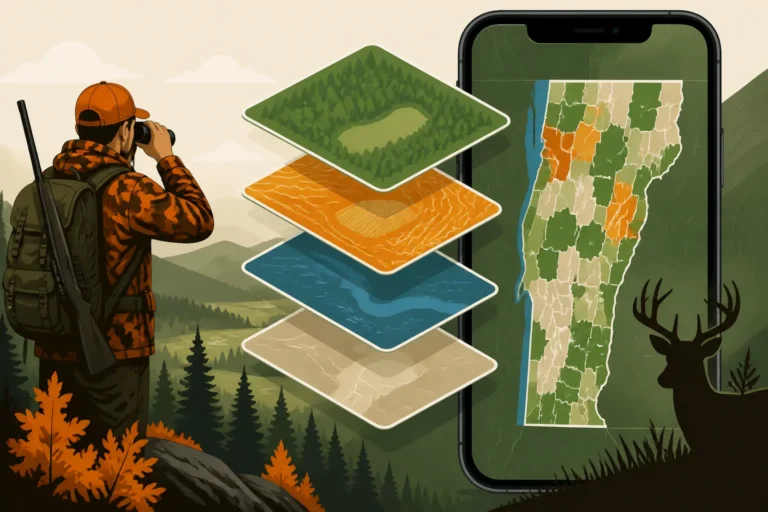
In today's hunting world, digital mapping tools are an indispensable asset for navigating private land. Services like onX Hunt are invaluable for identifying property boundaries, landowner names, and often even contact information. Before you even set foot in the field, you can use these apps to scout potential areas, identify landowners, and plan your approach for asking permission. For example, you might see a great funnel between two unposted woodlots or a small, isolated cover patch in a sea of agriculture. With onX Hunt, you can instantly see who owns that parcel, cross-reference it with local tax records if needed, and develop a plan. This saves countless hours of knocking on the wrong doors or inadvertently trespassing. GoHunt also offers resources that can sometimes include property information, further aiding in your pre-hunt research and planning for Hunting Small Private Tracts in Vermont. These tools are not just for public land; they are essential for ethical and effective private land hunting.
Key Game Species and Their Habits Near the Border
The mix of habitats along the New York border means you'll find a variety of game, each with its own behaviors influenced by the local environment. Knowing what to expect from each species can help tailor your hunting strategy.
Whitetail Deer Habits in the Western Corridor
Vermont's whitetail deer population thrives along the western corridor, especially in the Champlain Valley. Here, deer often grow larger due to the abundant agricultural food sources. Their movements are highly dictated by these food sources, moving from dense bedding cover (swamps, thickets, standing corn) to feed in fields, especially under the cover of darkness. During the rut, however, bucks will travel widely, often using fencerows, small woodlots, and creek bottoms as travel corridors. In the more mountainous Taconic foothills, deer are more reliant on mast crops like acorns and beech nuts, as well as natural browse. They'll use elevation to escape pressure and find thermal cover. Hunting these deer often means understanding their use of Scrape Lines Along a Logging Road or focusing on early morning and late evening movements along field edges. The border region is also home to some of the state's highest deer densities in certain WMUs, making antlerless opportunities more common, especially during the special October muzzleloader season or late-season hunts. White-Tailed Deer Across Vermont gives a broader overview of the state's deer population.
Black Bear Activity Near the Border
Black bears are common throughout Vermont, and the western border region, particularly where the Green Mountain National Forest or other large tracts of timber meet more developed areas, sees significant bear activity. Bears are opportunists, and while they thrive on wild mast crops like beechnuts and acorns in the timbered hills, they will readily venture into agricultural areas or even suburban fringes to find food. This means that a cornfield bordering the GMNF or a dense apple orchard near a power line cut could be prime bear hunting territory. Bear hunting in Vermont is a long season, running from September through November, with specific rules regarding baiting (where legal) and spot-and-stalk methods. In the more remote border areas, spot-and-stalk along beech ridges can be productive, especially in early fall. Closer to agriculture, understanding where bears might be crossing or feeding can lead to success. Black Bears in Vermont offers insights into their broader distribution.
Waterfowl and Small Game Opportunities
The New York border also runs along Lake Champlain, which is a major migratory flyway for waterfowl. This creates fantastic opportunities for duck and goose hunting, especially in the extensive marshes, deltas, and agricultural fields along the lake and its feeder rivers. Species like mallards, wood ducks, Canada geese, and various diver ducks can be found here. Decoying Ducks on Lake Champlain is a popular method, often requiring specialized gear like waders and boat access. Further inland, in the mixed habitats of the Champlain Valley and Taconic foothills, small game like ruffed grouse, snowshoe hare, and squirrels thrive. Grouse often prefer early successional habitat, old logging cuts, and dense stands of young timber. Snowshoe hare are found in thick softwood cover, especially in higher elevations or swampy areas. Squirrels are abundant wherever there are mature hardwoods, particularly oak and beech ridges. These species offer exciting opportunities, often as a bonus to deer hunting or as standalone pursuits during their respective seasons. Vermont Waterfowl on the Atlantic Flyway and Squirrel Hunting Vermont Hardwoods provide more context.
Challenges and Strategies for Border Region Hunting
Hunting near any state border comes with its own set of challenges, from understanding varying regulations to dealing with human and animal behavior influenced by the boundary. Vermont's New York border is no exception, and a prepared hunter is a successful hunter.
Managing Hunting Pressure
One of the most significant challenges, particularly in accessible areas or prime habitats, is hunting pressure. Land along a state border often sees pressure from hunters on both sides, and popular public land parcels can become crowded. The strategy here is often counter-intuitive: go where others won't. This might mean hiking deeper into the Green Mountain National Forest, exploring smaller, overlooked state parcels, or focusing on tough-to-access private land where you've secured exclusive permission. Hunting during weekdays rather than weekends can significantly reduce competition. If you're targeting deer, consider hunting cover that's so thick it deters others, knowing that pressured deer often seek refuge in these impenetrable spots. Learning to identify and avoid areas with high pressure, or conversely, using pressure to your advantage by setting up on escape routes, is a skill developed over time.
Understanding Wind and Thermals
The diverse topography along the New York border, from flat valley floors to rolling hills and steep mountains, makes understanding wind and thermals absolutely critical. In the Champlain Valley, prevailing winds are often predictable, but even a slight rise or dip in terrain can create localized swirling. As you move into the Taconic and Green Mountain foothills, thermals become a major factor. In the mornings, cool air sinks into valleys, carrying scent downward. As the sun rises and warms the slopes, the air begins to rise, carrying scent upward. Ignoring these natural air currents is a surefire way to spook game. Planning your approach, stand placement, and exit routes to account for changing wind and thermal patterns is non-negotiable. This might mean waiting until mid-morning for thermals to stabilize before still-hunting a ridge or setting up on a saddle where winds tend to funnel more consistently. Still-Hunting Green Mountain National Forest Timber highlights the importance of this knowledge.
Scouting Across Diverse Terrain
Effective scouting is always important, but near the New York border, it means adapting your approach to different terrain types. In the Champlain Valley, scouting might involve driving backroads, glassing fields from a distance, and walking field edges to look for tracks and rub lines. You'll focus on identifying bottlenecks between woodlots, creek crossings, and potential bedding areas in thickets. In the Taconics and GMNF, scouting becomes more physically demanding. It involves hiking steep terrain, looking for natural benches, saddles, and drainages that deer use for travel. You'll be searching for mast crops, active scrapes, and rubs, and trying to identify dense cover where deer might bed. Using digital mapping tools like GoHunt or onX Hunt to mark historical sightings, sign, and potential stand locations during your off-season scouting trips is highly recommended. Pay attention to water sources and areas where different habitat types converge, as these are often hot spots for game movement.
Gear and Logistics for a Successful Hunt
Having the right gear and planning your logistics carefully can make or break a hunt, especially in an area with varied terrain and potentially remote conditions like the Vermont-New York border. Don't skimp on preparation!
Essential Mapping and Navigation Tools
As discussed, robust mapping and navigation are paramount. A reliable GPS unit or a smartphone with a dedicated hunting app like onX Hunt, loaded with offline maps, is an absolute must. Cell service can be spotty to non-existent in many of the more remote areas of the GMNF or some State Forests. You need to be able to accurately locate property boundaries, pinpoint your stand location, mark game sign, and safely navigate back to your vehicle, even in the dark. Always carry a physical compass and map as a backup – batteries die, and electronics fail. Knowing how to use them can literally be a lifesaver. Beyond navigation, these tools are invaluable for pre-season scouting, helping you analyze terrain, identify potential pinch points, and understand land ownership before you ever set foot in the woods. Using the Fish and Wildlife App Without Cell Service is a critical skill for any Vermont hunter.
Footwear for Varied Western Vermont Terrain
Given the diversity of terrain, choosing the right footwear is crucial. If you're hunting the wet, marshy areas of the Champlain Valley or navigating muddy farm fields, a good pair of waterproof rubber boots might be ideal, offering protection from water and keeping your scent low. For the dryer, rolling hills and timber of the Taconics, comfortable, supportive leather or synthetic hiking boots with good ankle support are a better choice, especially if you'll be putting in a lot of miles. When you venture into the steeper, rockier, and more rugged parts of the Green Mountain foothills, you'll need sturdy, waterproof mountaineering-style boots with excellent traction to prevent slips and provide maximum support on uneven ground. Consider insulation levels based on the season – uninsulated for early archery, and heavily insulated for late-season muzzleloader hunts. Boots for Vermont's Steep Terrain provides guidance on choosing the right pair.
Weapon Choices for Border Conditions
The type of weapon you choose will often depend on the specific season and the terrain you're hunting. For archery season, a compound bow or crossbow is typical, allowing for quiet movement and close-range shots in dense cover. If you're bowhunting during the rifle season overlap, remember Vermont's blaze orange requirements. During rifle season, popular calibers for whitetails often include .30-06, .270, .308, and 6.5 Creedmoor, offering enough power for deer while remaining manageable. In the more open fields of the Champlain Valley, longer shots might be possible, making a flat-shooting rifle advantageous. In the dense timber of the Green Mountain foothills, quick handling and brush-busting capabilities might be more important. Muzzleloader season presents its own considerations, with many hunters opting for in-line muzzleloaders for their accuracy and reliability in various weather conditions. Always ensure your chosen weapon is legal for the specific season and area you are hunting, and practice extensively to be proficient with it. Rifles and Calibers for Vermont Big Game and Muzzleloader Gear for Vermont's Two Seasons can offer more detailed advice.
| Feature | Champlain Valley Hunting | Taconic Foothills Hunting | Green Mountain Foothills Hunting |
|---|---|---|---|
| Primary Terrain | Farmland, flat woodlots, marshes | Rolling hills, mixed timber, valleys | Steep slopes, dense timber, ravines |
| Typical Game | Large-bodied deer, waterfowl, bear | Deer, bear, turkey, small game | Smaller deer, bear, small game |
| Access | Often private, some state parks/WMAs | Mix of private and public (GMNF, State Forests) | Primarily public (GMNF), remote |
| Hunting Style | Stand hunting, field edges, funnels | Still-hunting, ridge running, saddles | Still-hunting, deep woods, tracking |
| Key Challenge | Private land access, pressure | Steep climbs, navigating dense cover | Rugged terrain, wide-ranging game |
| Mapping Needs | Property lines, field boundaries | Topo lines, timber types, access roads | Topo lines, water sources, remote trails |
Disclaimer
This article is for general informational purposes only and does not constitute professional advice. Laws, prices and regulations vary by location and change over time. Consult a qualified professional for guidance on your specific situation.