Wild Turkeys in Vermont
There's nothing quite like the sound of a spring gobbler hammering at dawn, or the subtle clucks and purrs of a fall flock working its way through the timber. For many, chasing wild turkeys in Vermont is an addiction, a deeply satisfying challenge that connects us to the land and the rhythms of the seasons. But these cunning birds can be incredibly elusive, making success feel like a monumental task, especially if you're new to the game or trying to adapt to Vermont's unique terrain. This guide is here to cut through the confusion and frustration, offering a comprehensive look at everything you need to know to pursue wild turkeys across the Green Mountain State, from understanding their behavior to mastering the hunt.
The Remarkable Resurgence of Vermont's Wild Turkeys
It's truly a testament to conservation efforts that we even have a thriving wild turkey population in Vermont today. Not so long ago, these magnificent birds were completely absent from our landscape. Their return is one of the greatest wildlife success stories in the state, offering fantastic opportunities for hunters and wildlife enthusiasts alike.
From Extirpation to Abundance: A Conservation Success Story
Imagine a Vermont without wild turkeys—that was the reality for over a century. By the late 1800s, unchecked hunting and widespread habitat destruction had wiped out the last remaining turkeys in the state. It was a bleak situation, one that highlighted the urgent need for thoughtful wildlife management and conservation. For decades, the woods were silent where once the vibrant gobble echoed.
The journey back began in the 1960s with initial attempts to reintroduce turkeys from other states. While some of these early efforts didn't fully take hold, the dedicated work of the Vermont Fish and Wildlife Department, in collaboration with organizations like the National Wild Turkey Federation (NWTF), really started to make a difference in the 1970s. Through a technique called "trap and transfer," wild turkeys from healthy populations in New York and other states were captured and released into suitable habitats across Vermont. These birds, truly wild and resilient, quickly adapted to our diverse forests and agricultural lands. It wasn't an overnight fix; it required careful planning, habitat improvements, and the commitment of many individuals and groups. Hunters played a crucial role, too, supporting these efforts through license fees and volunteer work, understanding that conservation funding directly contributes to the health of game populations. Today, the sight of a strutting gobbler or a hen leading her poults through a field is a common and cherished experience, a living monument to successful conservation.
Understanding Vermont's Turkey Population Trends and Density
Vermont's wild turkey population is generally robust and widespread, a far cry from their absence just a few generations ago. While precise numbers can fluctuate based on annual factors like mast crop production, winter severity, and spring nesting success, the overall trend has been positive for many years. The Vermont Fish and Wildlife Department actively monitors these populations, conducting surveys like spring gobbler counts and summer brood surveys to get a clear picture of how the birds are faring. You can often find details on these assessments in their annual reports, which offer a fascinating look into the health of various game species.
However, "widespread" doesn't mean uniform. You'll find different densities across various regions of the state. For instance, the fertile farmlands and mixed forests of the Champlain Valley often boast higher turkey densities due to abundant food sources and favorable terrain. Here, a mix of mature hardwoods for roosting, open fields for foraging, and dense brush for security creates ideal turkey habitat. Contrast this with some of the higher elevations in the Green Mountains, where deep snows, steeper terrain, and more continuous forest cover might lead to slightly lower, though still healthy, turkey numbers. Population dynamics are heavily influenced by the availability of acorns, beechnuts, and other mast crops, which provide essential winter food. Severe winters with prolonged deep snow can impact survival, particularly of younger birds, as can predation from coyotes, bobcats, and even raptors on poults. Understanding these regional differences and ecological factors is key to successful turkey hunting in Vermont, helping you anticipate where the birds are likely to thrive. For a deeper dive into the health and numbers of these magnificent birds, you might want to explore articles like Vermont Turkey Population Trends.
Key Characteristics and Behavior of Vermont Gobblers
To consistently find success in the turkey woods, you need to think like a turkey. Understanding their physical makeup, how they interact with their environment, and what drives their seasonal behaviors gives you a significant edge over the uninitiated hunter.
Identifying Local Subspecies and Their Traits
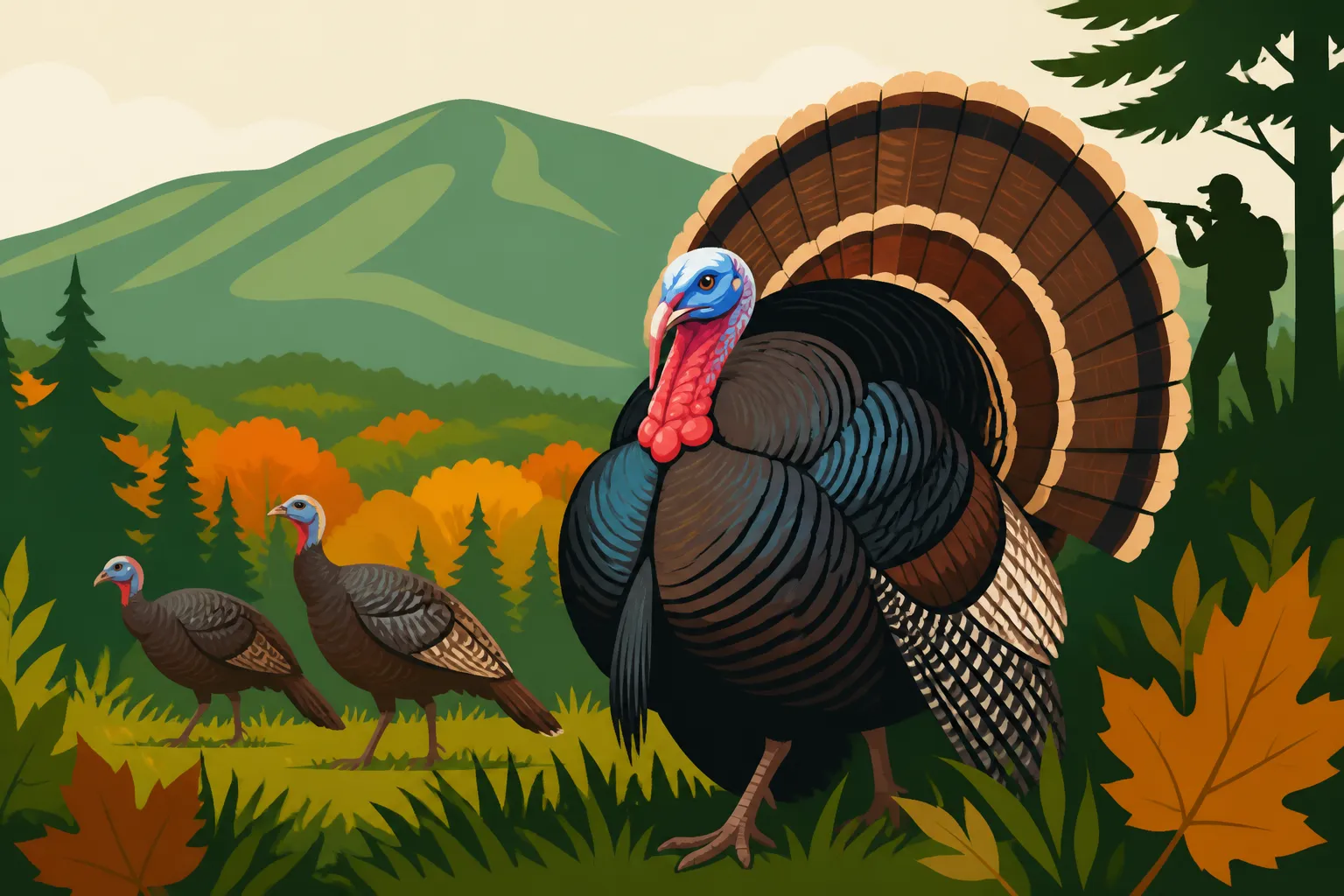
The wild turkeys gracing Vermont's forests and fields are the Eastern wild turkey (Meleagris gallopavo silvestris), one of the most widespread and recognizable subspecies across North America. These birds are a true marvel of nature, exquisitely adapted to survive in diverse eastern woodland habitats. Physically, they're striking: mature gobblers, or "toms," are large birds, often weighing between 18 to 25 pounds, though some can exceed that. Their plumage is a rich, iridescent mix of copper, bronze, red, and green, which shimmers spectacularly in the sunlight. Their heads are bare, changing colors from red, white, and blue, particularly during the breeding season when hormones are surging. They also sport a fleshy wattle, caruncles (warty growths on the head and neck), and a snood (a fleshy appendage that hangs over the beak).
Beyond their impressive size and coloration, gobblers are characterized by their "beard" – a tuft of coarse, bristle-like feathers protruding from their chest. While hens can occasionally have beards, it's far less common and usually much shorter. Their long, powerful legs are designed for running and scratching, and their sharp spurs, located on the back of their legs, are formidable weapons during territorial fights. Hens are generally smaller, weighing 8 to 12 pounds, with duller plumage that provides excellent camouflage while nesting. Their heads are typically blue-gray, and they lack the prominent beard and spurs of a tom. All these traits allow them to blend seamlessly into Vermont's varied terrain, from dense pine stands to open hardwood ridges, making them truly challenging and rewarding game animals to pursue.
Seasonal Movements and Habitat Preferences
Wild turkeys are creatures of habit, yet their habits shift dramatically with the seasons, dictated by breeding cycles, food availability, and cover requirements. Understanding these patterns is crucial for any Vermont turkey hunter.
In spring, as temperatures warm and daylight lengthens, the focus is entirely on breeding. Gobblers become vocal, sounding off from their roosts at dawn, eager to attract hens. These roost trees are typically large, sturdy hardwoods or pines, often found on slight inclines or near water, providing a safe perch from predators. After flying down, gobblers will strut and display for hens in open areas, fields, logging roads, or thinly timbered woods. Hens, meanwhile, will be seeking out safe nesting sites, often in dense brush, tall grass, or thickets that offer protection from predators. During this period, you'll find them scattered across the landscape, but always near a mosaic of mature timber for roosting, open areas for breeding displays, and dense cover for nesting.
As summer progresses, after the breeding season, hens with their poults (young turkeys) form "brood flocks." These family groups spend much of their time foraging in open fields, pastures, and along forest edges, where insects are abundant and young poults can easily find protein-rich food. Gobblers, no longer focused on breeding, often form "bachelor groups" and can be found in more secluded areas of the forest, feeding and loafing. Food sources shift from insects to wild berries, seeds, and early mast crops.
By fall, all turkeys, including juvenile birds, typically regroup into larger flocks. These can be single-sex (all hens and poults, or all gobblers) or mixed flocks. Their primary focus shifts to finding and consuming mast crops like acorns, beechnuts, and wild cherries, which are vital for building up fat reserves for the coming winter. They will travel widely in search of these food sources, often utilizing large tracts of hardwood forests, particularly those with a strong presence of oak and beech. As winter approaches and snow begins to fall, turkeys will concentrate in areas with reliable food sources, often near agricultural fields with waste grain or in protected evergreen stands that offer thermal cover and a safe roost from the elements. Knowing what kind of trees to look for when scouting can be a huge advantage. For example, knowing Vermont Turkey Roost Tree Preferences can guide you to productive areas before you even set foot in the woods.
Navigating Vermont's Turkey Hunting Seasons and Regulations
Vermont offers two distinct turkey hunting seasons: a thrilling spring hunt for gobblers and a strategic fall hunt for either sex. Each season comes with its own set of rules, dates, and opportunities that you need to be familiar with.
Spring Season: The Thrill of the Gobble
The Vermont spring turkey season is a highly anticipated event for many hunters, offering the chance to call a vocal gobbler into close range. The season typically opens in early May and runs for a little over three weeks, often concluding near the end of the month. Legal shooting hours generally begin 30 minutes before sunrise and extend to noon, providing a focused morning hunt. This short window means you need to be in position early and make the most of those precious hours when turkeys are most active and vocal.
For residents, Vermont offers a generous two-bird bag limit during the spring season, a fantastic opportunity to fill the freezer or extend your hunting experience. These two birds must be legally "bearded" turkeys, meaning a male bird or an occasional bearded hen. This rule is in place to protect nesting hens and ensure the continued health of the population. Non-residents are typically limited to one bearded bird per season. To participate, you'll need a valid Vermont hunting license and a spring turkey permit. It's always a good idea to double-check the current year's regulations on the Vermont Fish and Wildlife Department website or in their official hunting guide, as dates and rules can occasionally shift. For all the specifics on licenses and permits, you'll want to review resources like Vermont Spring Turkey Permit Rules and understand the details of Vermont Resident-Only Two-Bird Turkey Limit.
Fall Season: Flock Dynamics and Strategic Pursuits
While the spring season is all about the gobble, the fall turkey season in Vermont presents a different, but equally engaging, challenge. This season typically spans a much longer period, beginning with an archery-only segment in early October and often extending into November with specific shotgun-legal dates in designated Wildlife Management Units (WMUs). The bag limit in the fall is usually one bird of either sex, making it a different kind of hunt focused more on flock dispersal and calling tactics rather than just luring in a dominant tom.
The fall season offers unique opportunities because turkeys are in larger flocks and are often more food-driven than breeding-driven. For the archery segment, which is statewide, you can pursue turkeys with a bow or crossbow. If you prefer a shotgun, you'll need to consult the regulations carefully, as only certain WMUs allow shotgun hunting for turkeys during specific dates in the fall. These WMUs are usually areas where turkey populations can sustain additional harvest pressure. Understanding these nuances is critical for planning your fall hunt; a great resource for this is Vermont Fall Turkey WMU Rules. The different weapon options and WMU-specific rules mean you need to be extra diligent in checking the regulations for the current season. To ensure you're squared away, look up information like Vermont Fall Archery Turkey Season Dates and Vermont Fall Turkey Bag Limit.
Youth and Novice Opportunities
Vermont is deeply committed to fostering the next generation of hunters, and the special youth and novice hunting weekends are a prime example of this dedication. These weekends provide a fantastic, low-pressure environment for young hunters and those new to the sport to experience the thrill of turkey hunting, often under the guidance of an experienced mentor.
Typically held just before the regular spring and fall seasons, these designated weekends allow eligible youth (usually under 16) and novice hunters (those who have completed hunter education and are hunting for the first time or within their first year) to hunt turkeys. The rules are designed to be supportive: youth hunters generally don't need a hunting license but must be accompanied by an adult who holds a valid Vermont hunting license and is at least 18 years old. This adult cannot carry a firearm or bow while mentoring. The bag limits for youth and novice hunters usually mirror the regular season, allowing them to harvest one bearded bird in spring or one bird of either sex in fall. These mentored hunts are invaluable, not just for learning how to call or stalk, but for instilling a deep respect for wildlife, ethical hunting practices, and the importance of conservation. They offer a vital pathway for newcomers to connect with nature and become responsible members of the hunting community. For specific dates and eligibility, always consult the Vermont Fish and Wildlife Department's official calendar or an article like Vermont Youth and Novice Turkey Weekend.
| Feature / Season | Spring Turkey Season (Bearded Birds) | Fall Turkey Season (Either Sex) |
|---|---|---|
| Typical Dates | Early May – Late May | Early Oct (Archery) – Nov (Shotgun) |
| Legal Shooting Hours | 30 minutes before sunrise to noon | 30 minutes before sunrise to sunset |
| Resident Bag Limit | Two bearded turkeys | One turkey of either sex |
| Non-Resident Bag Limit | One bearded turkey | One turkey of either sex |
| Legal Weapons | Shotgun, Bow, Crossbow | Bow, Crossbow (statewide); Shotgun (designated WMUs) |
| Permit Required | Yes (Spring Turkey Permit) | Yes (Fall Turkey Permit) |
| Focus | Calling in vocal gobblers for breeding | Locating flocks, scattering, calling back |
Essential Gear and Tactics for Vermont Turkey Hunters
Having the right gear won't guarantee success, but it certainly puts you in a much better position to capitalize on opportunities. From calls that mimic the sounds of the flock to footwear that handles Vermont's varied terrain, thoughtful preparation is key.
Calls and Decoys for Different Scenarios
When it comes to turkey hunting, effective calling is arguably the most critical skill to master. You're essentially trying to speak their language, and having a variety of tools in your arsenal can make all the difference.
For spring gobbler hunting, the goal is to imitate a hen to entice a lovesick tom. Diaphragm calls (mouth calls) are incredibly versatile, allowing for a wide range of yelps, clucks, purrs, and cuts, and they have the added benefit of being hands-free. Slate calls (pot calls) and box calls produce rich, realistic sounds and are often easier for beginners to master. You'll want to practice a variety of calls – excited yelps to grab attention, soft clucks and purrs to reassure a close-by bird, and even some aggressive cutting to mimic a demanding hen. Decoys can dramatically increase your chances in the spring. A single hen decoy or a jake/hen combination can pull a hesitant gobbler the final few yards. Placing your decoy correctly, usually 20-30 yards from your position and facing away from you, can draw the gobbler's attention and potentially position him for a shot. For a detailed look at setting up your spread, check out Decoy Placement for Pressured Spring Birds. Remember, sometimes less is more; a simple setup can be very effective.
In the fall, the calling strategy shifts. Instead of mimicking a breeding hen, you're often trying to locate flocks, scatter them, and then call them back together using "assembly" calls like lost yelps and kee-ke runs. This often involves mimicking the sounds of scattered poults or a lonely hen trying to regroup with her flock. Decoys are less commonly used in the fall, but a single hen decoy could still potentially work to reassure a regrouping flock if you're in a very open area. Ultimately, the best calls are the ones you can operate proficiently and that produce realistic sounds. Spend time practicing, listening to real turkeys, and adapting your calling to the specific situation at hand.
Weapons and Ammunition Considerations
Choosing the right weapon and ammunition for Vermont turkey hunting depends on the season and your personal preference. Both shotguns and bows (including crossbows) are effective tools, each with its own advantages.
For shotgun hunters, 12-gauge shotguns are by far the most popular choice, offering a great balance of power and shot payload. 20-gauge shotguns are also highly effective, especially with modern ammunition, and are a good option for youth or smaller-framed hunters. The key to patterning a shotgun for turkeys is the choke tube and the specialized turkey loads. A full or extra-full choke is typically used to create a dense pattern for head and neck shots, which are the only ethical shots on a turkey. When it comes to ammunition, modern tungsten super shot (TSS) loads have revolutionized turkey hunting, offering incredible density and range, allowing for smaller shot sizes (like #7 or #9) that carry more energy than traditional lead loads. Brands like Federal Premium's TSS or Winchester's Long Beard XR are excellent choices. Always pattern your chosen choke and ammunition combination at the distances you expect to shoot to ensure a tight, consistent pattern.
Archery hunters, whether using a compound bow, traditional bow, or crossbow, face a different set of challenges but find immense satisfaction in a successful bow kill. For compound bows, a typical hunting setup with a draw weight suitable for deer is generally fine for turkeys. Broadheads designed specifically for turkeys, often with large cutting diameters or unique features to maximize shock and penetration on a body shot, are popular. Mechanical broadheads with large deployment diameters are a common choice. Crossbows have become increasingly popular for turkey hunting due to their accuracy and ease of use. Ensure your bow or crossbow is tuned and you're practicing regularly, as shot placement is even more critical with archery equipment. The compact nature of a bow can be a real asset when Bowhunting During Vermont's Rifle Season, allowing you to move through thick cover quietly. Regardless of your chosen weapon, ethical hunting demands proficiency and respect for the game.
Layering and Boots for Vermont's Variable Weather
Vermont's weather is notoriously unpredictable, especially during the spring and fall hunting seasons. One day can bring warm sunshine and comfortable temperatures, while the next might be cold, rainy, or even see late-season snow flurries. Effective layering is not just about comfort; it's about safety and your ability to remain in the field and focused.
A good layering system starts with a moisture-wicking base layer to pull sweat away from your skin, preventing chills. Next comes an insulating mid-layer, such as fleece or synthetic puffy jackets, which can be added or removed as temperatures fluctuate. Finally, an outer shell that is both windproof and waterproof is essential to protect against sudden downpours, strong winds, or unexpected snow. Brands like Sitka, First Lite, and Kuiu offer excellent layering systems designed for hunting, but even a combination of quality outdoor clothing can be effective. Avoid cotton, which absorbs moisture and loses its insulating properties when wet. For spring, you might start with a light base layer, a fleece vest, and a light rain jacket, carrying an extra puffy in your pack for cooler mornings or extended sits. In the fall, especially later in the season, you'll want more substantial insulation, perhaps a heavier fleece or down jacket, ensuring it can be worn under your orange requirements.
Footwear is equally critical. Vermont's turkey habitats can range from muddy agricultural fields to steep, rocky hardwood ridges and damp, low-lying areas. A good pair of waterproof, comfortable hunting boots with adequate ankle support and aggressive traction is a must. Brands like Irish Setter, Kenetrek, or Schnee's offer boots that stand up to the rigors of Vermont's terrain. For early spring or warmer fall days, uninsulated or lightly insulated boots might suffice. However, as the temperatures drop, especially for later fall hunts or if you're sitting for long periods, moderately insulated boots (400-800 grams of Thinsulate) will keep your feet warm and dry. Always ensure your boots are broken in before the season to prevent blisters, and consider bringing extra pairs of wool or synthetic socks to change into if your feet get wet.
Effective Strategies for Hunting Vermont Turkeys
Wild turkeys are intelligent, wary birds, and consistently punching your tag requires more than just showing up in the woods. It demands strategic thinking, patience, and the ability to adapt to their behavior.
Spring Gobbler Tactics: Roosting, Calling, and Setup
The spring gobbler hunt is a game of strategy, patience, and timing. One of the most effective ways to start is by roosting birds the evening before your hunt. This involves heading out to likely turkey areas before dark, listening for gobblers sounding off as they fly up to their roost trees for the night. Pinpointing their roost location allows you to get into position silently before dawn, giving you a significant advantage. Once you know where they're roosting, you can plan your approach to be within 100-150 yards of their roost tree, ideally with good cover, without disturbing them.
Your pre-dawn setup is critical. Get settled in well before fly-down, ensuring you have a clear shooting lane and a solid backdrop (like a large tree or rock) to break up your silhouette. Make sure you can comfortably hold your gun or bow in a ready position for an extended period. When the woods start to awaken, listen intently. As light breaks, the gobblers will start sounding off again, often multiple times from the roost. A soft tree yelp or two right as they're waking up can sometimes get a response. Once they fly down, the real chess match begins. Your calling strategy should mimic a lonely hen, but don't overcall. Start with some soft tree yelps, then some clucks and purrs after fly-down. Let the gobbler dictate the pace. If he's hot and gobbling aggressively, you might need to be a bit more assertive with your calls. If he's hesitant, back off and let him wonder where the "hen" went. Patience is key; a hung-up gobbler might just need a few more minutes to commit. Setting up against a large sugar maple or sturdy oak provides not only excellent camouflage but also a natural backrest for those long sits. For those early mornings, learning Calling an Early May Gobbler Off the Roost will make all the difference. Likewise, understanding Setting Up Against a Big Sugar Maple will help ensure you're hidden and comfortable.
Fall Turkey Hunting: Breaking Flocks and Calling Back
Fall turkey hunting is a completely different beast than the spring, focusing on breaking up established flocks and then calling the scattered birds back together. This method exploits the strong social bonds within turkey flocks, especially between hens and poults.
The first step is locating a fall flock. This can involve scouting for sign (droppings, tracks, scratch marks), listening for subtle clucks and putts, or even driving backroads and spotting them in fields. Once you've located a flock, the goal is to scatter them as widely as possible. This often means running or charging into the flock, yelling and making as much noise as you can. The more dispersed they are, the more likely they are to try and regroup, and the more likely they are to respond to your calls. After scattering, find a good ambush point quickly. This should be a spot with good visibility and cover, where you can see birds returning from different directions. The key is to wait patiently – often for 20-30 minutes, sometimes even longer – before making your first call. This allows the birds to calm down and realize they're alone.
Once you start calling, use "lost" calls: soft, plaintive yelps, clucks, and especially the distinct "kee-kee" run of a lost poult. The kee-kee run is particularly effective because it mimics the distress call of a young turkey trying to find its family. Start softly and gradually increase volume if you don't get a response. Turkeys will often return to the point where they were scattered, so being set up near that spot is advantageous. They typically approach silently or with very soft calls, so pay close attention. It's a game of patience and mimicking their desire to regroup. This tactic works because turkeys are highly social animals and instinctively want to come back together. Mastering the art of Breaking Up a Fall Turkey Flock can make your fall season incredibly productive.
Scouting and E-Scouting Vermont Turkey Hotspots
Successful turkey hunting, whether spring or fall, almost always begins with diligent scouting. In Vermont, this means leveraging both boots-on-the-ground exploration and modern e-scouting tools.
Traditional scouting involves spending time in the woods before the season opens. Look for fresh turkey sign: tracks in muddy areas, droppings (larger and J-shaped for gobblers, smaller and curled for hens), scratch marks in leaf litter where they've been feeding, and dusting bowls (areas of loose dirt where they clean their feathers). Pay close attention to food sources, particularly mast crops like oak and beech ridges in the fall, or open fields and logging roads that provide insect foraging in the spring. Identify potential roost trees—tall, mature hardwoods or pines, often near water or on ridge lines—and areas with dense cover for nesting hens. Early morning and late evening drives can also help you spot birds in fields or hear them gobbling from the roost.
E-scouting has become an invaluable tool for modern hunters. Platforms like GoHunt, OnX Hunt, and other mapping applications allow you to analyze satellite imagery, topographical maps, and land ownership boundaries from the comfort of your home. Use these tools to identify potential roosting areas (mature timber on ridges), travel corridors (logging roads, creek bottoms, saddles), feeding areas (open fields, oak flats), and dense cover. You can mark waypoints, measure distances, and understand the lay of the land before you ever step foot in the woods. This is especially helpful for identifying public land access points and property lines, saving you precious hunting time. For instance, you can use these apps to find promising public lands you might not know about. You can read more about how to prepare for your hunts by scouting the land in Scouting Vermont Public Land Before Season. By combining detailed e-scouting with in-person reconnaissance, you can significantly narrow down your search and maximize your chances of finding turkeys.
Post-Harvest Care, Regulations, and Future Conservation
Harvesting a wild turkey in Vermont is a rewarding experience, but the process doesn't end with the shot. Proper post-harvest care, adherence to reporting regulations, and an understanding of our role in conservation are all vital parts of being a responsible hunter.
Field Dressing and Processing Your Vermont Turkey
Once you've successfully harvested a wild turkey, prompt and proper field dressing is essential to ensure the quality of the meat, especially on warmer spring or early fall days. Turkeys have a lot of insulating feathers, and their body heat can quickly spoil the meat if not cooled down.
The most common method for field dressing involves removing the entrails. Lay the bird on its back and make a shallow incision from the breastbone to the vent. Carefully reach in and remove all internal organs. You can also make a cut around the vent to ensure everything comes out cleanly. If you're planning to mount the bird, be especially careful around the breast and tail fan. Once the entrails are removed, you can usually take the bird to a cooler with ice (never directly on the ice, as water can cause freezer burn if not careful, instead use ice packs or a sealed bag of ice) as quickly as possible. For immediate consumption, many hunters choose to simply breast out the bird in the field. This involves removing the breast meat directly from the bone, which is often the largest and most desirable portion. Make a cut down the center of the breastbone, then slice along the rib cage to free the meat. You can also remove the thighs and legs if you desire. Be mindful of any shot damage and trim it away. The key is to get the meat cool as fast as possible. Once home, whether you have the whole bird or just the breast, process it quickly into freezer-ready portions. For inspiration on turning your harvest into a delicious meal, consider exploring recipes and techniques like those found in Cooking a Wild Turkey Breast.
Reporting Your Harvest and Disease Monitoring
Reporting your turkey harvest in Vermont is not just a suggestion; it's a mandatory legal requirement and a crucial component of the state's wildlife management efforts. This information allows the Vermont Fish and Wildlife Department to collect vital data on harvest rates, population health, and hunter success, which directly informs future season structures and conservation strategies.
All harvested turkeys must be reported within 48 hours. The most convenient way to do this is through the Vermont Fish and Wildlife Department's online reporting system or via their mobile app. You'll typically need your license number, the date and time of harvest, the WMU where the bird was taken, and information about the bird itself (e.g., bearded or non-bearded, weight, spur length for gobblers). While not directly related to turkeys, Vermont also has important Chronic Wasting Disease (CWD) prevention rules primarily aimed at deer and moose. Although CWD has not been detected in Vermont's cervid populations, the state maintains strict regulations, such as carcass import restrictions and a ban on urine-based lures, to keep it out. While turkeys don't carry CWD, being aware of these broader disease monitoring efforts highlights the state's commitment to wildlife health. It's important to remember that every piece of data you provide through your harvest report contributes to a larger picture that benefits all hunters and the wildlife we cherish. For detailed information on the reporting process, look up Vermont Turkey Checking Requirements.
Sustaining Vermont's Wild Turkey Legacy
The remarkable recovery of wild turkeys in Vermont is a powerful reminder of what dedicated conservation efforts can achieve, and hunters continue to be at the forefront of sustaining this legacy. Every hunting license and permit purchased directly contributes financially to the Vermont Fish and Wildlife Department, funding critical wildlife research, habitat restoration, law enforcement, and educational programs. These are the very resources that ensure healthy turkey populations for future generations.
Beyond financial contributions, hunters often volunteer their time for habitat improvement projects, participate in citizen science efforts like brood surveys, and advocate for sound wildlife management policies. Organizations like the National Wild Turkey Federation (NWTF) are instrumental in these efforts, working tirelessly on habitat enhancement, advocating for hunter access, and promoting ethical hunting practices. Their work, often supported by individual hunters, directly benefits wild turkeys and a host of other wildlife species. By understanding the ecological needs of wild turkeys, adhering to regulations, practicing ethical hunting, and supporting conservation organizations, we collectively ensure that the vibrant gobble of a wild turkey will continue to echo through Vermont's forests for years to come. It’s a privilege to pursue these magnificent birds, and with that privilege comes the responsibility to protect and preserve them.
Disclaimer
The information provided in this guide is for general informational purposes only and is subject to change. Hunting regulations, season dates, and permit requirements are established by the Vermont Fish and Wildlife Department and can vary annually. It is the sole responsibility of the hunter to review and comply with all current state and federal hunting laws and regulations before engaging in any hunting activities. Always prioritize safety and ethical hunting practices.