Vermont Woodcock Singing Ground Surveys
For many of us who cherish the crack of a shotgun or the flush of a bird dog in Vermont's coverts, the American woodcock, or "timberdoodle," is a creature of immense fascination and frustration. You know the feeling: you find that perfect mix of alder thicket and damp ground, but how do you know if there will be birds? It's tough to gauge populations of such an elusive bird, but thankfully, dedicated efforts like the Vermont Woodcock Singing Ground Surveys provide crucial insights into their health and numbers, guiding both conservation and hunting strategies.
Understanding the Elusive Woodcock and Why Surveys Matter
The American woodcock is truly a unique bird, and anyone who has spent time in their habitat understands just how special, and often mysterious, they can be. They're not like grouse, which can be seen drumming or dusting, or turkeys, whose gobbling carries for miles. Woodcock are far more subtle, making it incredibly challenging to get a real handle on their population dynamics without specific, scientific approaches.
The Mystique of the Timberdoodle
Picture it: that perfectly camouflaged bird, blending seamlessly into the fallen leaves and damp earth of a young forest or a brushy field edge. The American woodcock, affectionately known as the timberdoodle, is a master of disguise. These fascinating migratory shorebirds, despite their awkward appearance on the ground, are agile flyers and incredibly adapted to their specific niche. They primarily feed on earthworms, probing the soft soil with their long, sensitive bills, making damp, early successional habitats their preferred stomping grounds. For upland bird hunters, especially those of us who appreciate the challenge and beauty of flushing a bird from thick cover, the woodcock holds a special place. Their erratic, twittering flight can make for a tricky shot, and finding their preferred habitat often means navigating dense tangles. But because they are so cryptic and typically move around individually or in small groups, trying to estimate their numbers or even just confirm their presence can feel like guesswork without a systematic approach. It's not uncommon to wonder, "Are there as many as there used to be?" or "Did that late spring frost affect their breeding?" These are the very questions that surveys aim to answer. If you're keen on chasing these birds, you might also be interested in other upland opportunities like Vermont Ruffed Grouse and Woodcock or pursuing Vermont Small Game and Furbearers.
The Purpose of Singing Ground Surveys
Given the woodcock's secretive nature, traditional methods of wildlife census, like direct observation counts or flush rates, simply aren't effective for accurately assessing their populations. You can walk the best coverts all day and only see a handful, which doesn't give you a true picture of the broader population. This is where the singing ground surveys come into play. These surveys aren't just about counting birds; they are a critical tool for providing vital trend data, giving wildlife biologists and conservationists a long-term understanding of population health. By consistently monitoring male woodcock displays in specific locations year after year, we can identify increases, decreases, or stable trends in their numbers. This data is absolutely essential for guiding management decisions, informing bag limits, and ensuring sustainable hunting seasons. Without these surveys, we'd be flying blind, unable to make informed decisions that protect this unique migratory bird for future generations of hunters and wildlife enthusiasts.
How Woodcock Singing Ground Surveys Are Conducted in Vermont
Conducting these surveys is a finely tuned operation, relying on specific timing and protocols to ensure consistency and accuracy. It’s not just a casual stroll in the woods; it’s a scientific endeavor that requires dedication and a keen ear.
The Methodology: Routes and Listening Stops
In Vermont, as in other states within the woodcock's breeding range, these surveys follow a standardized methodology established nationally. This ensures that data collected here can be compared with data from across the Atlantic Flyway, giving us a regional and continental perspective on woodcock health. The routes are typically established along secondary roads or quiet backroads that pass through suitable woodcock breeding habitat, such as young forests, alder swales, and wet fields. Each route consists of multiple listening stops, spaced at predetermined intervals, often a half-mile apart.
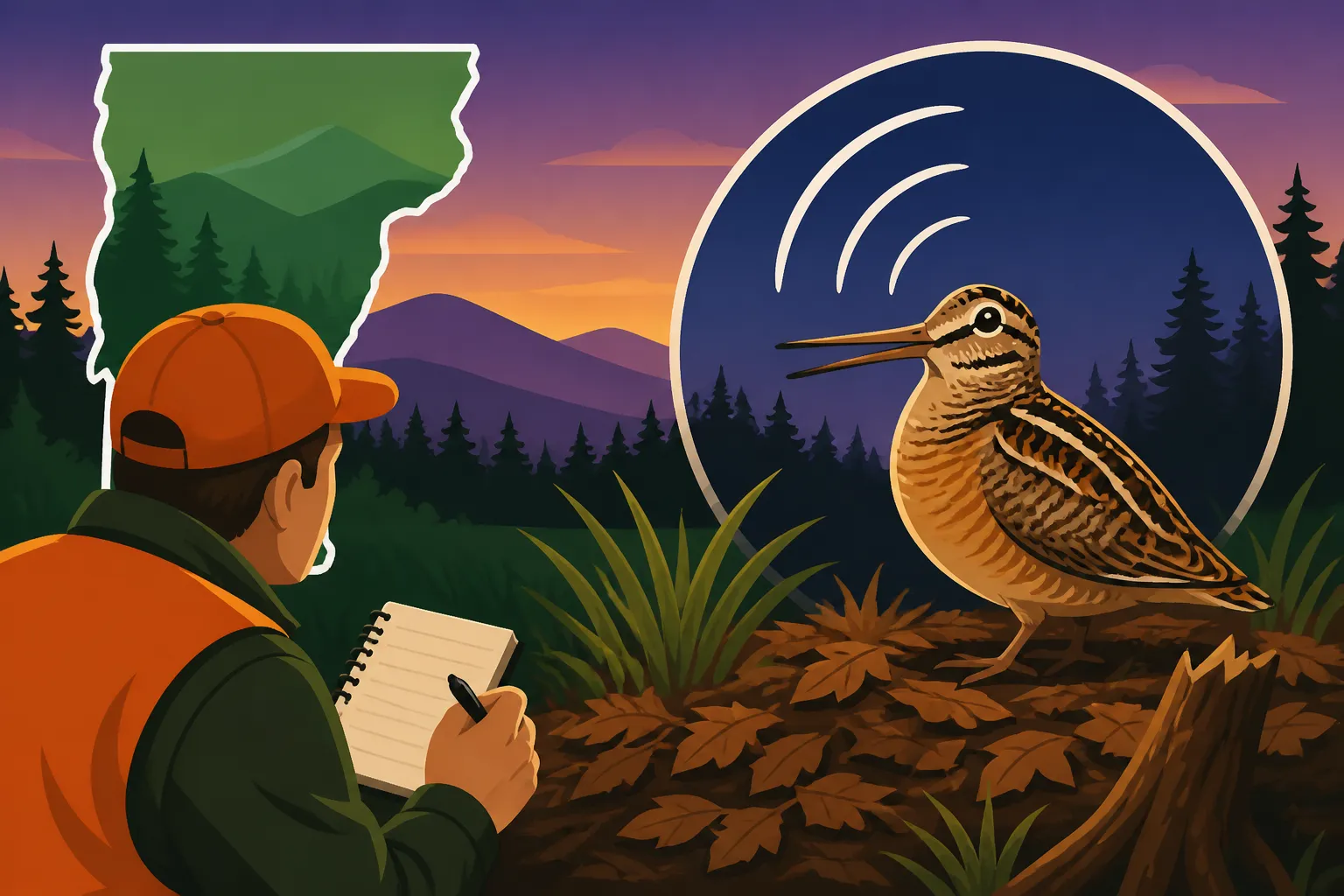
The timing is critical: surveys must be conducted in the spring, typically from late April through early May, when male woodcock are actively performing their elaborate courtship displays. Even more specific, they must occur during the dawn twilight period, beginning about 20-30 minutes after sunset, and continuing for about 30-45 minutes. This is when the males are most vocal and active on their "singing grounds." At each stop, surveyors listen intently for a set period, usually two minutes, recording every "peent" call heard on the ground and every aerial flight display observed. Weather conditions are also carefully considered: surveys are only conducted on calm, clear evenings, as wind or rain can significantly impact a surveyor's ability to hear the birds. This structured approach, often relying on dedicated volunteers and Fish & Wildlife biologists, ensures that the data collected is as consistent and reliable as possible year after year. Hunters who use mapping apps like GoHunt for scouting might appreciate the precision involved in defining these routes, similar to how they might pinpoint potential Scrape Lines Along a Logging Road or plan Entry Routes Through a Cut Cornfield.
Identifying Woodcock "Singing" Displays
For the uninitiated, recognizing a woodcock's "singing" display might sound a bit odd, given that their primary call is a nasal "peent." But it's this unique vocalization, combined with an acrobatic aerial show, that makes their courtship ritual so distinctive and detectable during these surveys. The male woodcock begins on the ground, emitting a series of short, buzzy "peent" calls. He then launches into the air, spiraling upwards in ever-widening circles, his wings producing a distinct, whistling sound as he ascends. At the apex of his flight, sometimes hundreds of feet high, he performs a series of chirping notes before fluttering back down to the exact spot he took off from, landing silently to resume his "peenting."
Surveyors are trained to identify both the ground peents and the unique whistling and chirping sounds of the aerial display. The challenge lies not only in hearing these sounds against the backdrop of other nocturnal noises but also in accurately counting individual birds. Sometimes, multiple males might be displaying in the same general area, requiring a skilled ear and careful observation to avoid double-counting. A surveyor must be able to triangulate sounds, estimate distances, and remain absolutely focused. This specialized knowledge and keen listening are paramount for ensuring the accuracy of the data, which ultimately helps determine management strategies, including details relevant to Vermont Migratory Bird Certification for hunters.
Interpreting the Data: What Vermont's Surveys Reveal
Once collected, the raw data from these singing ground surveys becomes a treasure trove of information, allowing biologists to paint a picture of woodcock populations over time and across different habitats. It's a critical step in understanding the health of the species.
Population Trends and Fluctuations
The true power of the singing ground surveys lies in their ability to track long-term population trends. A single year's data point, while interesting, doesn't tell the whole story. It's when you look at the numbers over five, ten, or even twenty years that patterns emerge. Biologists meticulously analyze this data, looking for statistically significant increases or declines in the number of peents heard per route. These trends can reveal a lot about the health of the woodcock population. For example, a sustained decline might indicate broader issues like habitat loss or environmental changes impacting breeding success. Conversely, stable or increasing numbers suggest healthy populations, reflecting successful conservation efforts or favorable conditions.
Annual fluctuations are also common and can be influenced by a myriad of factors. A particularly harsh winter with heavy snow cover could impact overwinter survival, leading to fewer birds returning to breed. A late spring frost might affect insect populations, reducing food availability for chicks. Predation by various animals can also play a role. Understanding these nuances helps biologists distinguish between short-term blips and genuine long-term trends, allowing for more informed decisions. It's a complex puzzle, and every year's survey adds another piece. This data directly impacts decisions around various seasons, including Vermont Waterfowl Zones and Seasons.
Habitat Indicators and Conservation Efforts
Beyond just population numbers, the singing ground surveys also serve as powerful habitat indicators. By knowing where woodcock are actively displaying, biologists can identify and prioritize critical breeding habitat throughout Vermont. If a particular route consistently shows high numbers of birds, it's a strong signal that the surrounding landscape provides the specific mix of young forest, dense thickets, and moist soils that woodcock require for successful breeding and rearing young.
This information is invaluable for focusing conservation efforts. For instance, if surveys highlight areas where woodcock numbers are declining, it prompts a closer look at potential habitat degradation or loss in those regions. Conversely, consistently strong survey results in areas undergoing active timber management or habitat restoration projects can confirm the success of those initiatives. This data directly informs decisions on where to invest resources for creating or maintaining the mosaic of young forest and shrubland habitats that woodcock, and many other wildlife species, depend on. Organizations, even hunting app developers like GoHunt, often utilize public data from such surveys to inform users about general habitat preferences, helping hunters understand where to focus their scouting efforts or look for Late-Season Food Sources for Vermont Whitetails. The insights gained are crucial for habitat work on Vermont Wildlife Management Areas and for maintaining the health of White-Tailed Deer Across Vermont.
The Impact of Survey Findings on Vermont Woodcock Hunting
The diligent work of surveyors and biologists culminates in decisions that directly affect hunters. It's a testament to science-based wildlife management that our hunting opportunities are tied to the health of the game species.
Season Setting and Bag Limits
The population trend data gathered from the singing ground surveys is a cornerstone of the Vermont Fish & Wildlife Department's decision-making process for setting woodcock hunting seasons and bag limits. Since woodcock are migratory birds, these decisions are also coordinated with federal guidelines and other states along the Atlantic Flyway, ensuring a consistent and sustainable approach across their range. When surveys indicate a stable or increasing population, it typically supports maintaining current season lengths and bag limits, providing consistent opportunities for hunters. If, however, the data suggests a significant and sustained decline, wildlife managers may recommend more conservative regulations, such as reduced bag limits or shorter seasons, to help the population recover.
This isn't about arbitrary restrictions; it's about adaptive management. The goal is always to strike a careful balance: providing ample opportunity for hunters to enjoy their passion while simultaneously ensuring the long-term health and abundance of the woodcock resource. It’s a dynamic process, with regulations reviewed annually in light of the latest survey results and other biological information. Hunters play a role too, as adherence to federal requirements like the Migratory Bird Harvest Information Program (HIP) also provides valuable harvest data that complements the singing ground surveys, offering a more complete picture of woodcock dynamics.
Best Practices for Sustainable Hunting
Understanding the science behind woodcock management also empowers hunters to be better stewards of the resource. Knowing that decisions are based on data like the singing ground surveys encourages a greater appreciation for conservation efforts. It’s not just about filling a vest; it’s about participating in a tradition and contributing to the health of the ecosystem. Sustainable hunting practices involve more than just adhering to legal limits. It means understanding the species, respecting its habitat, and making ethical choices in the field. This includes knowing how to identify birds correctly, avoiding over-pressuring specific areas, and perhaps even engaging in habitat improvement projects on private land or through volunteer efforts on public lands.
Hunters can also contribute valuable anecdotal data by simply observing and reporting what they see in the field – though not a formal survey, consistent observations can provide useful context to biologists, especially when utilizing tools like the Scouting With the Vermont Fish and Wildlife App. This collective participation ensures that the woodcock, a truly unique game bird, continues to thrive in Vermont's diverse landscapes. For those planning their hunting trips, resources that utilize biological data, such as GoHunt, can sometimes offer insights into public land areas with suitable habitat for various species, helping hunters make informed decisions about where to go.
Here's a quick look at key aspects of the woodcock's breeding display, crucial for surveys:
| Display Aspect | Description | Significance for Surveys |
|---|---|---|
| Ground Peent | A short, nasal, buzzy "peent" call emitted by the male from the ground, often repeated. | Primary auditory cue for initial detection and counting, especially during the listening period. |
| Aerial Flight | Male spirals upward, wings making a distinct whistling sound. Reaches apex, then descends with chirping notes. | Visual and auditory cue confirming a displaying male; helps distinguish from non-displaying birds. |
| Landing Spot | Male typically returns to the exact same spot on the ground after his aerial display. | Indicates a fixed "singing ground," allowing surveyors to track individual display locations. |
| Timing | Occurs primarily at dawn and dusk during spring breeding season. | Strict survey timing ensures consistent conditions for detection. |
| Habitat | Moist, early successional habitats; young forests, alder thickets, brushy fields. | Survey routes are strategically placed in these specific habitats to maximize detection. |
Challenges and Future Outlook for Vermont Woodcock
While woodcock surveys provide a critical baseline, the species still faces significant hurdles. Understanding these challenges is key to ensuring a thriving future for Vermont's timberdoodles.
Threats to Woodcock Populations
The biggest, most overarching threat to American woodcock populations isn't hunting pressure; it's the widespread loss and degradation of their specialized habitat. Woodcock are true "early successional" species, meaning they rely on young forests, shrublands, and brushy areas that are constantly regenerating. As forests mature across Vermont and many agricultural fields are abandoned and grow into mature woodlands, this crucial young habitat disappears. Development further fragments landscapes, breaking up important breeding grounds and migration corridors. Without consistent disturbance, either natural (like fire or beaver activity) or human-induced (like timber harvesting), the dense, regenerating cover woodcock need simply isn't there.
Beyond habitat, climate change poses another layer of complexity. Shifts in temperature and precipitation patterns can affect earthworm populations, their primary food source, and potentially alter migration timing or breeding success. If spring arrives too early or too late, it can disrupt the delicate balance between nesting and food availability. Increased frequency of severe weather events could also impact critical habitat. Lastly, natural predation, while part of a healthy ecosystem, can become a more significant factor when populations are already stressed by other issues. The woodcock is a migratory bird, and its success relies on healthy habitat not just in Vermont, but along its entire flyway.
The Role of Ongoing Monitoring and Hunter Participation
Given the persistent threats to woodcock populations, the continued execution of the singing ground surveys is absolutely indispensable. They are the early warning system, providing the long-term data necessary to identify declines and adapt management strategies before it's too late. Without this consistent, systematic monitoring, conservation efforts would be reactive rather than proactive. Every year's survey adds to a vital dataset that guides everything from habitat projects to hunting regulations.
Hunters, as always, have a crucial role to play beyond simply participating in the sport. Staying informed about woodcock biology and conservation initiatives, supporting organizations that focus on habitat restoration, and advocating for sound wildlife management policies are all essential. Participating in programs like the Migratory Bird Harvest Information Program (HIP), which is required for all migratory bird hunters, provides additional data on harvest rates that complements the singing ground surveys. This holistic approach, combining scientific monitoring with engaged hunter participation, is our best bet for ensuring that the unique "peent" of the timberdoodle continues to echo across Vermont's spring landscapes for generations to come. Your continued interest in opportunities like Hunting the Regular Archery Opener in October or Hunting the Rut in Early-to-Mid November demonstrates your commitment to Vermont's wildlife, and that extends to these smaller, but no less important, game birds.
Disclaimer
This article is for general informational purposes only and does not constitute professional advice. Laws, prices and regulations vary by location and change over time. Consult a qualified professional for guidance on your specific situation.